🎉 Up to 70% Off Selected ItemsShop Sale



17th Century Silver Coat of Arms Signet Ring
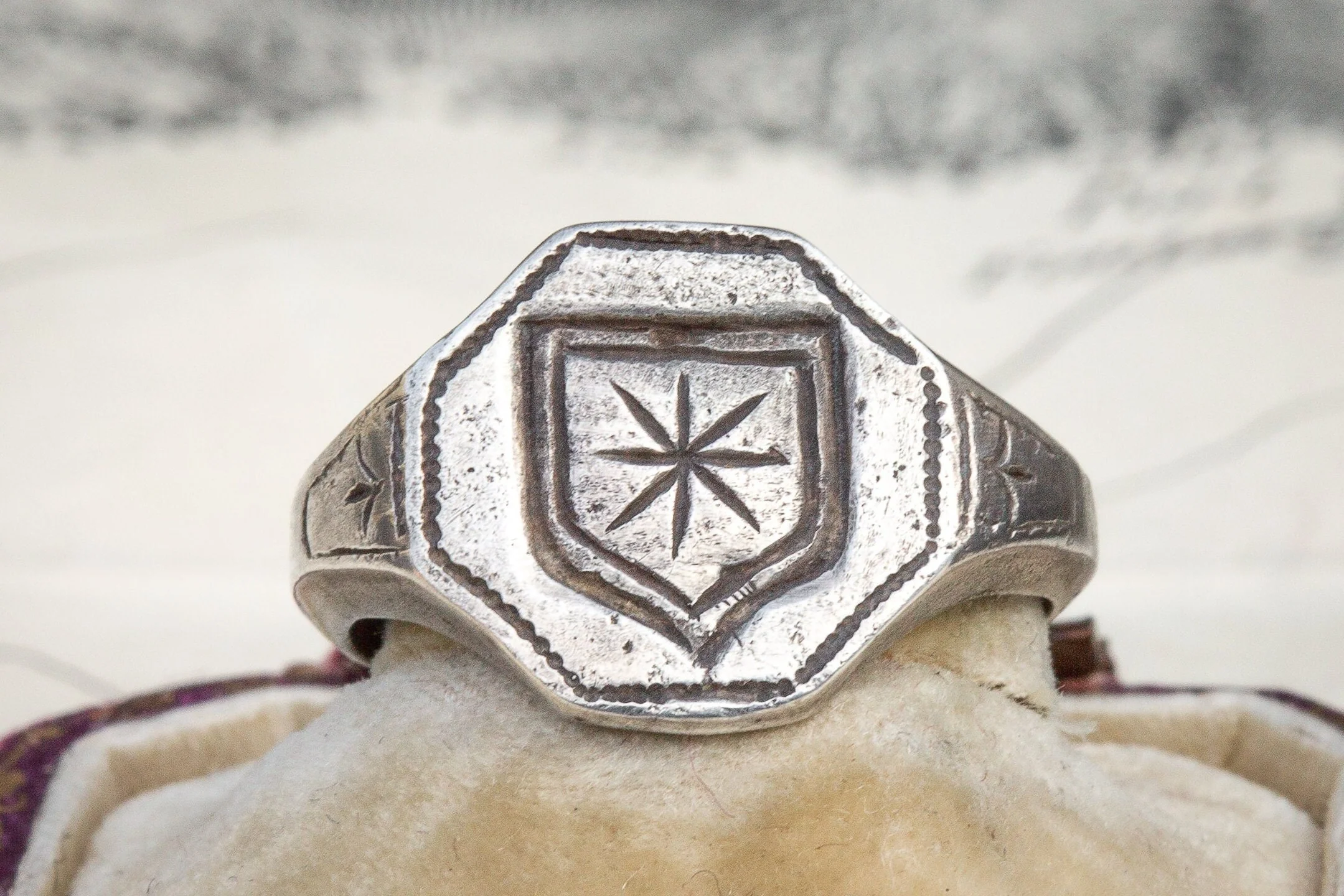
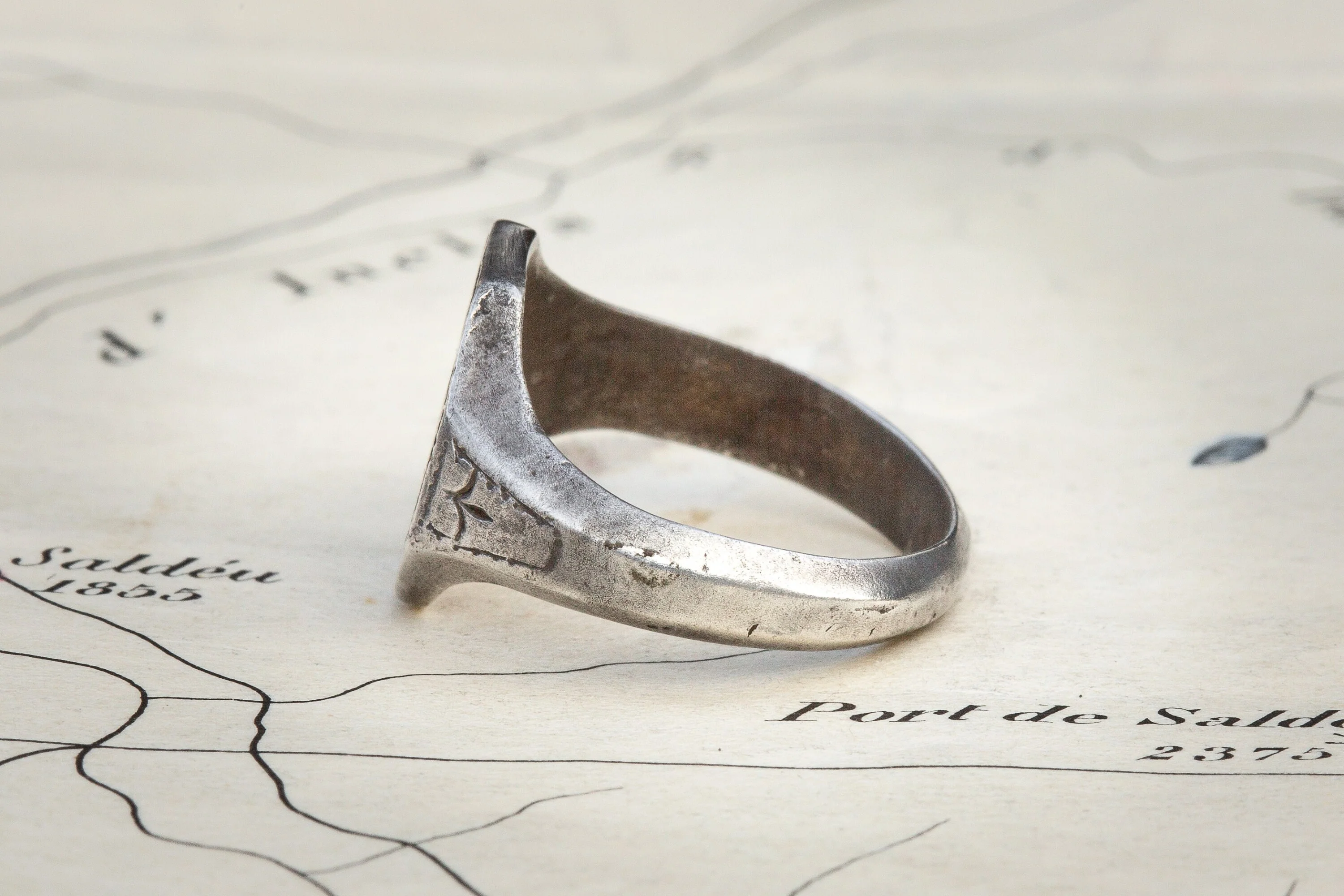
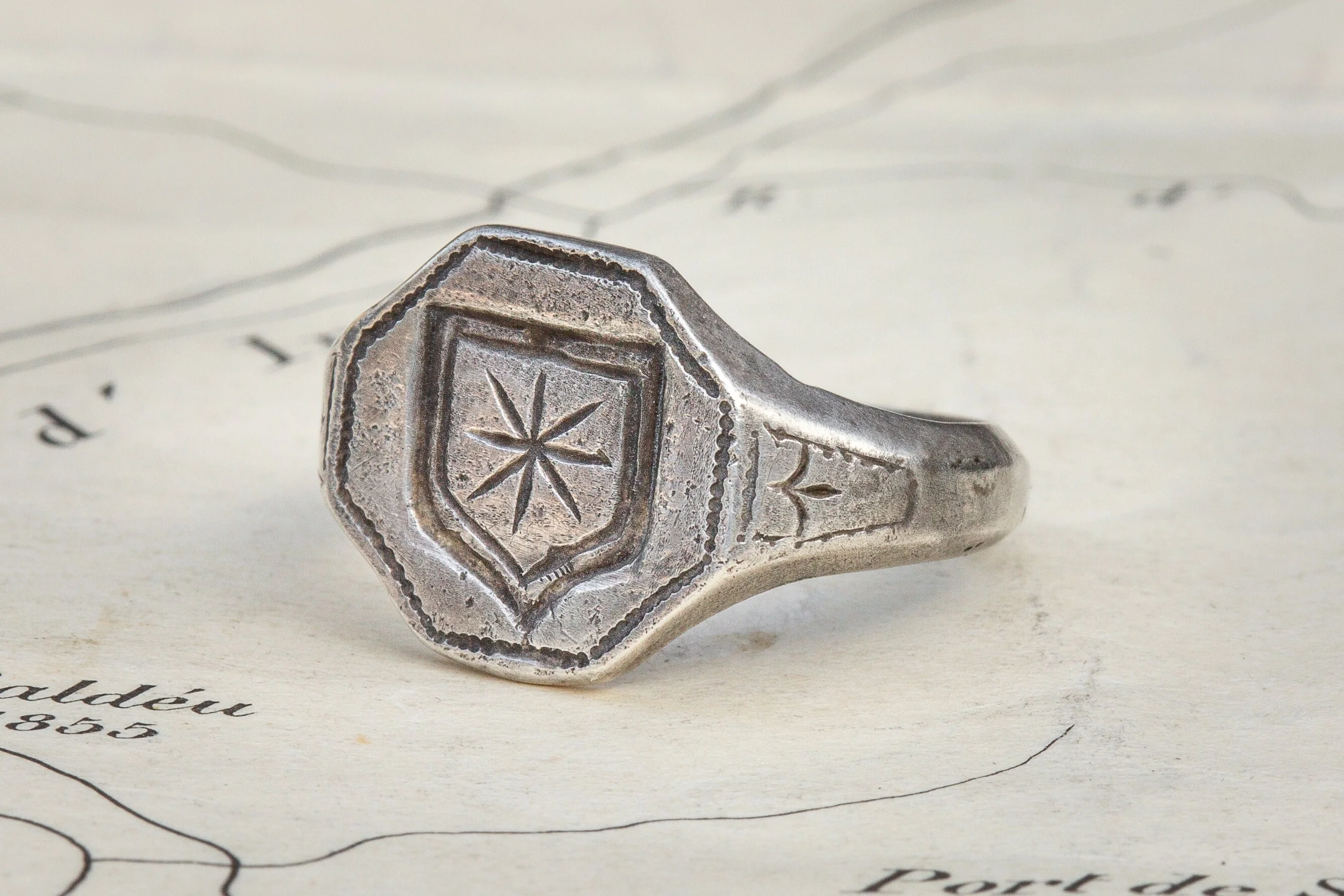
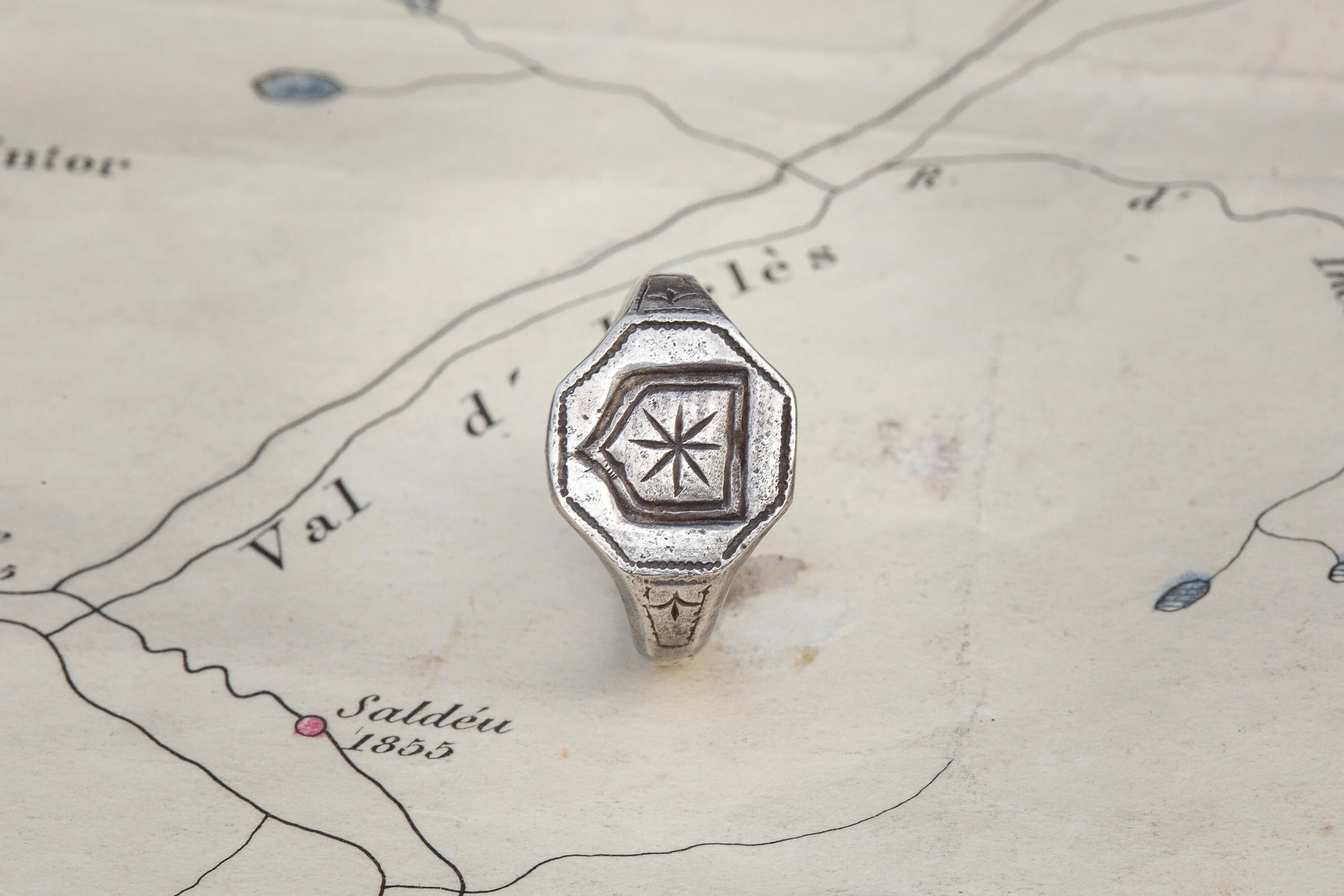
This rare heraldic Stuart period silver intaglio signet ring dates from the late 17th century and originates from Western Europe. The flat, octagonal bezel is engraved with a rudimentary family coat of arms depicting an eight pointed star. The silver ring is cast in one piece, the intaglio is framed within a chased octagonal border and the band displays flared and chamfered edges at the shoulders, all features typical of the period.
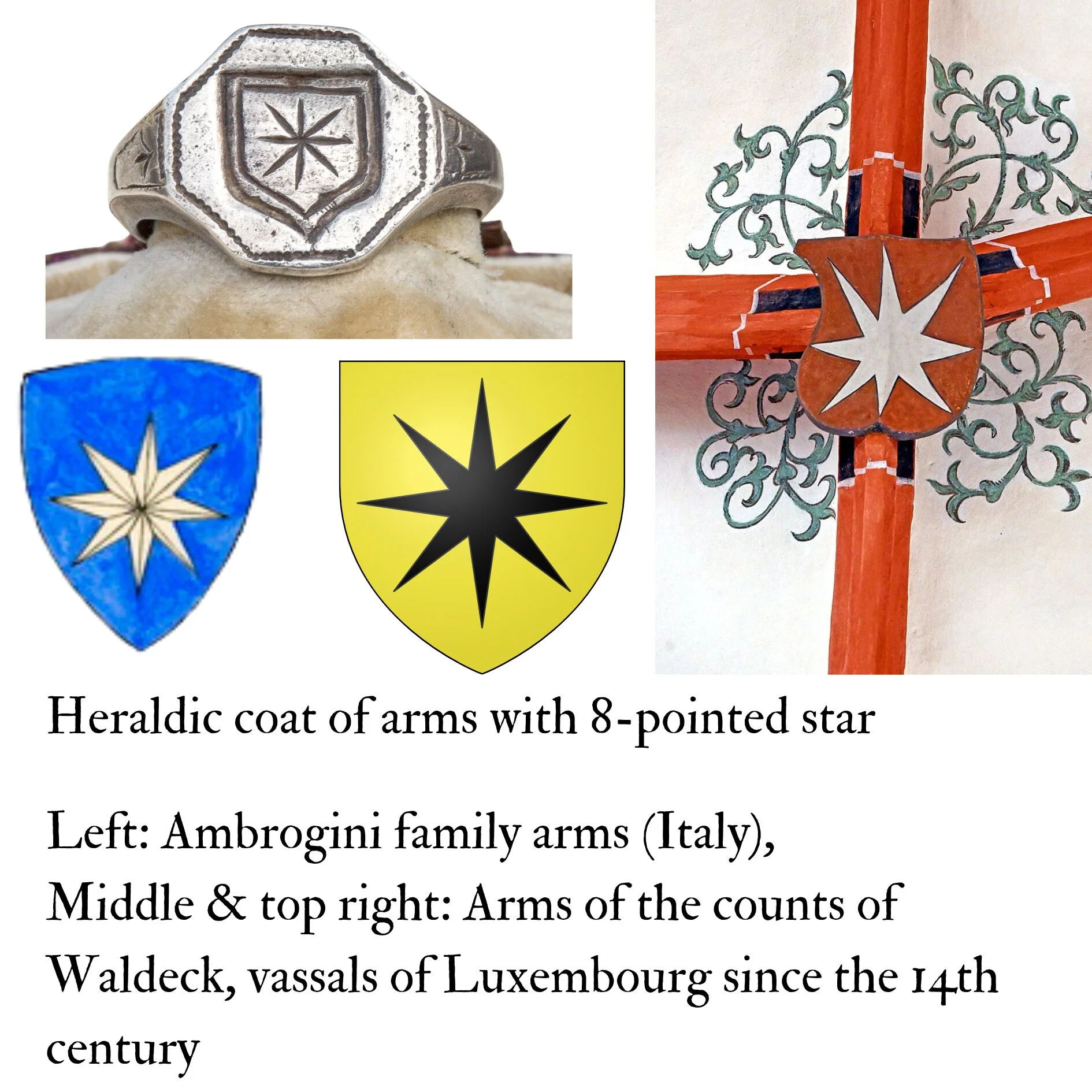
After looking into heraldry archives, there are a few families in Western Europe which share this coat of arms, some notable examples are the Ambrogini family of Italy and the Counts of Waldeck, vassals of Luxembourg since the 14th century (see final photo).
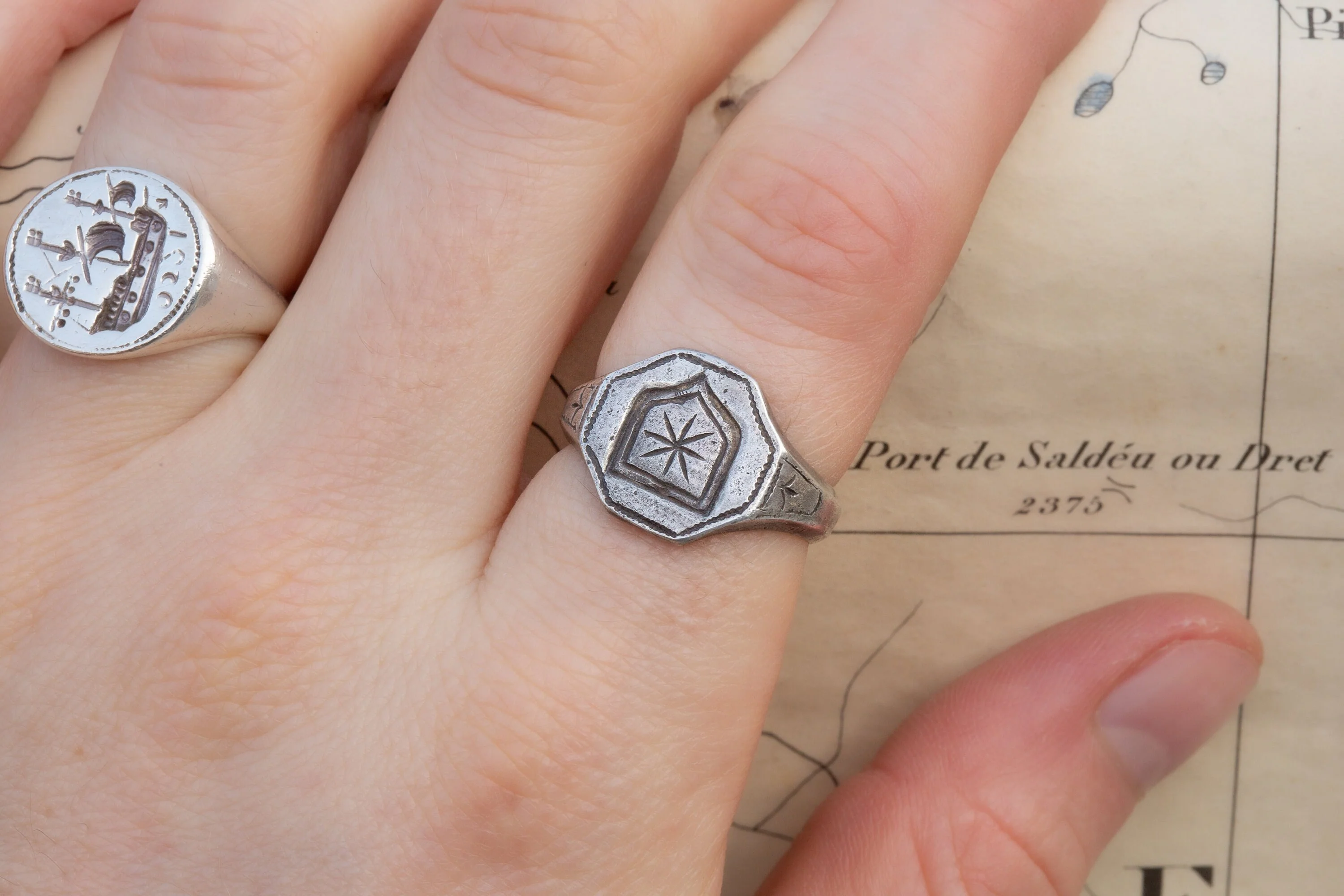
UK ring size P, US size 7.5, 6.08g silver, octagonal bezel measures 14mm x 13mm
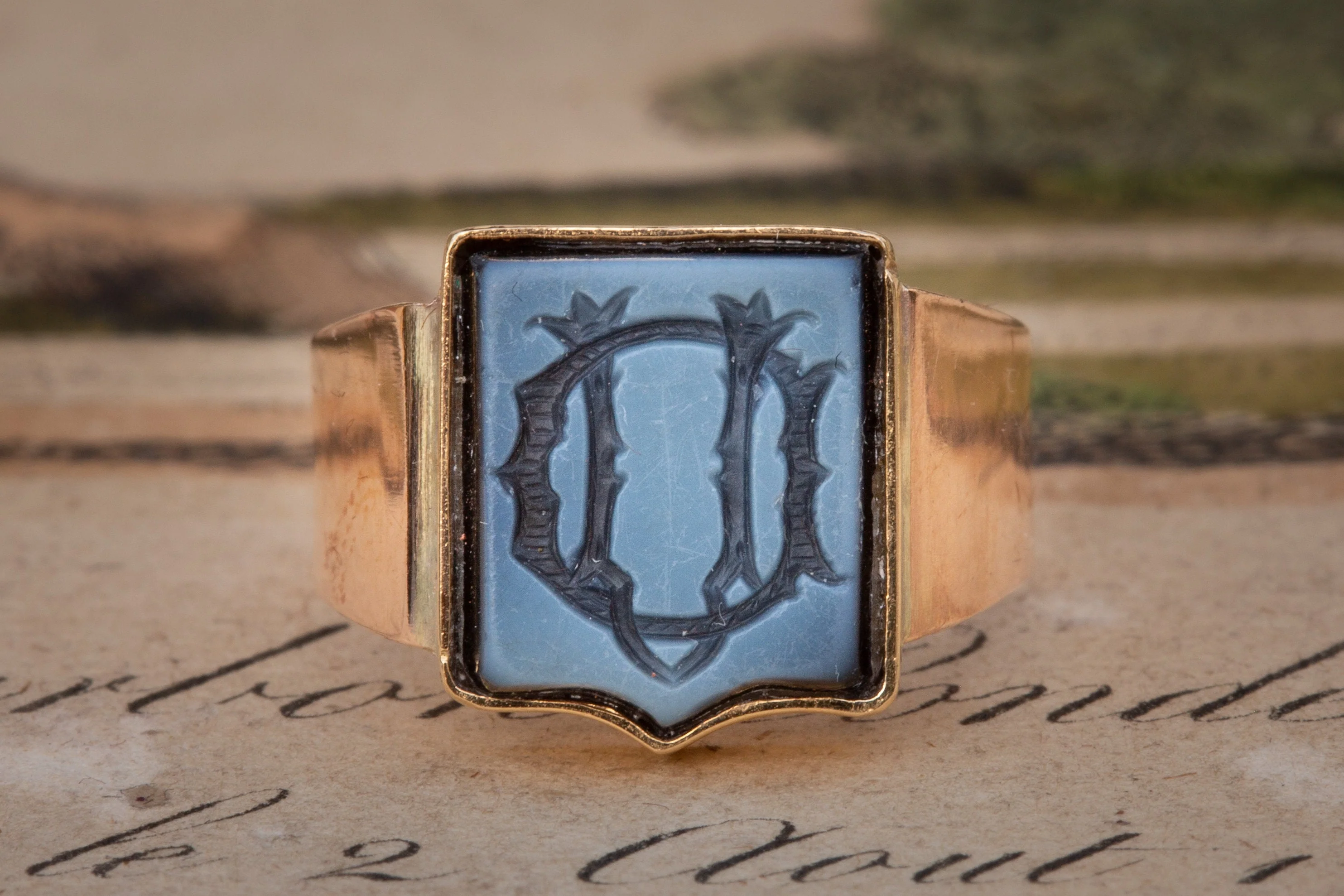
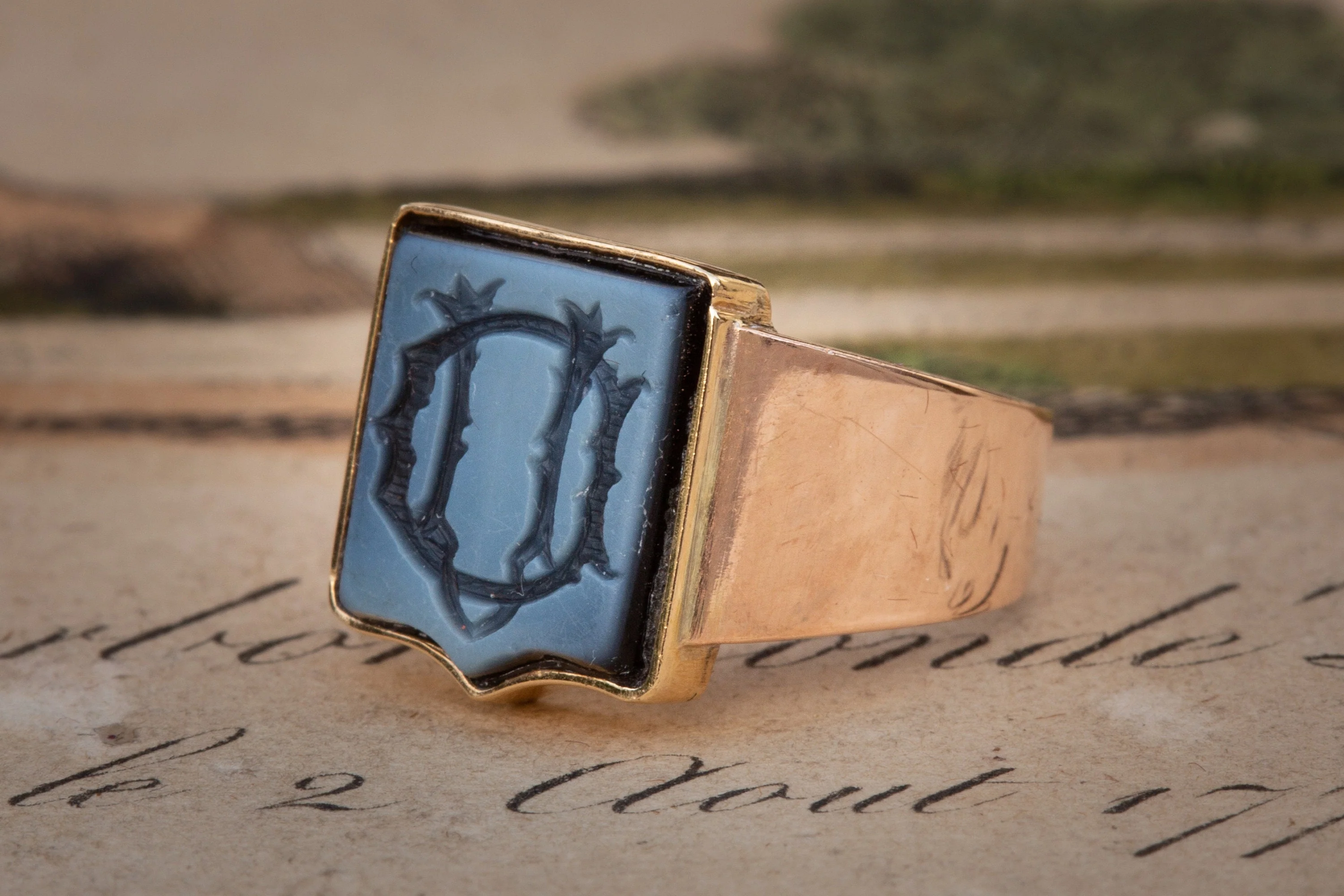
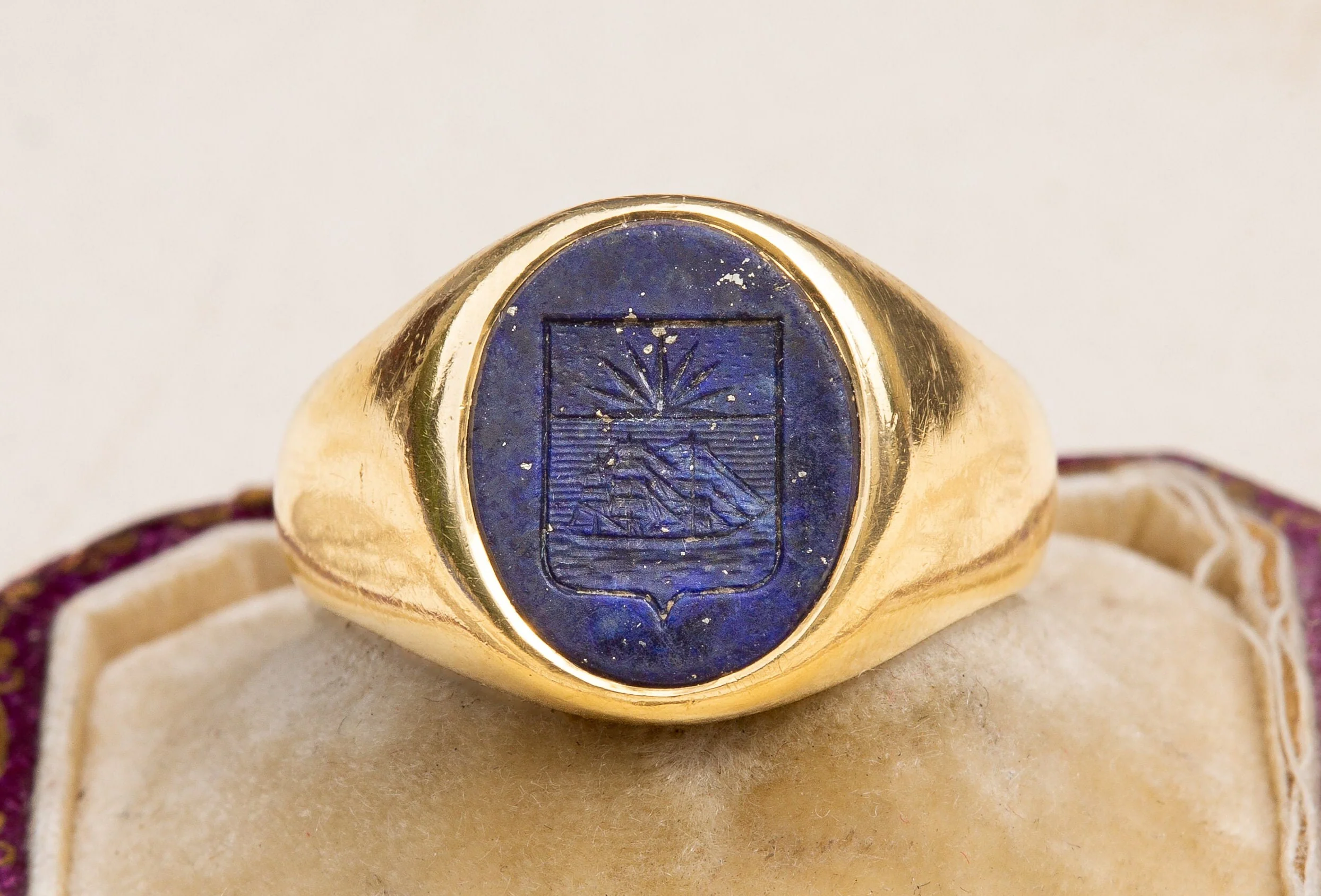
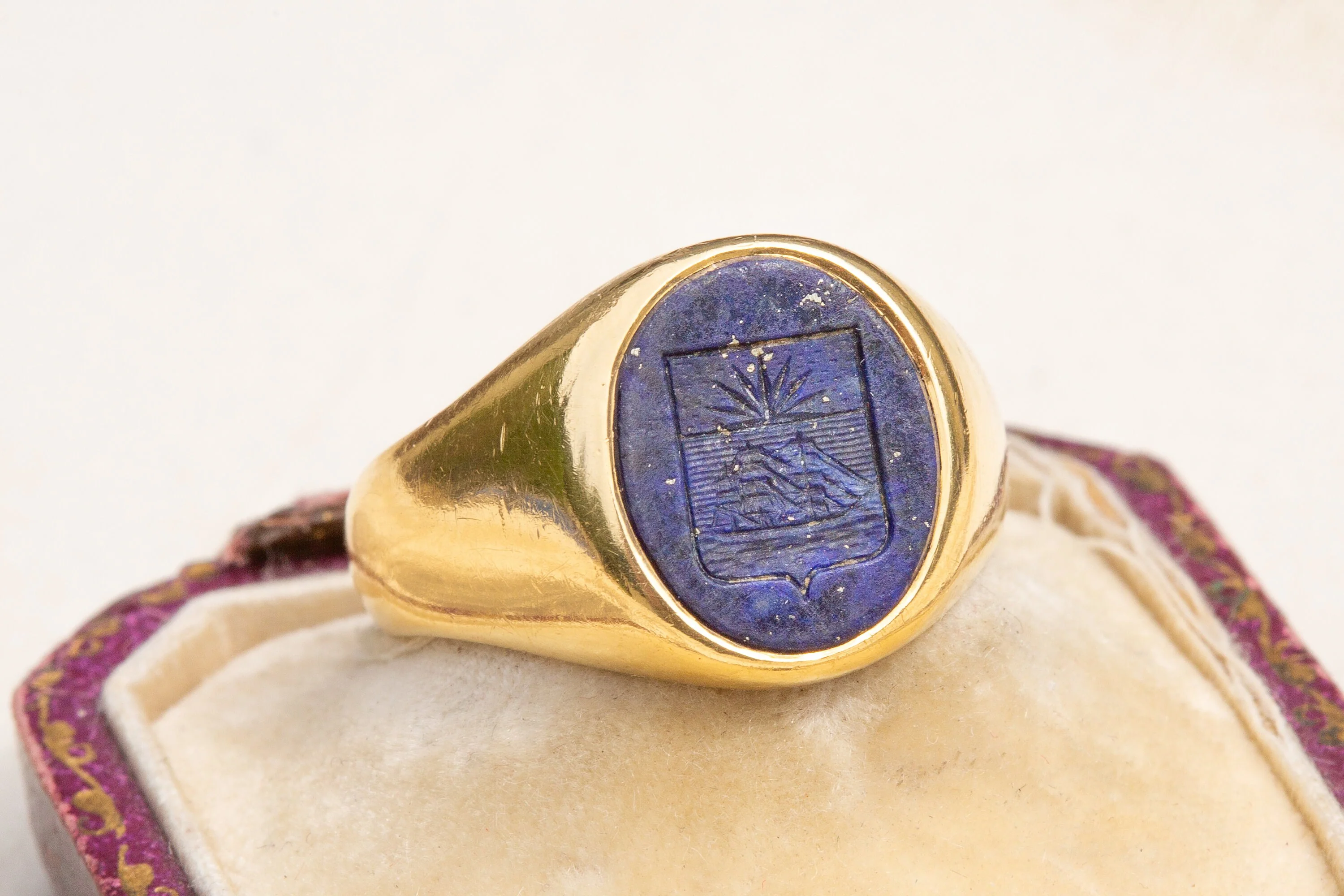
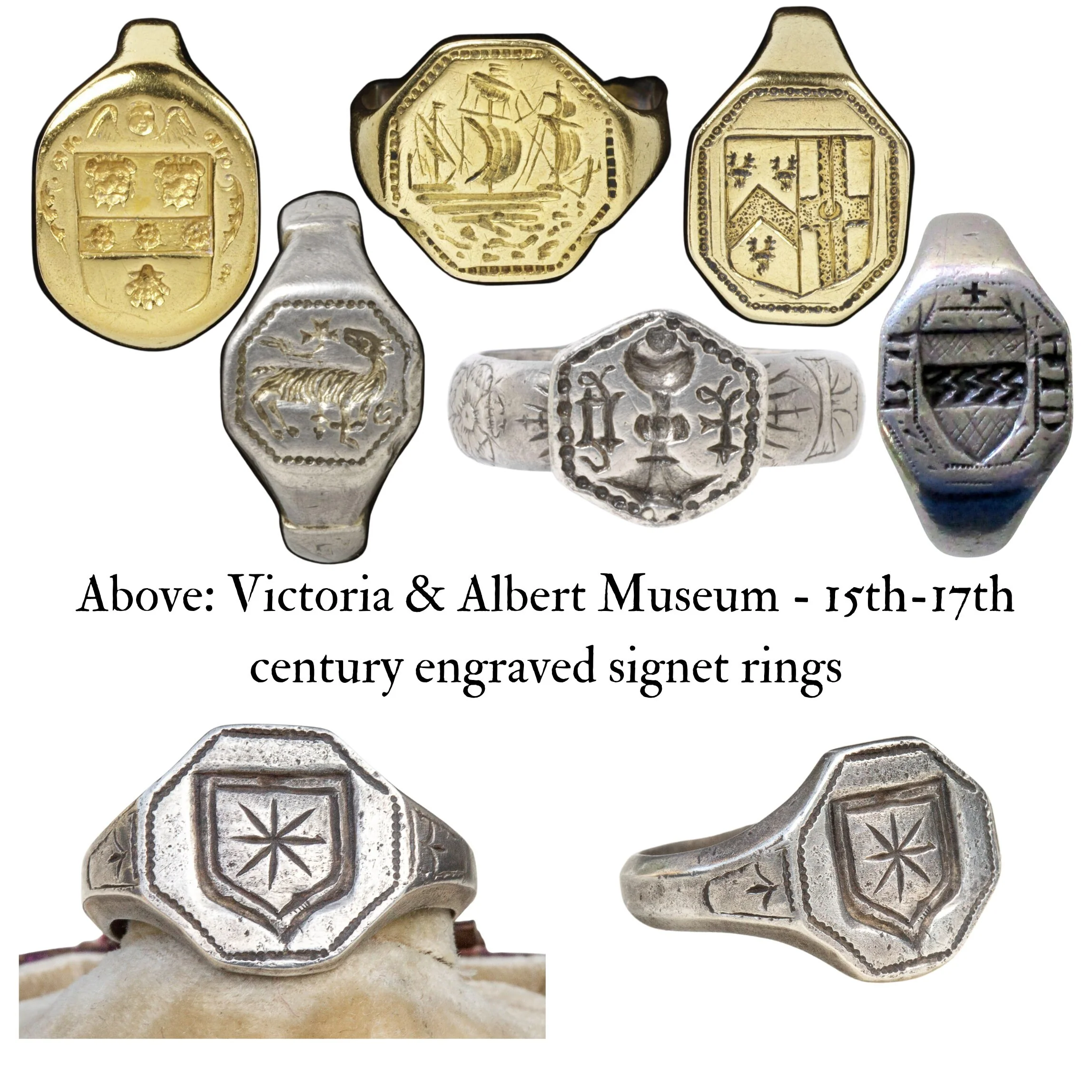
A seal or signet ring was used to apply the wearer's personal mark to the sealing wax on a document. The seal then demonstrated the legality of the document and the identification of the issuing authority or individual. Signet rings could be engraved with a coat of arms or crest, an initial, a merchant's mark (a geometric symbol used to mark goods or personal belongings), or a personal symbol. Sixteenth and seventeenth century portraits show signet rings worn on the forefinger or thumb, presumably to make it easy to apply the ring to the wax by turning the hand. They were items of jewellery with a practical function but the use of precious metals and engraved hardstones indicates that they were also signs of status.
After looking into heraldry archives, there are a few families in Western Europe which share this coat of arms, some notable examples are the Ambrogini family of Italy and the Counts of Waldeck, vassals of Luxembourg since the 14th century (see final photo).
UK ring size P, US size 7.5, 6.08g silver, octagonal bezel measures 14mm x 13mm
A seal or signet ring was used to apply the wearer's personal mark to the sealing wax on a document. The seal then demonstrated the legality of the document and the identification of the issuing authority or individual. Signet rings could be engraved with a coat of arms or crest, an initial, a merchant's mark (a geometric symbol used to mark goods or personal belongings), or a personal symbol. Sixteenth and seventeenth century portraits show signet rings worn on the forefinger or thumb, presumably to make it easy to apply the ring to the wax by turning the hand. They were items of jewellery with a practical function but the use of precious metals and engraved hardstones indicates that they were also signs of status.
$391.97
Original: $1,306.57
-70%17th Century Silver Coat of Arms Signet Ring—
$1,306.57
$391.97Product Information
Product Information
Shipping & Returns
Shipping & Returns
Description
This rare heraldic Stuart period silver intaglio signet ring dates from the late 17th century and originates from Western Europe. The flat, octagonal bezel is engraved with a rudimentary family coat of arms depicting an eight pointed star. The silver ring is cast in one piece, the intaglio is framed within a chased octagonal border and the band displays flared and chamfered edges at the shoulders, all features typical of the period.
After looking into heraldry archives, there are a few families in Western Europe which share this coat of arms, some notable examples are the Ambrogini family of Italy and the Counts of Waldeck, vassals of Luxembourg since the 14th century (see final photo).
UK ring size P, US size 7.5, 6.08g silver, octagonal bezel measures 14mm x 13mm
A seal or signet ring was used to apply the wearer's personal mark to the sealing wax on a document. The seal then demonstrated the legality of the document and the identification of the issuing authority or individual. Signet rings could be engraved with a coat of arms or crest, an initial, a merchant's mark (a geometric symbol used to mark goods or personal belongings), or a personal symbol. Sixteenth and seventeenth century portraits show signet rings worn on the forefinger or thumb, presumably to make it easy to apply the ring to the wax by turning the hand. They were items of jewellery with a practical function but the use of precious metals and engraved hardstones indicates that they were also signs of status.
After looking into heraldry archives, there are a few families in Western Europe which share this coat of arms, some notable examples are the Ambrogini family of Italy and the Counts of Waldeck, vassals of Luxembourg since the 14th century (see final photo).
UK ring size P, US size 7.5, 6.08g silver, octagonal bezel measures 14mm x 13mm
A seal or signet ring was used to apply the wearer's personal mark to the sealing wax on a document. The seal then demonstrated the legality of the document and the identification of the issuing authority or individual. Signet rings could be engraved with a coat of arms or crest, an initial, a merchant's mark (a geometric symbol used to mark goods or personal belongings), or a personal symbol. Sixteenth and seventeenth century portraits show signet rings worn on the forefinger or thumb, presumably to make it easy to apply the ring to the wax by turning the hand. They were items of jewellery with a practical function but the use of precious metals and engraved hardstones indicates that they were also signs of status.