🎉 Up to 70% Off Selected ItemsShop Sale





Rare Antique Indian 'Mirror' Ring
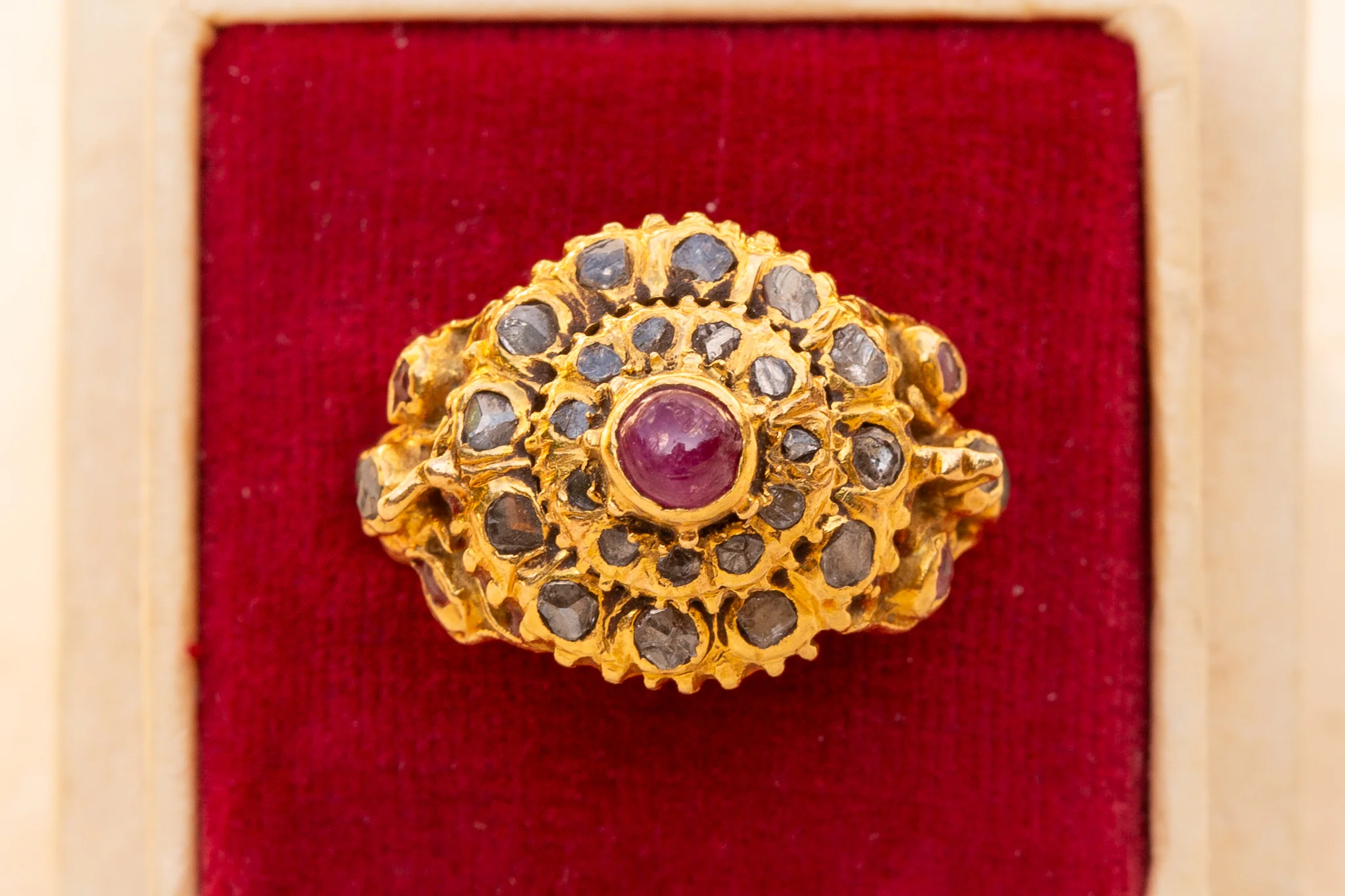
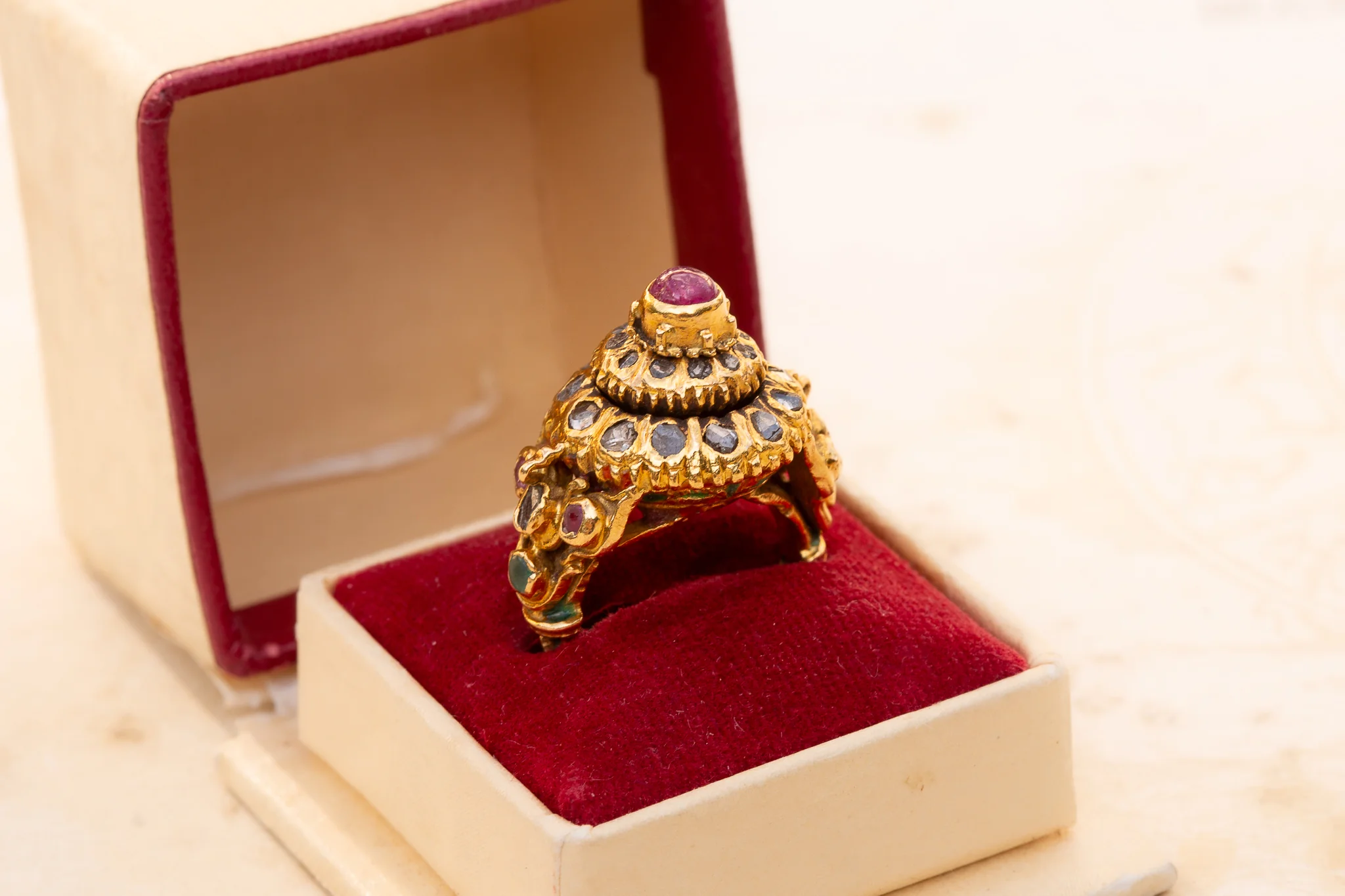
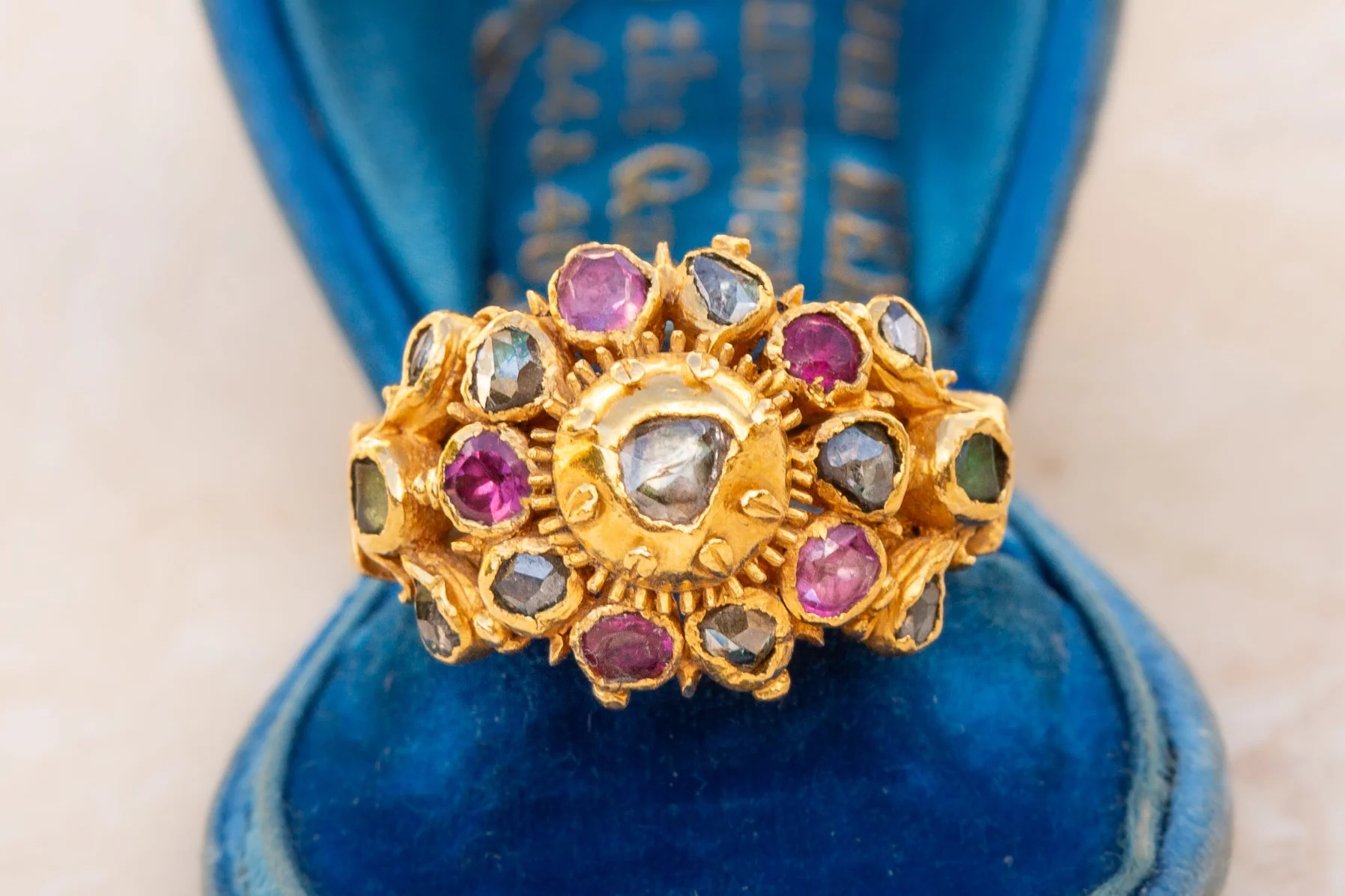
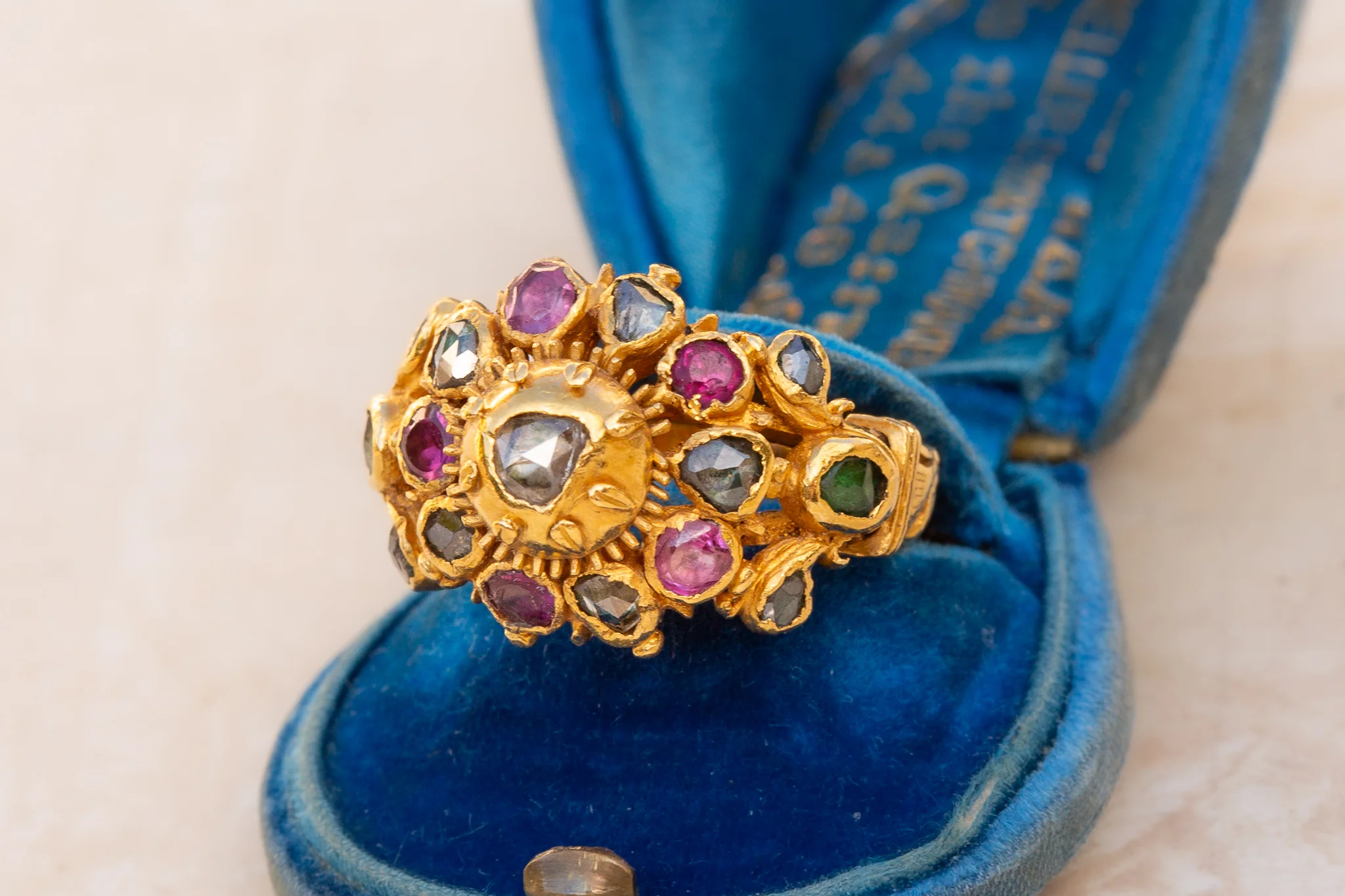
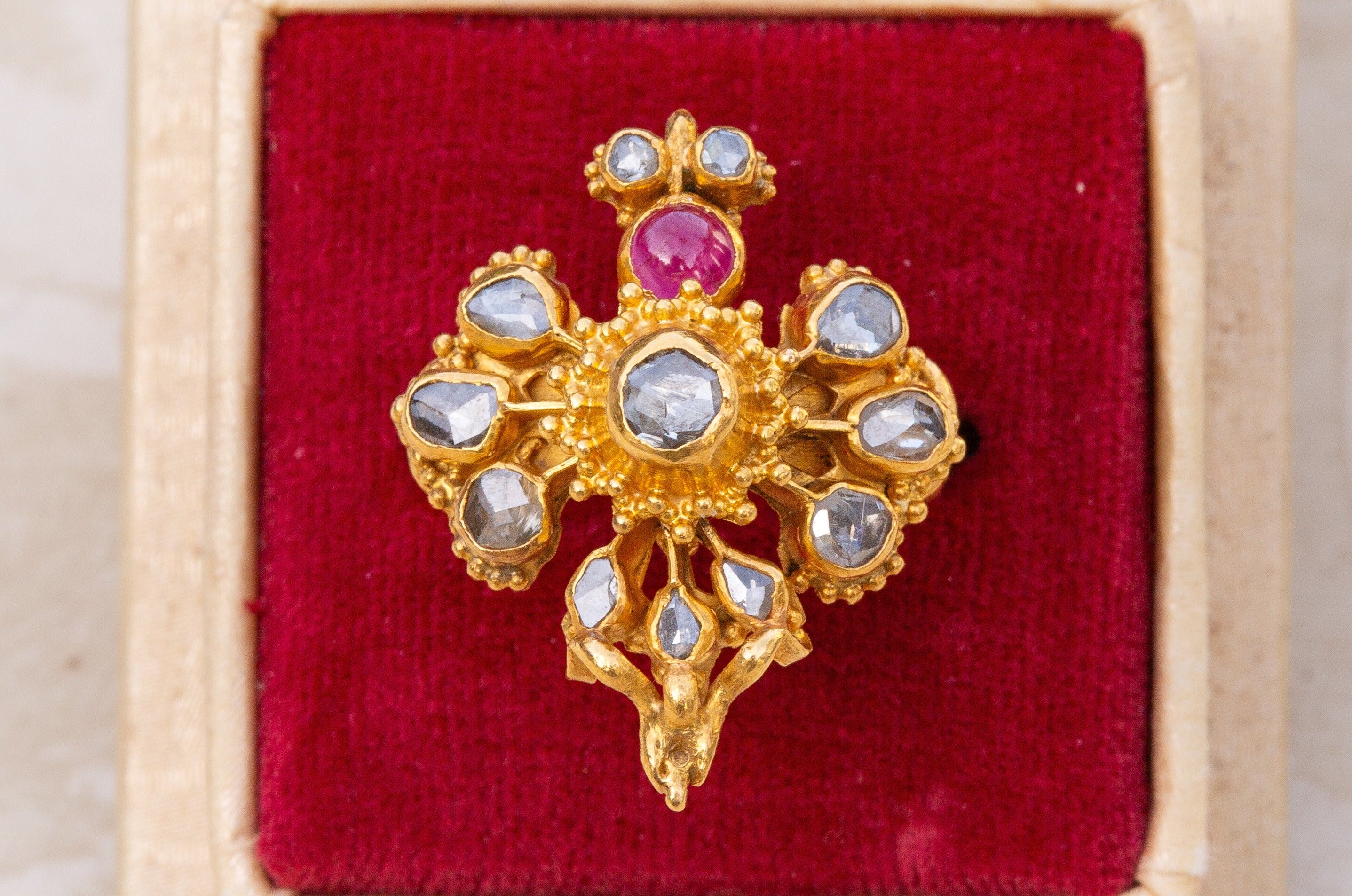
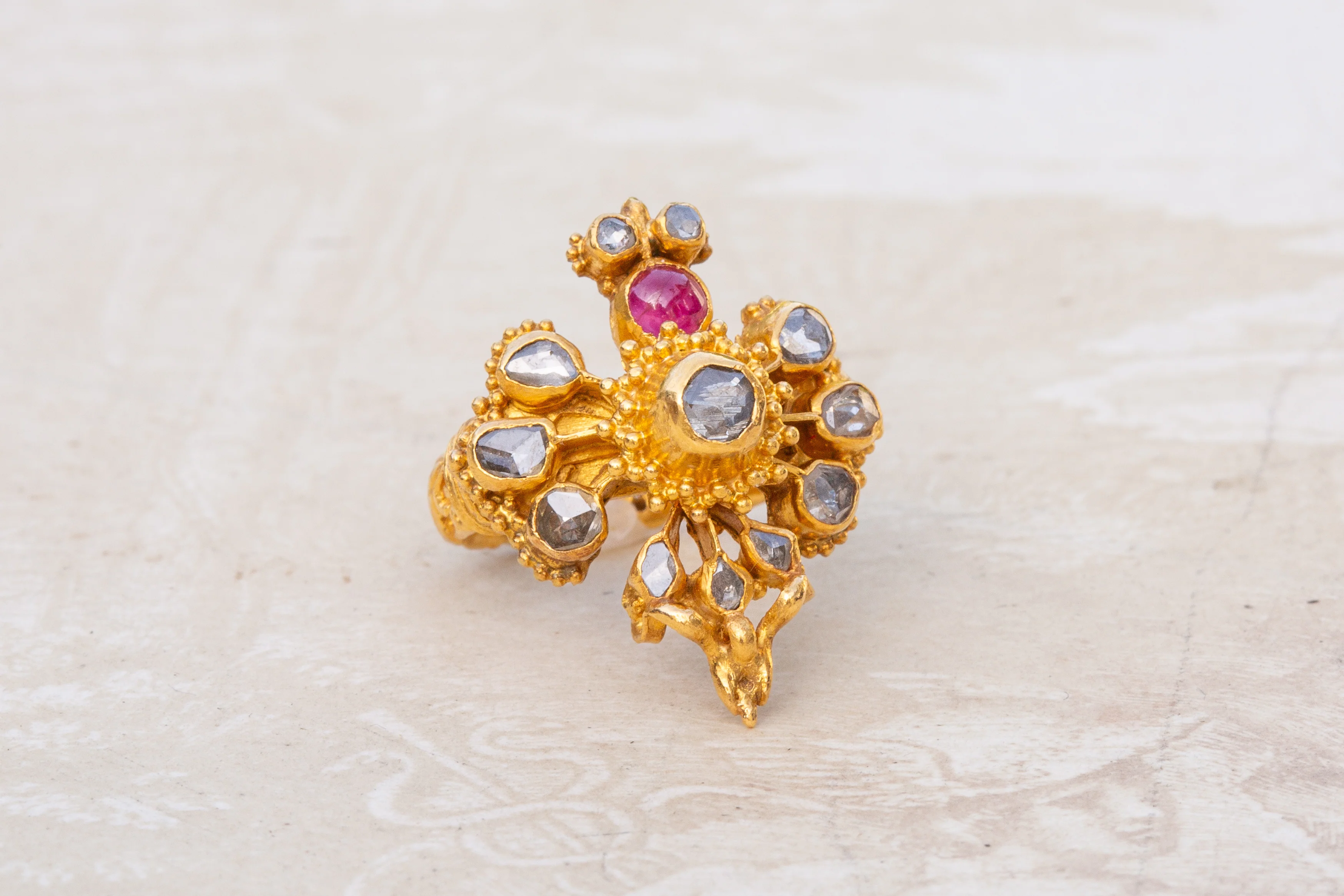
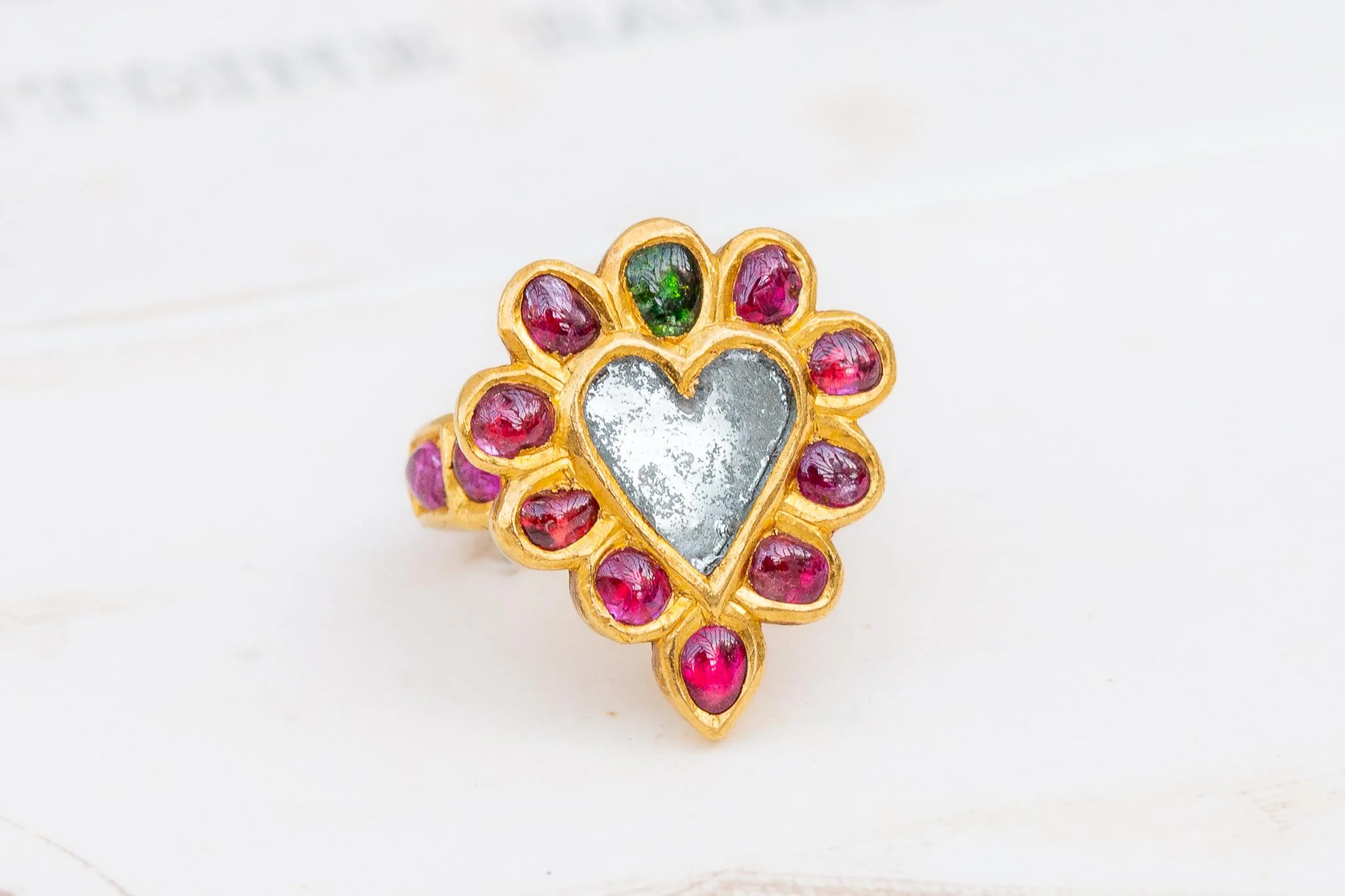
This extraordinary antique 'mirror' ring, also known as an arsi ring, hails from 18th-century South India during the Mughal dynasty. Worn by women in the royal courts of India, these rings held a small mirror at their centre, enabling the wearer to discreetly check their reflection. Tradition also suggests that brides wore these rings on their thumbs, using the mirror to catch a glimpse of their groom from beneath their veils.
Crafted in high-karat gold (approximately 23-24K) using the traditional kundan setting technique, this piece features a heart-shaped motif - a design rooted in Indian culture and thought to have originated during the Indus Valley Civilisation, inspired by the sacred "peepal" tree leaves. Unlike the more common circular examples, this is a rare heart-shaped form.
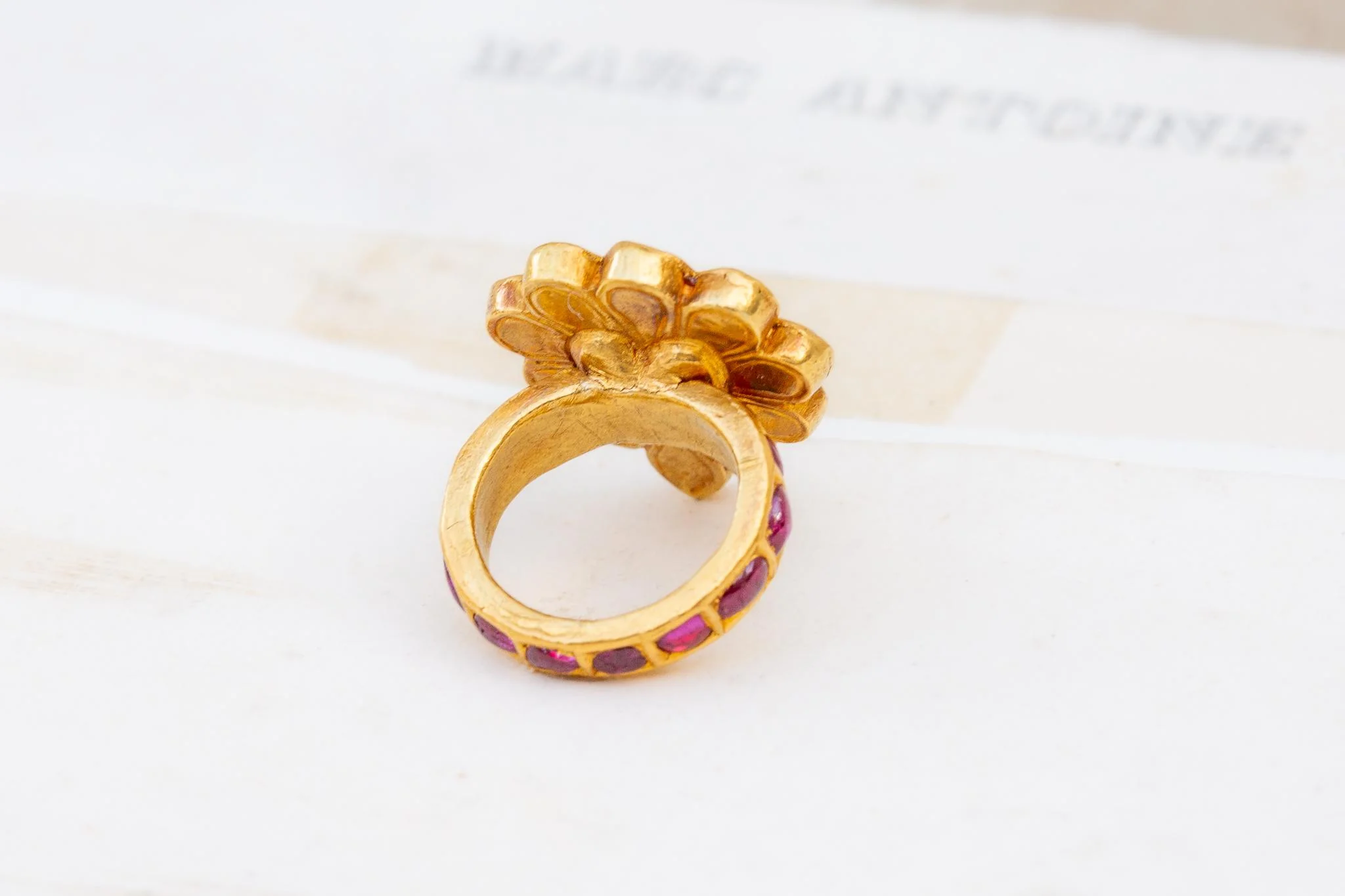
The ring is set with nine cabochon-cut rubies encircling the central mirror, complemented by an additional twelve rubies along the band and a single emerald at the top of the heart. Together, the gemstones weigh over 2 carats. The mirror itself, measuring 1 cm in diameter, is likely composed of silver foil beneath a layer of rock crystal.
This unique ring weighs 8.62 grams and is particularly small, with a size of UK C½ (US 1.75). It may have originally been intended as a mid-finger ring or for someone with slender fingers.
Measurements:
- Band width: 3 mm at the back.
- Mirror diameter: 1 cm.
In remarkably good condition for its age, this piece remains fully wearable. Its rarity, coupled with its historical and cultural significance, makes it an exceptional collector's item or a meaningful addition to any jewellery collection.
$1,949.80
Original: $6,499.32
-70%Rare Antique Indian 'Mirror' Ring—
$6,499.32
$1,949.80Product Information
Product Information
Shipping & Returns
Shipping & Returns
Description
This extraordinary antique 'mirror' ring, also known as an arsi ring, hails from 18th-century South India during the Mughal dynasty. Worn by women in the royal courts of India, these rings held a small mirror at their centre, enabling the wearer to discreetly check their reflection. Tradition also suggests that brides wore these rings on their thumbs, using the mirror to catch a glimpse of their groom from beneath their veils.
Crafted in high-karat gold (approximately 23-24K) using the traditional kundan setting technique, this piece features a heart-shaped motif - a design rooted in Indian culture and thought to have originated during the Indus Valley Civilisation, inspired by the sacred "peepal" tree leaves. Unlike the more common circular examples, this is a rare heart-shaped form.
The ring is set with nine cabochon-cut rubies encircling the central mirror, complemented by an additional twelve rubies along the band and a single emerald at the top of the heart. Together, the gemstones weigh over 2 carats. The mirror itself, measuring 1 cm in diameter, is likely composed of silver foil beneath a layer of rock crystal.
This unique ring weighs 8.62 grams and is particularly small, with a size of UK C½ (US 1.75). It may have originally been intended as a mid-finger ring or for someone with slender fingers.
Measurements:
- Band width: 3 mm at the back.
- Mirror diameter: 1 cm.
In remarkably good condition for its age, this piece remains fully wearable. Its rarity, coupled with its historical and cultural significance, makes it an exceptional collector's item or a meaningful addition to any jewellery collection.