🎉 Up to 70% Off Selected ItemsShop Sale




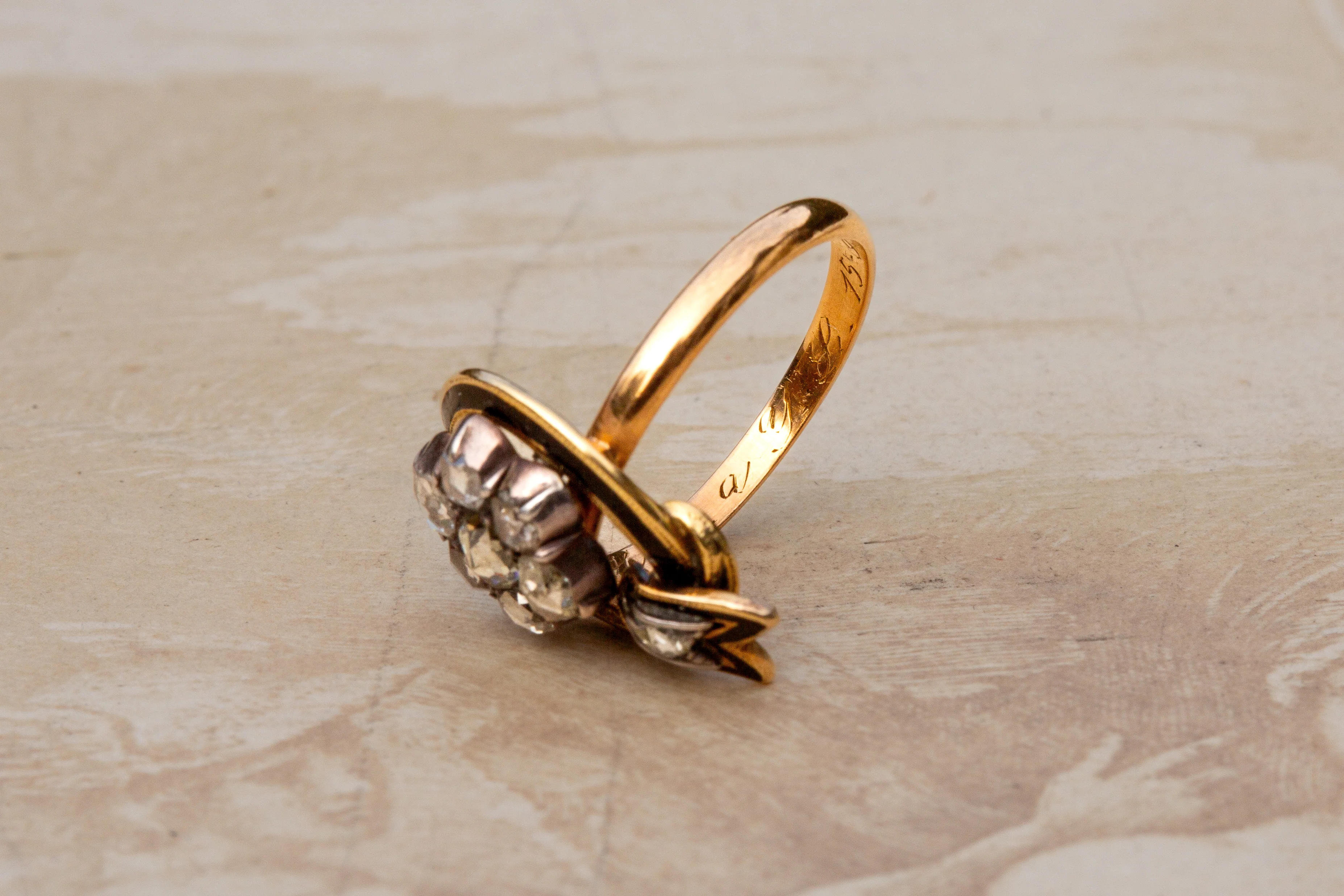
Georgian Halley’s Comet Diamond Cluster
This ornate diamond cluster was circa 1835, just after the sighting of Halley’s comet, a frequently recurring comet whose appearances have been recorded by humans since 240 BCE. Both the Georgians and Victorians had an affinity for symbolism and meaning. They often created jewellery to represent important life experiences and the rise in popularity of Halley’s comet jewellery is a perfect example of this.
The royal astronomer Sir Edmund Halley believed that the two dozen reported comet sightings between 1531 and 1682 were actually one single comet, which circled the sun every 75 years. Although he did not live to see it, he predicted accurately it’s return in 1759 and and the comet was soon named after the astrologist. Soon after its return in 1835, inspired Georgian jewellers created Halley’s Comet pins to commemorate its reappearance.
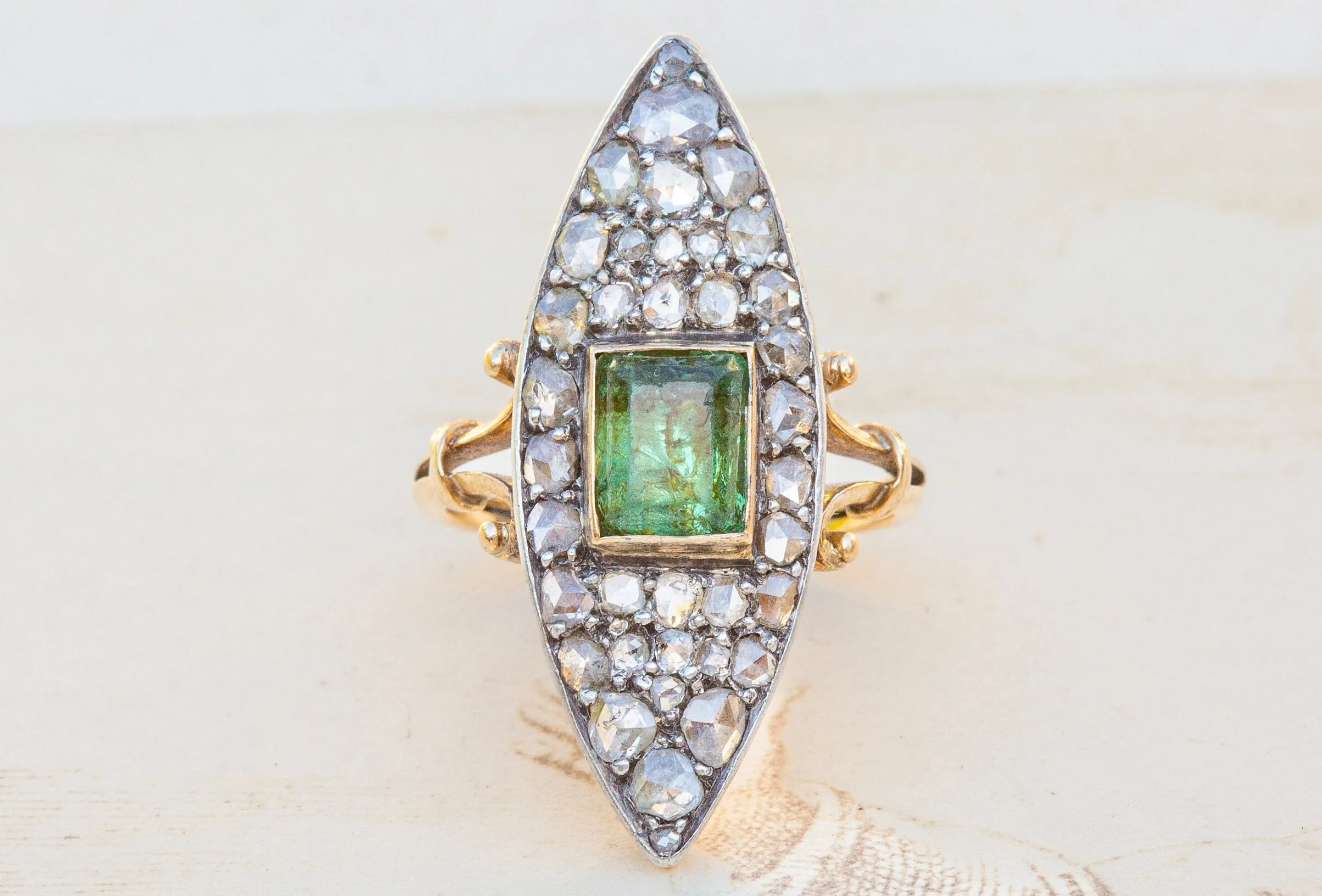
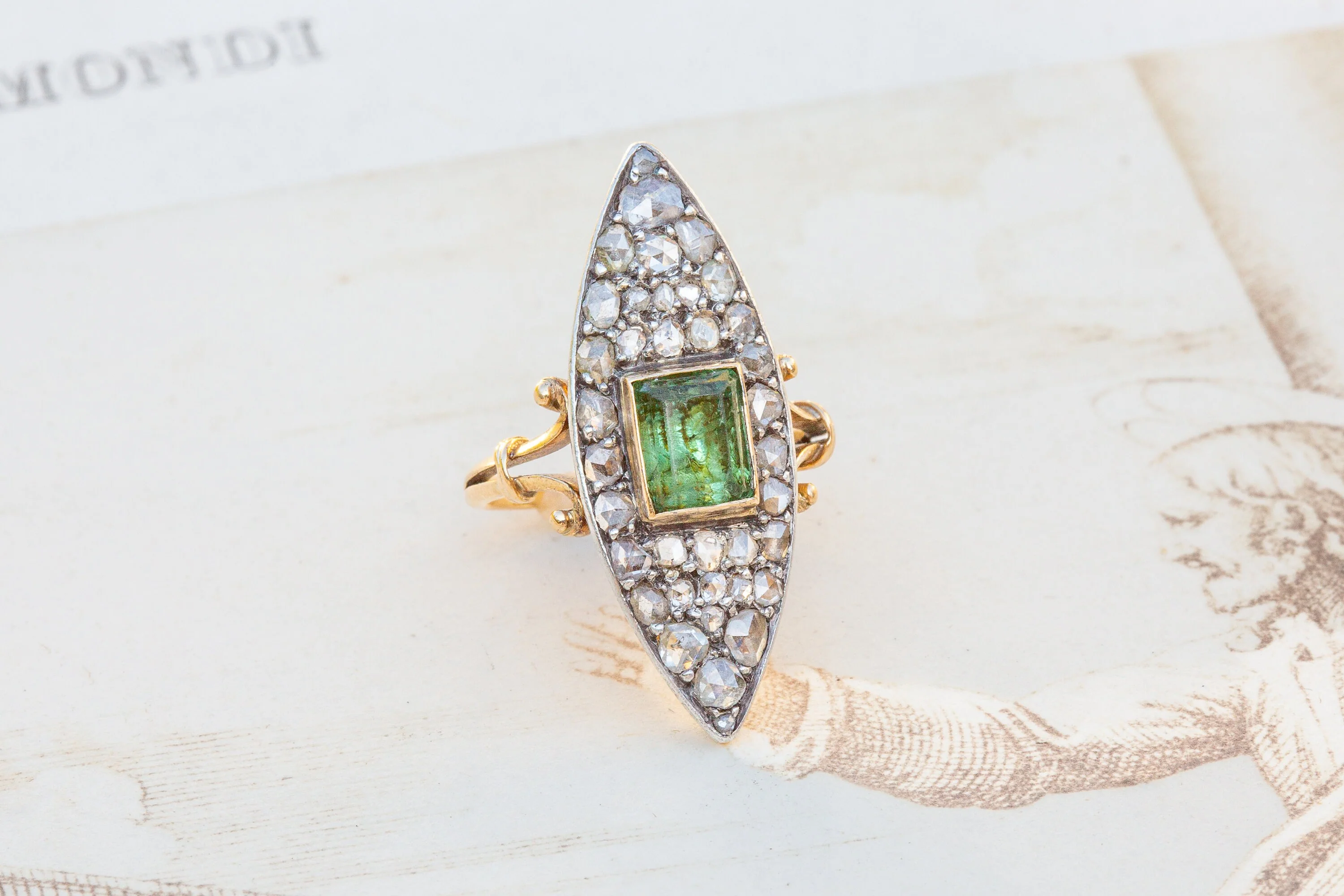
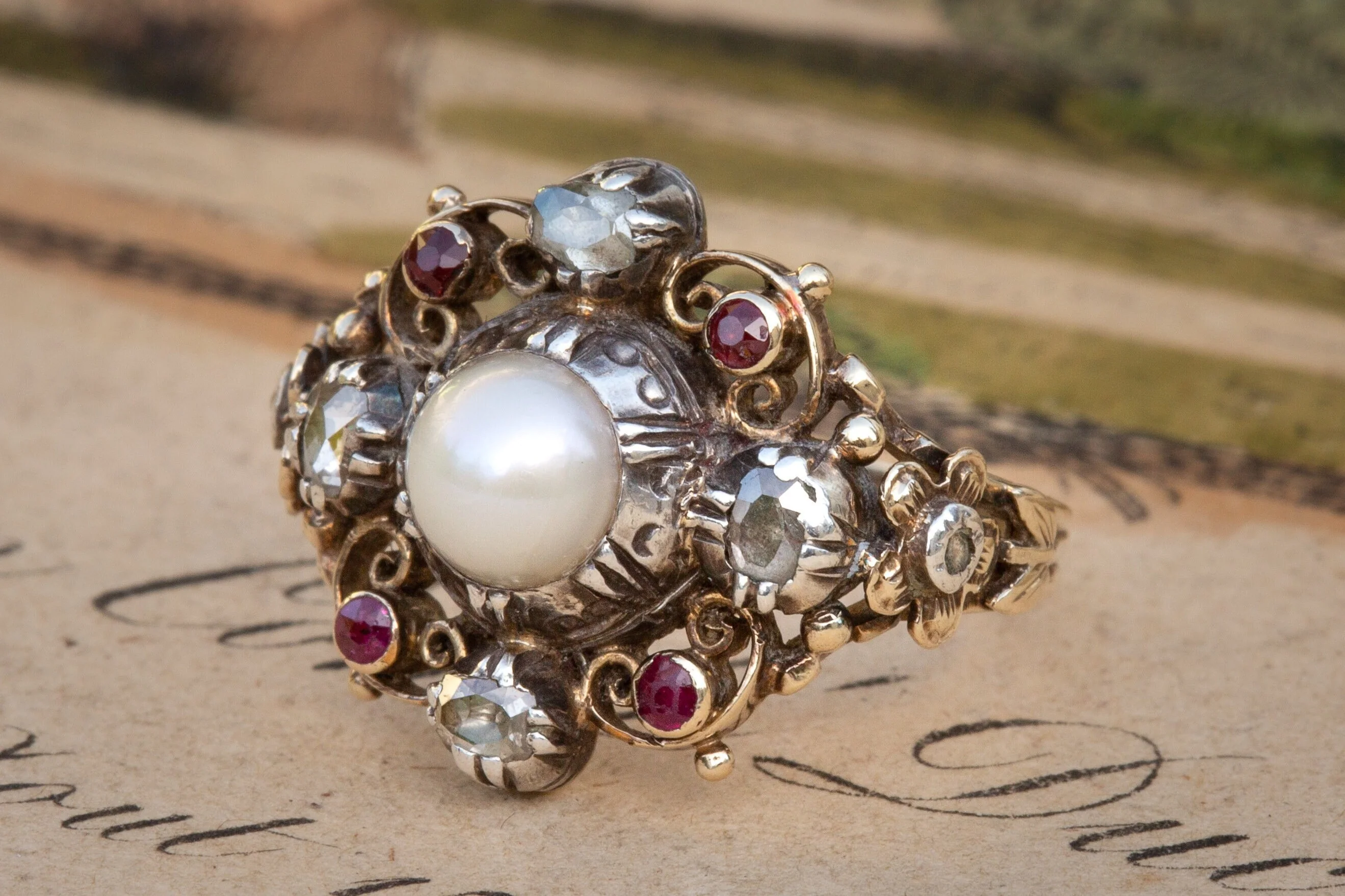
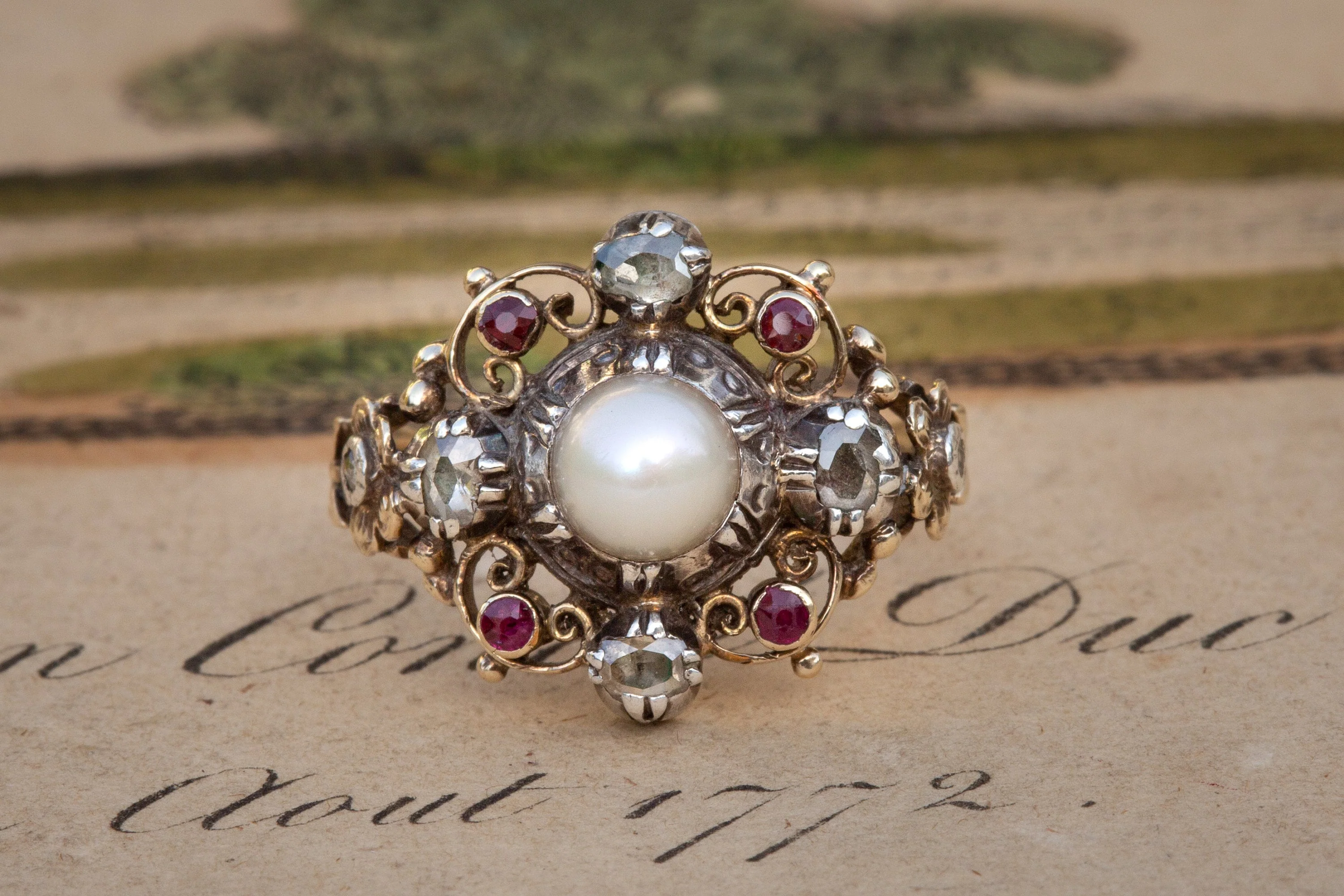
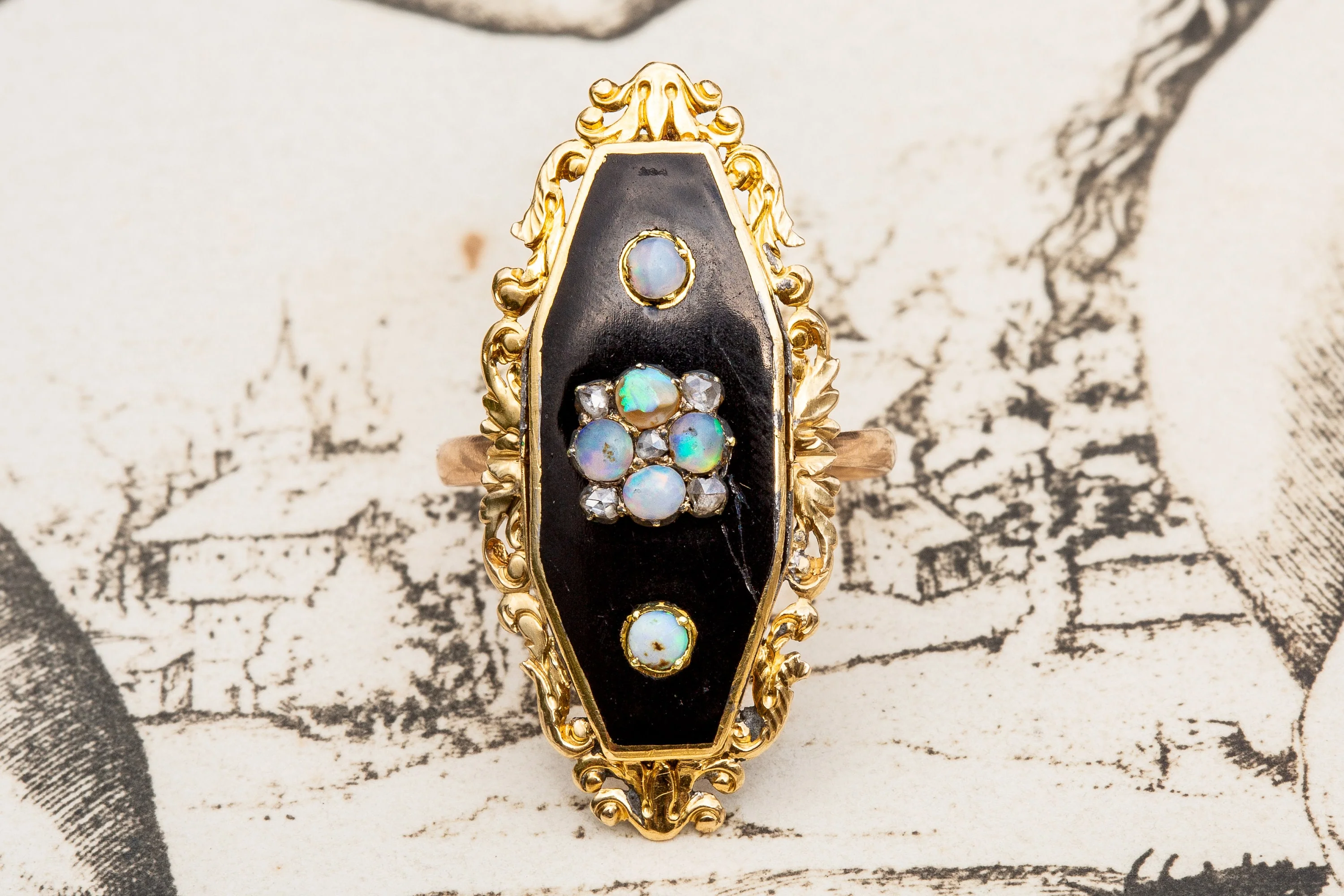
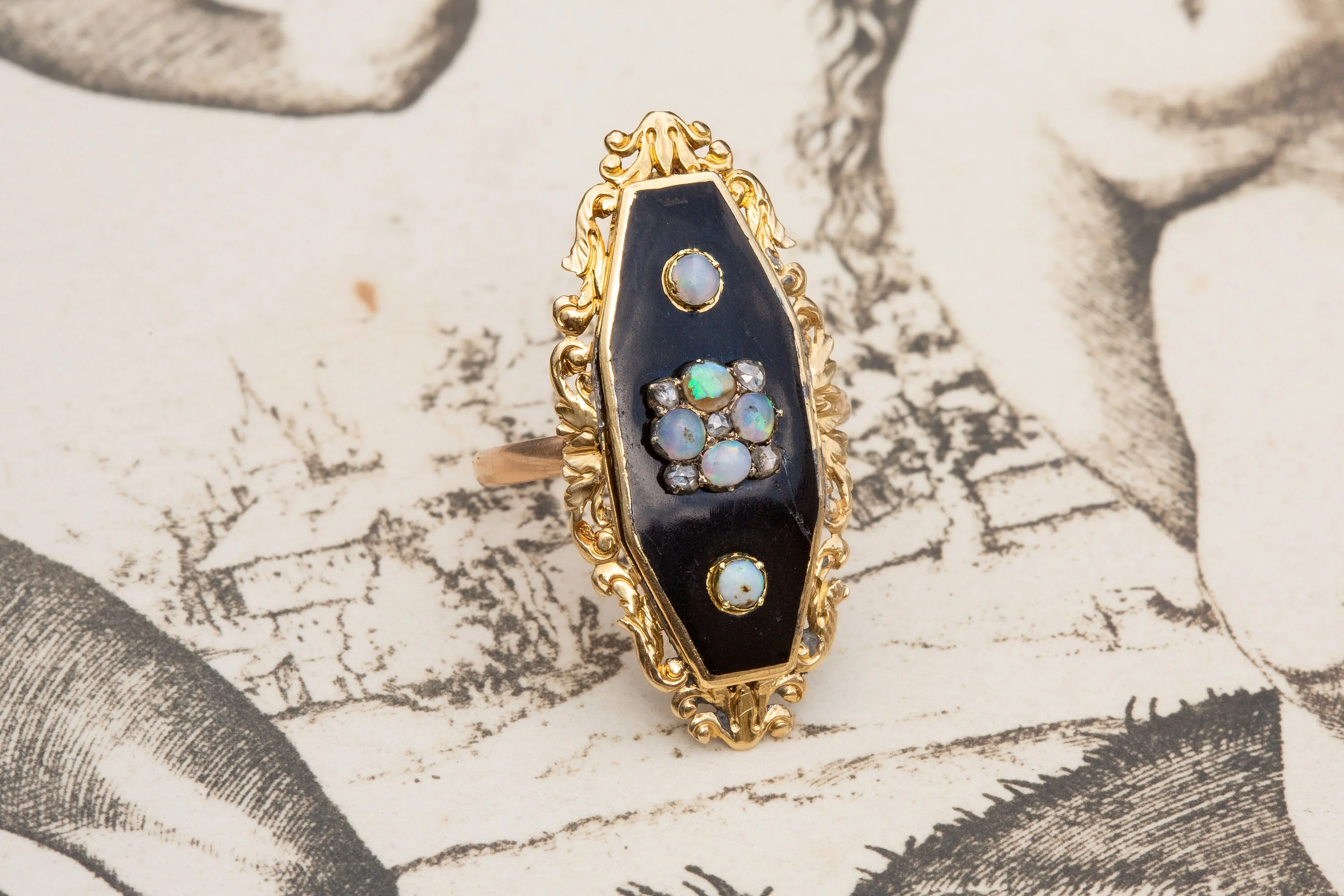
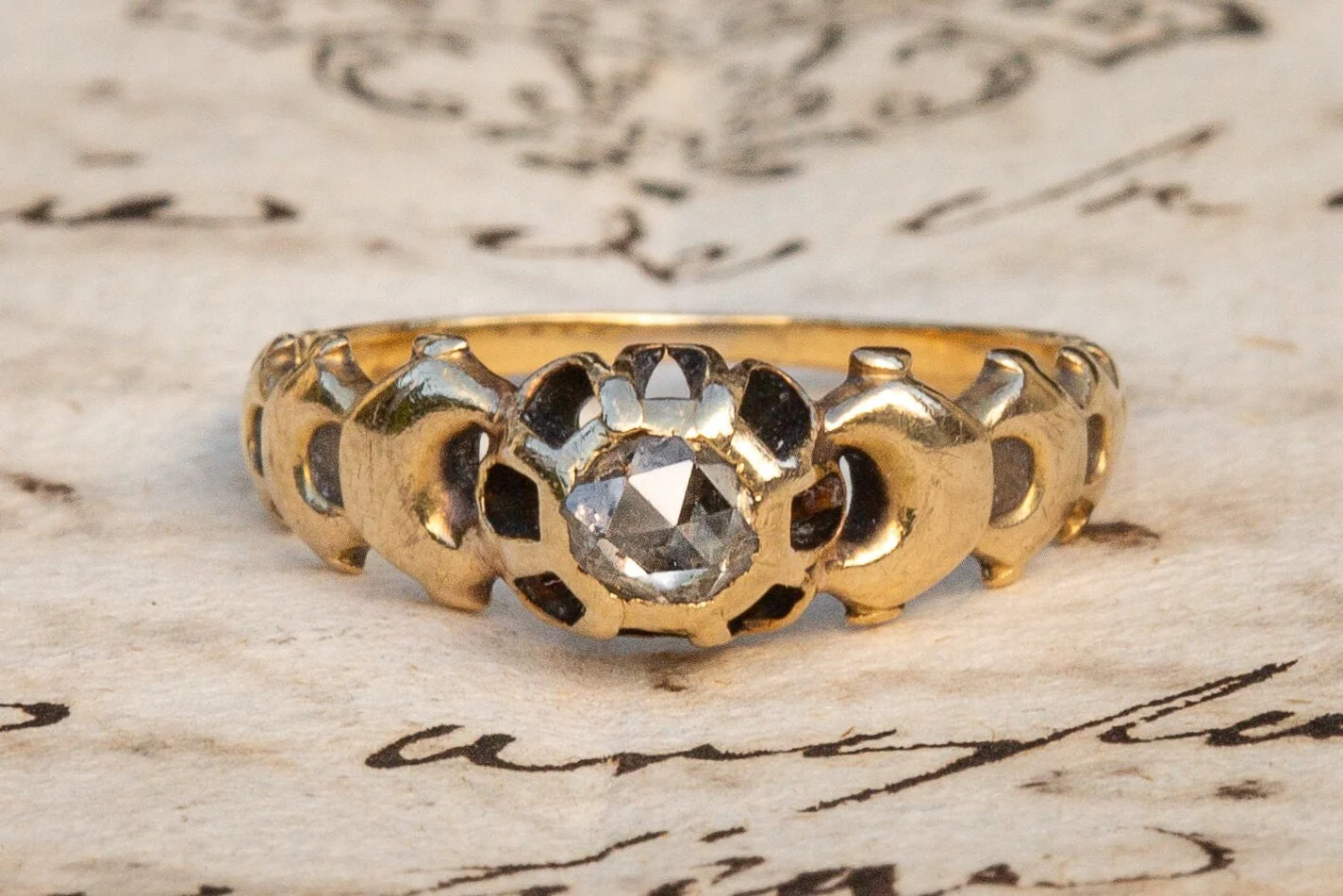
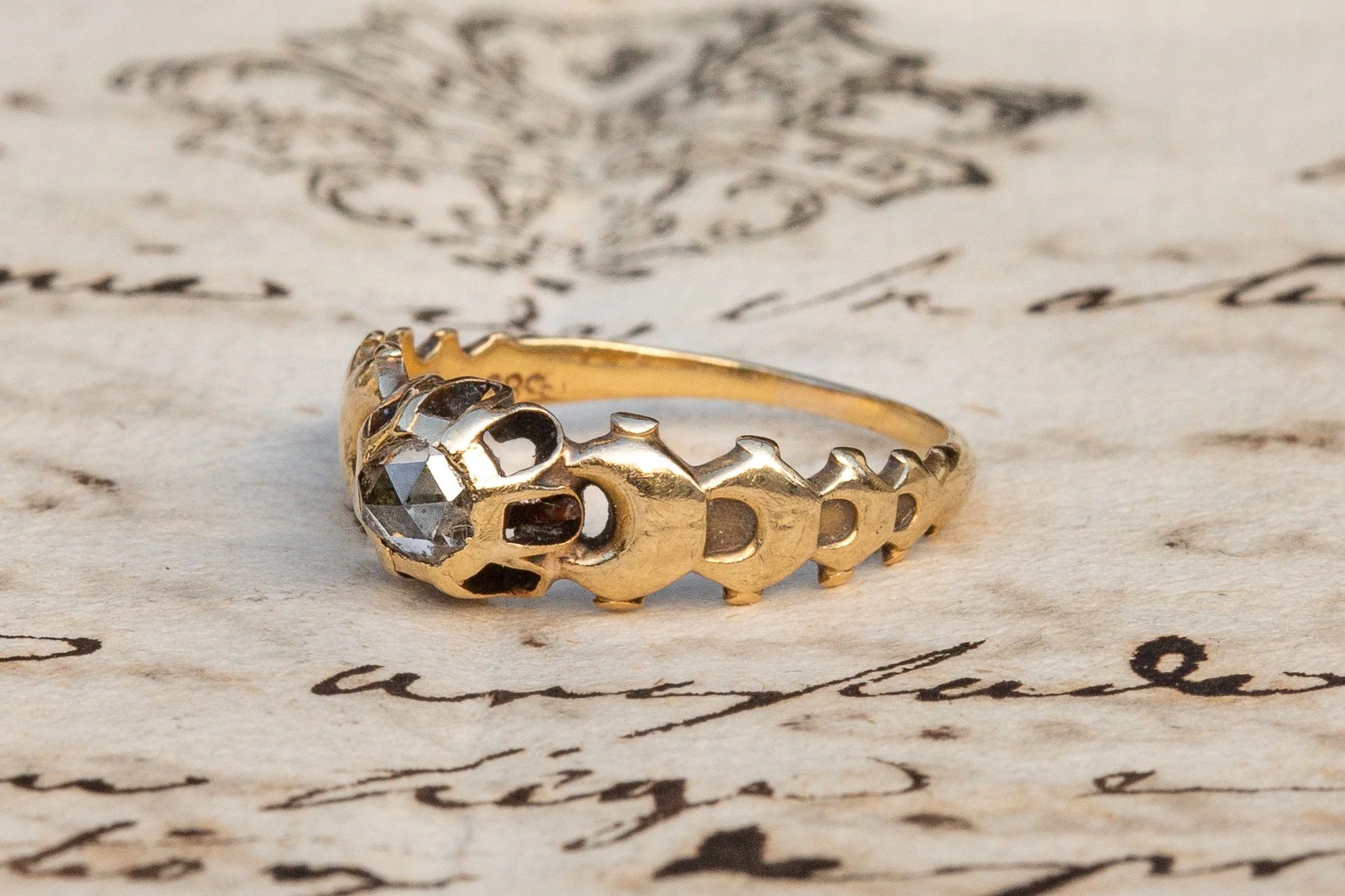
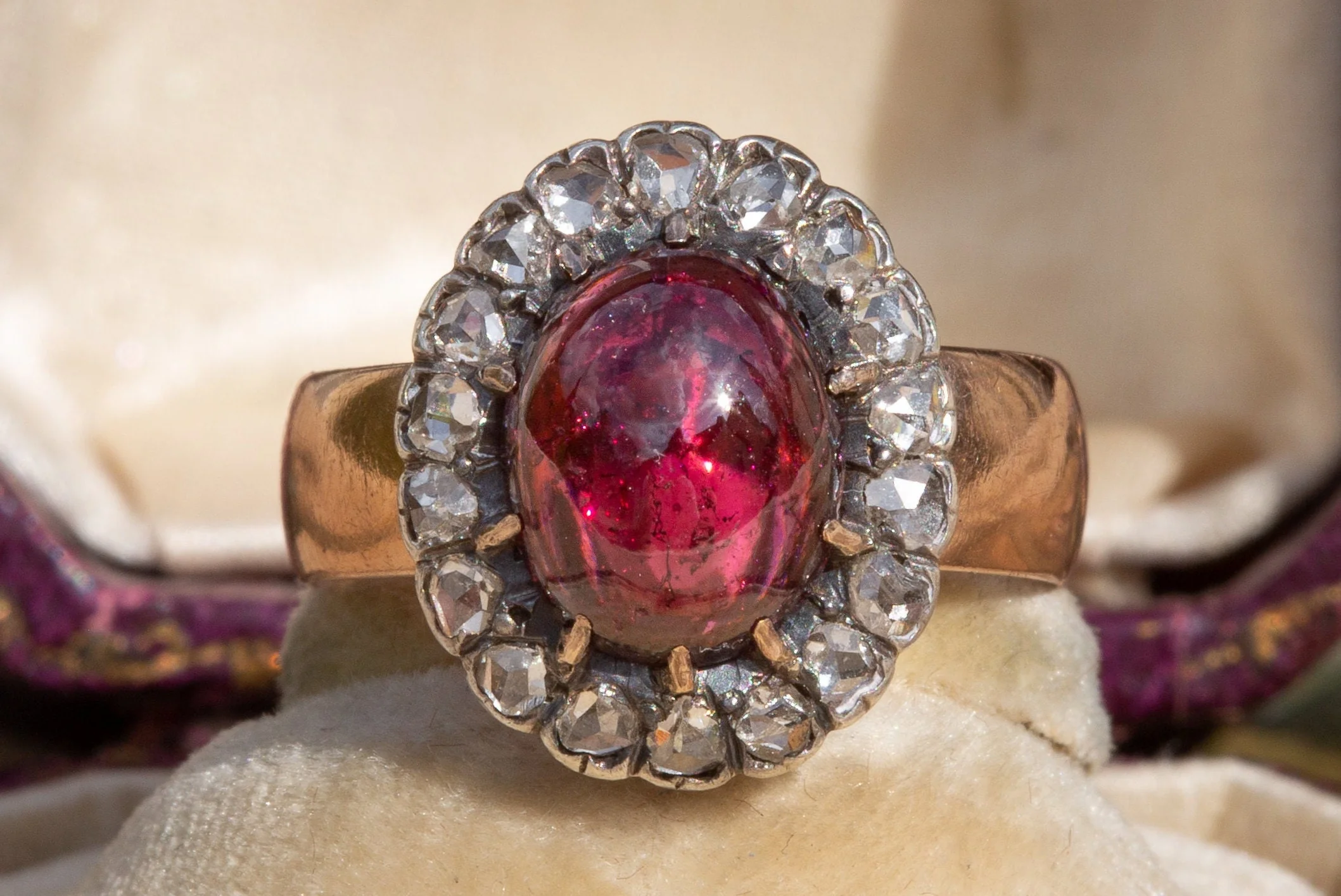
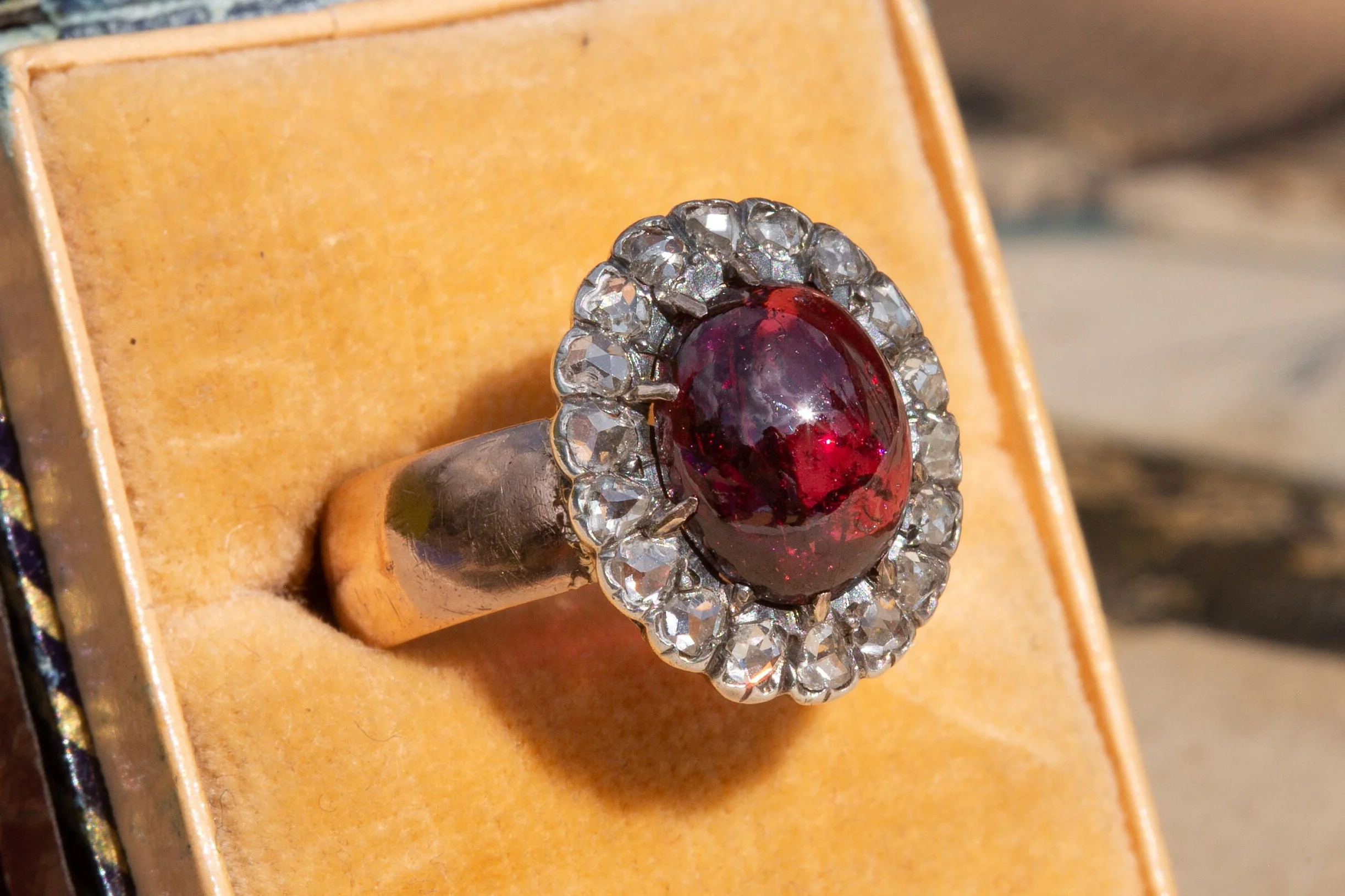
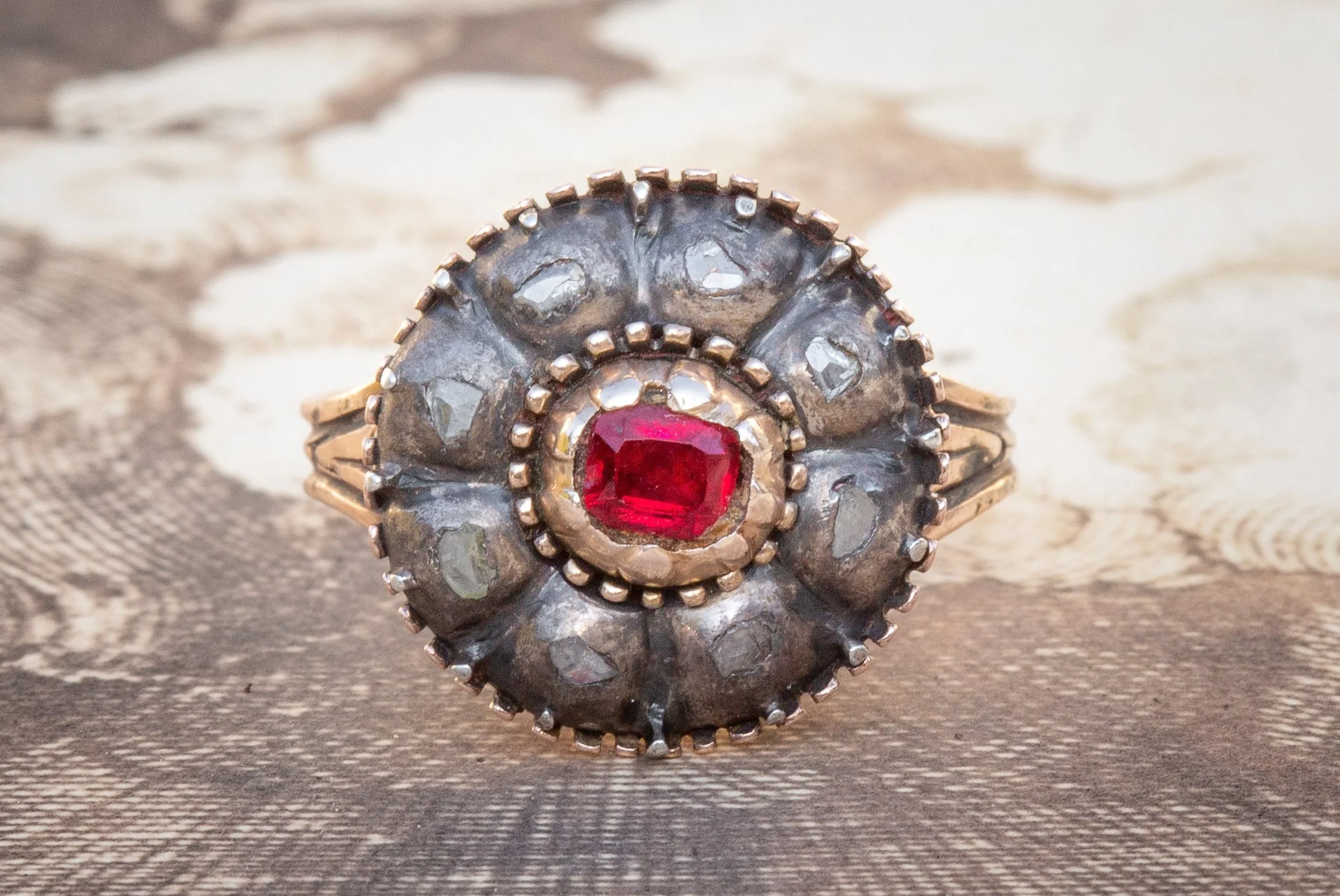
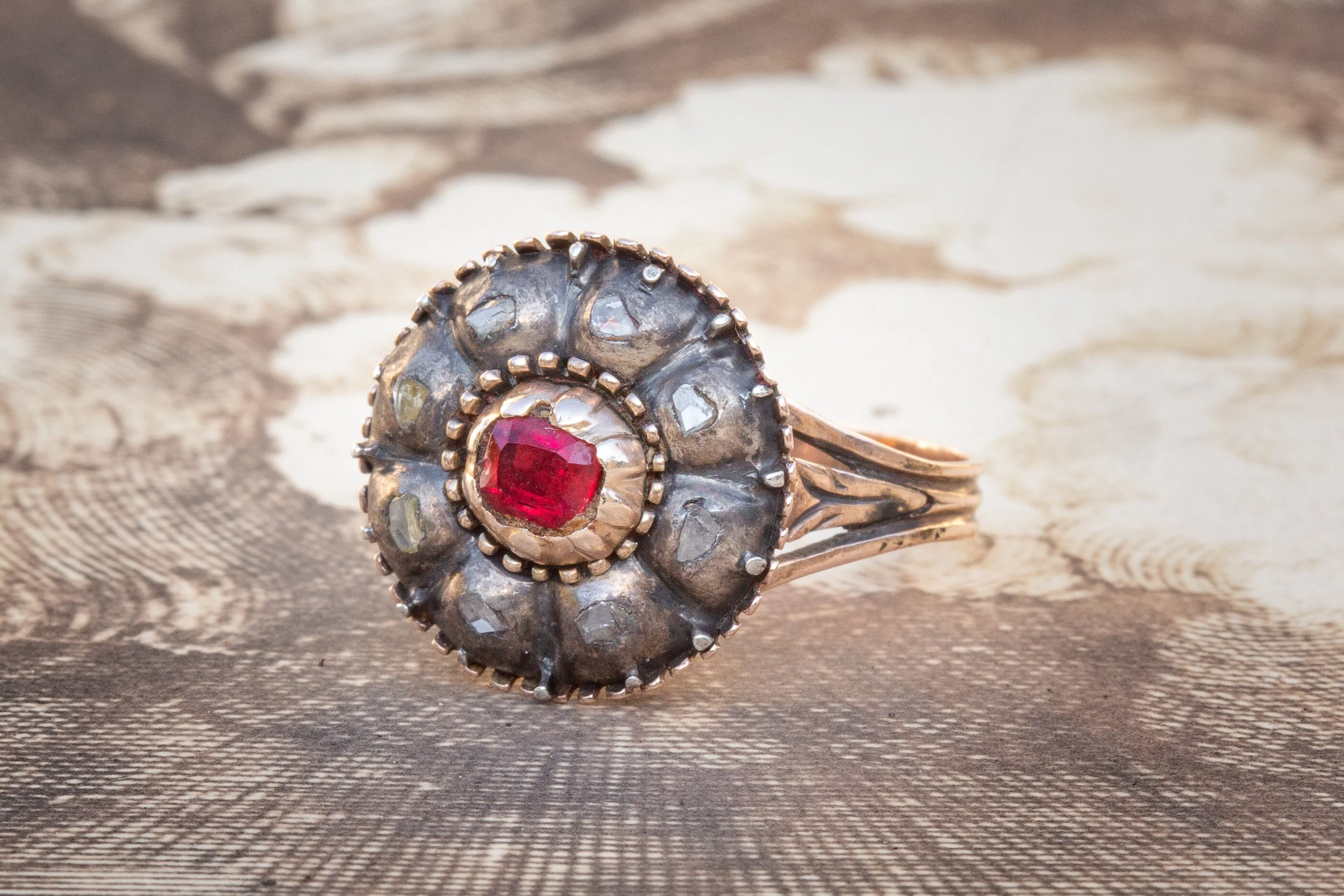
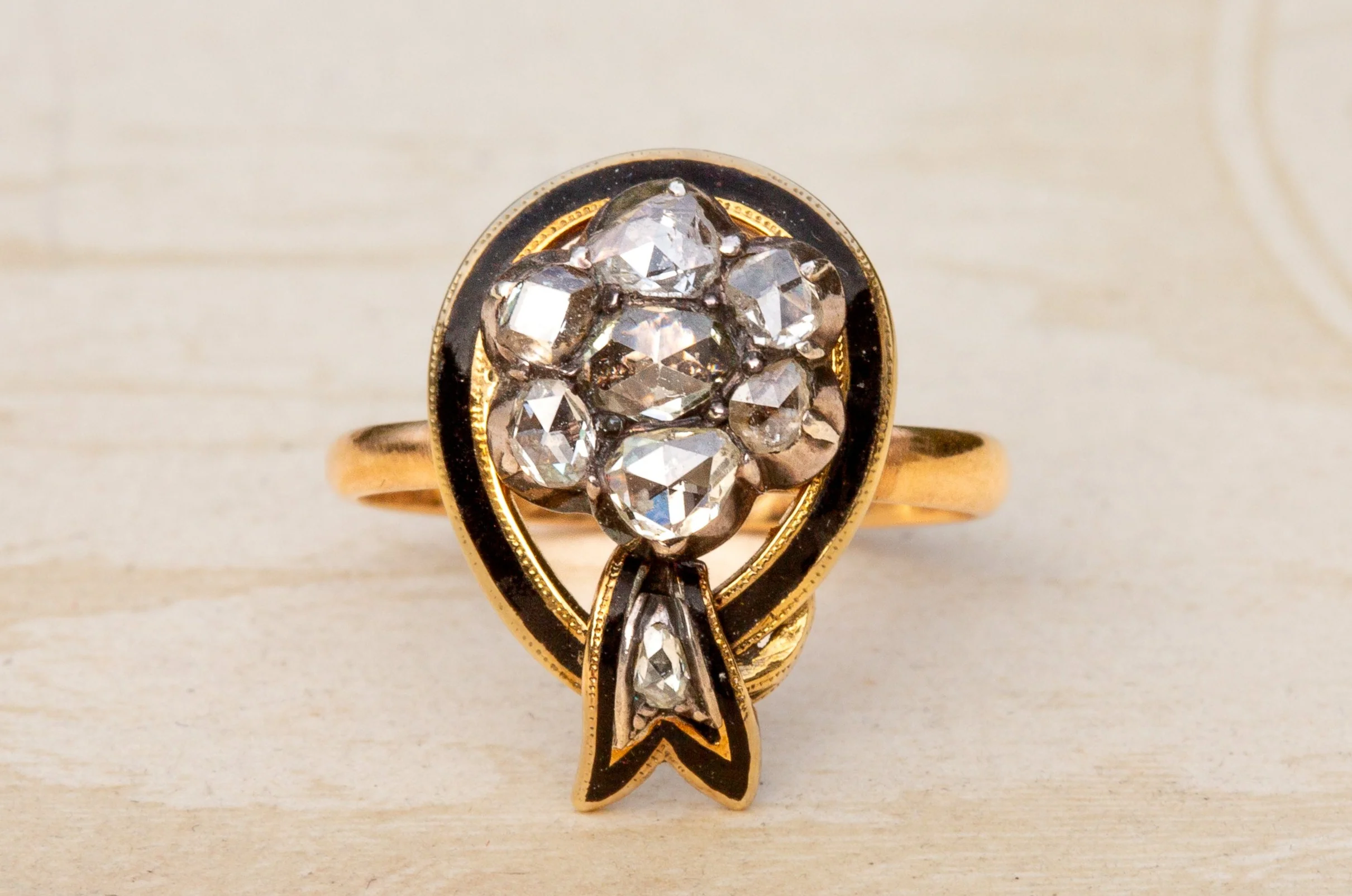
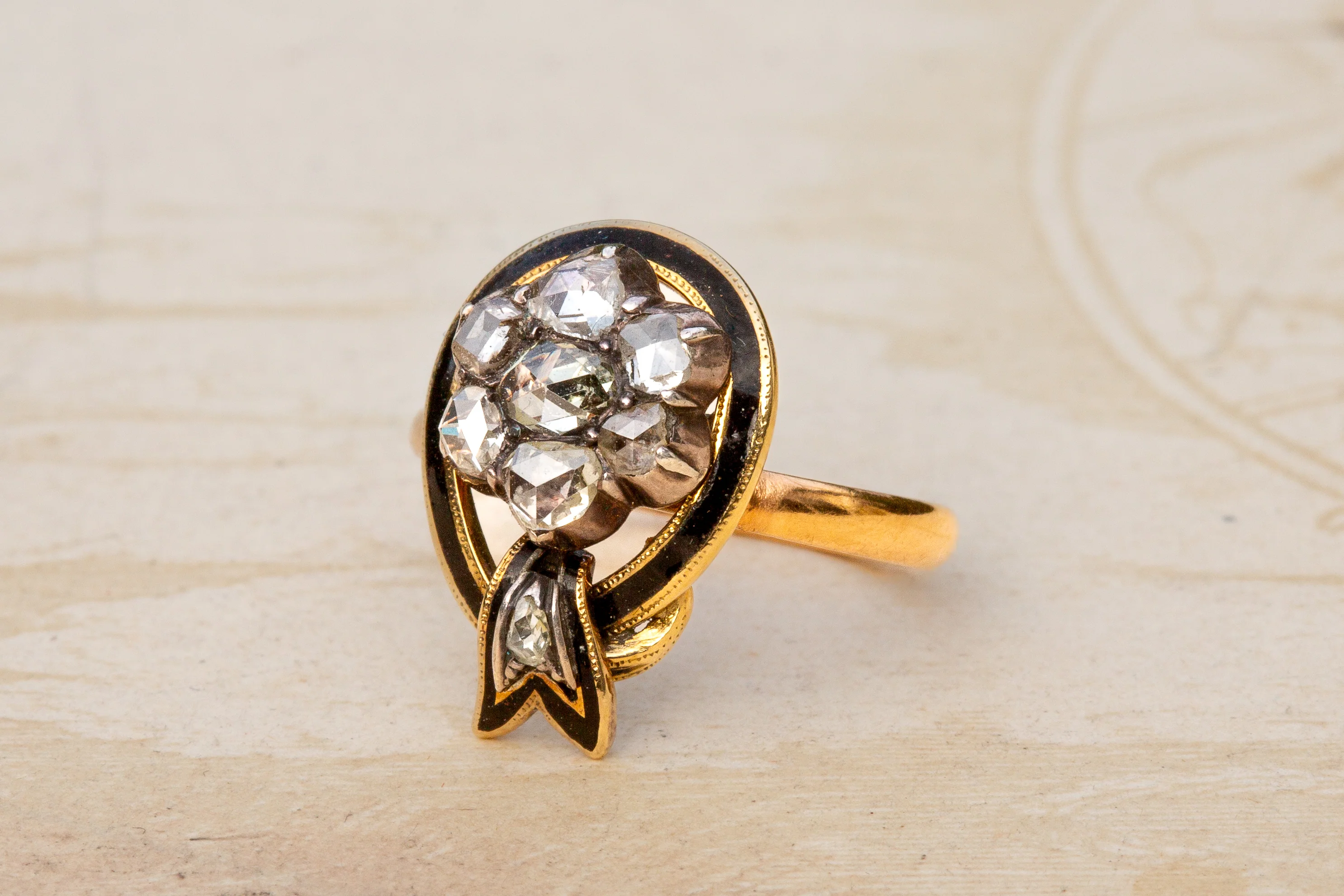
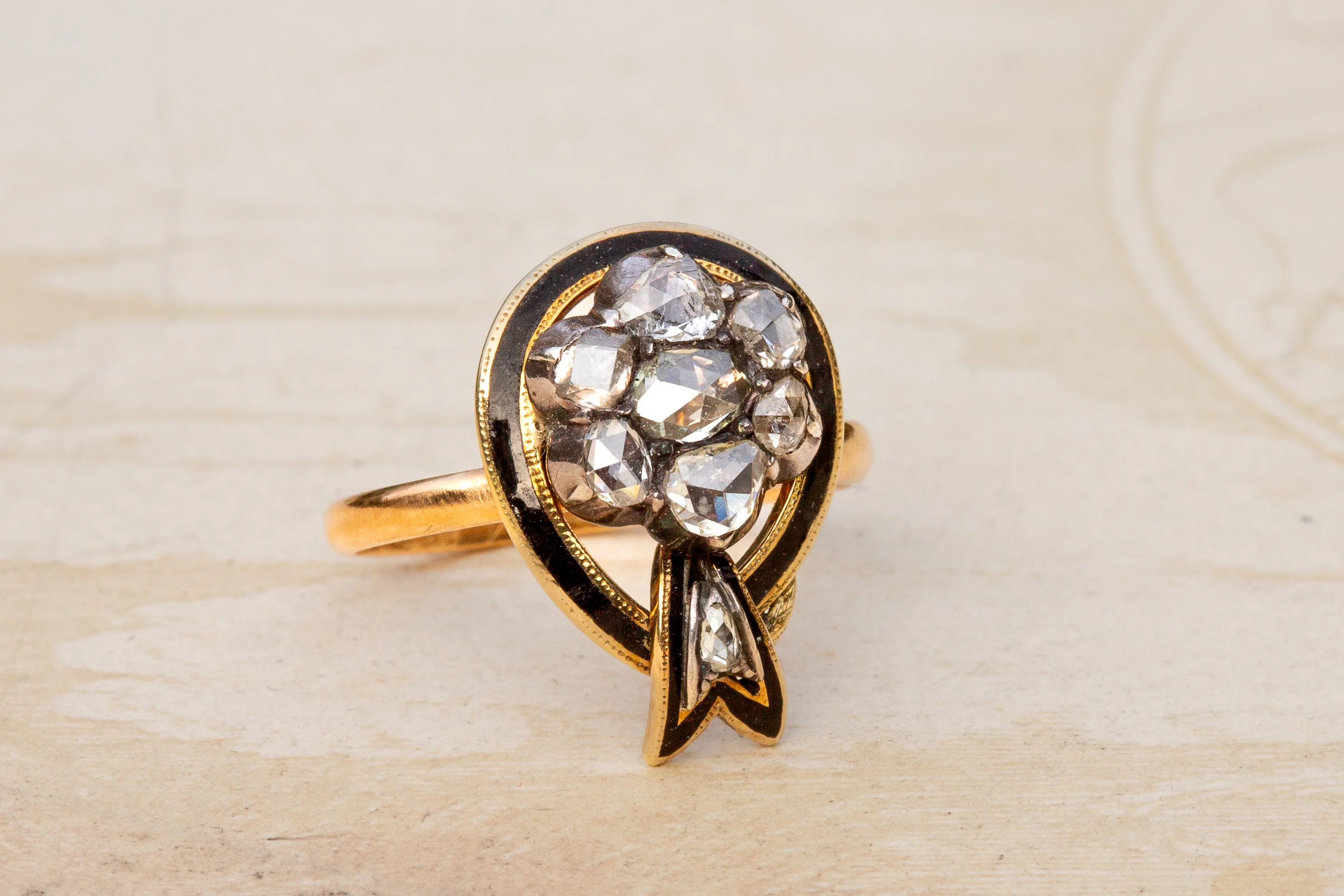
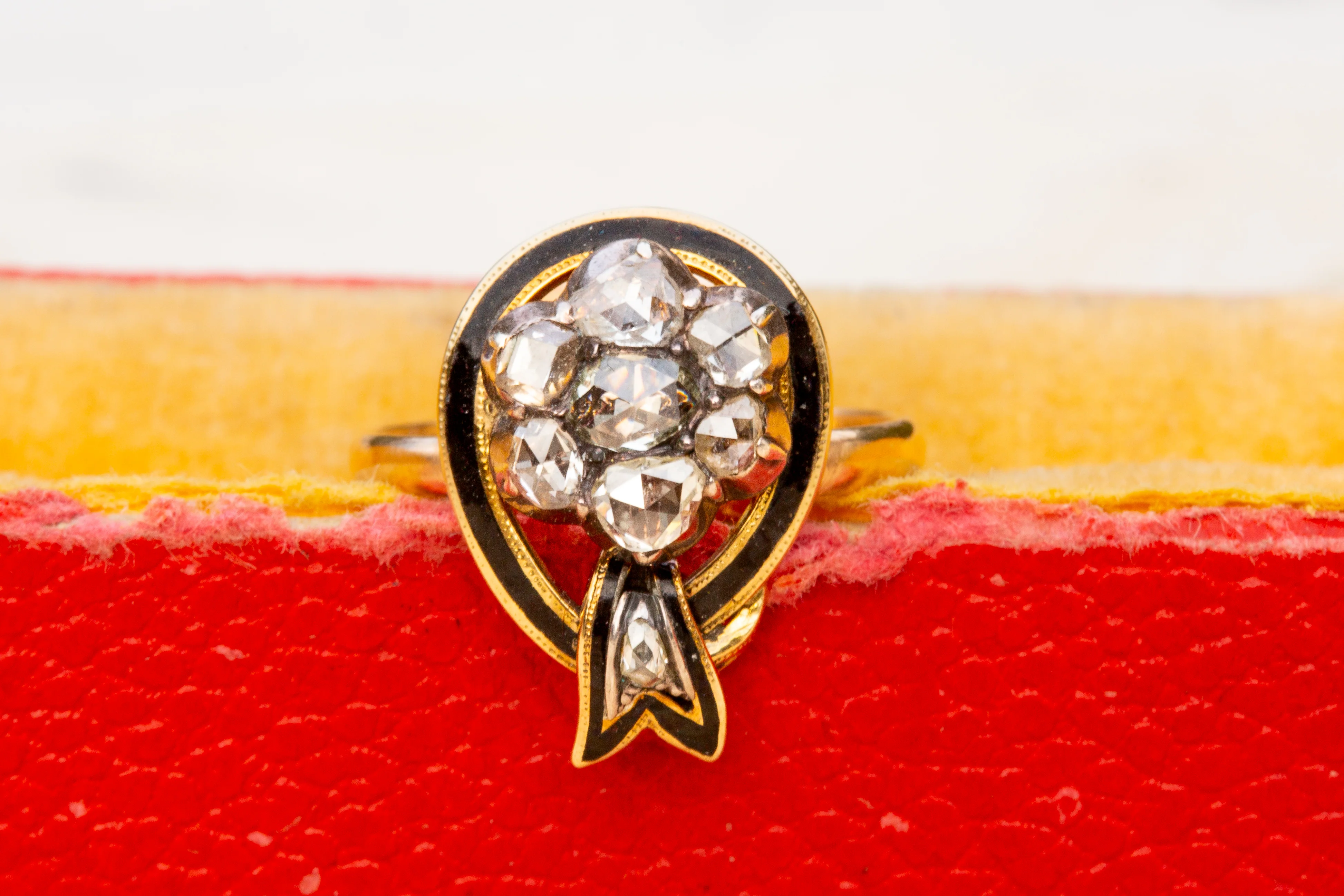
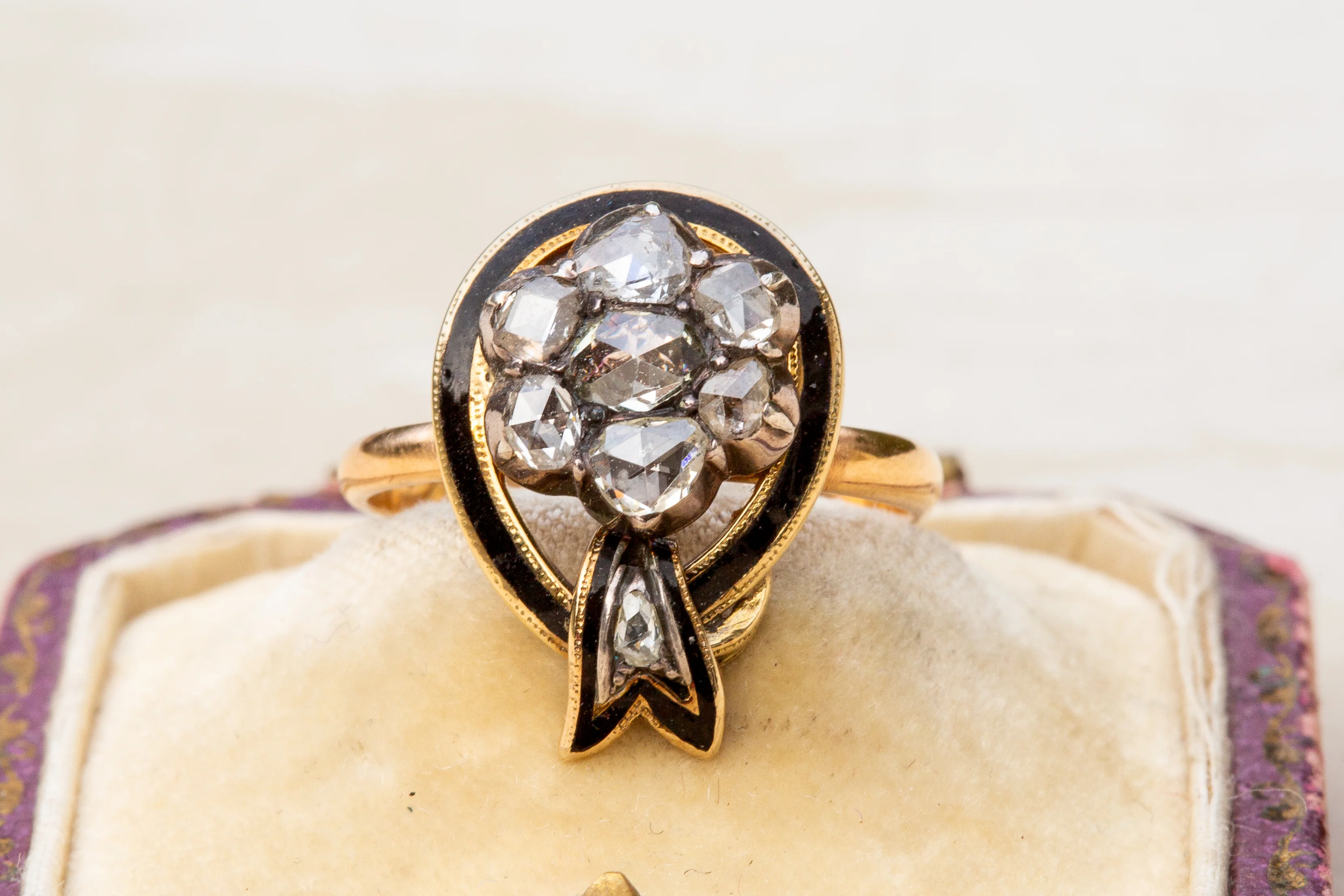
In this stunning example, a daisy cluster of 7 rose cut diamonds is set in closed-back and crimpled collet silver mountings. The comet tail streaks away from the head and is also set with another diamond. The comet is surrounded by black enamel to enhance the juxtaposition between the sparkle of the comet and the the night sky. This piece started life as a lace pin and has later been converted into a ring, the inner band is also engraved with ‘H.B & Y.L 15.9.51’, likely to be the year of the conversion. The diamond bezel tests as 18K gold, whilst the band tests as 15K.
UK size M, US size 6, 3.55g
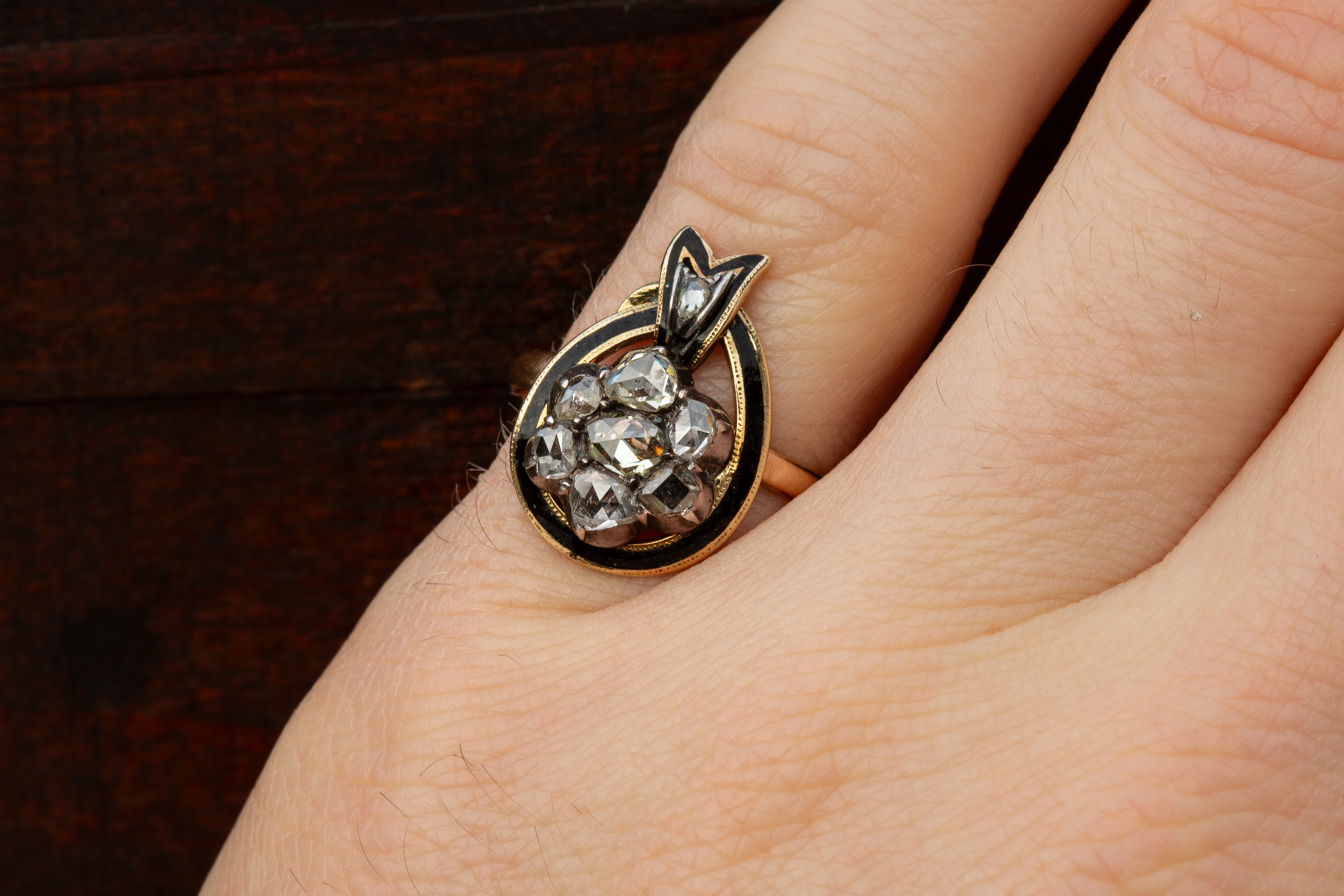
Ring measures 17mm north to south. The diamond cluster measures 10mm across. Central rose cut diamond in the cluster measures 4.1mm x 3.3mm.
The royal astronomer Sir Edmund Halley believed that the two dozen reported comet sightings between 1531 and 1682 were actually one single comet, which circled the sun every 75 years. Although he did not live to see it, he predicted accurately it’s return in 1759 and and the comet was soon named after the astrologist. Soon after its return in 1835, inspired Georgian jewellers created Halley’s Comet pins to commemorate its reappearance.
In this stunning example, a daisy cluster of 7 rose cut diamonds is set in closed-back and crimpled collet silver mountings. The comet tail streaks away from the head and is also set with another diamond. The comet is surrounded by black enamel to enhance the juxtaposition between the sparkle of the comet and the the night sky. This piece started life as a lace pin and has later been converted into a ring, the inner band is also engraved with ‘H.B & Y.L 15.9.51’, likely to be the year of the conversion. The diamond bezel tests as 18K gold, whilst the band tests as 15K.
UK size M, US size 6, 3.55g
Ring measures 17mm north to south. The diamond cluster measures 10mm across. Central rose cut diamond in the cluster measures 4.1mm x 3.3mm.
$3,102.26
Georgian Halley’s Comet Diamond Cluster—
$3,102.26
Product Information
Product Information
Shipping & Returns
Shipping & Returns
Description
This ornate diamond cluster was circa 1835, just after the sighting of Halley’s comet, a frequently recurring comet whose appearances have been recorded by humans since 240 BCE. Both the Georgians and Victorians had an affinity for symbolism and meaning. They often created jewellery to represent important life experiences and the rise in popularity of Halley’s comet jewellery is a perfect example of this.
The royal astronomer Sir Edmund Halley believed that the two dozen reported comet sightings between 1531 and 1682 were actually one single comet, which circled the sun every 75 years. Although he did not live to see it, he predicted accurately it’s return in 1759 and and the comet was soon named after the astrologist. Soon after its return in 1835, inspired Georgian jewellers created Halley’s Comet pins to commemorate its reappearance.
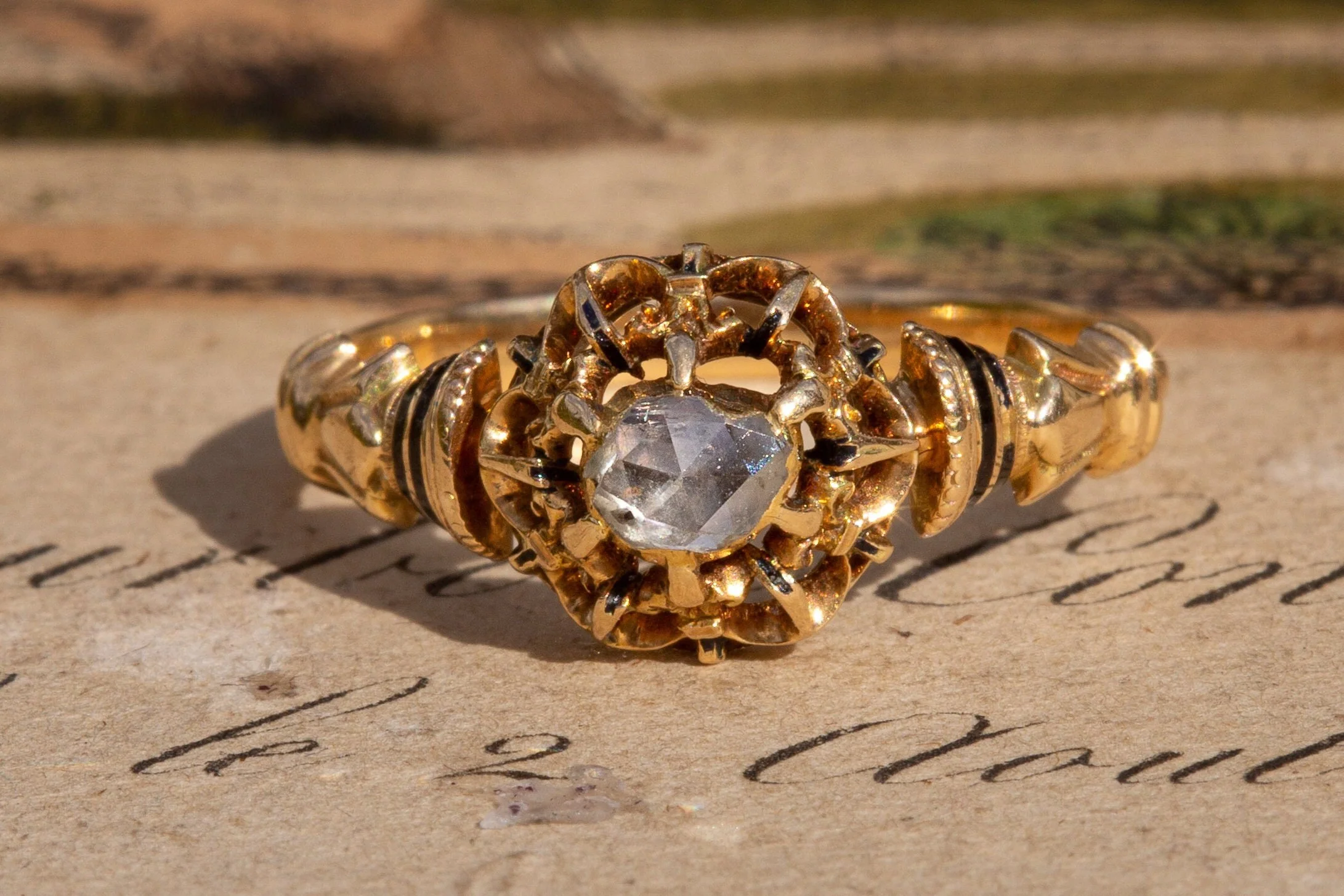
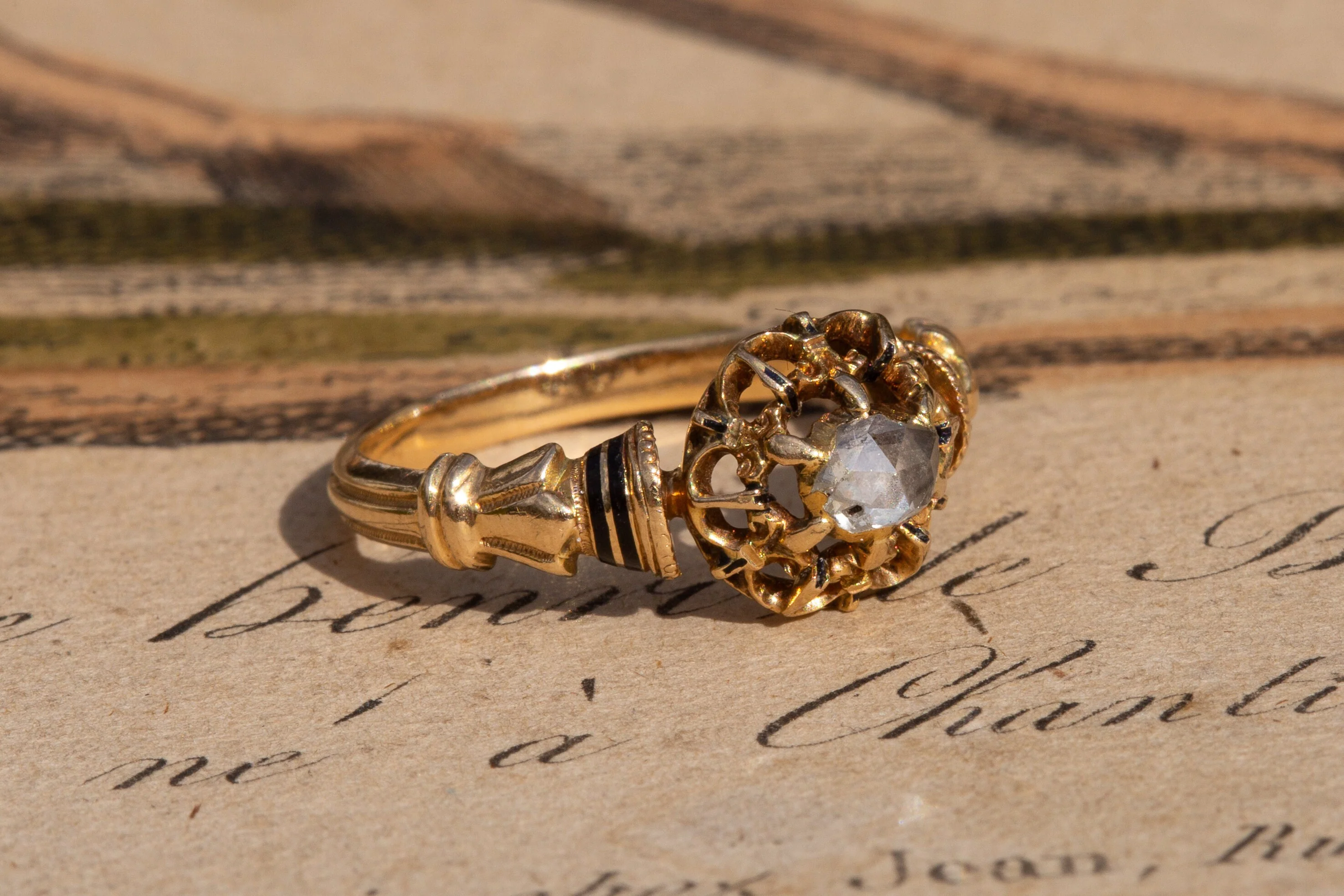
In this stunning example, a daisy cluster of 7 rose cut diamonds is set in closed-back and crimpled collet silver mountings. The comet tail streaks away from the head and is also set with another diamond. The comet is surrounded by black enamel to enhance the juxtaposition between the sparkle of the comet and the the night sky. This piece started life as a lace pin and has later been converted into a ring, the inner band is also engraved with ‘H.B & Y.L 15.9.51’, likely to be the year of the conversion. The diamond bezel tests as 18K gold, whilst the band tests as 15K.
UK size M, US size 6, 3.55g
Ring measures 17mm north to south. The diamond cluster measures 10mm across. Central rose cut diamond in the cluster measures 4.1mm x 3.3mm.
The royal astronomer Sir Edmund Halley believed that the two dozen reported comet sightings between 1531 and 1682 were actually one single comet, which circled the sun every 75 years. Although he did not live to see it, he predicted accurately it’s return in 1759 and and the comet was soon named after the astrologist. Soon after its return in 1835, inspired Georgian jewellers created Halley’s Comet pins to commemorate its reappearance.
In this stunning example, a daisy cluster of 7 rose cut diamonds is set in closed-back and crimpled collet silver mountings. The comet tail streaks away from the head and is also set with another diamond. The comet is surrounded by black enamel to enhance the juxtaposition between the sparkle of the comet and the the night sky. This piece started life as a lace pin and has later been converted into a ring, the inner band is also engraved with ‘H.B & Y.L 15.9.51’, likely to be the year of the conversion. The diamond bezel tests as 18K gold, whilst the band tests as 15K.
UK size M, US size 6, 3.55g
Ring measures 17mm north to south. The diamond cluster measures 10mm across. Central rose cut diamond in the cluster measures 4.1mm x 3.3mm.