🎉 Up to 70% Off Selected ItemsShop Sale
Seljuk Dynasty Gold Islamic Ring
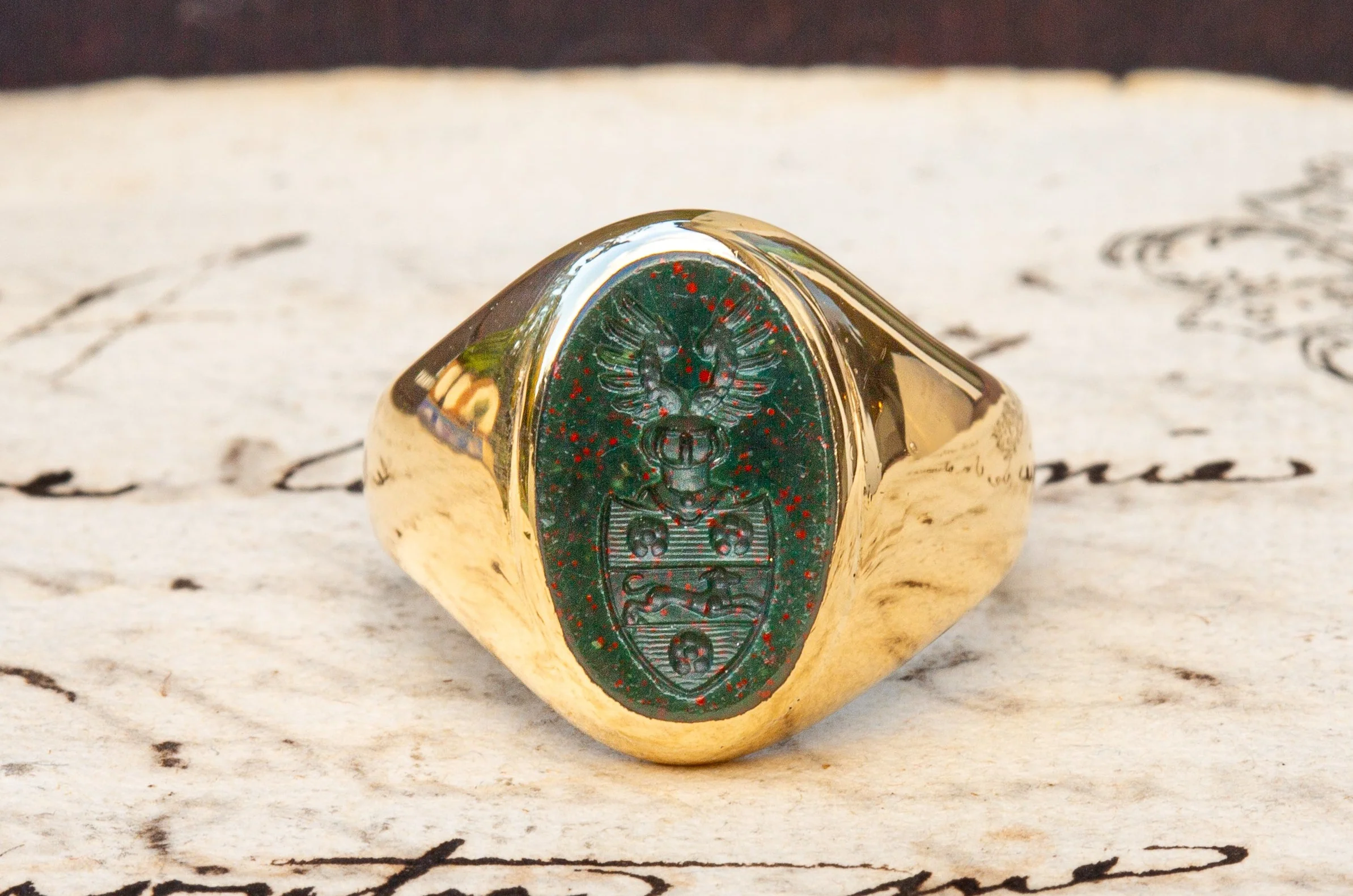
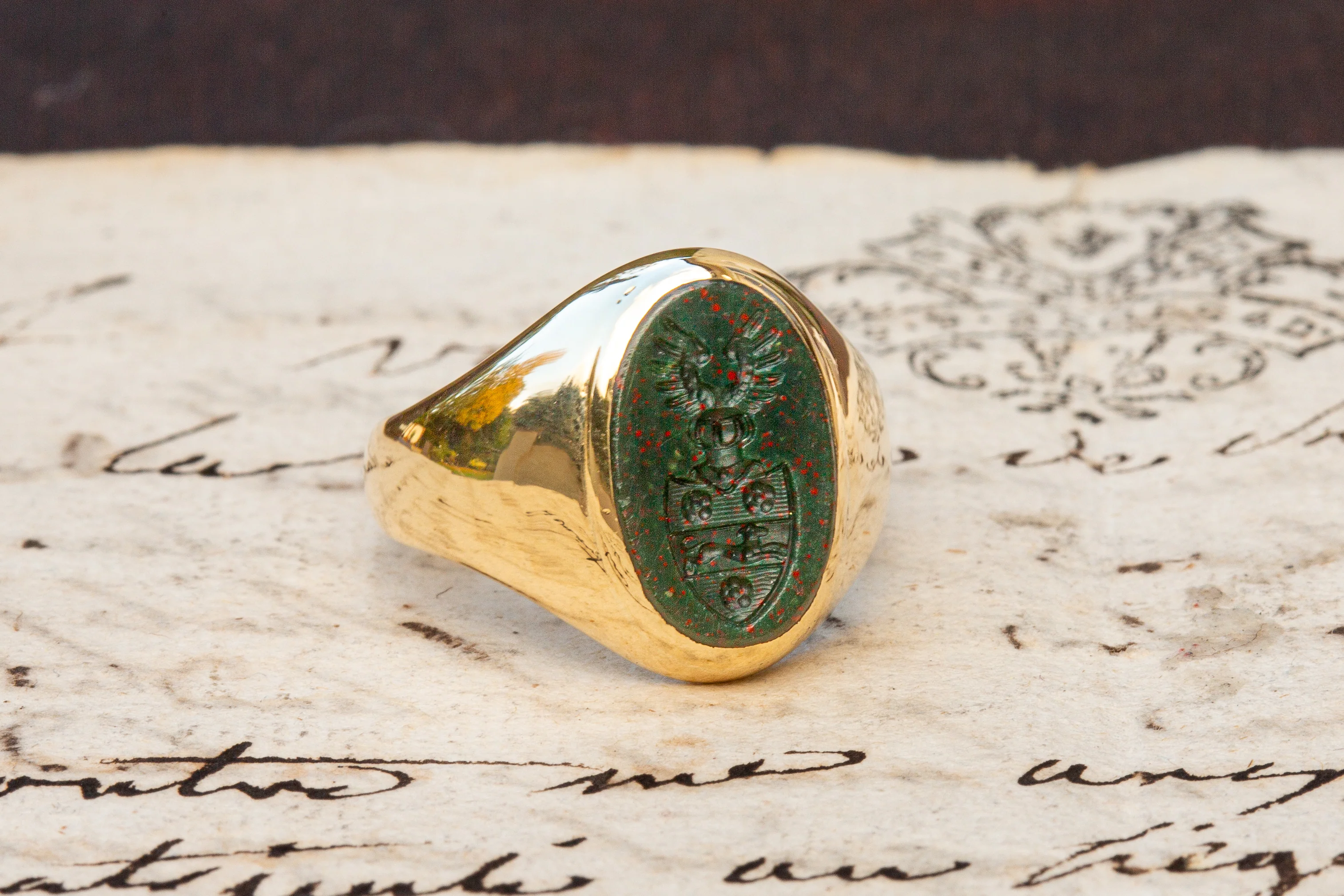
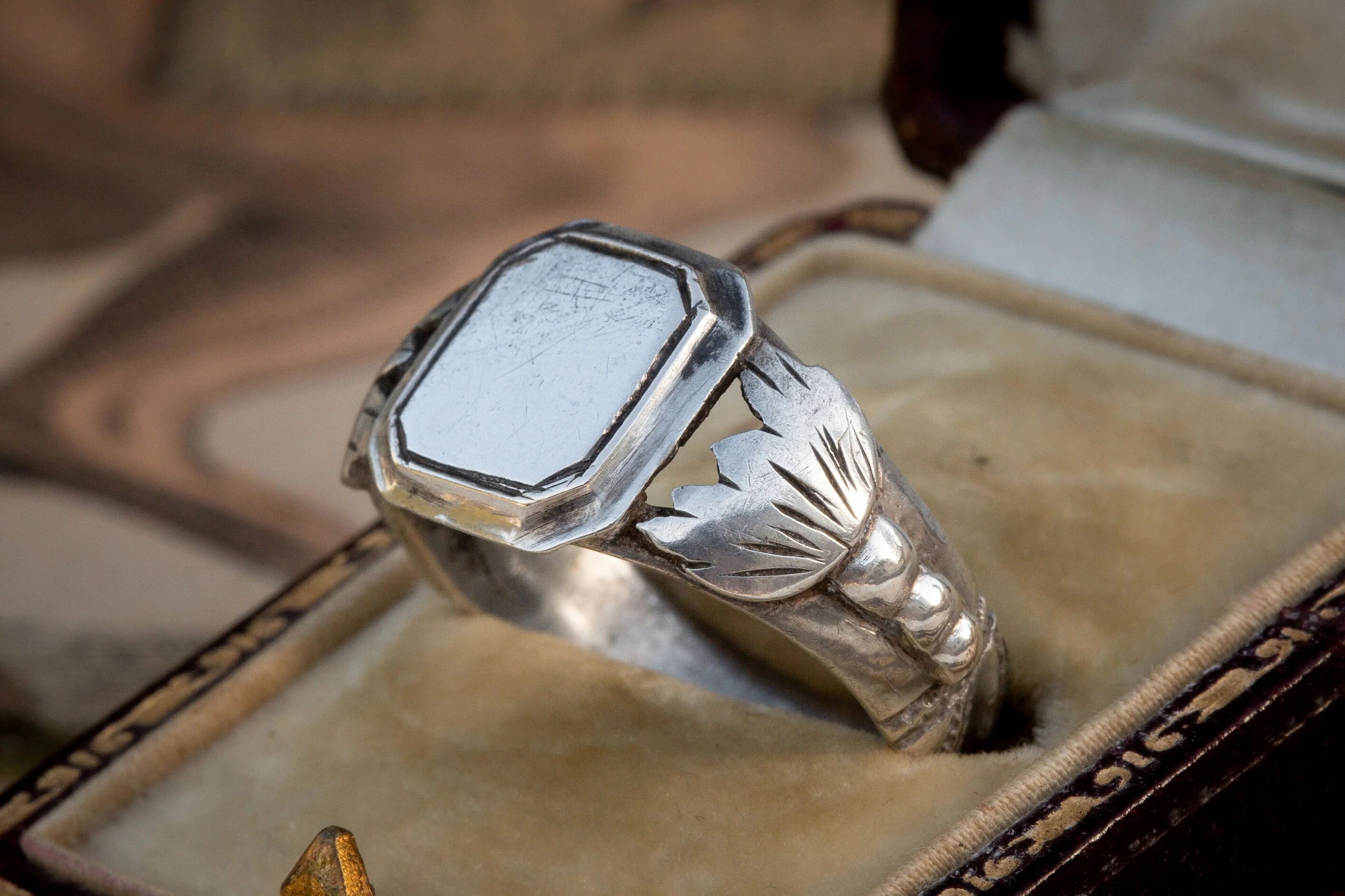
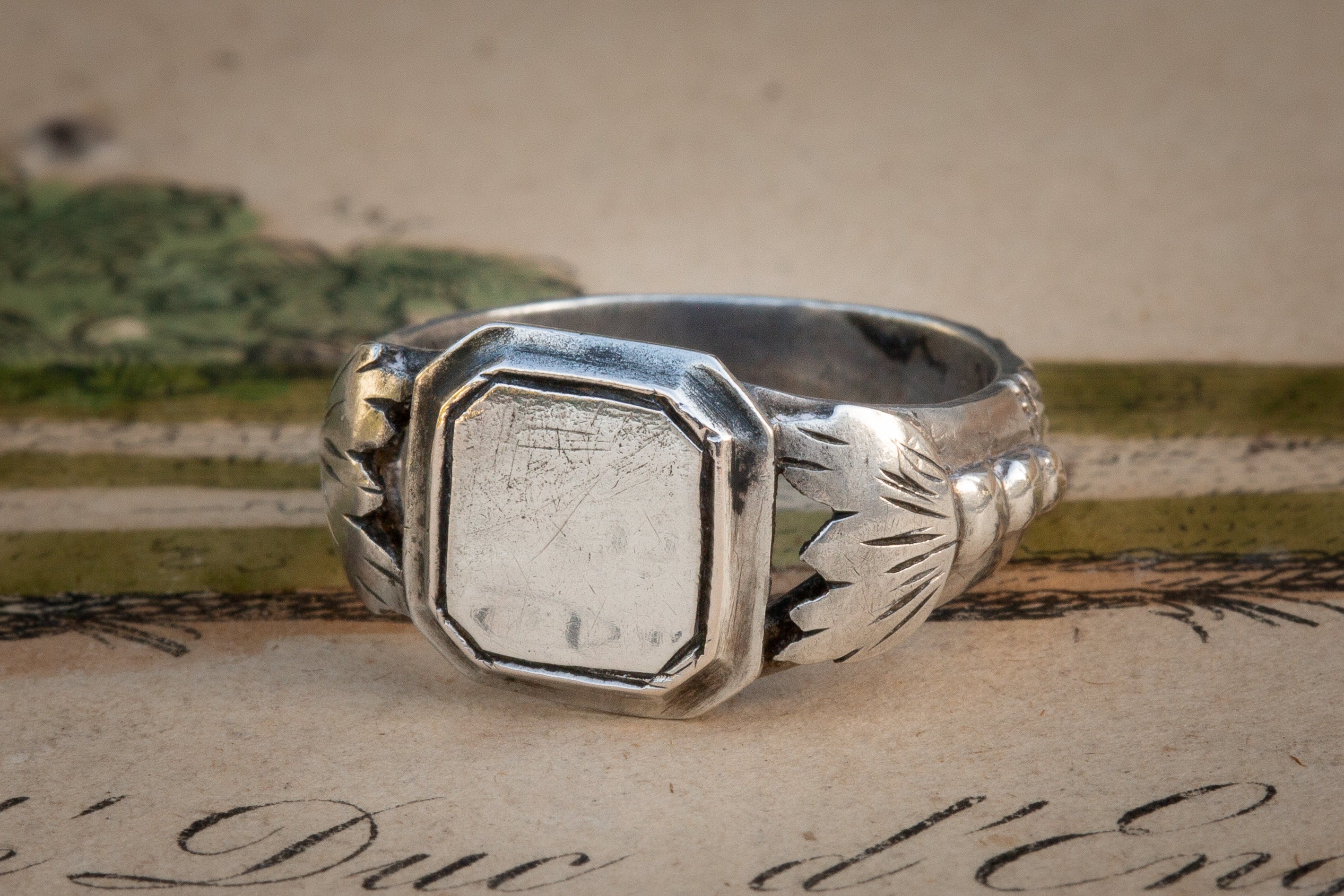
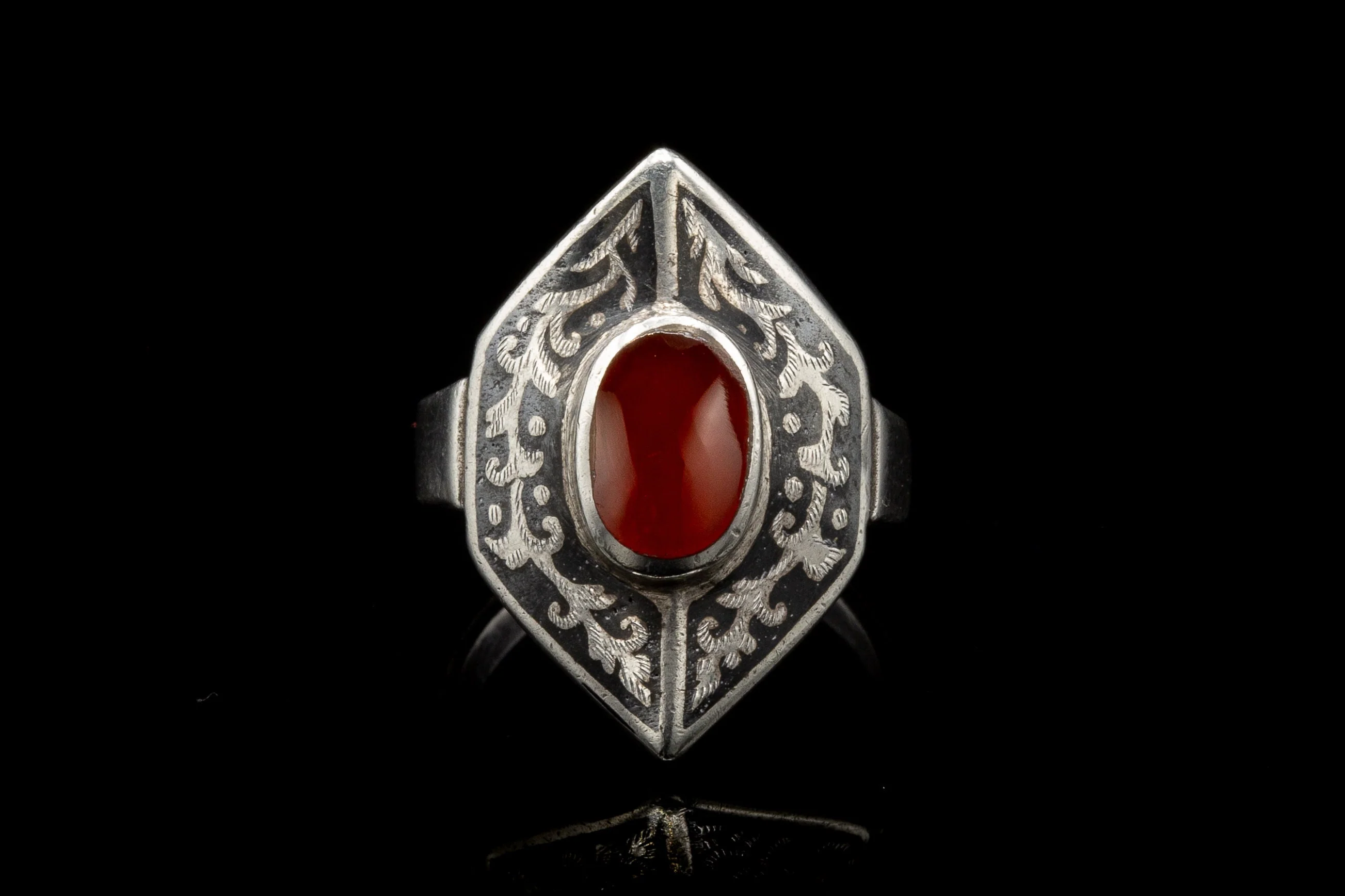
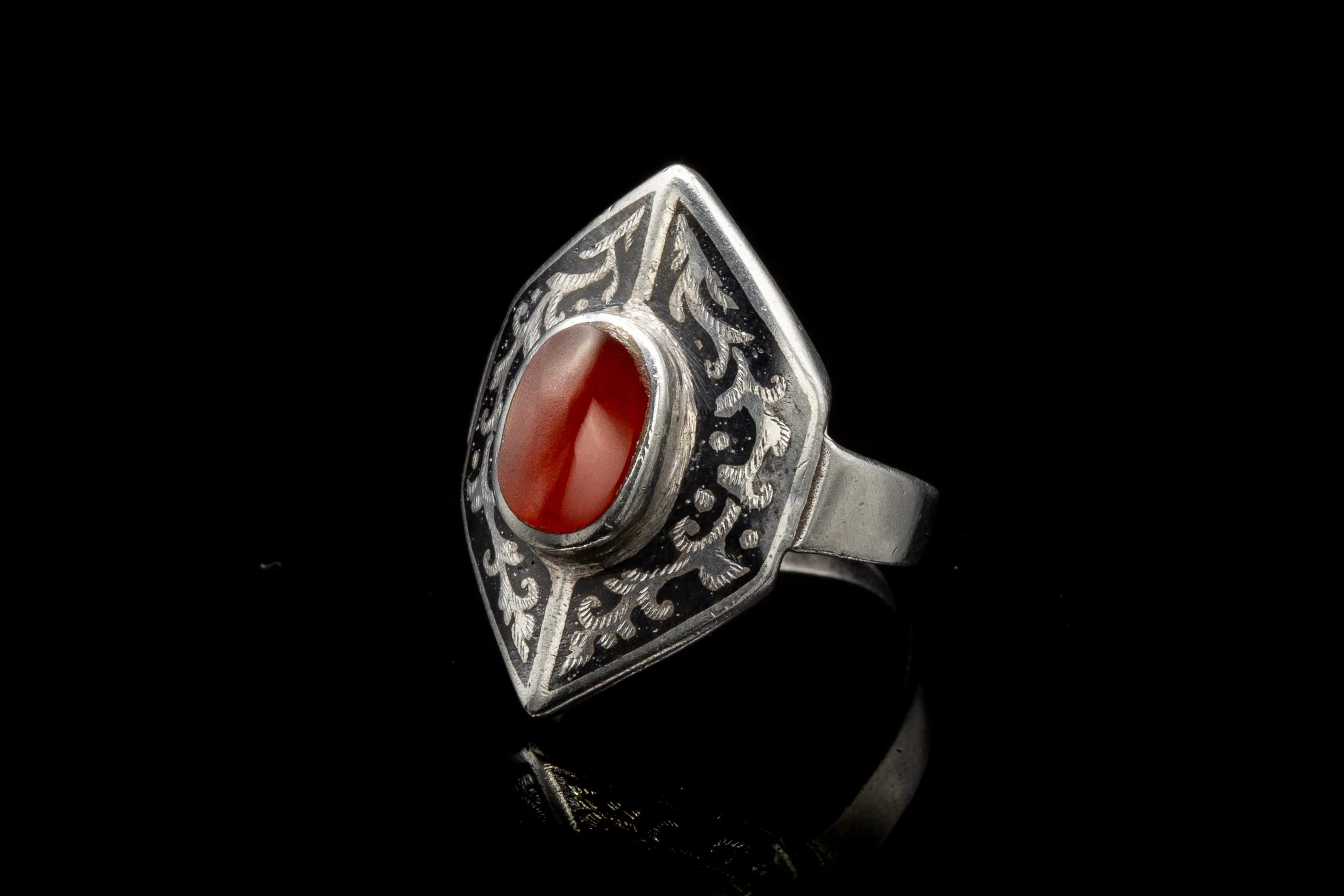
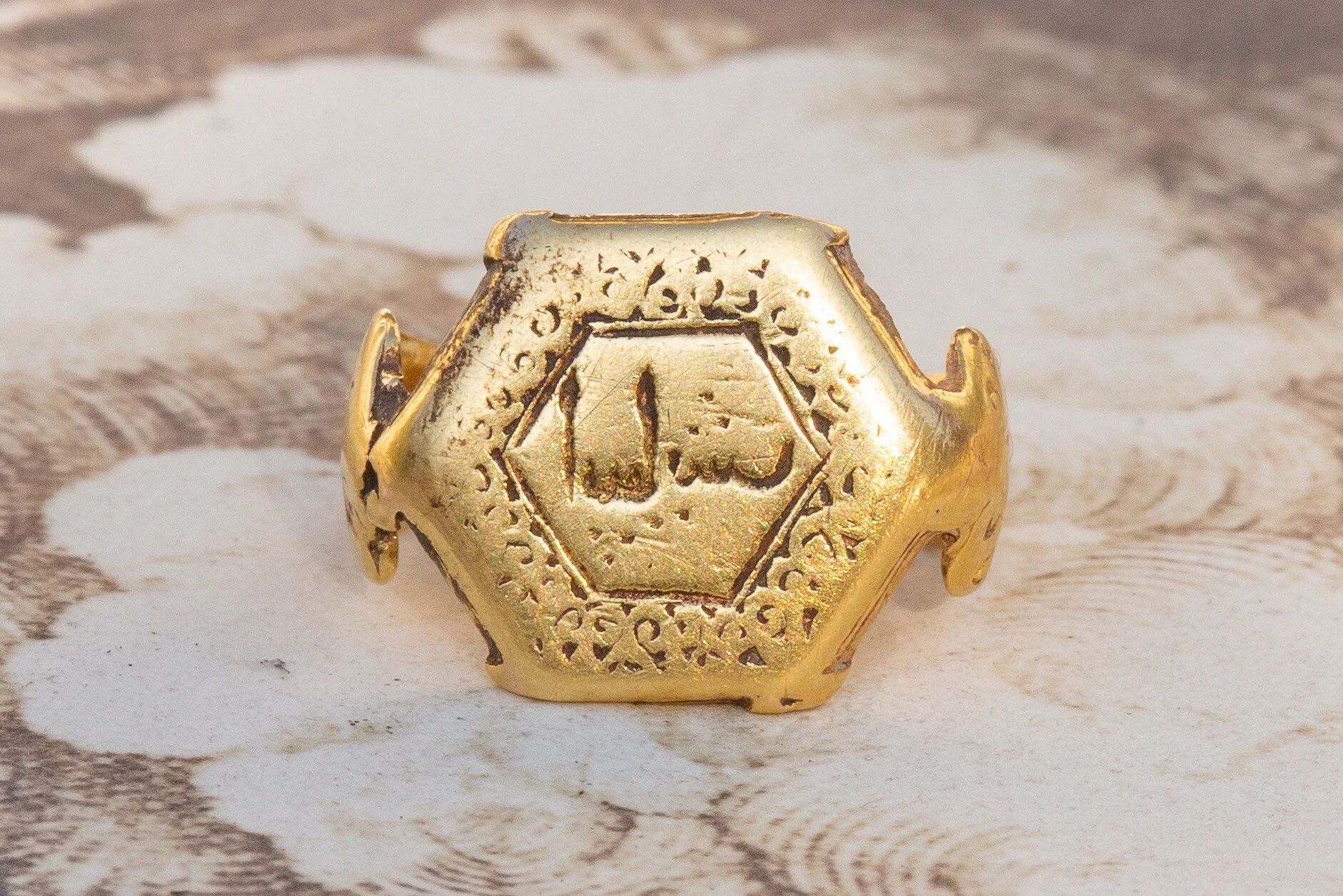
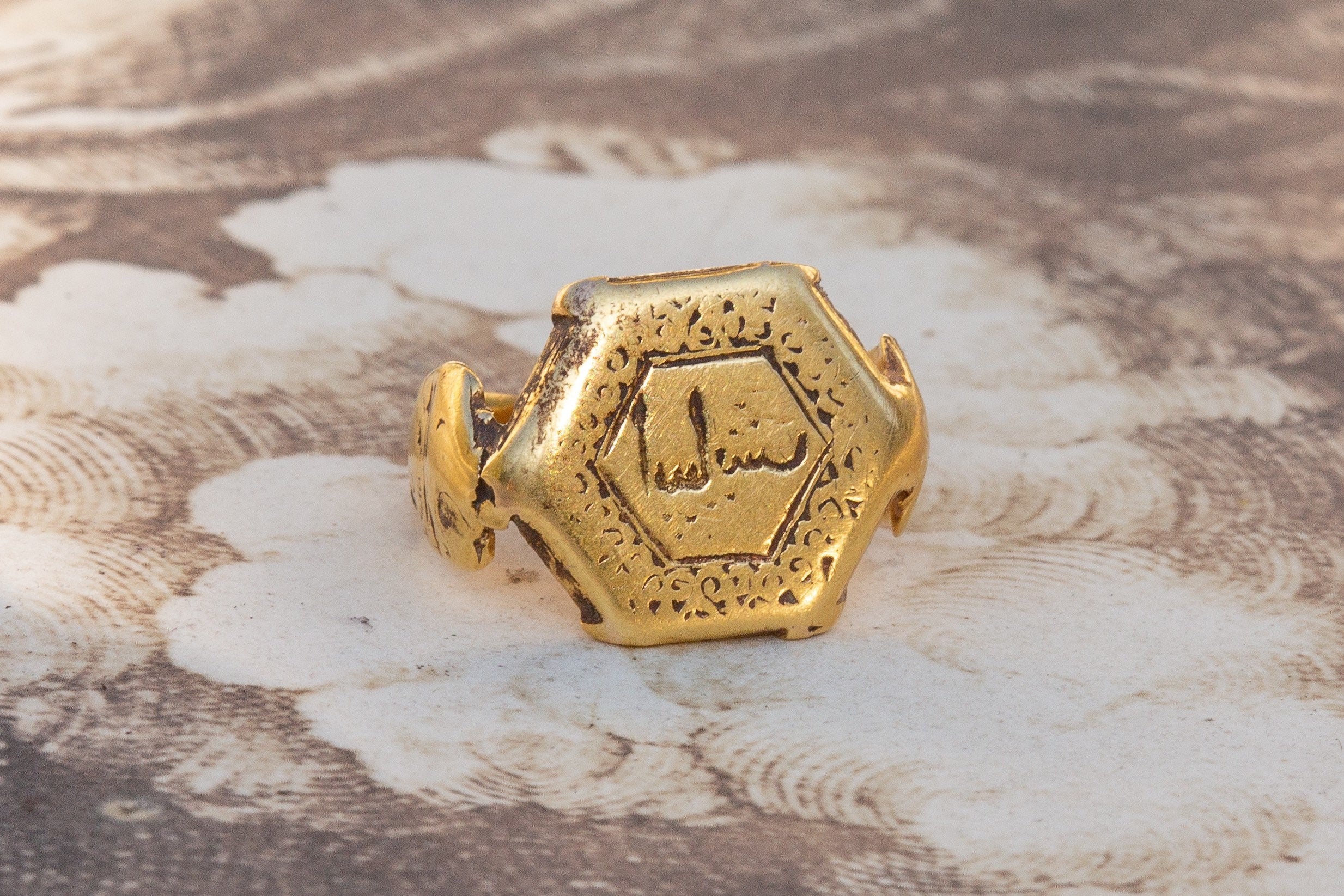
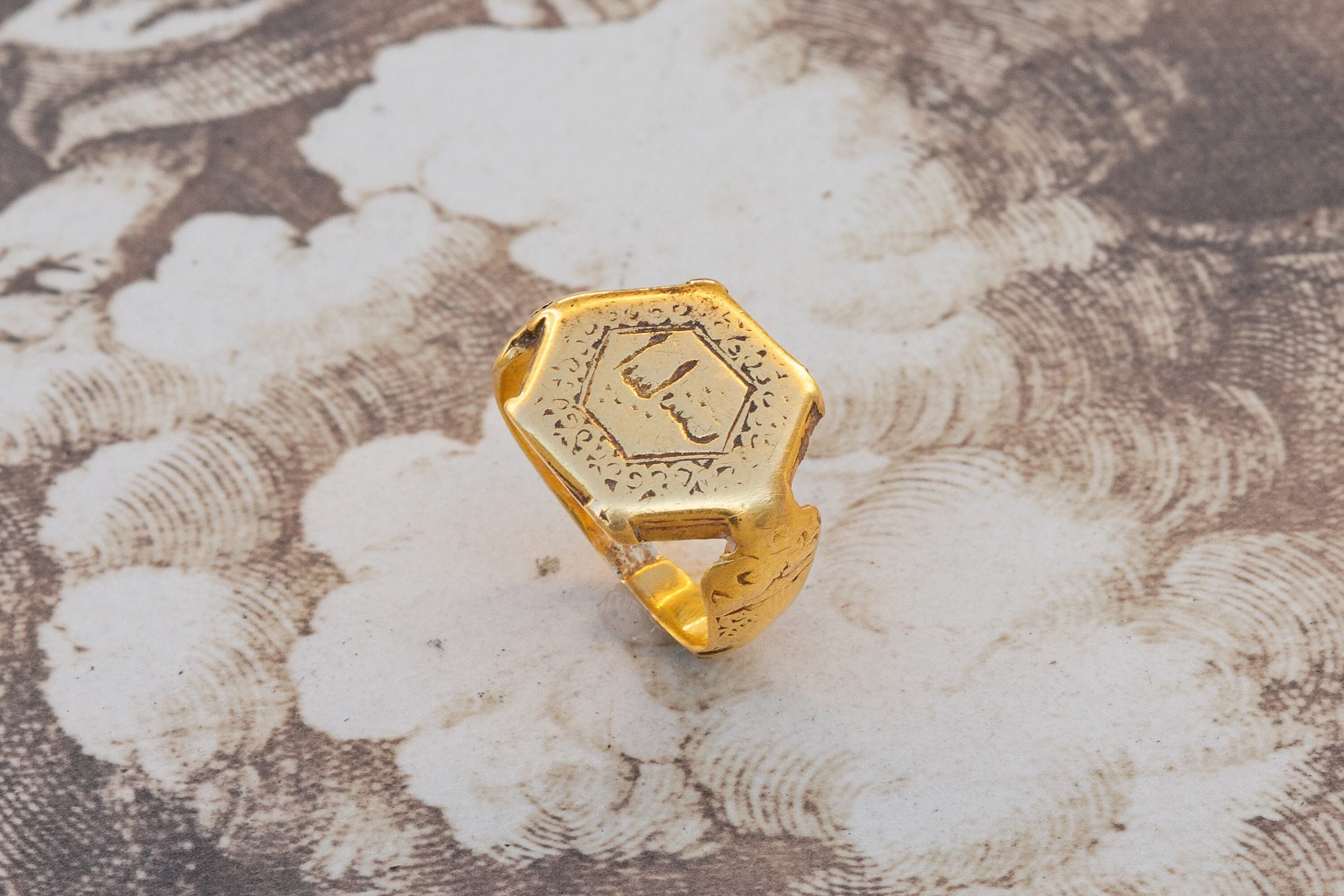
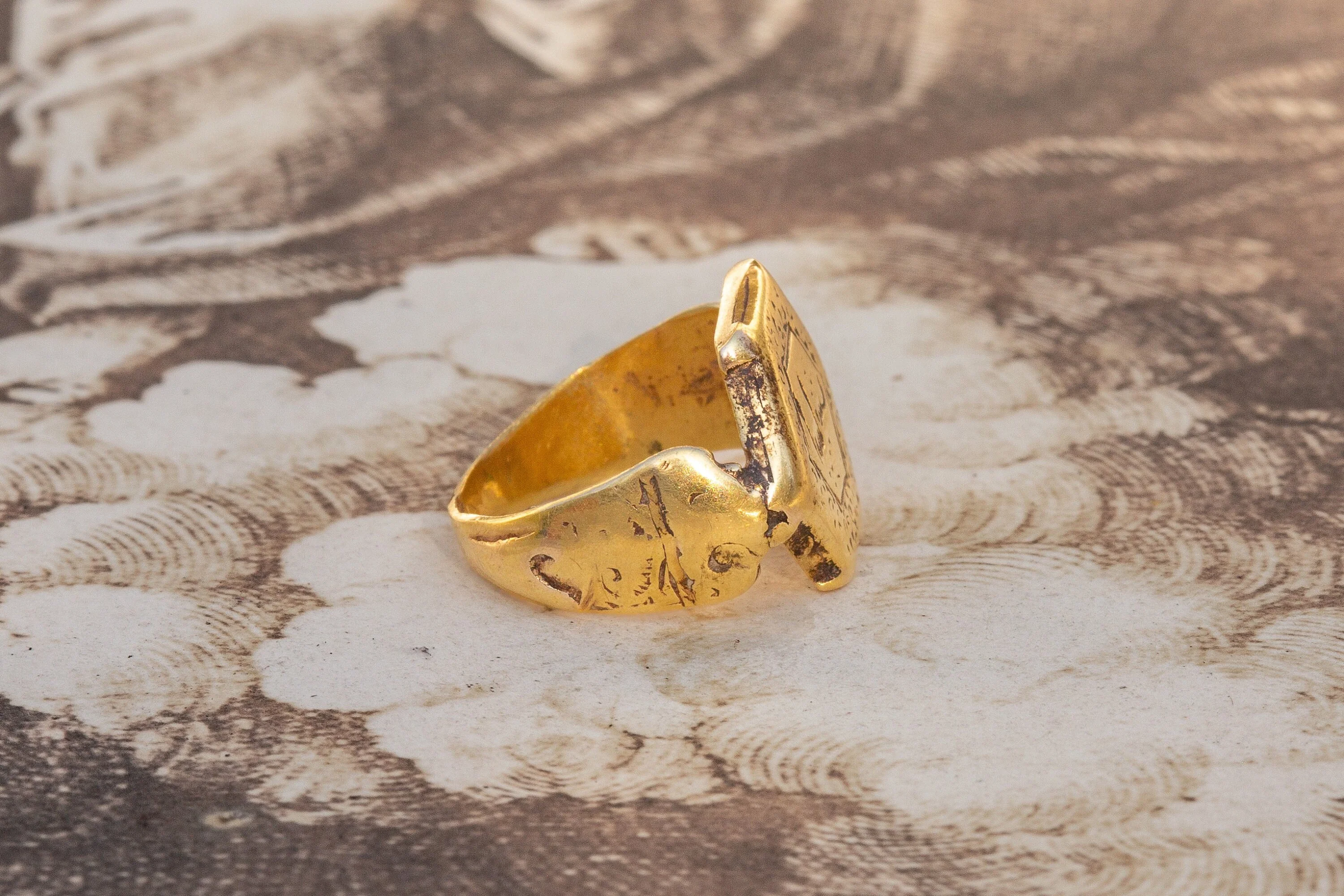
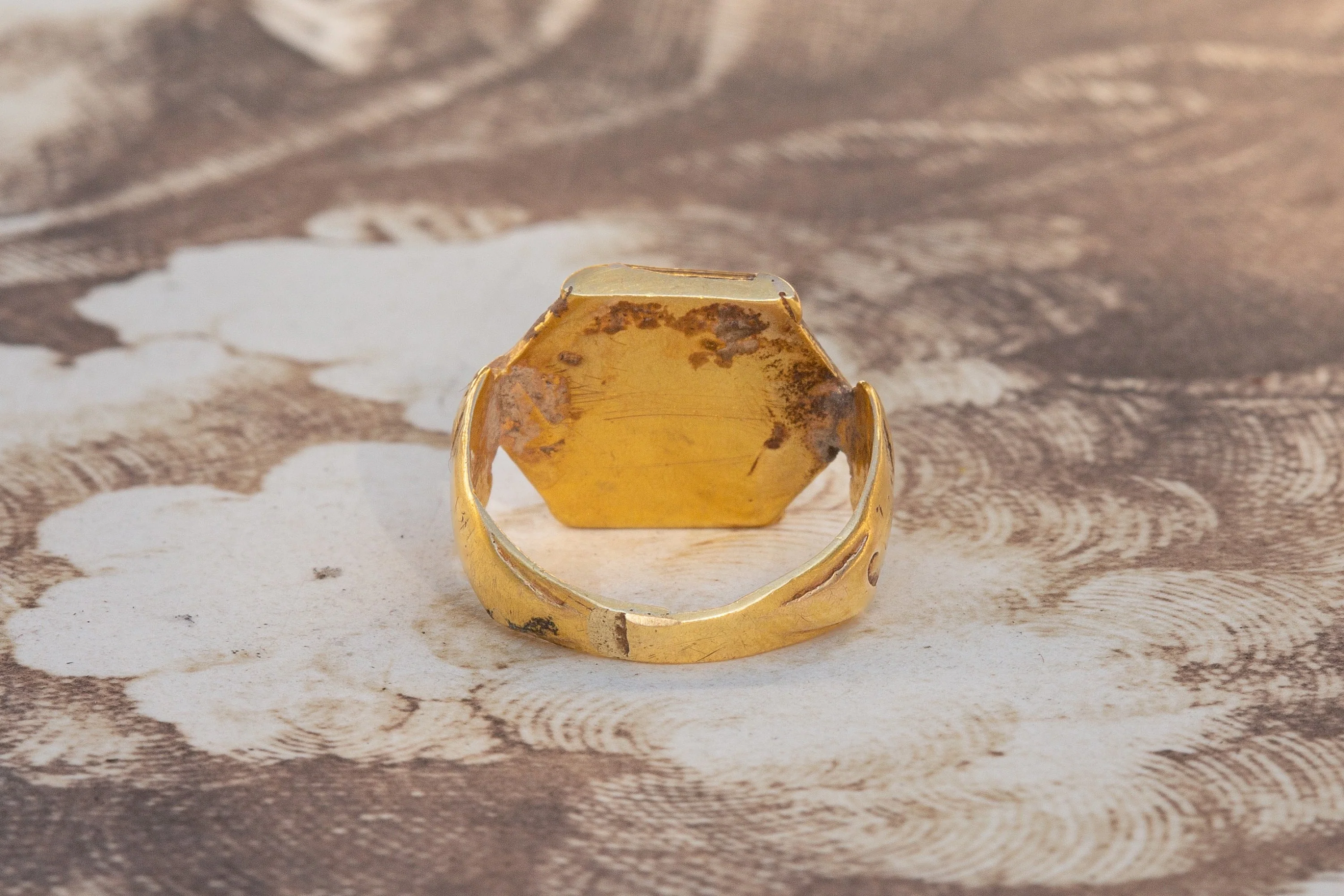
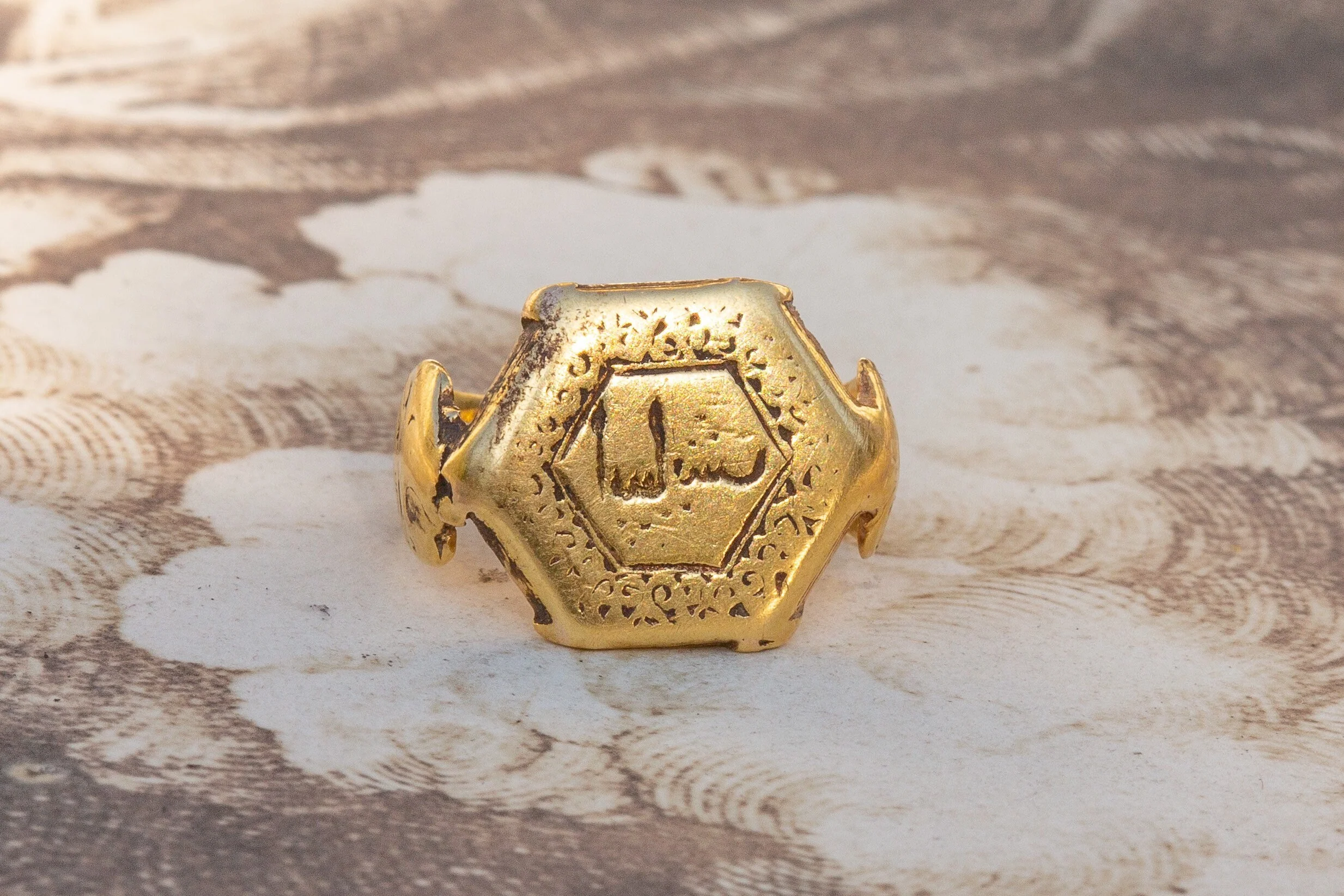
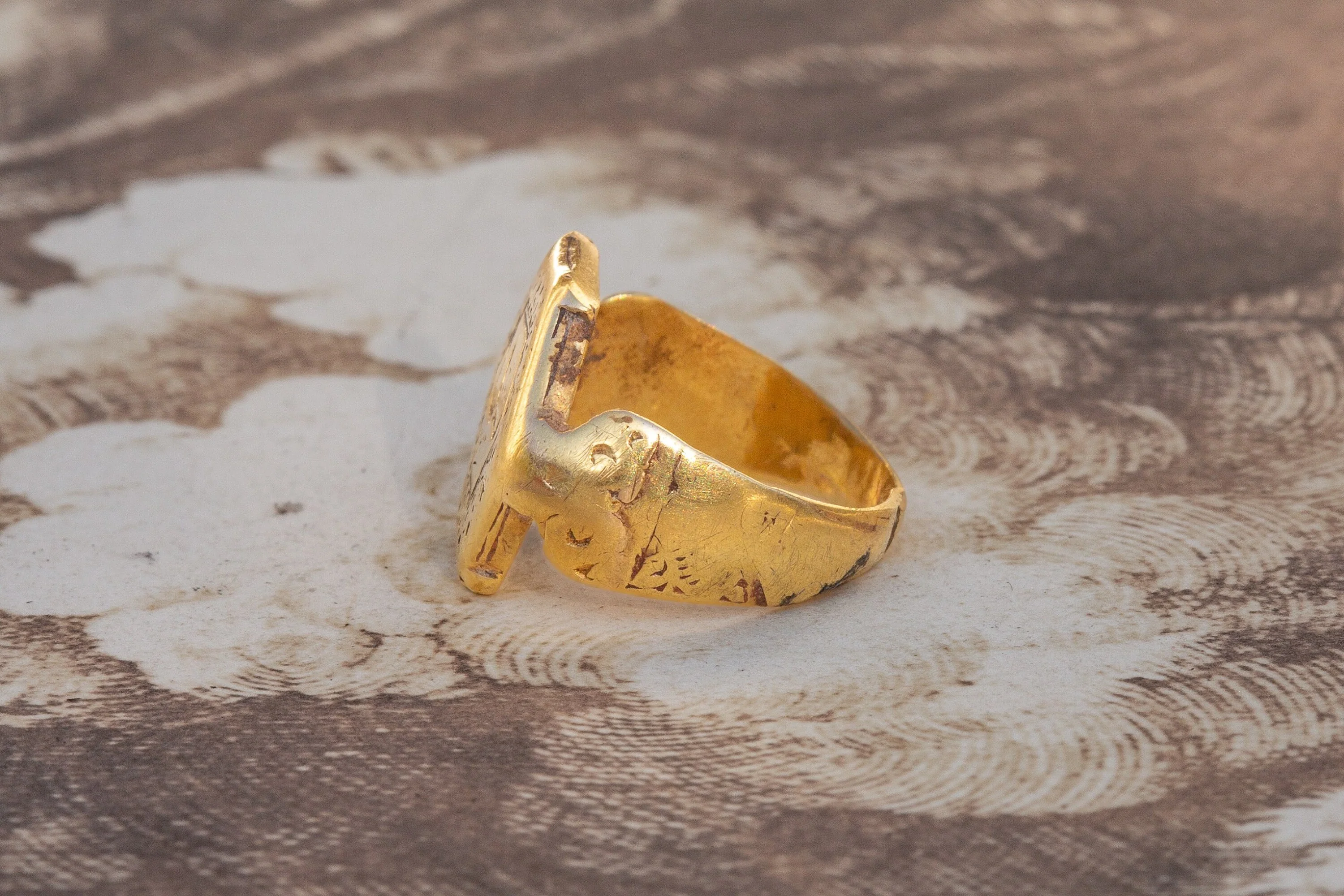
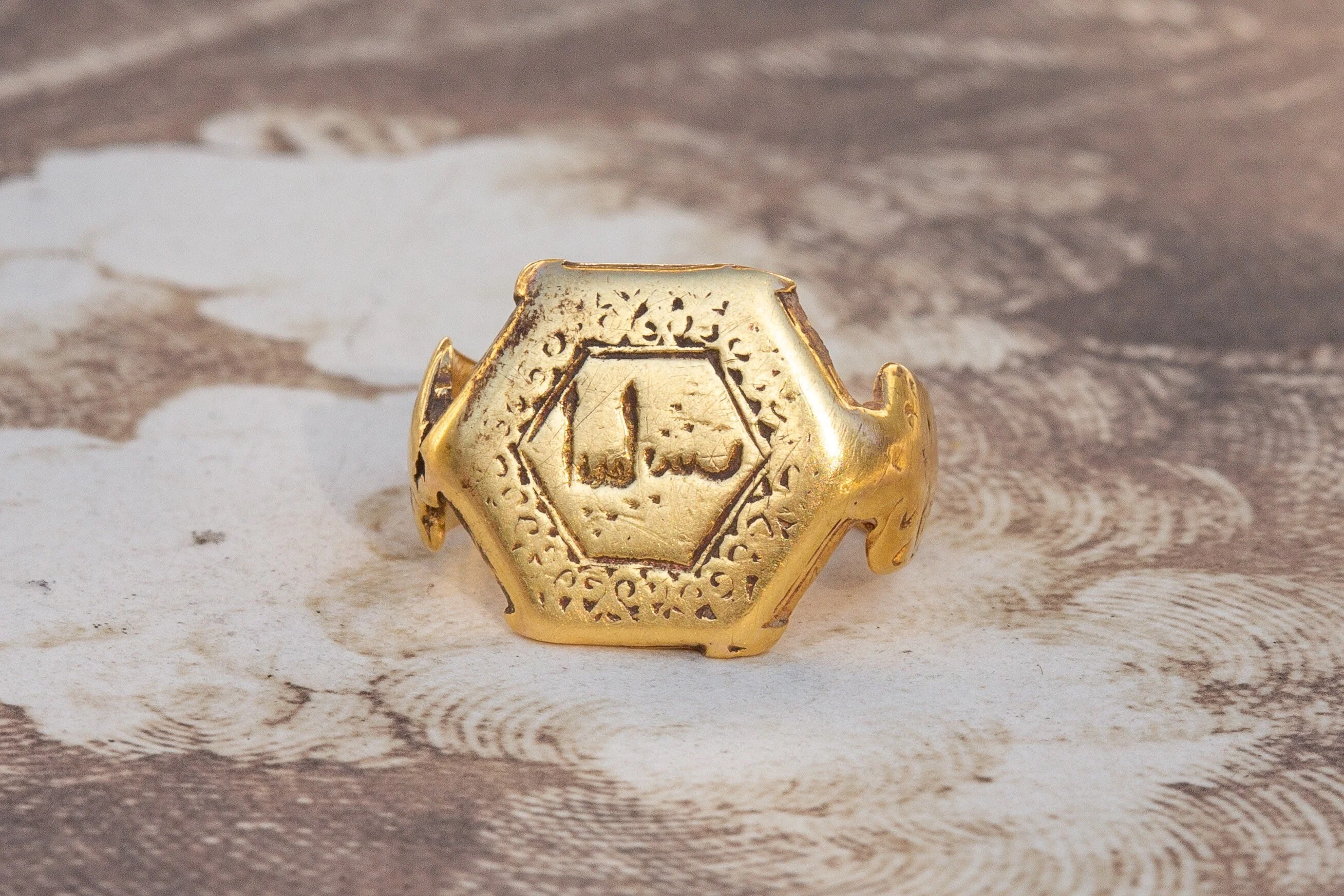
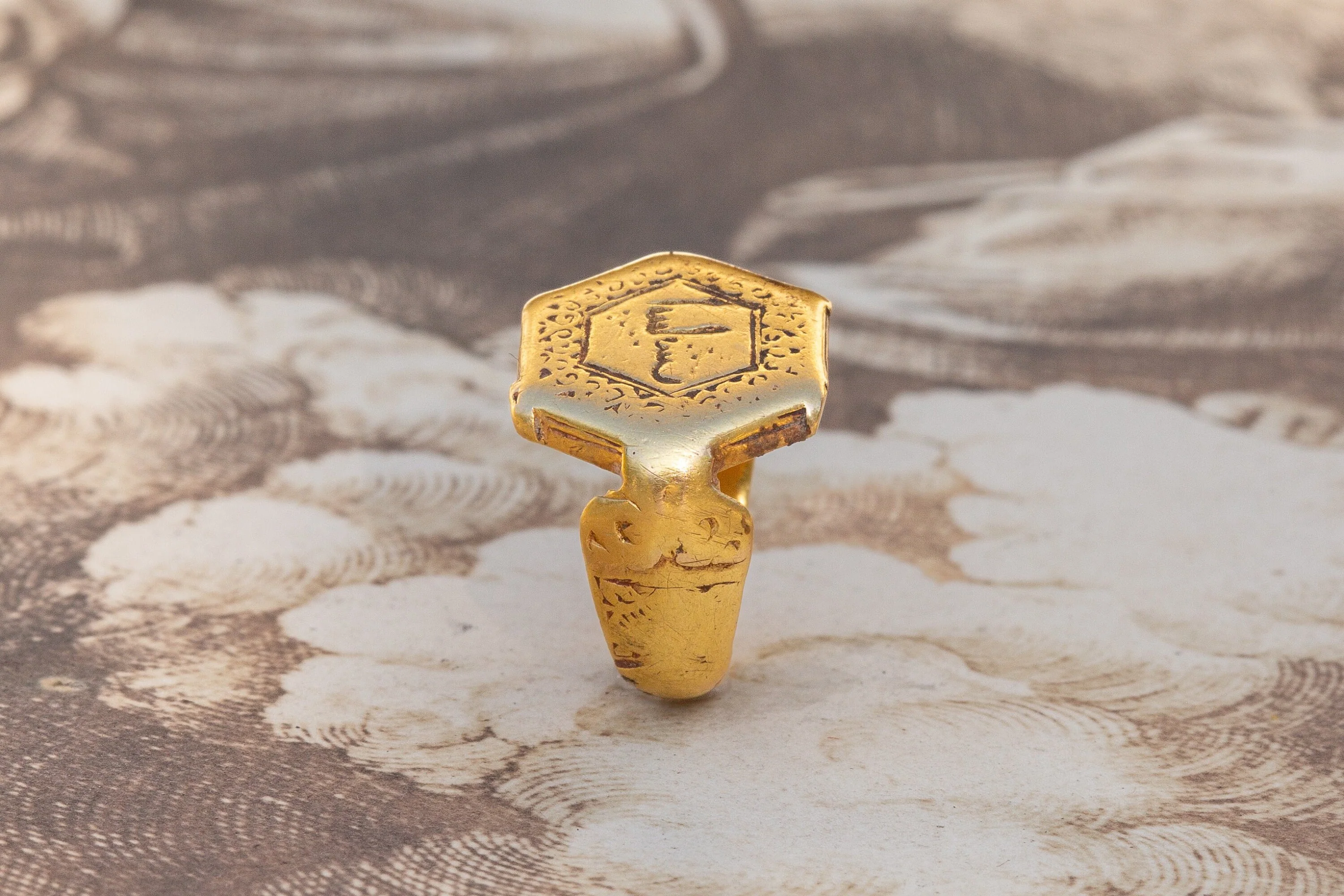
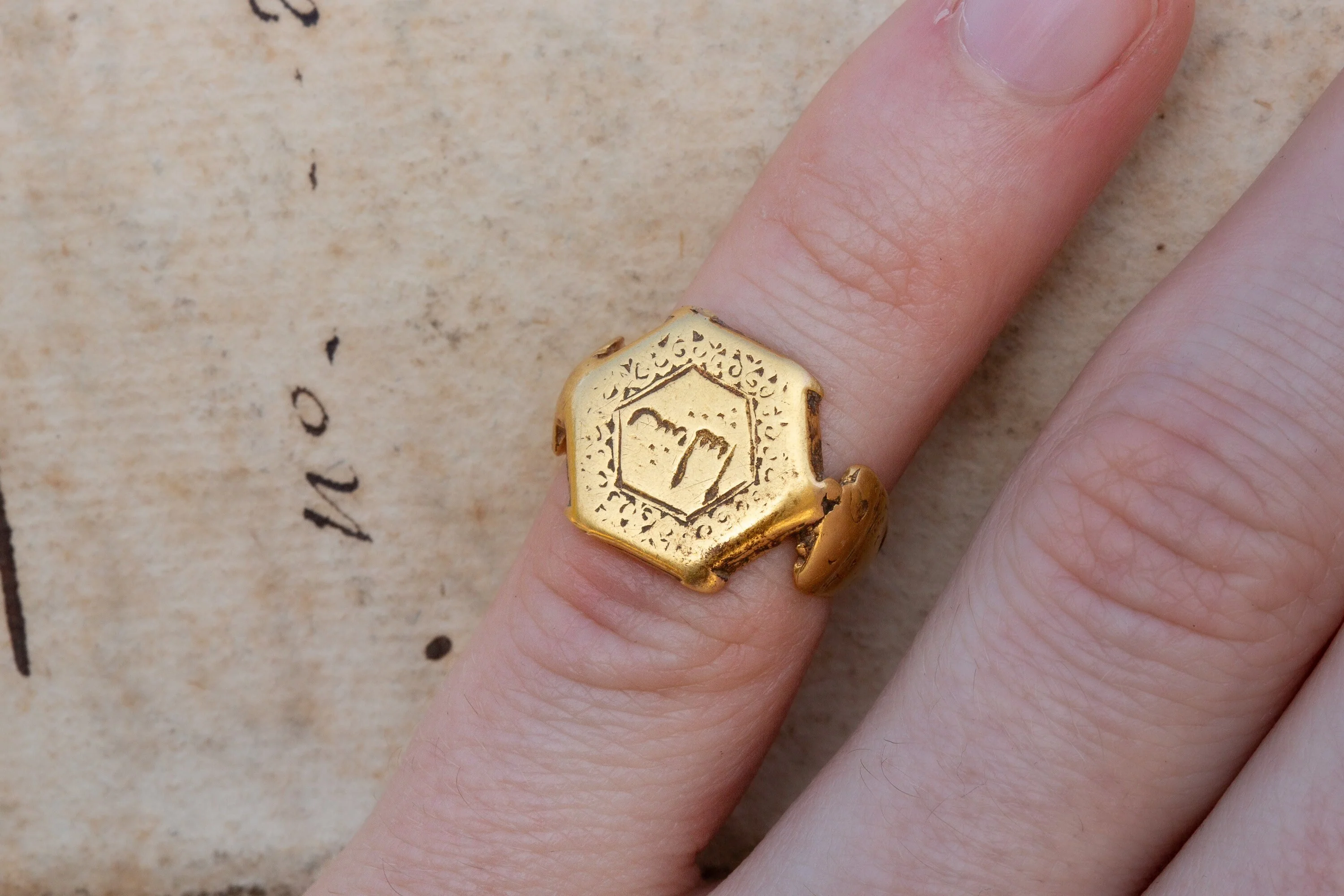
This quite small (yet mighty) 21K gold ring dates to the 11-13th century Seljuk dynasty. The hexagonal bezel features a negative cursive inscription within a border containing arabesque scrolled patterns. There is a waisted section between the bezel and shank. Typical Seljuk ornamentation and palmettes decorate the shoulders and tapering band, albeit much of the original design has since faded.
For a similar referenced example see item 40 in ‘Islamic Rings and Gems: the Benjamin Zucker Collection’, 1987 (message for photo). Also see this ring in the Museum of Berlin: https://recherche.smb.museum/detail/1525566/ring-siegel
UK size G 1/2, US size 3.5
7.2 grams, tests as high karat gold (21K), bezel measures 12mm in diameter.
The Seljuks, a Turkish dynasty of Central Asian nomadic origins, became the new rulers of eastern Islamic lands following the defeat of the powerful Ghaznavids at the Battle of Dandanakan (1040). Under the Seljuk sultanate, the region enjoyed a period of material and cultural prosperity.
For a similar referenced example see item 40 in ‘Islamic Rings and Gems: the Benjamin Zucker Collection’, 1987 (message for photo). Also see this ring in the Museum of Berlin: https://recherche.smb.museum/detail/1525566/ring-siegel
UK size G 1/2, US size 3.5
7.2 grams, tests as high karat gold (21K), bezel measures 12mm in diameter.
The Seljuks, a Turkish dynasty of Central Asian nomadic origins, became the new rulers of eastern Islamic lands following the defeat of the powerful Ghaznavids at the Battle of Dandanakan (1040). Under the Seljuk sultanate, the region enjoyed a period of material and cultural prosperity.
$1,005.05
Original: $3,350.17
-70%Seljuk Dynasty Gold Islamic Ring—
$3,350.17
$1,005.05Product Information
Product Information
Shipping & Returns
Shipping & Returns
Description
This quite small (yet mighty) 21K gold ring dates to the 11-13th century Seljuk dynasty. The hexagonal bezel features a negative cursive inscription within a border containing arabesque scrolled patterns. There is a waisted section between the bezel and shank. Typical Seljuk ornamentation and palmettes decorate the shoulders and tapering band, albeit much of the original design has since faded.
For a similar referenced example see item 40 in ‘Islamic Rings and Gems: the Benjamin Zucker Collection’, 1987 (message for photo). Also see this ring in the Museum of Berlin: https://recherche.smb.museum/detail/1525566/ring-siegel
UK size G 1/2, US size 3.5
7.2 grams, tests as high karat gold (21K), bezel measures 12mm in diameter.
The Seljuks, a Turkish dynasty of Central Asian nomadic origins, became the new rulers of eastern Islamic lands following the defeat of the powerful Ghaznavids at the Battle of Dandanakan (1040). Under the Seljuk sultanate, the region enjoyed a period of material and cultural prosperity.
For a similar referenced example see item 40 in ‘Islamic Rings and Gems: the Benjamin Zucker Collection’, 1987 (message for photo). Also see this ring in the Museum of Berlin: https://recherche.smb.museum/detail/1525566/ring-siegel
UK size G 1/2, US size 3.5
7.2 grams, tests as high karat gold (21K), bezel measures 12mm in diameter.
The Seljuks, a Turkish dynasty of Central Asian nomadic origins, became the new rulers of eastern Islamic lands following the defeat of the powerful Ghaznavids at the Battle of Dandanakan (1040). Under the Seljuk sultanate, the region enjoyed a period of material and cultural prosperity.