🎉 Up to 70% Off Selected ItemsShop Sale

Seljuk Dynasty Islamic Sheep's Eye Agate Ring
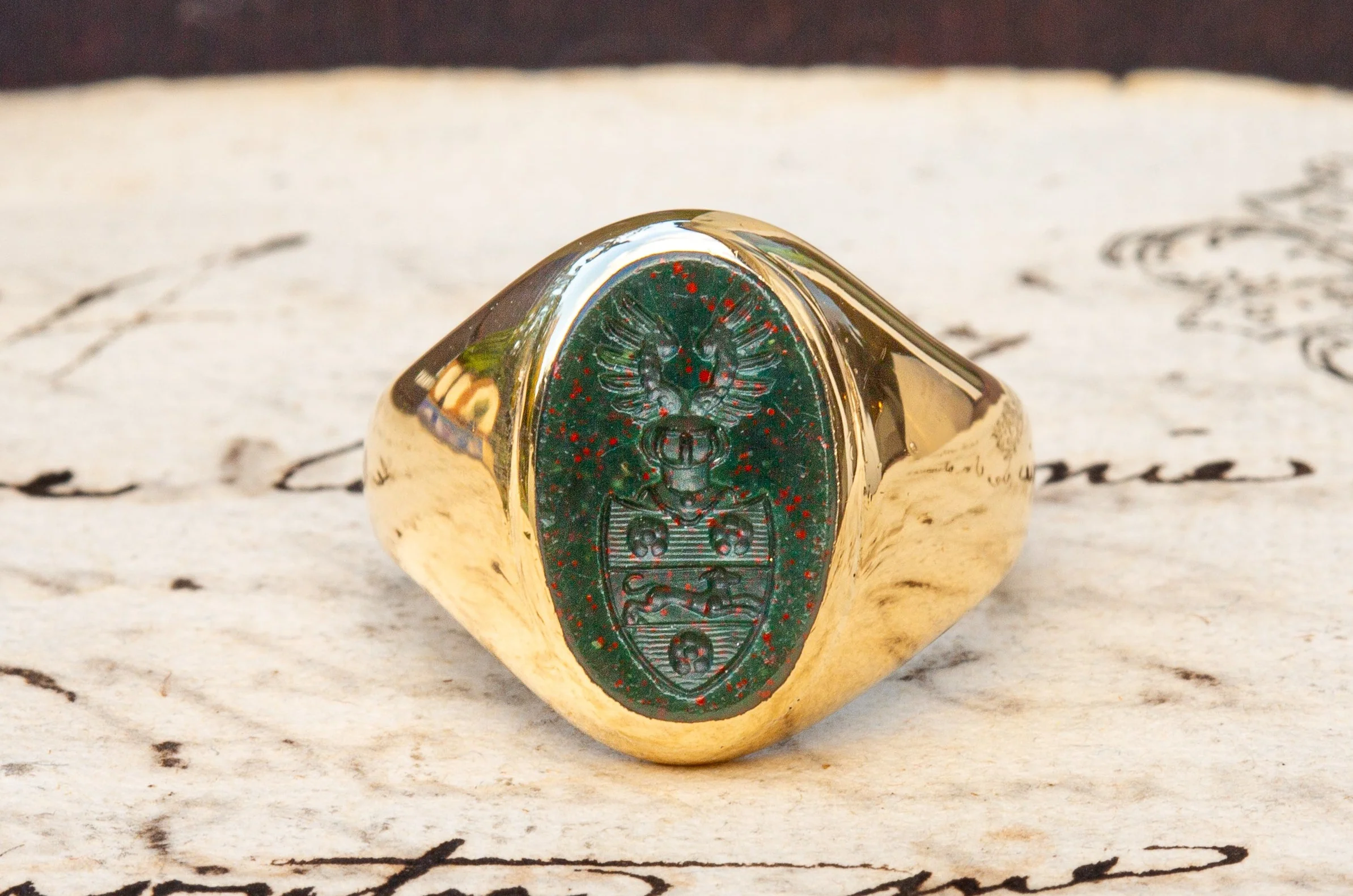
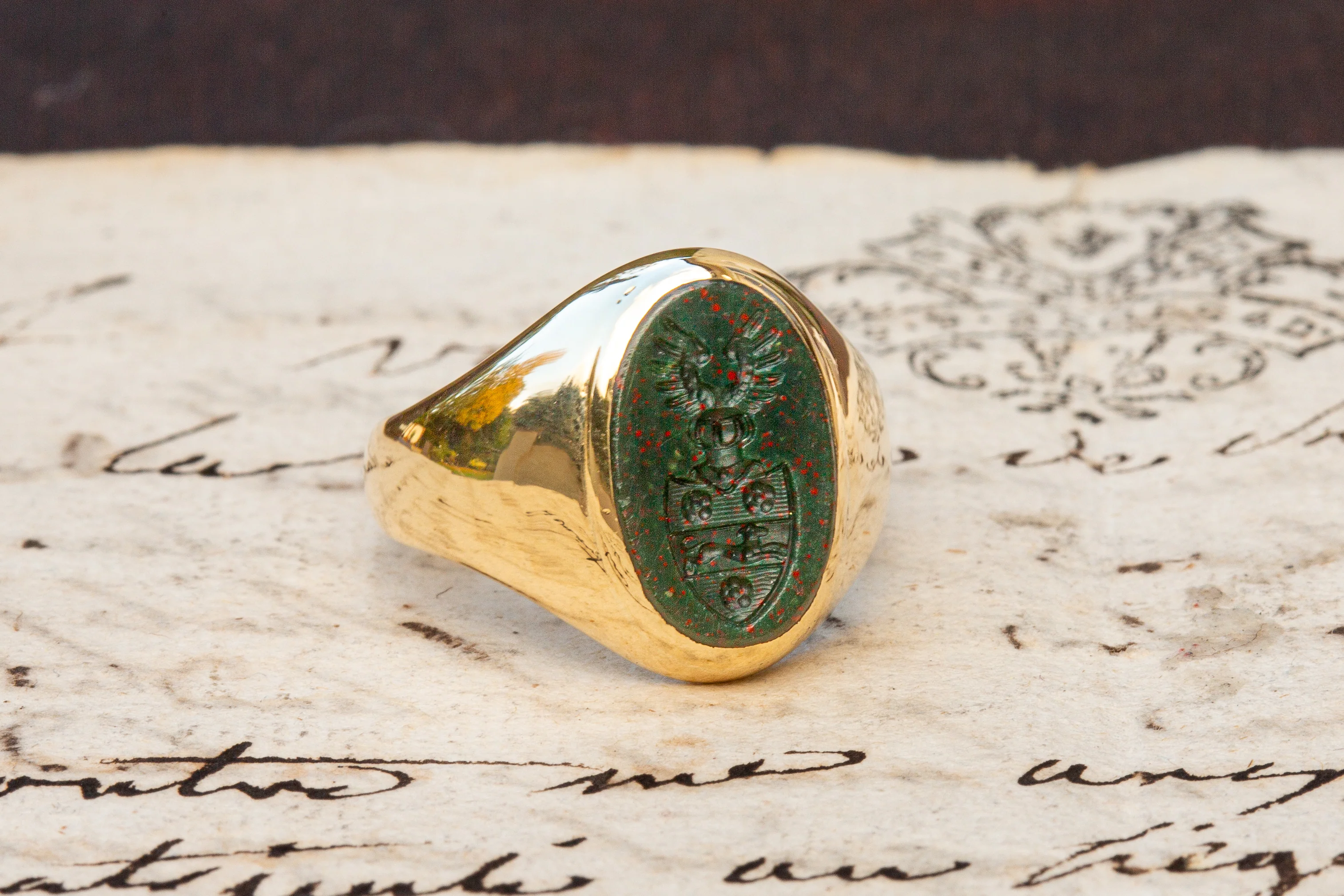
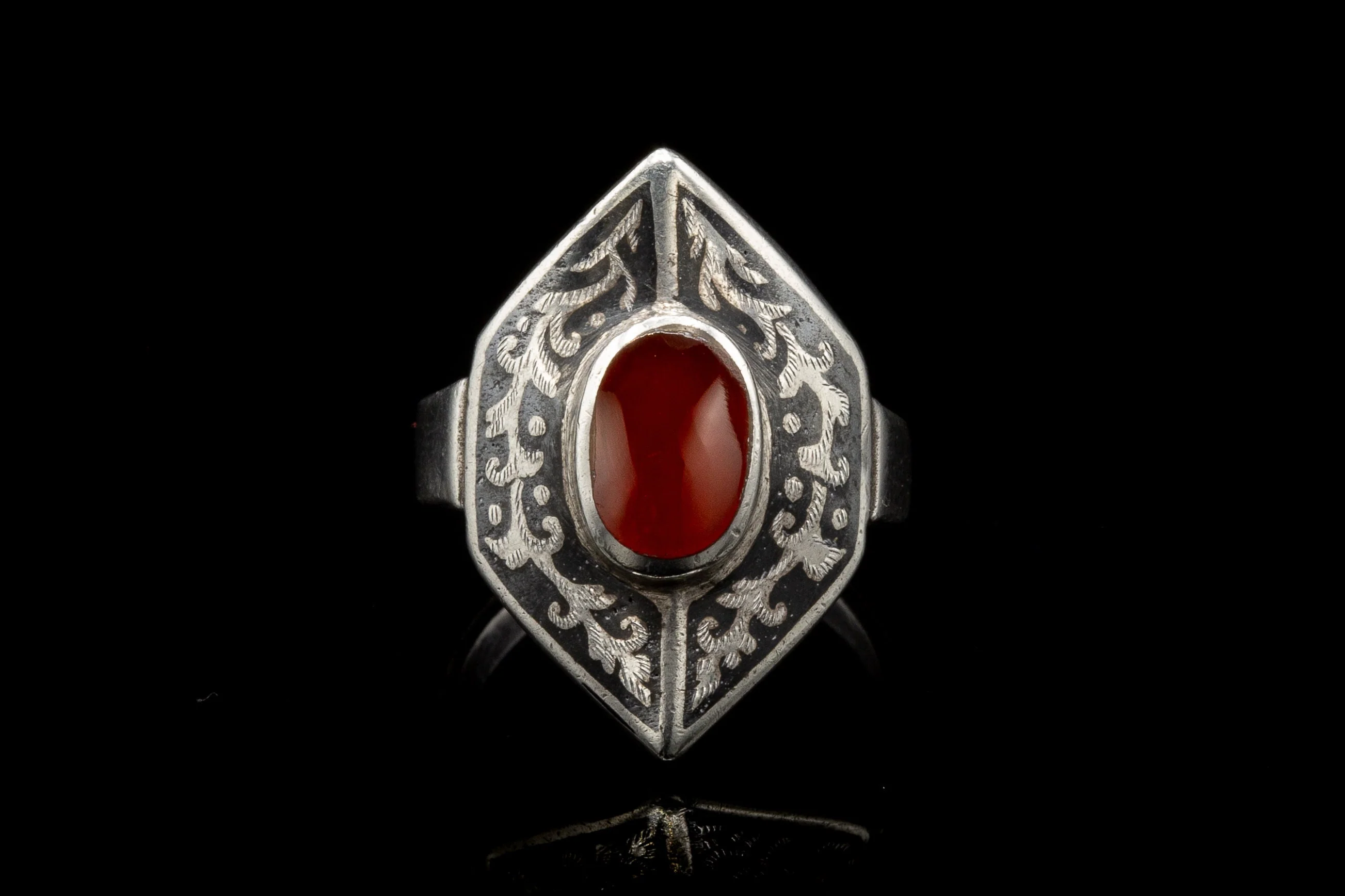
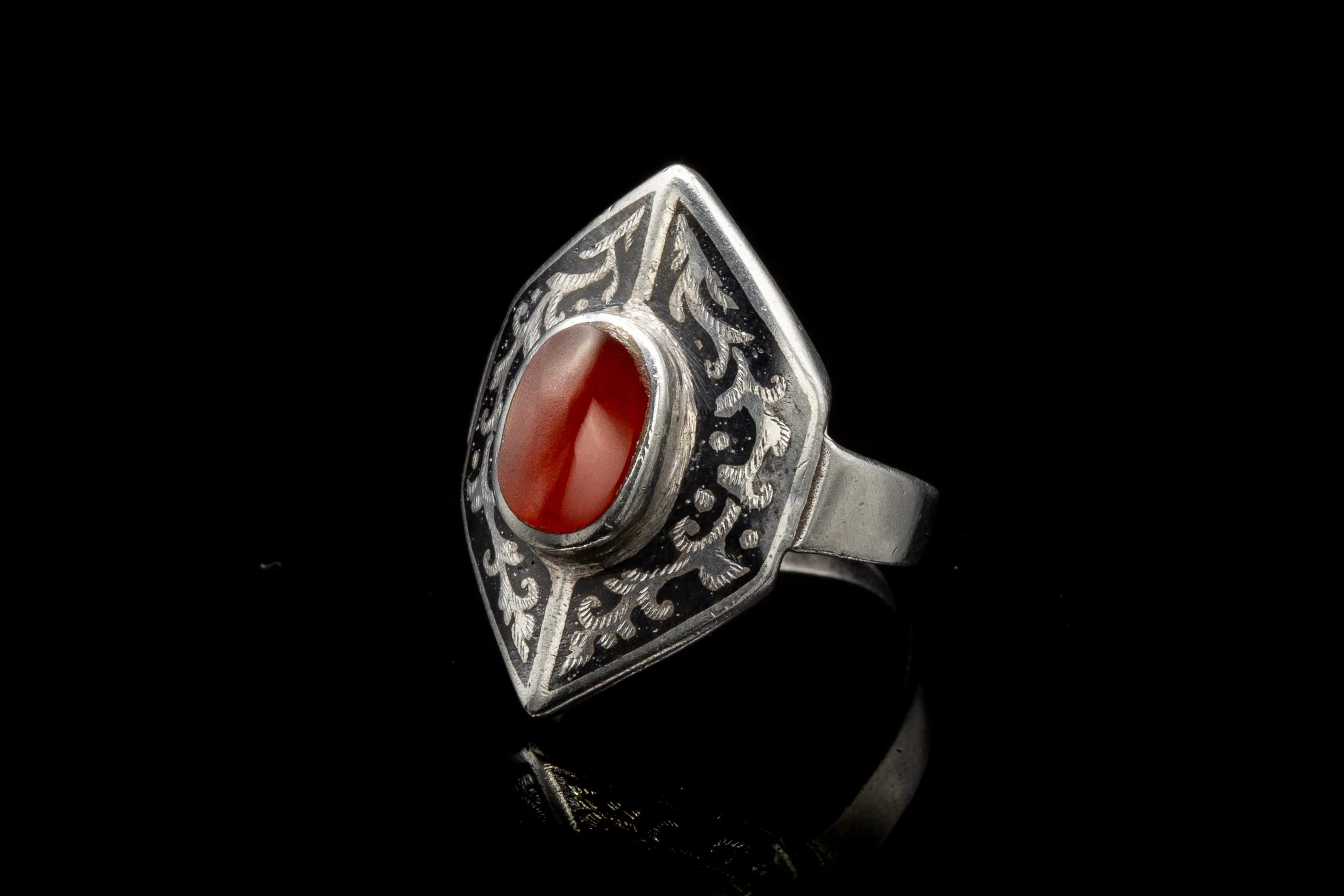
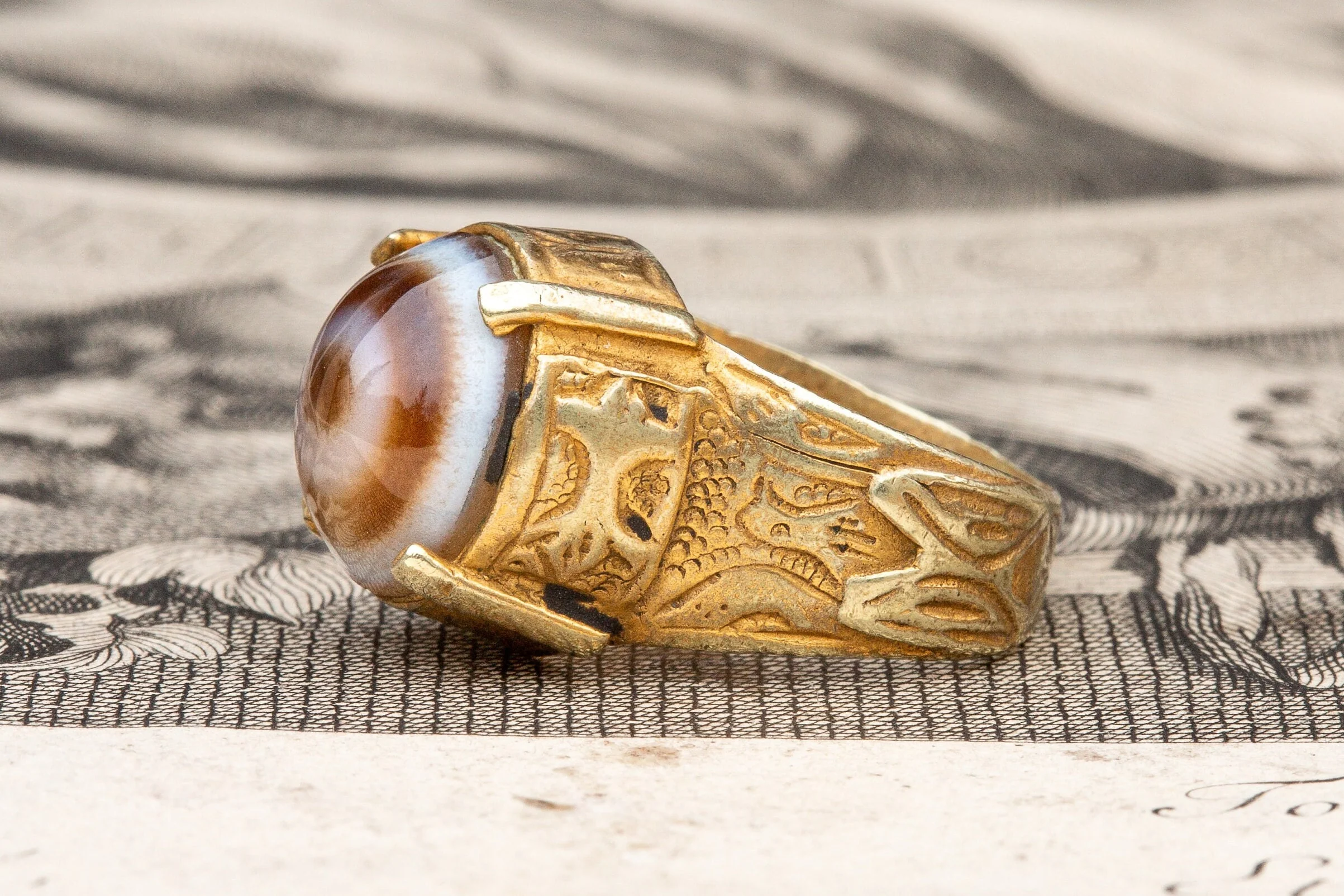
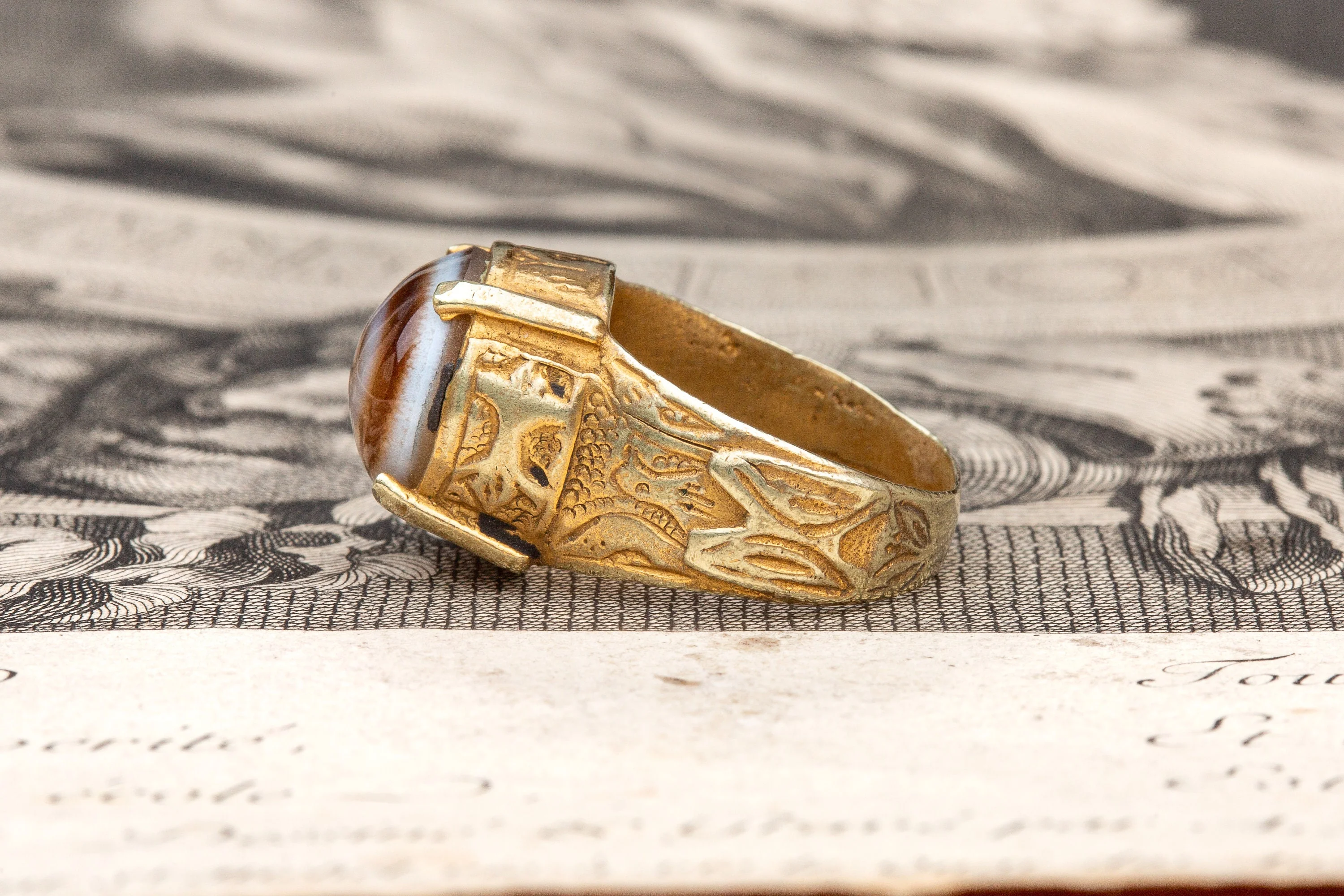
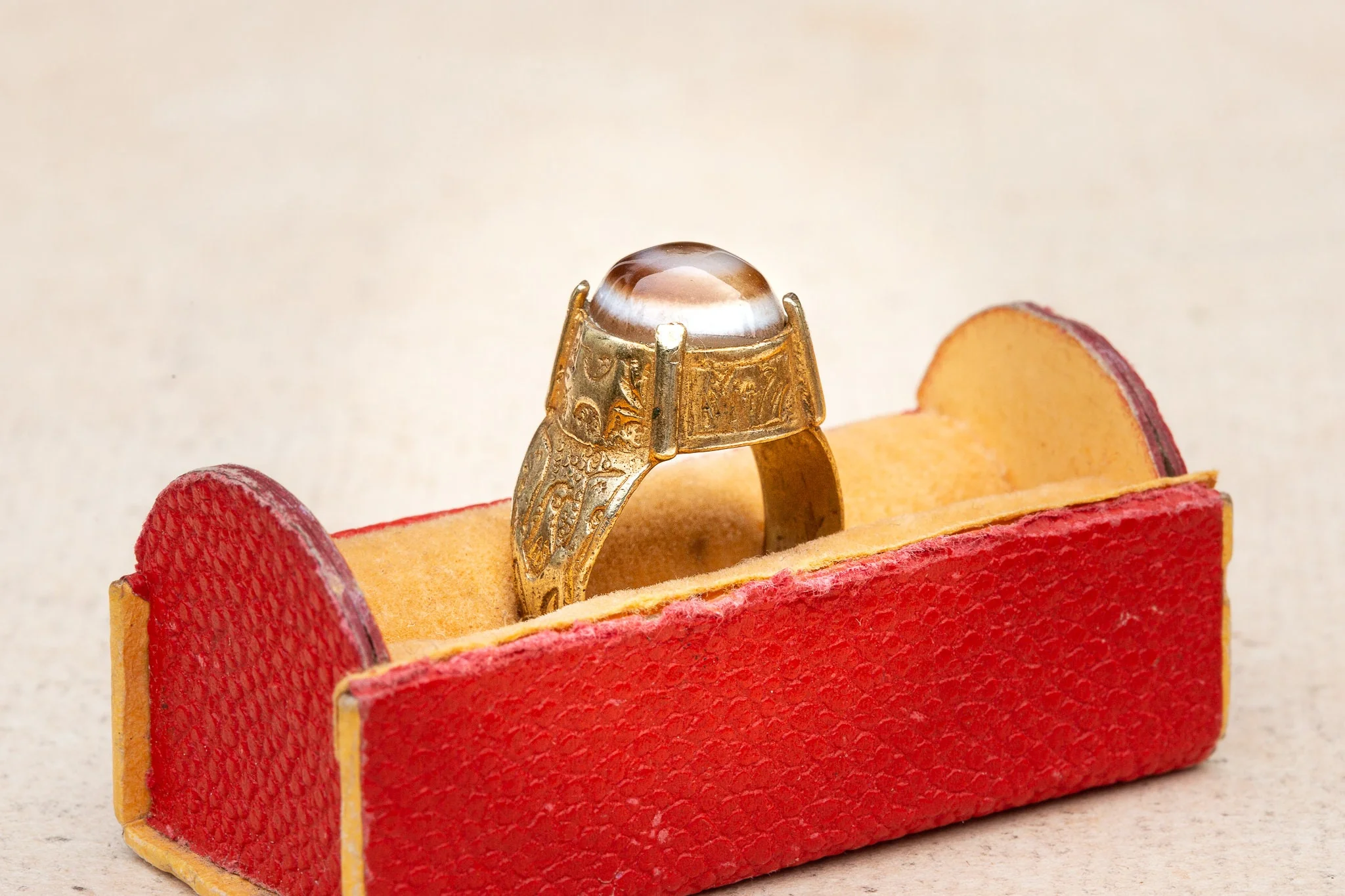
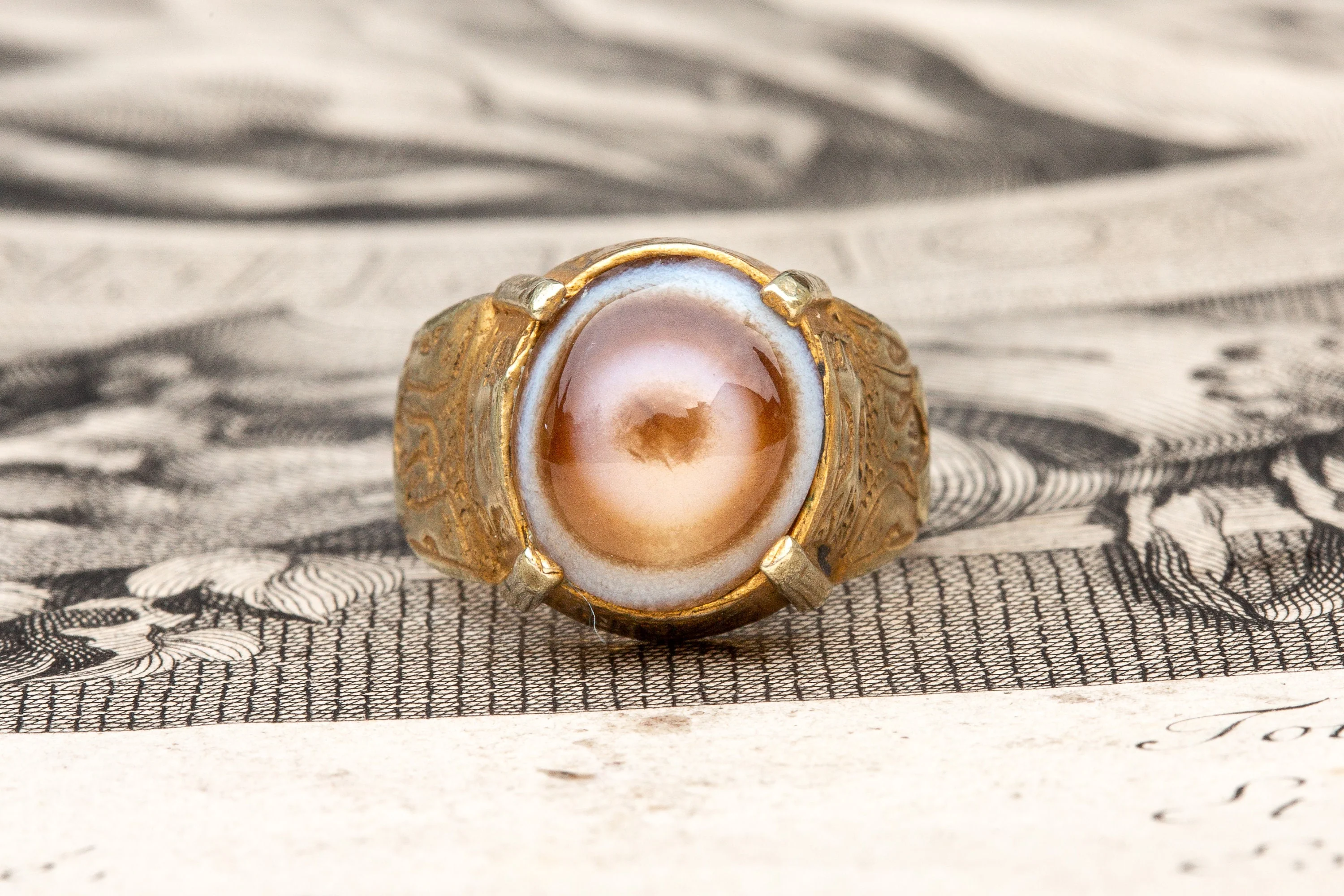
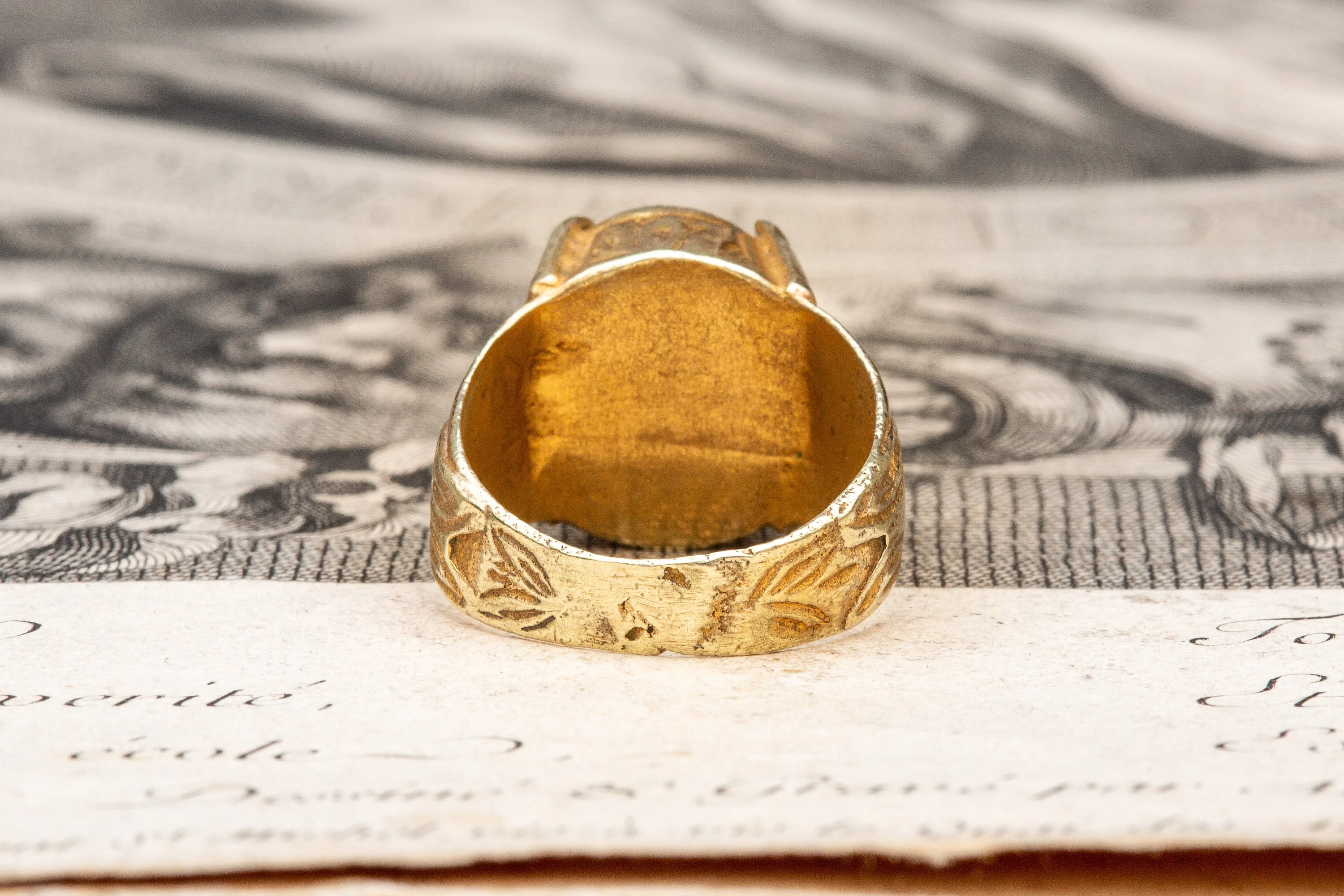
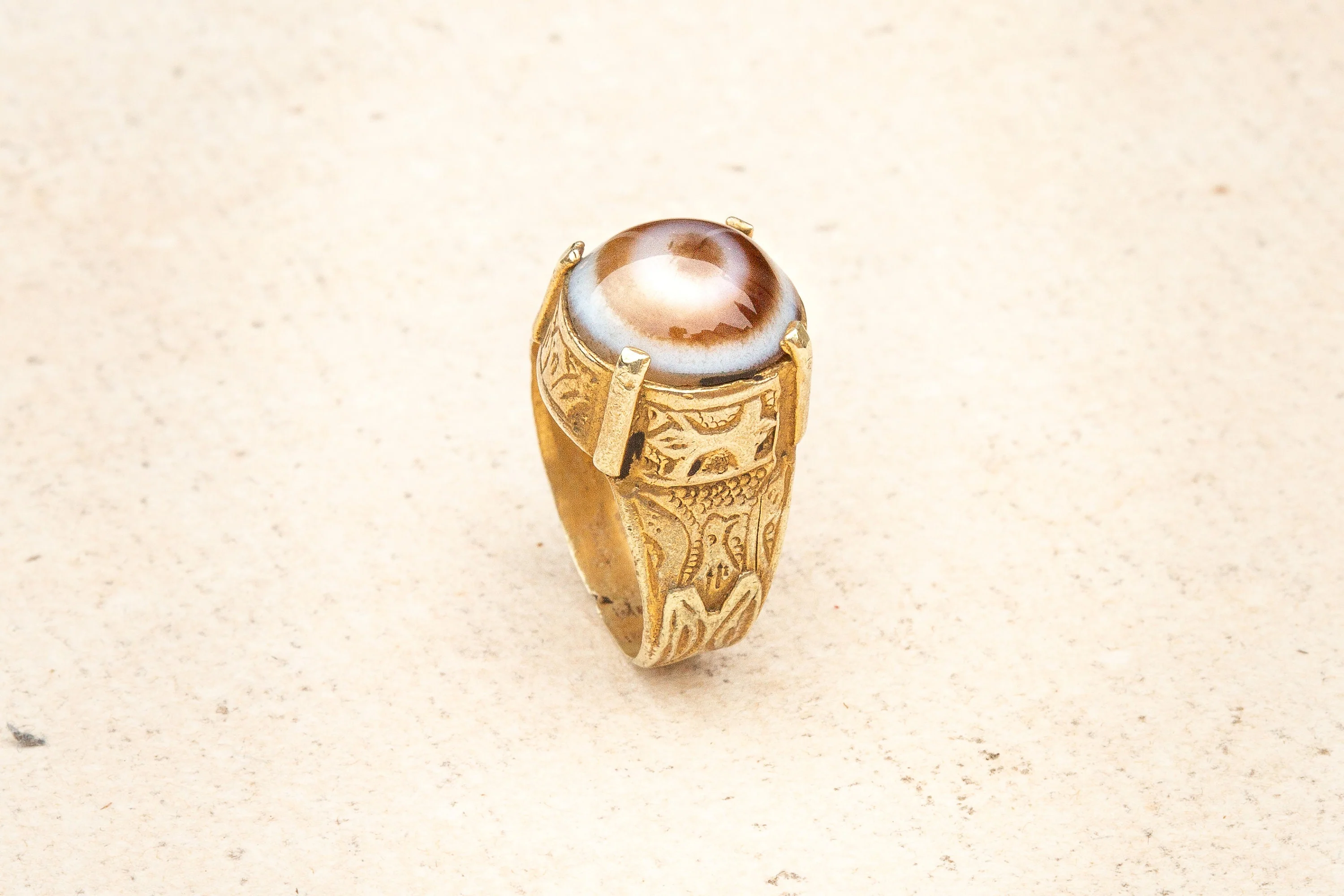
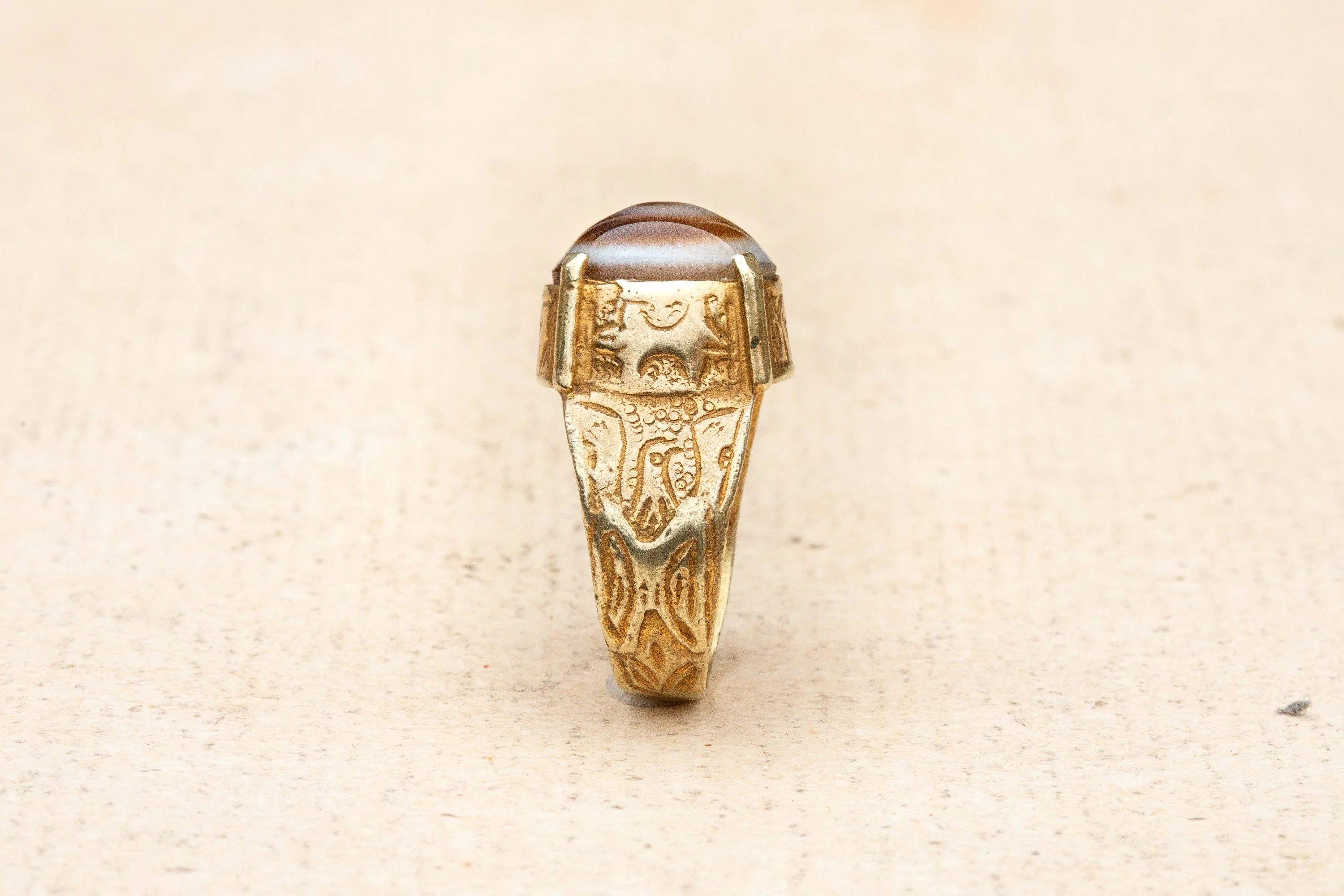
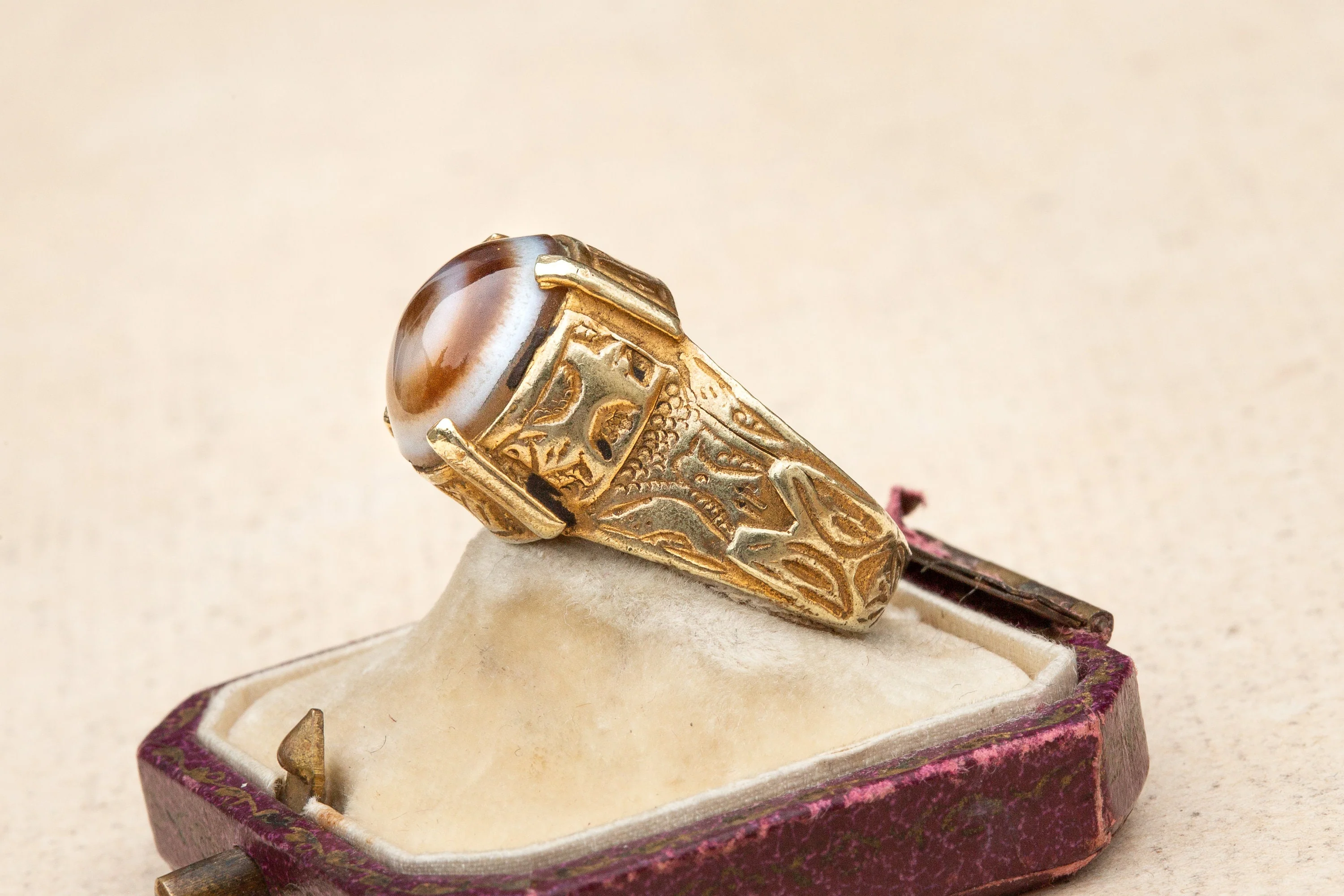
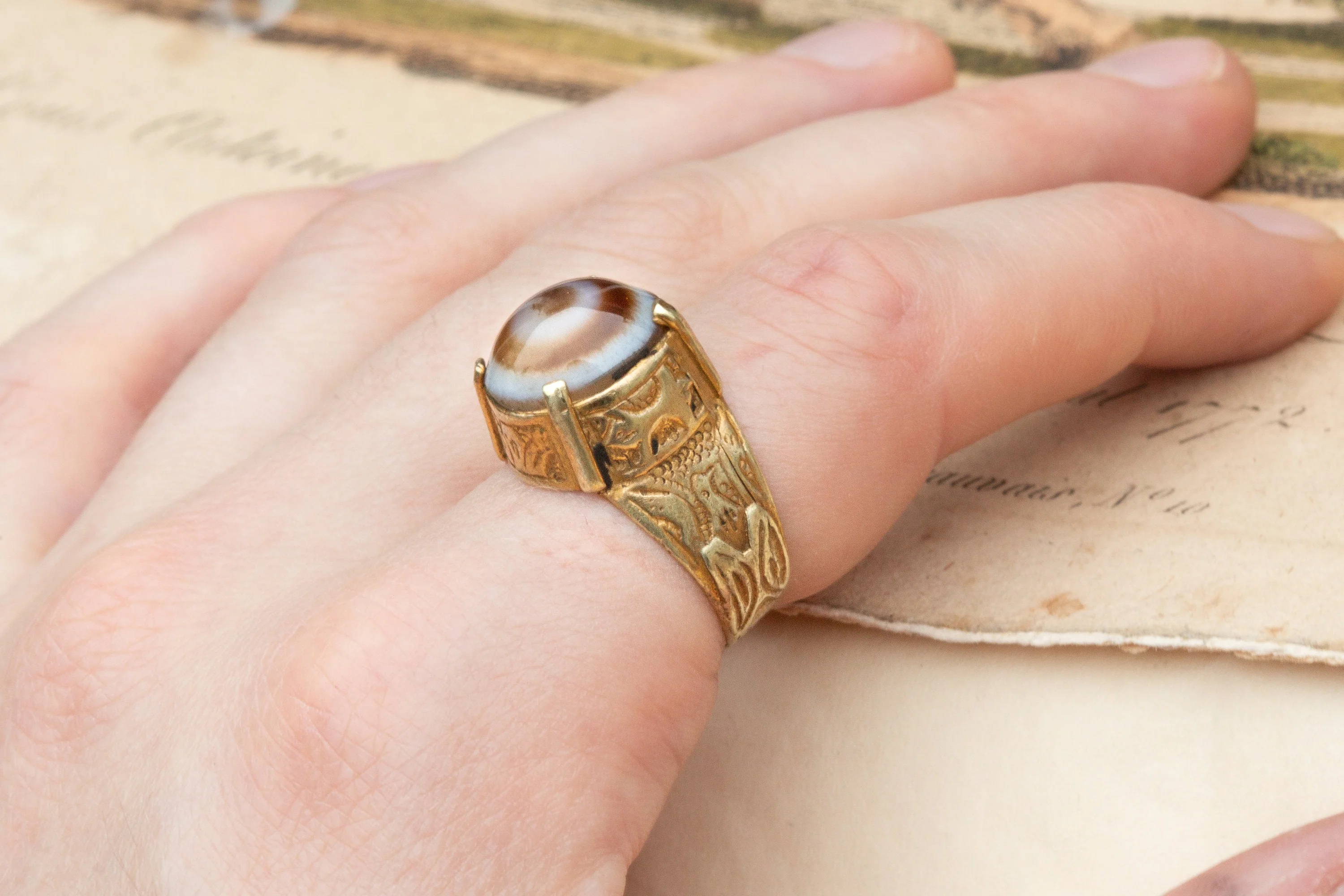
A superb Islamic gold and agate ring dating from the 13th to 14th century. The brown ‘sheep’s eye’ agate cabochon sits within a truncated conical bezel with a four-pronged setting soldered to the outside, typical of Seljuk dynasty rings. In the space between the prongs, the bezel is engraved with various zoomorphic motifs. These engravings continue down the tapered, flat shank and each shoulder is decorated with a splayed bird. This animal based ornamentation was most commonly found on Seljuk rings towards the end of the empire (13th-14th century).
For similar referenced examples of Seljuk rings see pages 55-69 in ‘Islamic Rings and Gems: the Benjamin Zucker Collection’ (1987).
The Seljuks, a Turkish dynasty of Central Asian nomadic origins, became the new rulers of eastern Islamic lands following the defeat of the powerful Ghaznavids at the Battle of Dandanakan (1040). Under the Seljuk sultanate, the region enjoyed a period of material and cultural prosperity.
UK size Q/US size 8, 6.5g low karat gold. Agate stone measures 13mm x 11mm and protrudes 5mm from the bezel.
For similar referenced examples of Seljuk rings see pages 55-69 in ‘Islamic Rings and Gems: the Benjamin Zucker Collection’ (1987).
The Seljuks, a Turkish dynasty of Central Asian nomadic origins, became the new rulers of eastern Islamic lands following the defeat of the powerful Ghaznavids at the Battle of Dandanakan (1040). Under the Seljuk sultanate, the region enjoyed a period of material and cultural prosperity.
UK size Q/US size 8, 6.5g low karat gold. Agate stone measures 13mm x 11mm and protrudes 5mm from the bezel.
$5,159.26
Seljuk Dynasty Islamic Sheep's Eye Agate Ring—
$5,159.26
Product Information
Product Information
Shipping & Returns
Shipping & Returns
Description
A superb Islamic gold and agate ring dating from the 13th to 14th century. The brown ‘sheep’s eye’ agate cabochon sits within a truncated conical bezel with a four-pronged setting soldered to the outside, typical of Seljuk dynasty rings. In the space between the prongs, the bezel is engraved with various zoomorphic motifs. These engravings continue down the tapered, flat shank and each shoulder is decorated with a splayed bird. This animal based ornamentation was most commonly found on Seljuk rings towards the end of the empire (13th-14th century).
For similar referenced examples of Seljuk rings see pages 55-69 in ‘Islamic Rings and Gems: the Benjamin Zucker Collection’ (1987).
The Seljuks, a Turkish dynasty of Central Asian nomadic origins, became the new rulers of eastern Islamic lands following the defeat of the powerful Ghaznavids at the Battle of Dandanakan (1040). Under the Seljuk sultanate, the region enjoyed a period of material and cultural prosperity.
UK size Q/US size 8, 6.5g low karat gold. Agate stone measures 13mm x 11mm and protrudes 5mm from the bezel.
For similar referenced examples of Seljuk rings see pages 55-69 in ‘Islamic Rings and Gems: the Benjamin Zucker Collection’ (1987).
The Seljuks, a Turkish dynasty of Central Asian nomadic origins, became the new rulers of eastern Islamic lands following the defeat of the powerful Ghaznavids at the Battle of Dandanakan (1040). Under the Seljuk sultanate, the region enjoyed a period of material and cultural prosperity.
UK size Q/US size 8, 6.5g low karat gold. Agate stone measures 13mm x 11mm and protrudes 5mm from the bezel.