🎉 Up to 70% Off Selected ItemsShop Sale




Ancient Roman Gold and Garnet Ring
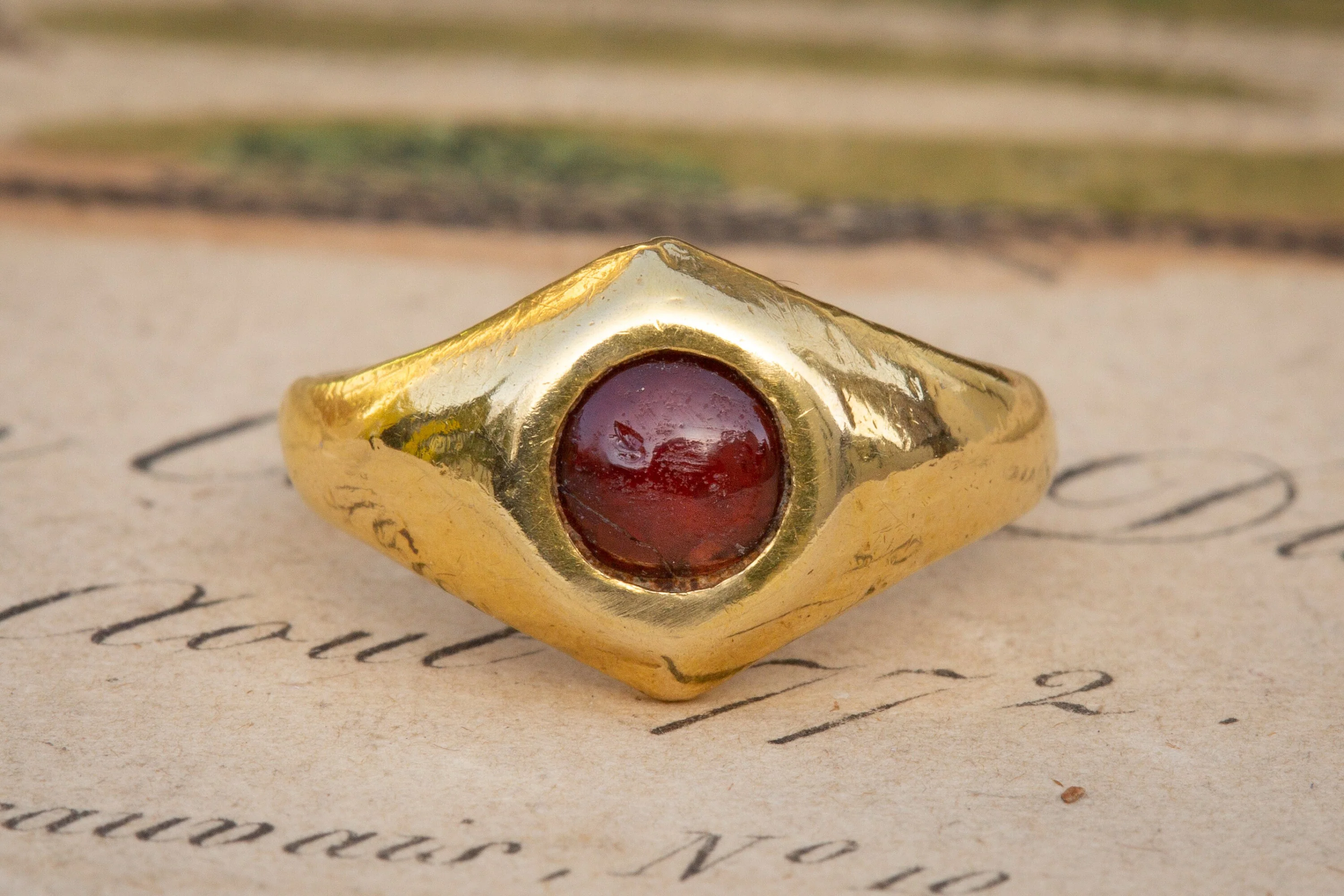
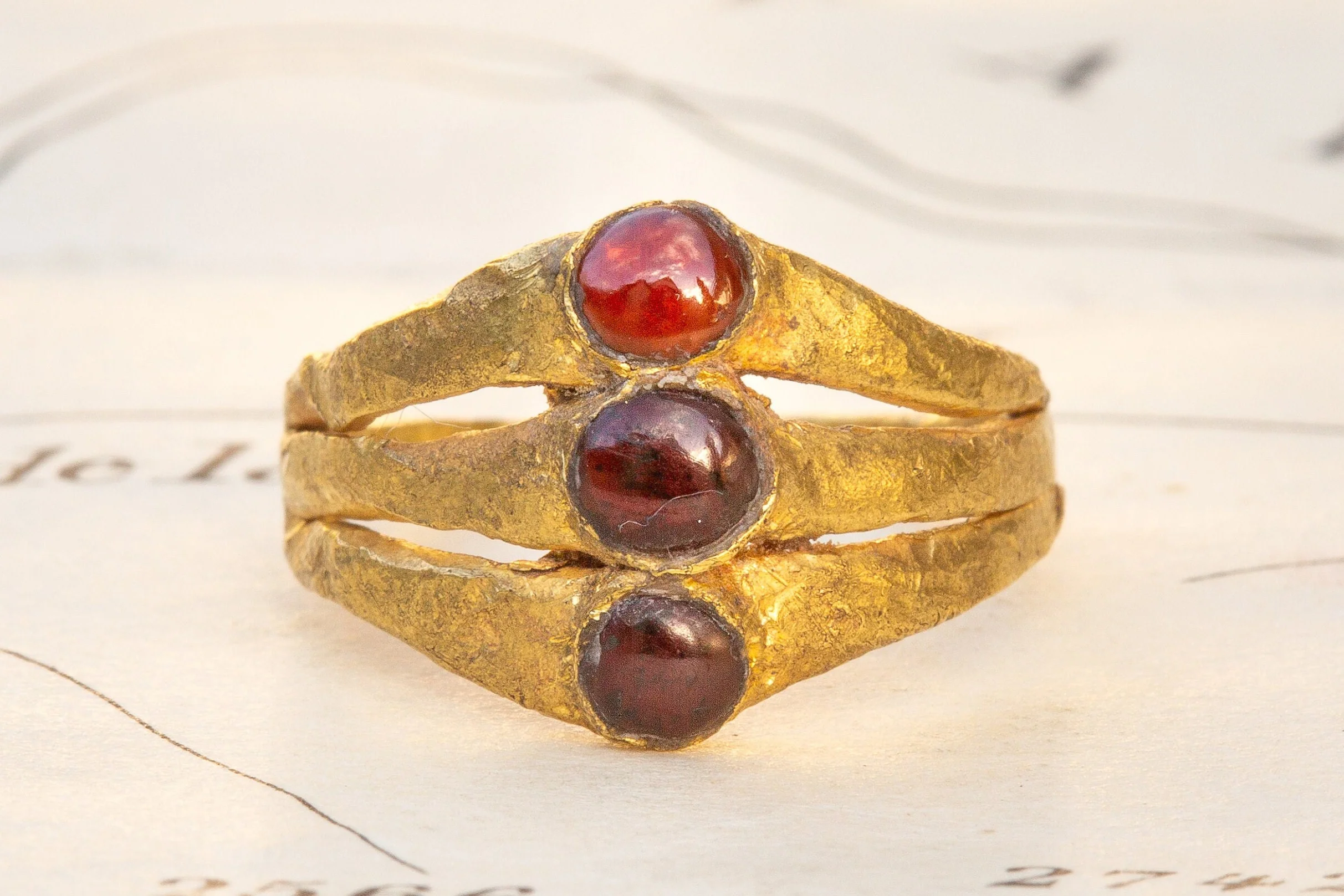
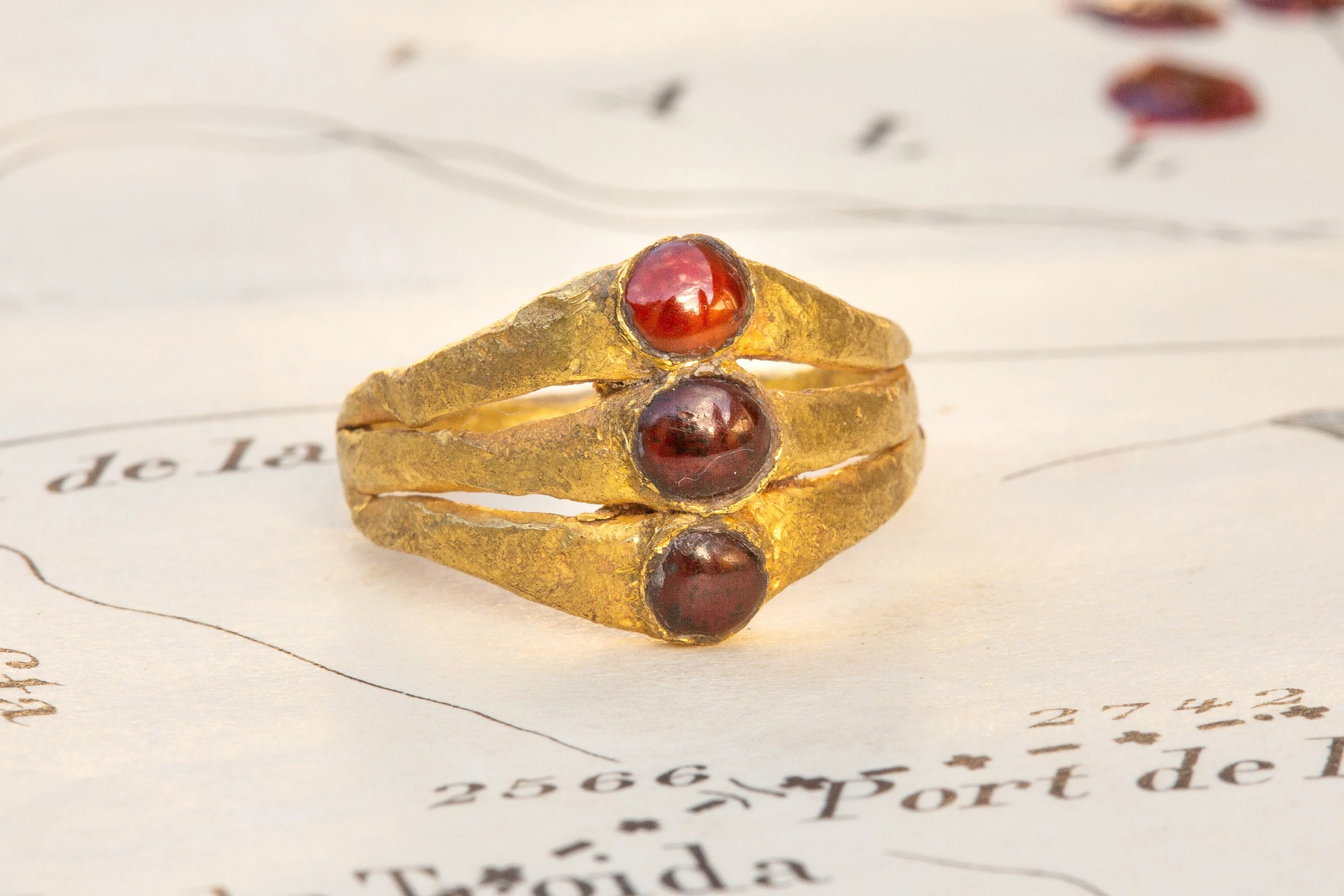
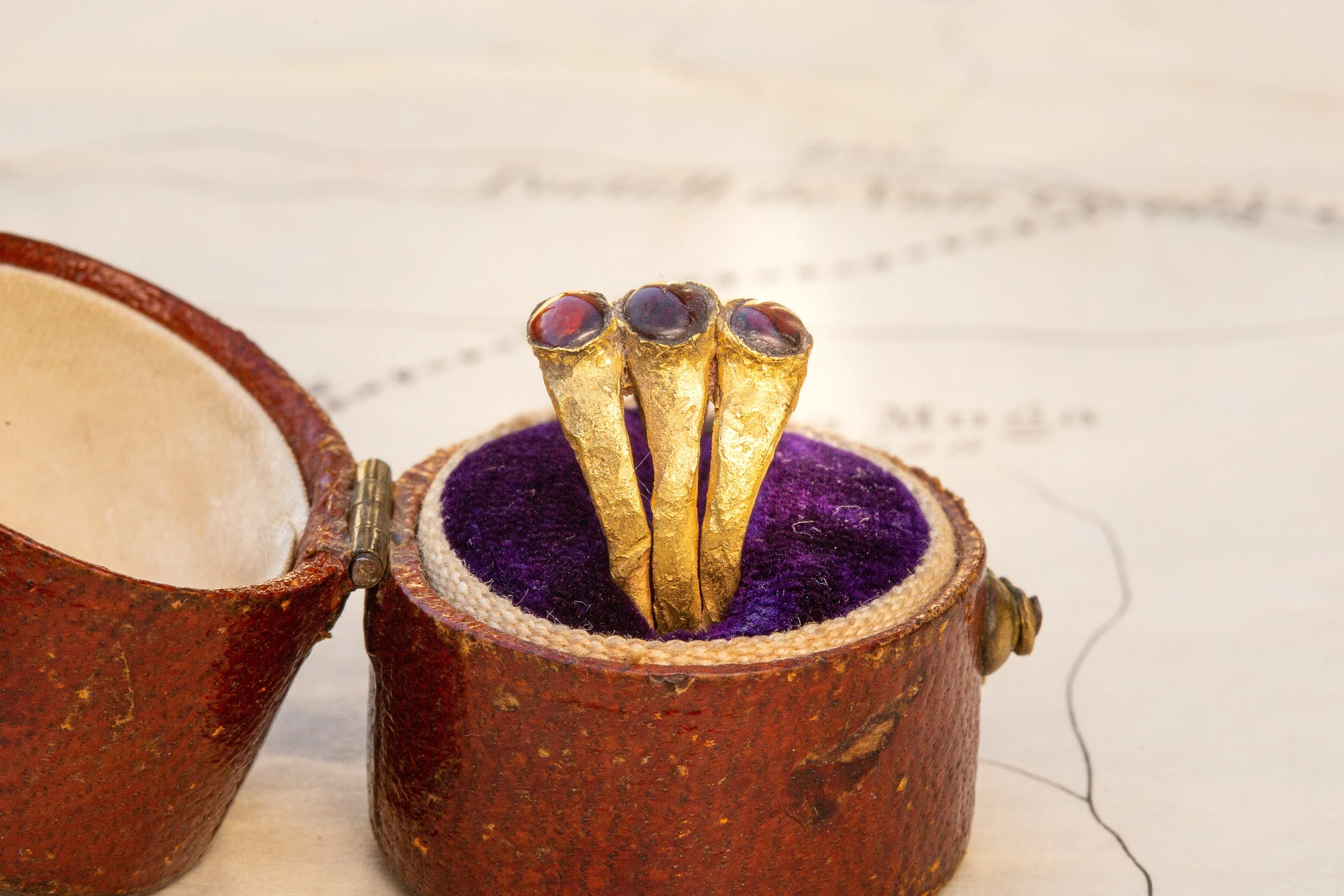
A beautiful and scarce example of a Late Roman triple-layered ring set with garnet cabochons, circa 3rd century AD. The flat band is made from a thick hammered sheet of high karat gold and trifurcates into three flat gold bands at the bezel, each set to the centre with a garnet cabochon in a closed-back rubover setting. Two of the stones display a lovely deep-red hue, with the third stone being slightly lighter in colour.
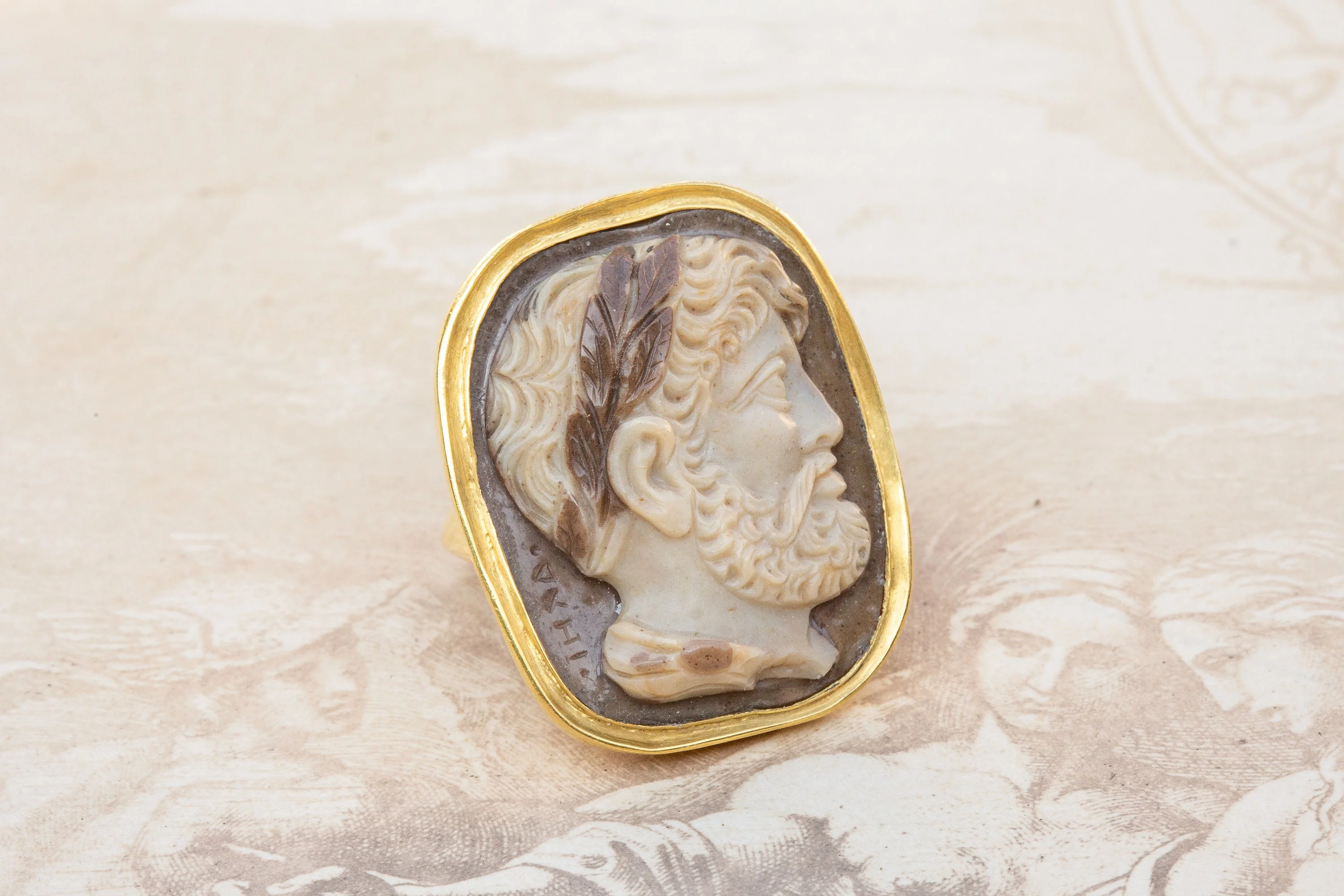
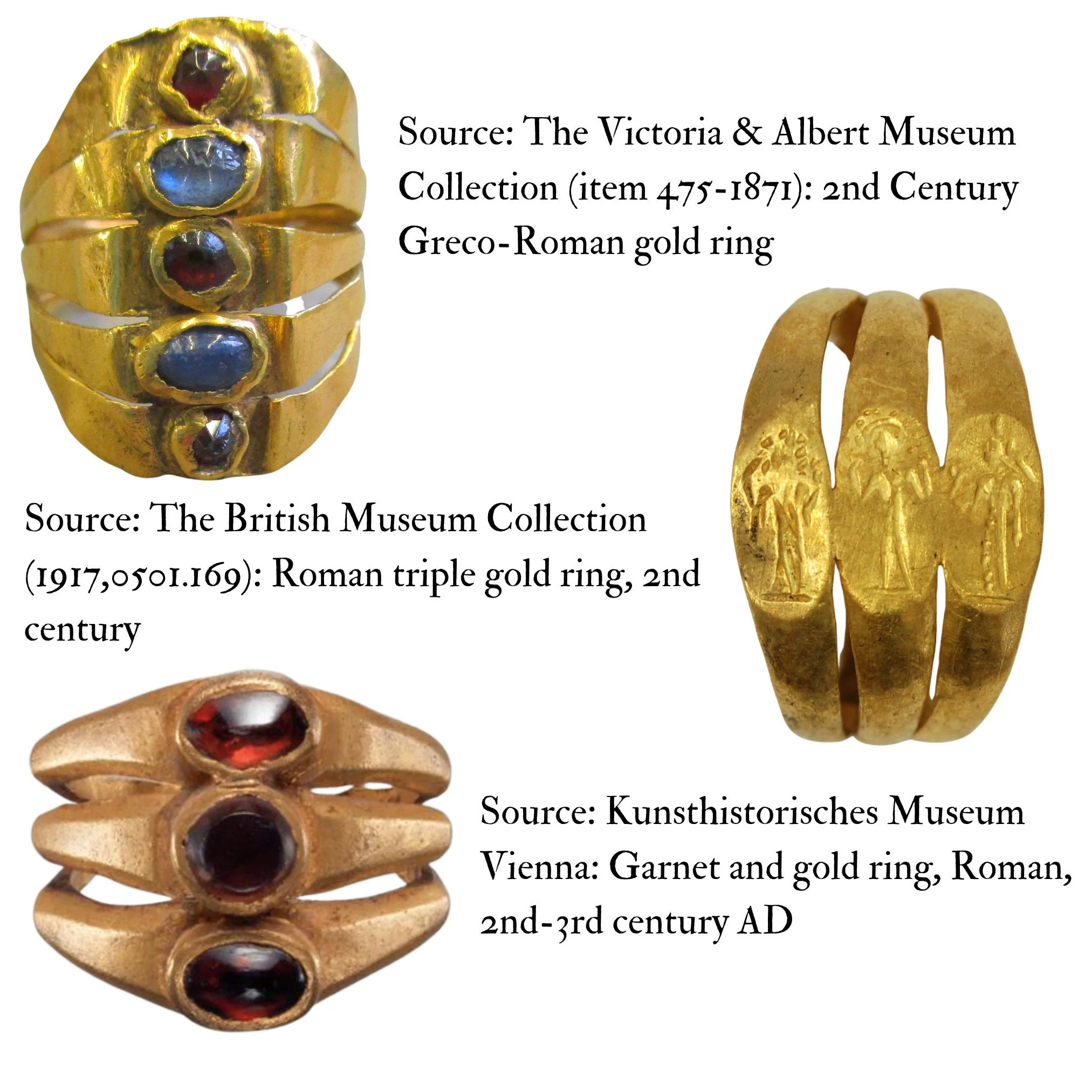
The ring is a fairly small size and is in wearable condition, commensurate with its age. Similar examples of Late Roman layered gem-set rings can be found in the Victoria & Albert Museum (item 475-1871), British Museum Collection (accession number: 1917,0501.169) and the Kunsthistoriches Museum Vienna (see final photo).
Tests as high karat gold (22k-23k) , 3.93g. The stones measures 3.5mm diameter and the bezel measures 10mm from north to south.
UK size H 1/2, US size 4
The ancient Romans considered jewellery to be an essential dressing accessory, for it provided a public display of their wealth. Roman jewellery first followed fashion set by the Etruscans, using gold and glass beads, but as the Roman empire spread and became more prosperous, so did its jewellery designs become more increasing elaborate. Different cultural styles from Greece, Egypt, North Africa, and the Orient were all incorporated to reflect Rome’s prosperity as a dominant, conquering city. The custom of wearing rings was probably introduced by the Sabines, who are described in early legends as wearing gold rings with precious stones. During the Roman Republic it became customary for all the senators, chief magistrates, and at last for the equites also, to wear gold rings.
The ring is a fairly small size and is in wearable condition, commensurate with its age. Similar examples of Late Roman layered gem-set rings can be found in the Victoria & Albert Museum (item 475-1871), British Museum Collection (accession number: 1917,0501.169) and the Kunsthistoriches Museum Vienna (see final photo).
Tests as high karat gold (22k-23k) , 3.93g. The stones measures 3.5mm diameter and the bezel measures 10mm from north to south.
UK size H 1/2, US size 4
The ancient Romans considered jewellery to be an essential dressing accessory, for it provided a public display of their wealth. Roman jewellery first followed fashion set by the Etruscans, using gold and glass beads, but as the Roman empire spread and became more prosperous, so did its jewellery designs become more increasing elaborate. Different cultural styles from Greece, Egypt, North Africa, and the Orient were all incorporated to reflect Rome’s prosperity as a dominant, conquering city. The custom of wearing rings was probably introduced by the Sabines, who are described in early legends as wearing gold rings with precious stones. During the Roman Republic it became customary for all the senators, chief magistrates, and at last for the equites also, to wear gold rings.
$3,752.19
Ancient Roman Gold and Garnet Ring—
$3,752.19
Product Information
Product Information
Shipping & Returns
Shipping & Returns
Description
A beautiful and scarce example of a Late Roman triple-layered ring set with garnet cabochons, circa 3rd century AD. The flat band is made from a thick hammered sheet of high karat gold and trifurcates into three flat gold bands at the bezel, each set to the centre with a garnet cabochon in a closed-back rubover setting. Two of the stones display a lovely deep-red hue, with the third stone being slightly lighter in colour.
The ring is a fairly small size and is in wearable condition, commensurate with its age. Similar examples of Late Roman layered gem-set rings can be found in the Victoria & Albert Museum (item 475-1871), British Museum Collection (accession number: 1917,0501.169) and the Kunsthistoriches Museum Vienna (see final photo).
Tests as high karat gold (22k-23k) , 3.93g. The stones measures 3.5mm diameter and the bezel measures 10mm from north to south.
UK size H 1/2, US size 4
The ancient Romans considered jewellery to be an essential dressing accessory, for it provided a public display of their wealth. Roman jewellery first followed fashion set by the Etruscans, using gold and glass beads, but as the Roman empire spread and became more prosperous, so did its jewellery designs become more increasing elaborate. Different cultural styles from Greece, Egypt, North Africa, and the Orient were all incorporated to reflect Rome’s prosperity as a dominant, conquering city. The custom of wearing rings was probably introduced by the Sabines, who are described in early legends as wearing gold rings with precious stones. During the Roman Republic it became customary for all the senators, chief magistrates, and at last for the equites also, to wear gold rings.
The ring is a fairly small size and is in wearable condition, commensurate with its age. Similar examples of Late Roman layered gem-set rings can be found in the Victoria & Albert Museum (item 475-1871), British Museum Collection (accession number: 1917,0501.169) and the Kunsthistoriches Museum Vienna (see final photo).
Tests as high karat gold (22k-23k) , 3.93g. The stones measures 3.5mm diameter and the bezel measures 10mm from north to south.
UK size H 1/2, US size 4
The ancient Romans considered jewellery to be an essential dressing accessory, for it provided a public display of their wealth. Roman jewellery first followed fashion set by the Etruscans, using gold and glass beads, but as the Roman empire spread and became more prosperous, so did its jewellery designs become more increasing elaborate. Different cultural styles from Greece, Egypt, North Africa, and the Orient were all incorporated to reflect Rome’s prosperity as a dominant, conquering city. The custom of wearing rings was probably introduced by the Sabines, who are described in early legends as wearing gold rings with precious stones. During the Roman Republic it became customary for all the senators, chief magistrates, and at last for the equites also, to wear gold rings.