🎉 Up to 70% Off Selected ItemsShop Sale



Italian Renaissance 'Hadrian' Cameo Ring
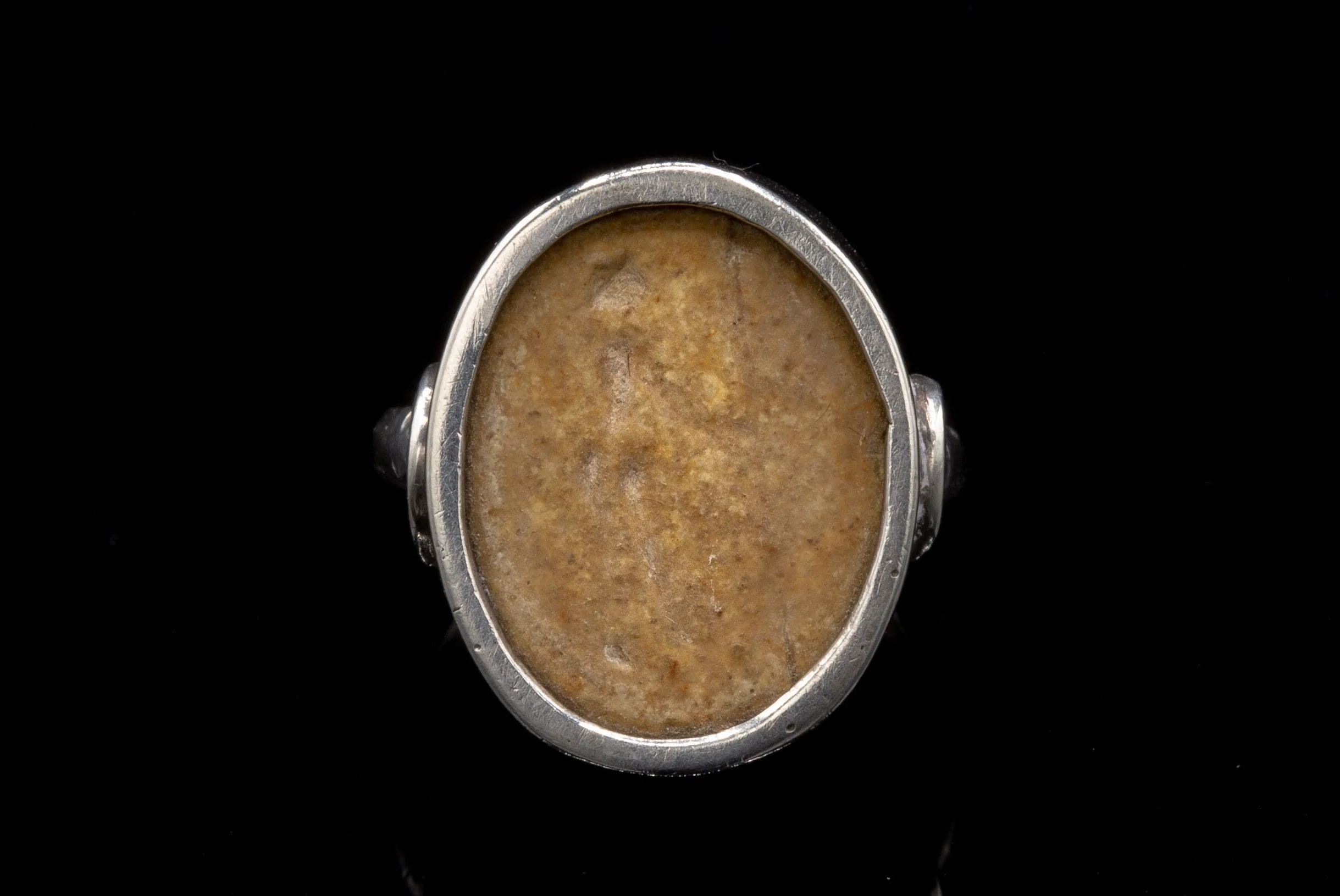
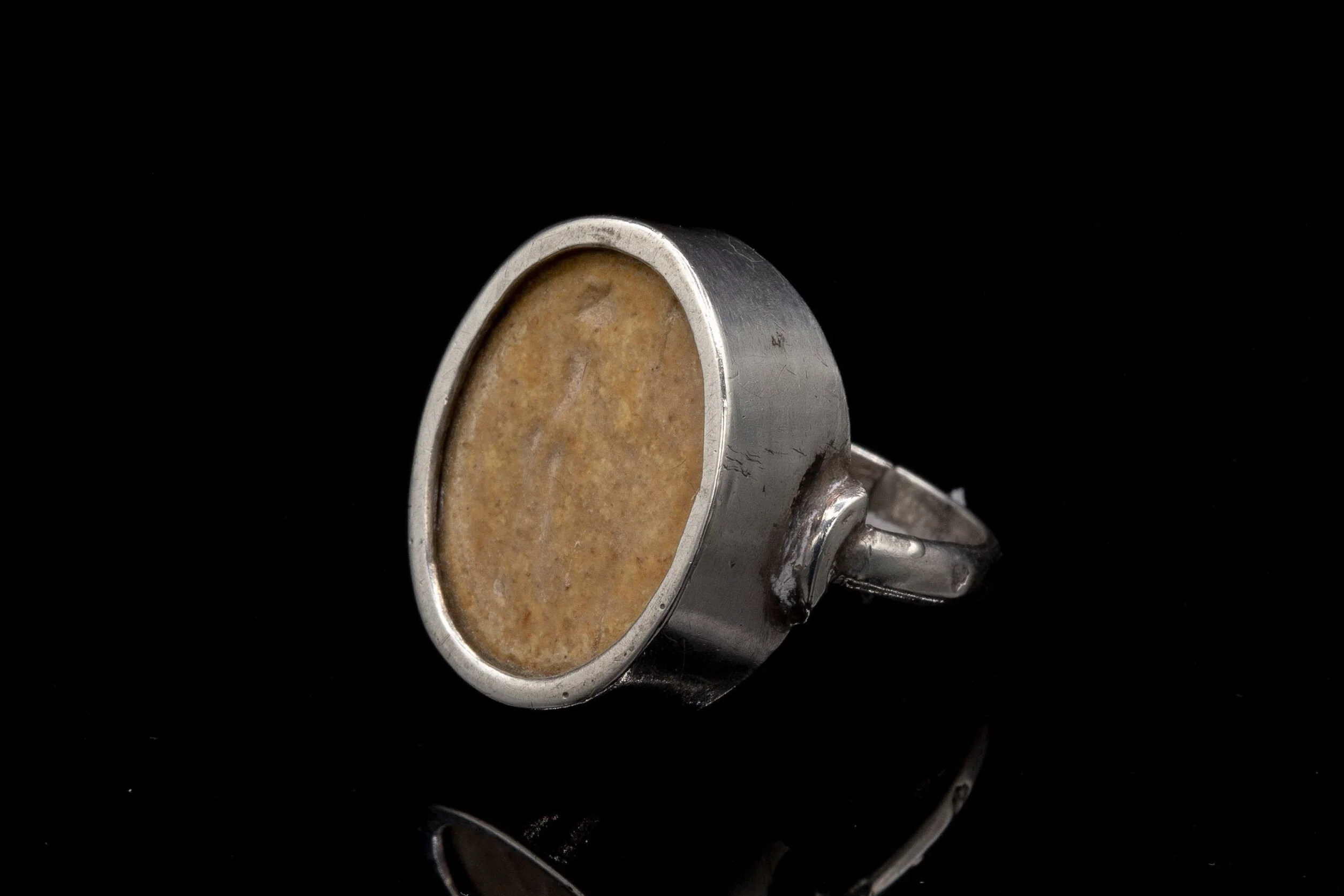
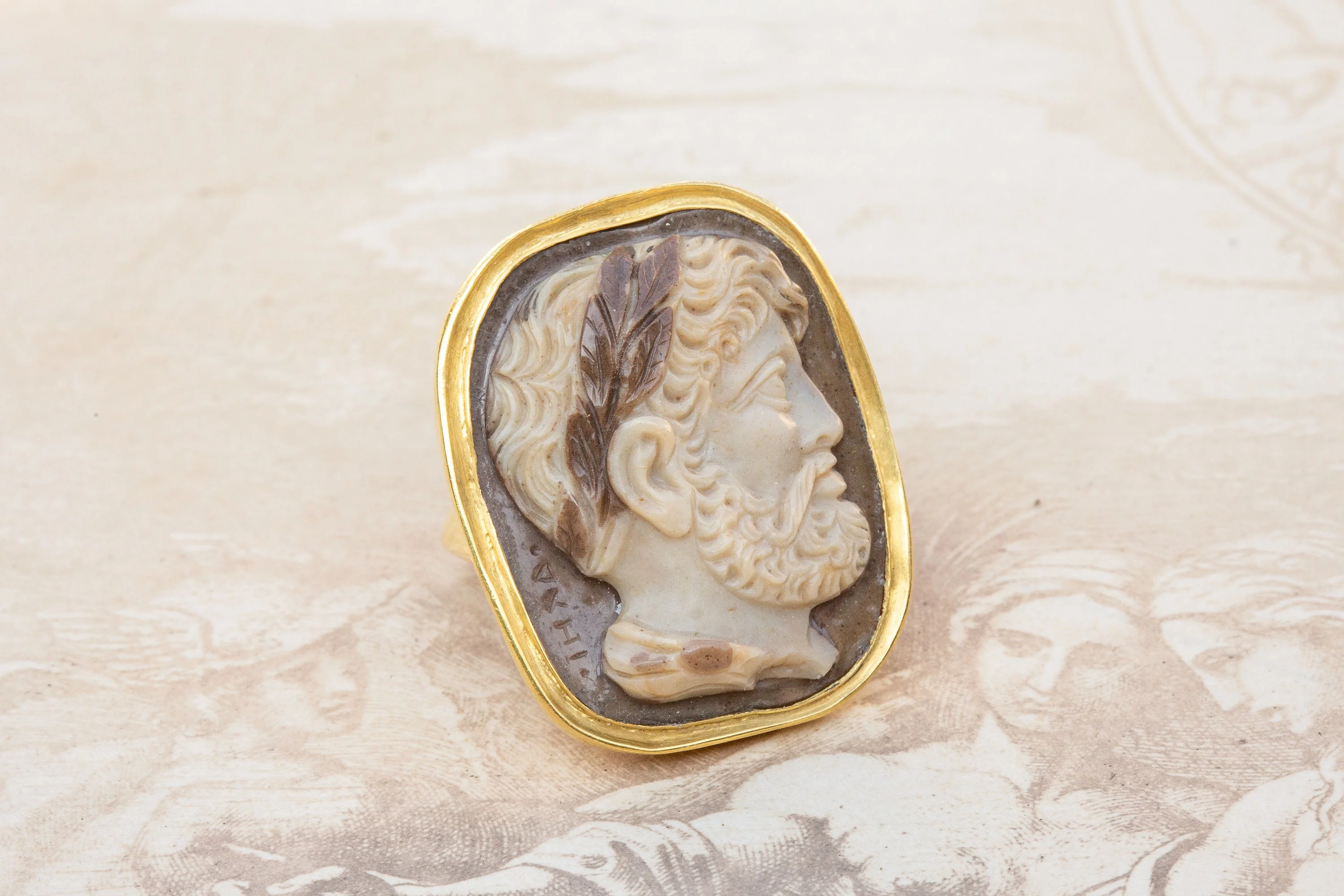
A rare 17th century Italian hardstone cameo set in a later high karat gold signet mount. This beautiful creamy-brown layered cameo is carved from a single piece of jasper to reveal the portrait of the emperor Hadrian in classical style. The effigy of the roman emperor faces to the right and presents the laureated head. The carving is typical of Renaissance production and is taken from the prototypes of classic roman coins. The face is framed by a moustache and finely curled beard and the iris of the eye is incised and turned upwards.
During the Renaissance, a time of heightened intellectual curiosity, there was a revival of classical antiquity - the study of Latin and Greek, and collecting everything connected to earlier Greek and Roman civilisations. The collecting of engraved gems became very fashionable, and cameos attracted collectors more than intaglios. However the demand was high, and the quantity of antique cameos available was not sufficient, which ultimately led to gem engravers of the Renaissance period creating their own cameos with classical mythological and heroic pictures from ancient gems, coins and sculptures. Like the present cameo, many of the Renaissance gem engravers also signed their works in Latin or Greek. See the final photo for similar examples of late 16th and early 17th century portrait cameos in museum collections.
In this example, the engraver cleverly uses each of the stone’s differently coloured layers to fill various parts of the portrait. The outermost, a dark brown layer is used for the laurel wreath which indicates that the sitter is an emperor. A lighter matte stone hued layer is revealed underneath which softly frames the face, hair and beard whist the background repeats the topmost layer of dark waxy, brown. The cameo is signed with the makers signature in Greek lettering, ‘IHX∆’. The 18K gold mount was added later and takes the form of late 18th century Georgian ring mounts.
Hadrian was an emperor of the Roman Empire from the years 117-138 CE. He was a powerful ruler committed to strengthening the Empire. Hadrian oversaw several important building projects, including the Temple of Venus and Roma as well as Hadrian's Wall in Northern Britain. He is also remembered for his love affair with the Bithynian youth Antinous (l. c. 110-130 CE) whom he deified after the young man’s death, resulting in the popular cult of Antinous which, early on, rivalled Christianity.
UK size Q 1/2, US size 8.25
The ring weighs an impressive 21.8g. The oval bezel measures 32mm x 26mm. The cameo protrudes 5mm from its base.
Key for museum references (final photo): 1. Sothebys - Italian 16th-17th century cameo of an emperor
2. Museum of Fine Arts Budapest - Antique Cameo of Emperor (52.233)
3. Bertolami Fine Arts - Roman Cameo of the Emperor Hadrian (Auction 66 - Part 2 - Lot 493)
4. British Museum - 16th century Italian cameo of Aflonso I de Este (1890,0901.20)
5. Our 17th century Hadrian cameo for comparison
6. British Museum - 16th century cameo of a woman (1859,0301.98)
7. The Hermitage Museum - 17th century cameo of Hadrian (К-3336)
8. The Hermitage Museum- 18th century cameo of warrior (К-6748)
9. The Hermitage Museum - 16th century Italian cameo of a philosopher (К-3901)
During the Renaissance, a time of heightened intellectual curiosity, there was a revival of classical antiquity - the study of Latin and Greek, and collecting everything connected to earlier Greek and Roman civilisations. The collecting of engraved gems became very fashionable, and cameos attracted collectors more than intaglios. However the demand was high, and the quantity of antique cameos available was not sufficient, which ultimately led to gem engravers of the Renaissance period creating their own cameos with classical mythological and heroic pictures from ancient gems, coins and sculptures. Like the present cameo, many of the Renaissance gem engravers also signed their works in Latin or Greek. See the final photo for similar examples of late 16th and early 17th century portrait cameos in museum collections.
In this example, the engraver cleverly uses each of the stone’s differently coloured layers to fill various parts of the portrait. The outermost, a dark brown layer is used for the laurel wreath which indicates that the sitter is an emperor. A lighter matte stone hued layer is revealed underneath which softly frames the face, hair and beard whist the background repeats the topmost layer of dark waxy, brown. The cameo is signed with the makers signature in Greek lettering, ‘IHX∆’. The 18K gold mount was added later and takes the form of late 18th century Georgian ring mounts.
Hadrian was an emperor of the Roman Empire from the years 117-138 CE. He was a powerful ruler committed to strengthening the Empire. Hadrian oversaw several important building projects, including the Temple of Venus and Roma as well as Hadrian's Wall in Northern Britain. He is also remembered for his love affair with the Bithynian youth Antinous (l. c. 110-130 CE) whom he deified after the young man’s death, resulting in the popular cult of Antinous which, early on, rivalled Christianity.
UK size Q 1/2, US size 8.25
The ring weighs an impressive 21.8g. The oval bezel measures 32mm x 26mm. The cameo protrudes 5mm from its base.
Key for museum references (final photo): 1. Sothebys - Italian 16th-17th century cameo of an emperor
2. Museum of Fine Arts Budapest - Antique Cameo of Emperor (52.233)
3. Bertolami Fine Arts - Roman Cameo of the Emperor Hadrian (Auction 66 - Part 2 - Lot 493)
4. British Museum - 16th century Italian cameo of Aflonso I de Este (1890,0901.20)
5. Our 17th century Hadrian cameo for comparison
6. British Museum - 16th century cameo of a woman (1859,0301.98)
7. The Hermitage Museum - 17th century cameo of Hadrian (К-3336)
8. The Hermitage Museum- 18th century cameo of warrior (К-6748)
9. The Hermitage Museum - 16th century Italian cameo of a philosopher (К-3901)
$3,216.16
Original: $10,720.54
-70%Italian Renaissance 'Hadrian' Cameo Ring—
$10,720.54
$3,216.16Product Information
Product Information
Shipping & Returns
Shipping & Returns
Description
A rare 17th century Italian hardstone cameo set in a later high karat gold signet mount. This beautiful creamy-brown layered cameo is carved from a single piece of jasper to reveal the portrait of the emperor Hadrian in classical style. The effigy of the roman emperor faces to the right and presents the laureated head. The carving is typical of Renaissance production and is taken from the prototypes of classic roman coins. The face is framed by a moustache and finely curled beard and the iris of the eye is incised and turned upwards.
During the Renaissance, a time of heightened intellectual curiosity, there was a revival of classical antiquity - the study of Latin and Greek, and collecting everything connected to earlier Greek and Roman civilisations. The collecting of engraved gems became very fashionable, and cameos attracted collectors more than intaglios. However the demand was high, and the quantity of antique cameos available was not sufficient, which ultimately led to gem engravers of the Renaissance period creating their own cameos with classical mythological and heroic pictures from ancient gems, coins and sculptures. Like the present cameo, many of the Renaissance gem engravers also signed their works in Latin or Greek. See the final photo for similar examples of late 16th and early 17th century portrait cameos in museum collections.
In this example, the engraver cleverly uses each of the stone’s differently coloured layers to fill various parts of the portrait. The outermost, a dark brown layer is used for the laurel wreath which indicates that the sitter is an emperor. A lighter matte stone hued layer is revealed underneath which softly frames the face, hair and beard whist the background repeats the topmost layer of dark waxy, brown. The cameo is signed with the makers signature in Greek lettering, ‘IHX∆’. The 18K gold mount was added later and takes the form of late 18th century Georgian ring mounts.
Hadrian was an emperor of the Roman Empire from the years 117-138 CE. He was a powerful ruler committed to strengthening the Empire. Hadrian oversaw several important building projects, including the Temple of Venus and Roma as well as Hadrian's Wall in Northern Britain. He is also remembered for his love affair with the Bithynian youth Antinous (l. c. 110-130 CE) whom he deified after the young man’s death, resulting in the popular cult of Antinous which, early on, rivalled Christianity.
UK size Q 1/2, US size 8.25
The ring weighs an impressive 21.8g. The oval bezel measures 32mm x 26mm. The cameo protrudes 5mm from its base.
Key for museum references (final photo): 1. Sothebys - Italian 16th-17th century cameo of an emperor
2. Museum of Fine Arts Budapest - Antique Cameo of Emperor (52.233)
3. Bertolami Fine Arts - Roman Cameo of the Emperor Hadrian (Auction 66 - Part 2 - Lot 493)
4. British Museum - 16th century Italian cameo of Aflonso I de Este (1890,0901.20)
5. Our 17th century Hadrian cameo for comparison
6. British Museum - 16th century cameo of a woman (1859,0301.98)
7. The Hermitage Museum - 17th century cameo of Hadrian (К-3336)
8. The Hermitage Museum- 18th century cameo of warrior (К-6748)
9. The Hermitage Museum - 16th century Italian cameo of a philosopher (К-3901)
During the Renaissance, a time of heightened intellectual curiosity, there was a revival of classical antiquity - the study of Latin and Greek, and collecting everything connected to earlier Greek and Roman civilisations. The collecting of engraved gems became very fashionable, and cameos attracted collectors more than intaglios. However the demand was high, and the quantity of antique cameos available was not sufficient, which ultimately led to gem engravers of the Renaissance period creating their own cameos with classical mythological and heroic pictures from ancient gems, coins and sculptures. Like the present cameo, many of the Renaissance gem engravers also signed their works in Latin or Greek. See the final photo for similar examples of late 16th and early 17th century portrait cameos in museum collections.
In this example, the engraver cleverly uses each of the stone’s differently coloured layers to fill various parts of the portrait. The outermost, a dark brown layer is used for the laurel wreath which indicates that the sitter is an emperor. A lighter matte stone hued layer is revealed underneath which softly frames the face, hair and beard whist the background repeats the topmost layer of dark waxy, brown. The cameo is signed with the makers signature in Greek lettering, ‘IHX∆’. The 18K gold mount was added later and takes the form of late 18th century Georgian ring mounts.
Hadrian was an emperor of the Roman Empire from the years 117-138 CE. He was a powerful ruler committed to strengthening the Empire. Hadrian oversaw several important building projects, including the Temple of Venus and Roma as well as Hadrian's Wall in Northern Britain. He is also remembered for his love affair with the Bithynian youth Antinous (l. c. 110-130 CE) whom he deified after the young man’s death, resulting in the popular cult of Antinous which, early on, rivalled Christianity.
UK size Q 1/2, US size 8.25
The ring weighs an impressive 21.8g. The oval bezel measures 32mm x 26mm. The cameo protrudes 5mm from its base.
Key for museum references (final photo): 1. Sothebys - Italian 16th-17th century cameo of an emperor
2. Museum of Fine Arts Budapest - Antique Cameo of Emperor (52.233)
3. Bertolami Fine Arts - Roman Cameo of the Emperor Hadrian (Auction 66 - Part 2 - Lot 493)
4. British Museum - 16th century Italian cameo of Aflonso I de Este (1890,0901.20)
5. Our 17th century Hadrian cameo for comparison
6. British Museum - 16th century cameo of a woman (1859,0301.98)
7. The Hermitage Museum - 17th century cameo of Hadrian (К-3336)
8. The Hermitage Museum- 18th century cameo of warrior (К-6748)
9. The Hermitage Museum - 16th century Italian cameo of a philosopher (К-3901)