🎉 Up to 70% Off Selected ItemsShop Sale



Rare Tudor Memento Mori Ring
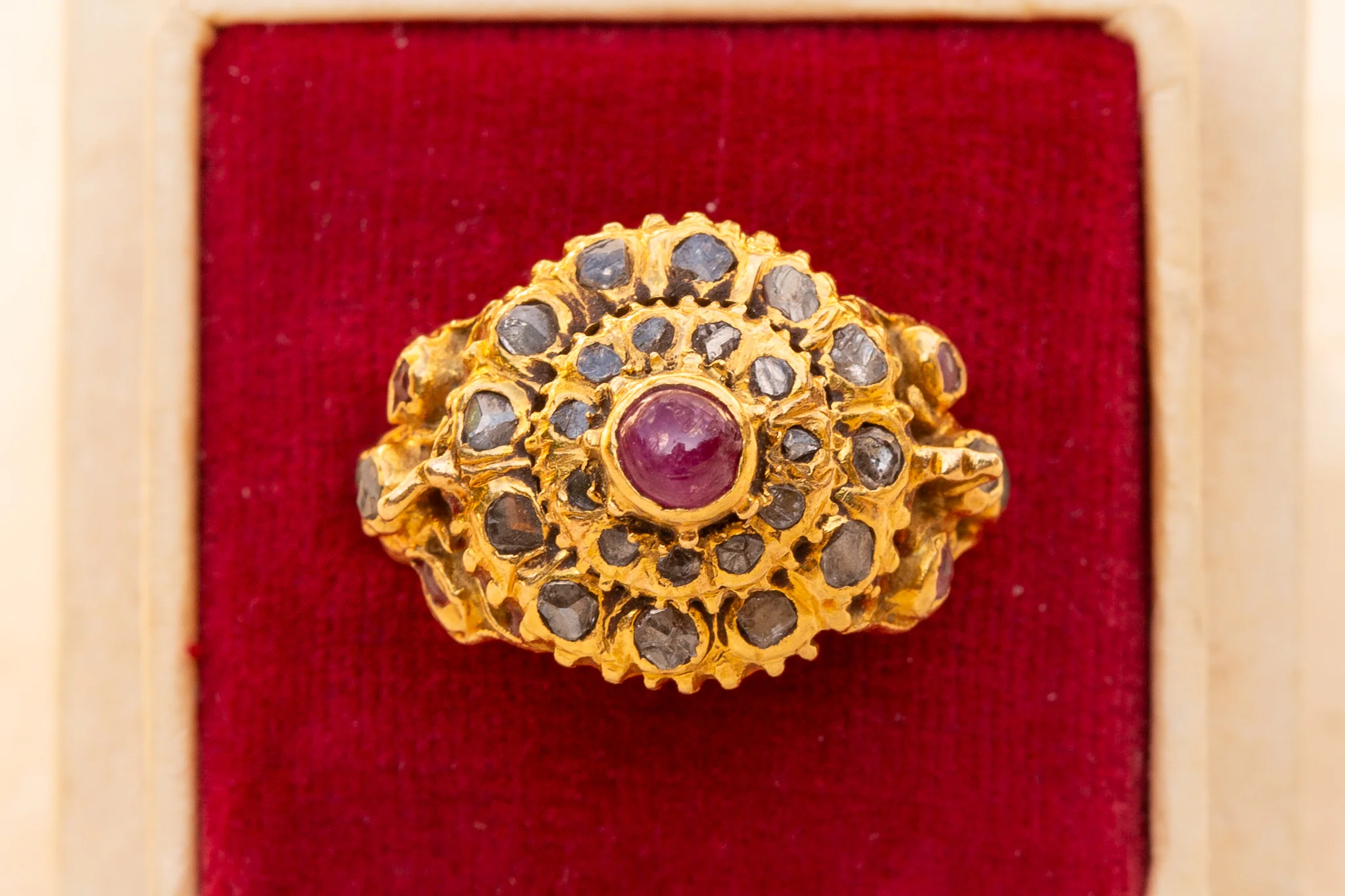
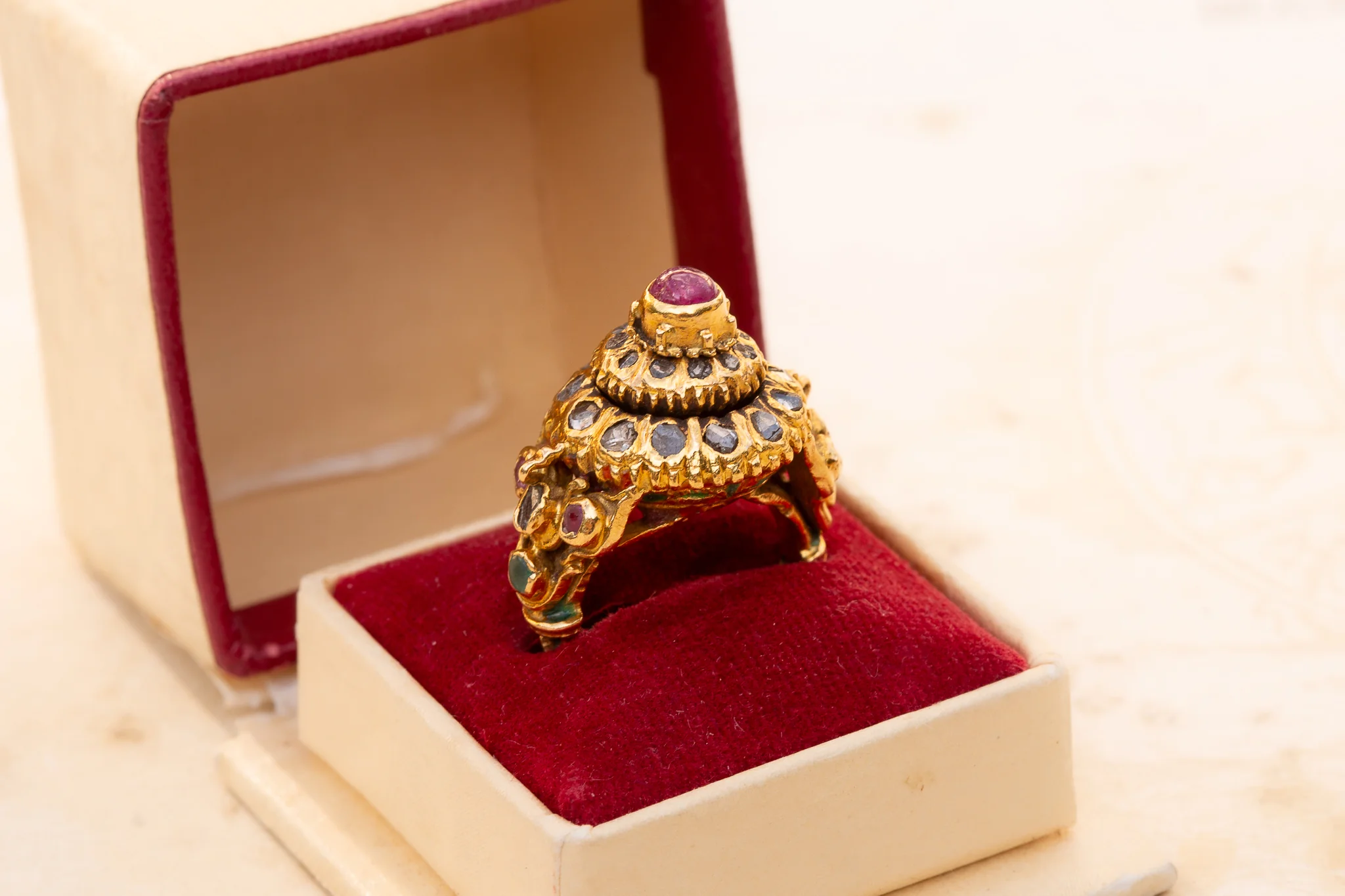
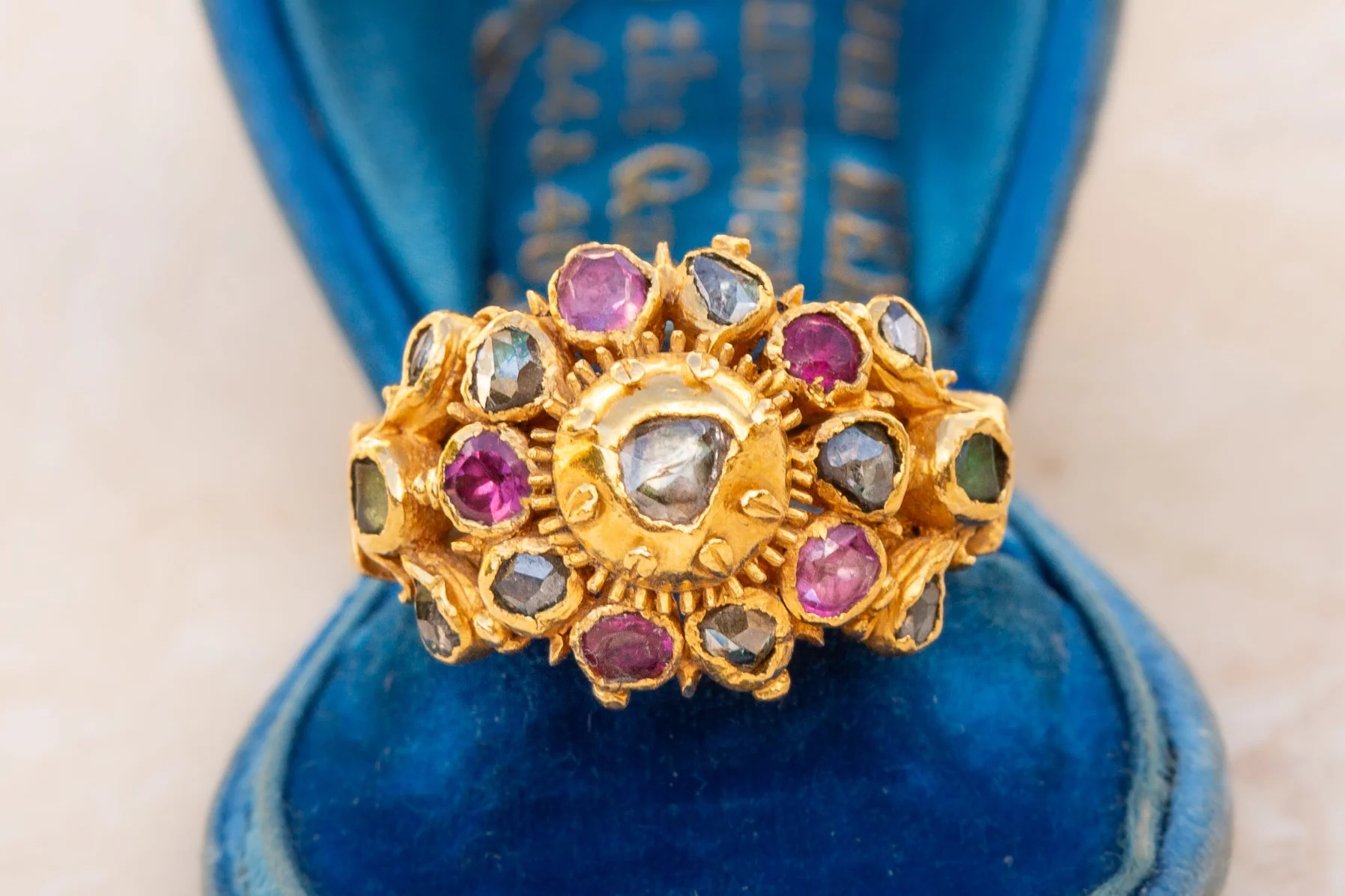
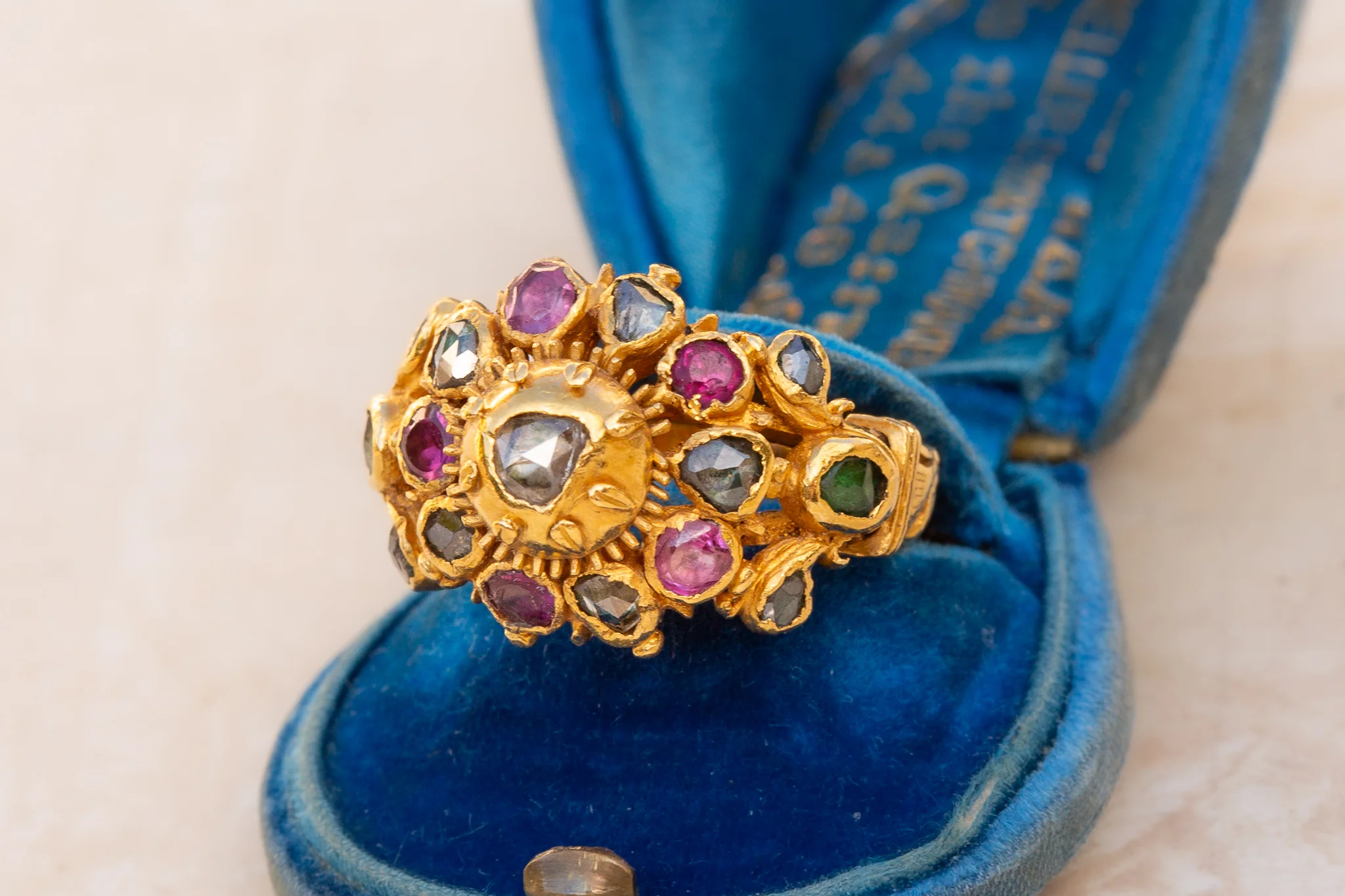
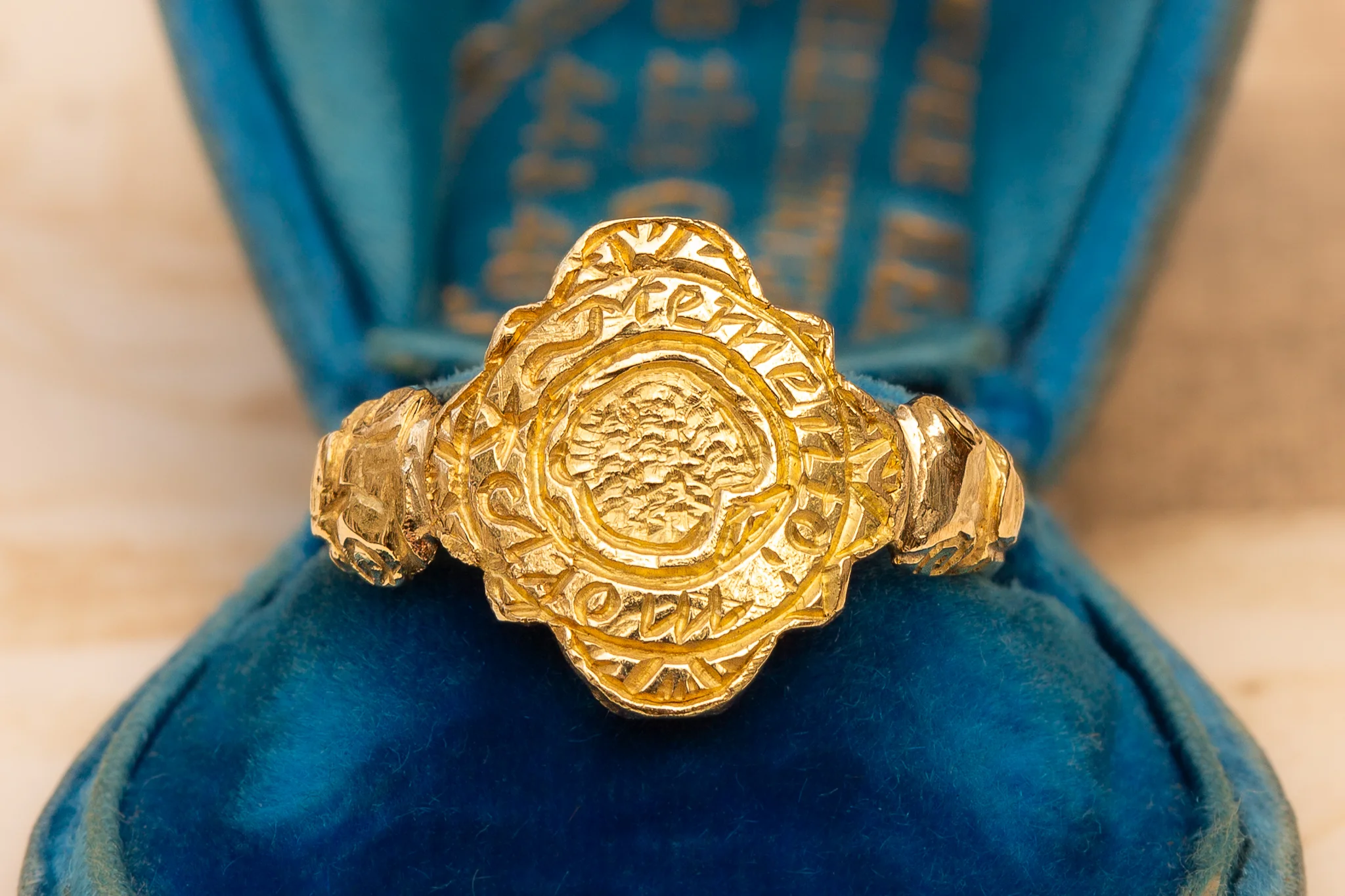
A highly important and exceptionally rare English Tudor period memento mori ring, dating to the second half of the 16th century; a surviving example of one of the most culturally significant jewel types of the Renaissance.
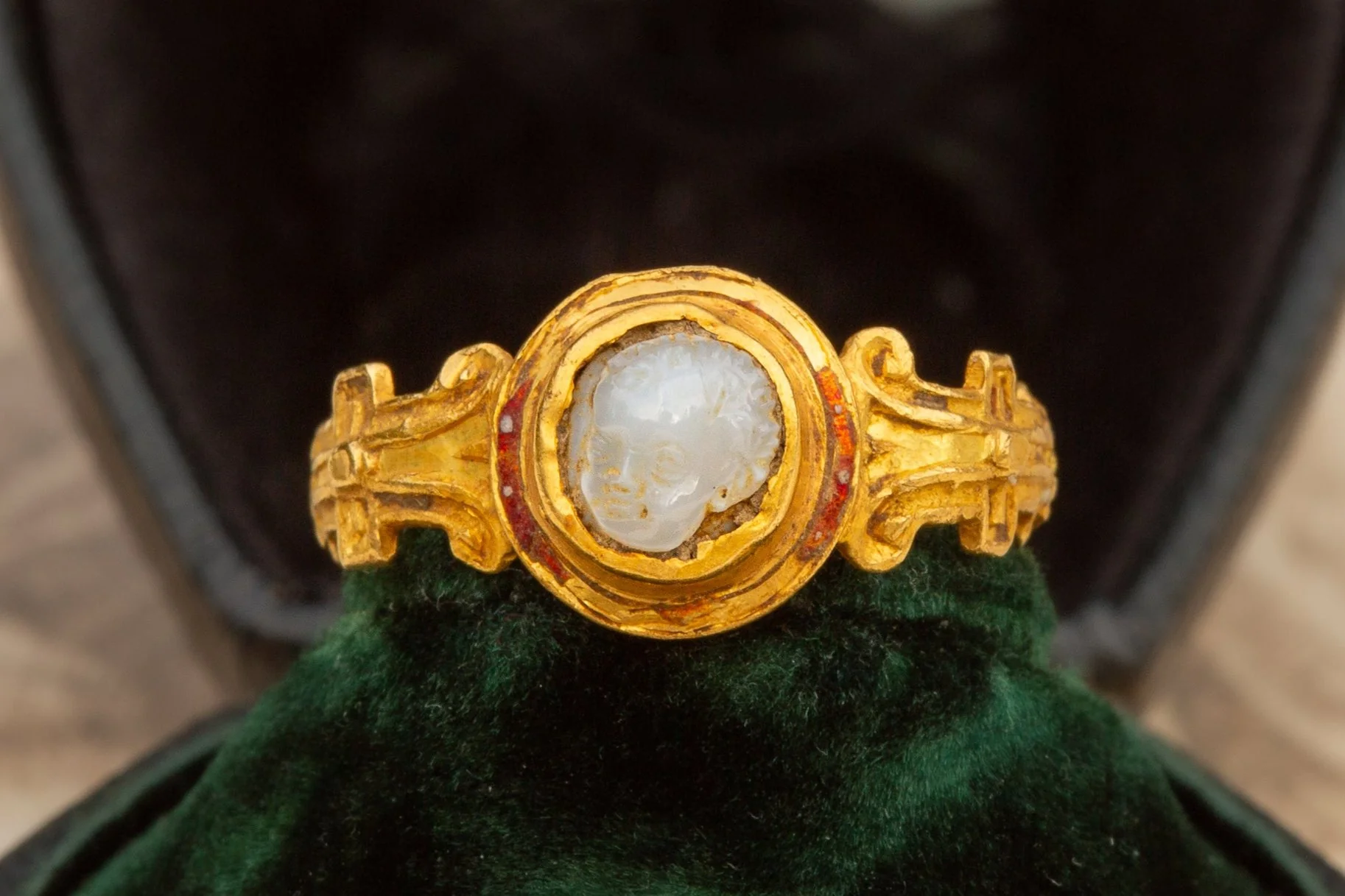
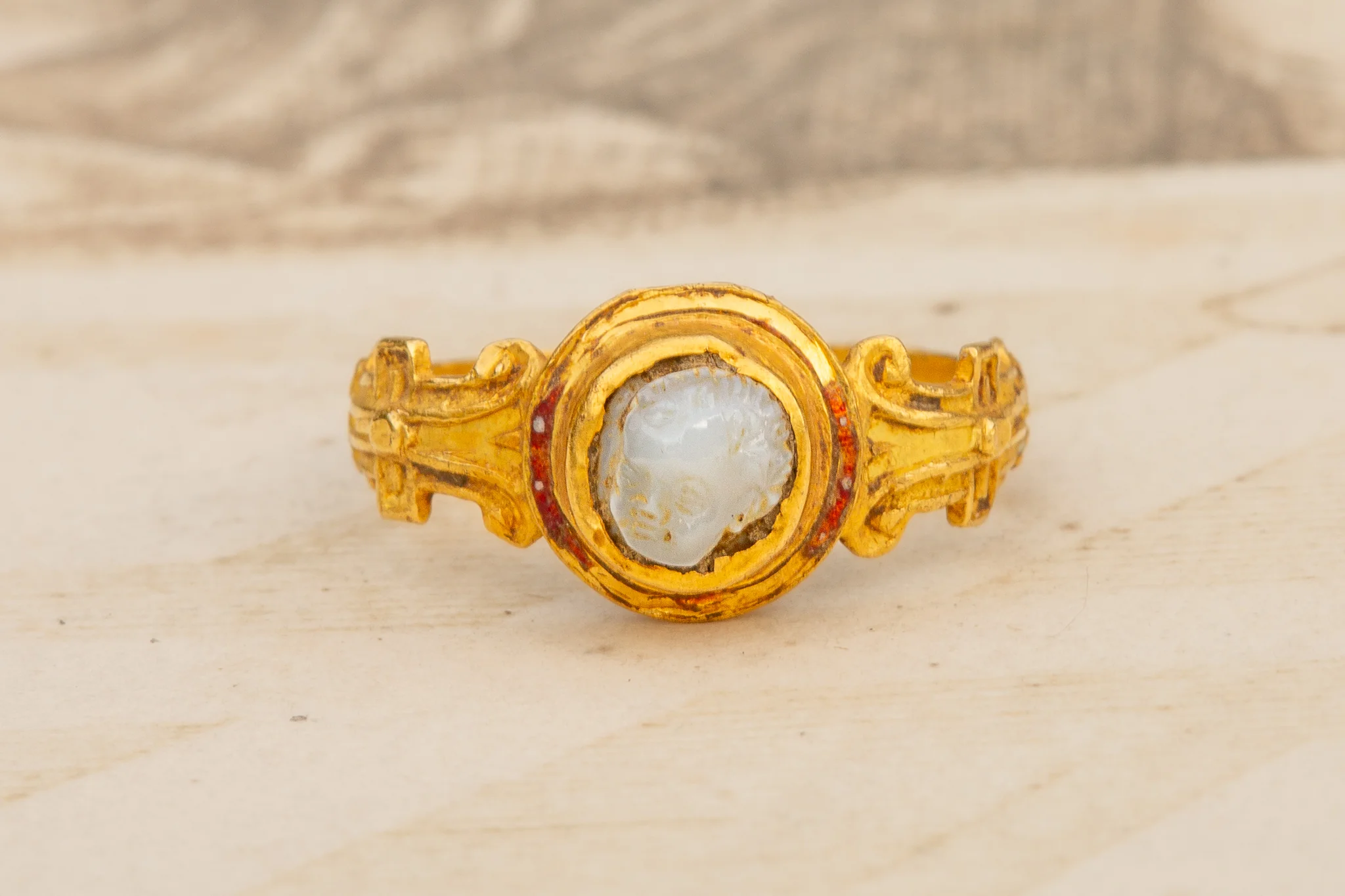
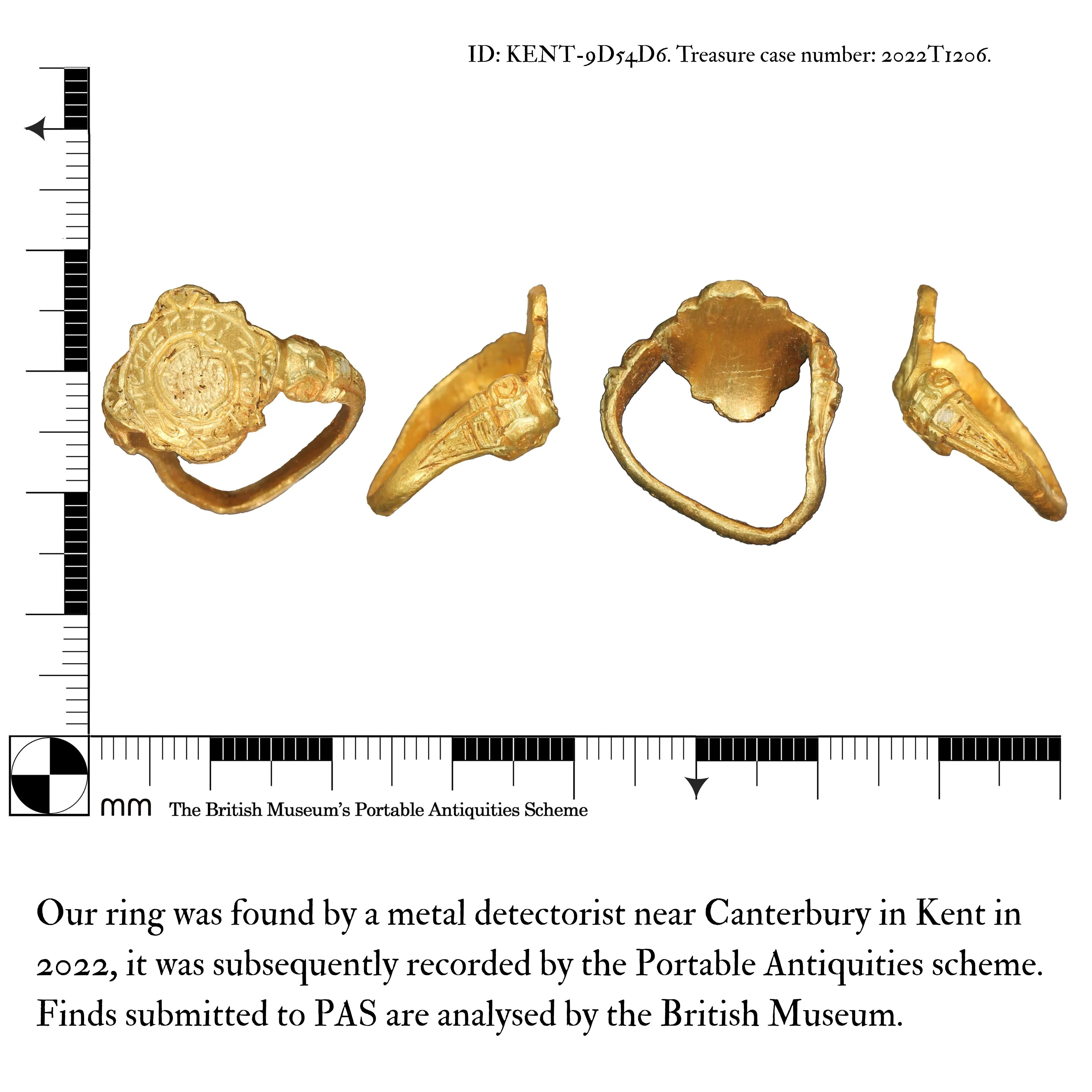
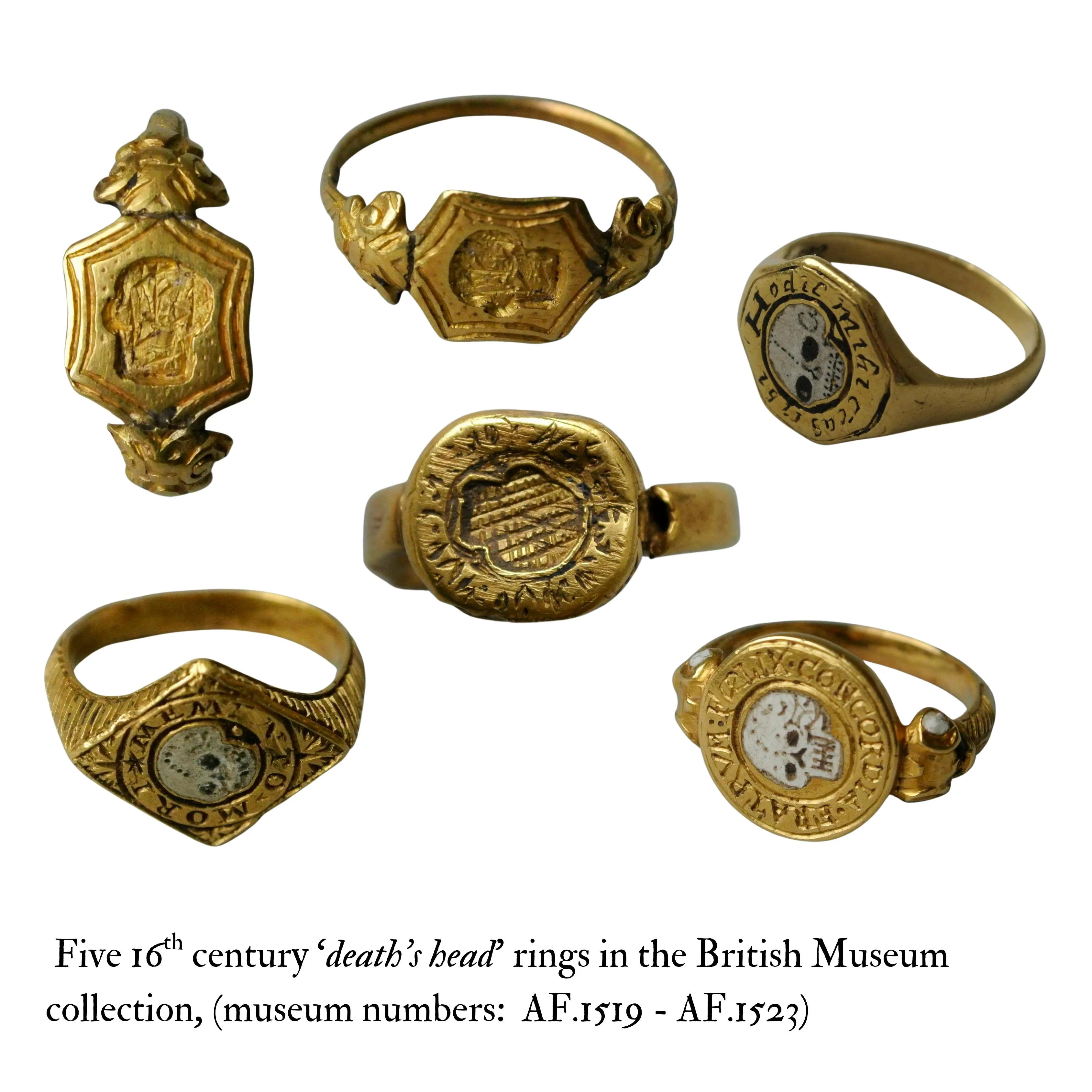
Crafted in high-karat gold (tests as 18K), the ring is formed with an engraved quatrefoil head centred by a skull; the surrounding border inscribed Memento Mori. The shoulders are decorated with finely cut scrollwork, characteristic of Tudor goldsmithing. Originally, the engraved lettering and skull would have been enriched with black and white enamel; traces are now lost through centuries of wear, as is typical for rings of this type. Comparable examples in the British museum demonstrate this original enamelled appearance.
This ring was discovered in 2022 by a metal detectorist near the medieval city of Canterbury, in Kent, and was formally recorded with the Portable Antiquities Scheme. It was subsequently analysed by the British Museum and declared Treasure, recorded under PAS ID KENT-9D54D6; Treasure case number 2022T1206. Images from the PAS database documenting the find and conservation can be found at the end of the photos.
Following recovery, the hoop; which had been slightly distorted in the ground; was professionally corrected, and the head re-aligned. The ring now restored remains in very good and wearable condition.
Death’s head rings became especially popular in 16th-century England, serving as potent reminders of mortality and Christian humility. Documentary evidence records such rings among elite Tudor ownership; Catherine Parr’s jewel inventory of 1549 includes a death’s head ring, and Mary Finch’s 1557 bequest lists multiple examples. A comparable ring is visible in the portrait of Edward Goodman of Ruthin (1476–1560) in the National Museum of Wales.
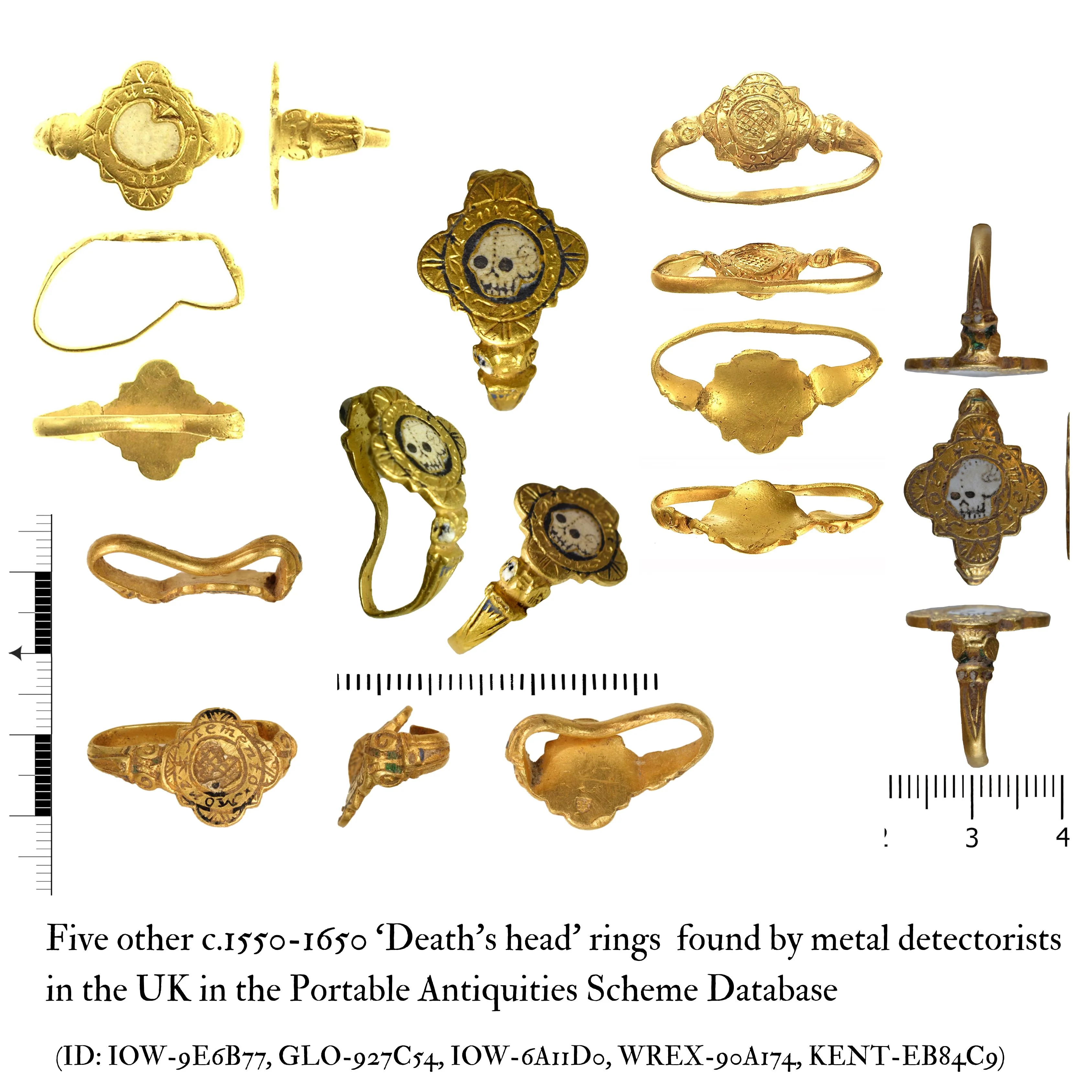
Closely related examples reside in the British Museum (accessions AF.1519–AF.1523), alongside further Tudor death’s head rings recorded as Treasure on the Portable Antiquities Scheme, including IOW-9E6B77, GLO-927C54, IOW-6A11D0, WREX-90A174, and KENT-EB84C9. One such discovery recently featured in BBC News and Smithsonian Magazine.
Details
- England; Tudor period, c.1550–1650
- High-karat gold; tests as 18K
- Weight: 4.4 grams
- Ring size: UK N; US 6.5
- Head: approx. 14mm north–south
- Inscription: Memento Mori
- Portable Antiquities Scheme ID: KENT-9D54D6
- Treasure case: 2022T1206
A museum-grade survival of Tudor moral jewellery; documented, published, and historically anchored.
$10,720.54
Rare Tudor Memento Mori Ring—
$10,720.54
Product Information
Product Information
Shipping & Returns
Shipping & Returns
Description
A highly important and exceptionally rare English Tudor period memento mori ring, dating to the second half of the 16th century; a surviving example of one of the most culturally significant jewel types of the Renaissance.
Crafted in high-karat gold (tests as 18K), the ring is formed with an engraved quatrefoil head centred by a skull; the surrounding border inscribed Memento Mori. The shoulders are decorated with finely cut scrollwork, characteristic of Tudor goldsmithing. Originally, the engraved lettering and skull would have been enriched with black and white enamel; traces are now lost through centuries of wear, as is typical for rings of this type. Comparable examples in the British museum demonstrate this original enamelled appearance.
This ring was discovered in 2022 by a metal detectorist near the medieval city of Canterbury, in Kent, and was formally recorded with the Portable Antiquities Scheme. It was subsequently analysed by the British Museum and declared Treasure, recorded under PAS ID KENT-9D54D6; Treasure case number 2022T1206. Images from the PAS database documenting the find and conservation can be found at the end of the photos.
Following recovery, the hoop; which had been slightly distorted in the ground; was professionally corrected, and the head re-aligned. The ring now restored remains in very good and wearable condition.
Death’s head rings became especially popular in 16th-century England, serving as potent reminders of mortality and Christian humility. Documentary evidence records such rings among elite Tudor ownership; Catherine Parr’s jewel inventory of 1549 includes a death’s head ring, and Mary Finch’s 1557 bequest lists multiple examples. A comparable ring is visible in the portrait of Edward Goodman of Ruthin (1476–1560) in the National Museum of Wales.
Closely related examples reside in the British Museum (accessions AF.1519–AF.1523), alongside further Tudor death’s head rings recorded as Treasure on the Portable Antiquities Scheme, including IOW-9E6B77, GLO-927C54, IOW-6A11D0, WREX-90A174, and KENT-EB84C9. One such discovery recently featured in BBC News and Smithsonian Magazine.
Details
- England; Tudor period, c.1550–1650
- High-karat gold; tests as 18K
- Weight: 4.4 grams
- Ring size: UK N; US 6.5
- Head: approx. 14mm north–south
- Inscription: Memento Mori
- Portable Antiquities Scheme ID: KENT-9D54D6
- Treasure case: 2022T1206
A museum-grade survival of Tudor moral jewellery; documented, published, and historically anchored.