



Seljuk Dynasty Lapis Lazuli Ring
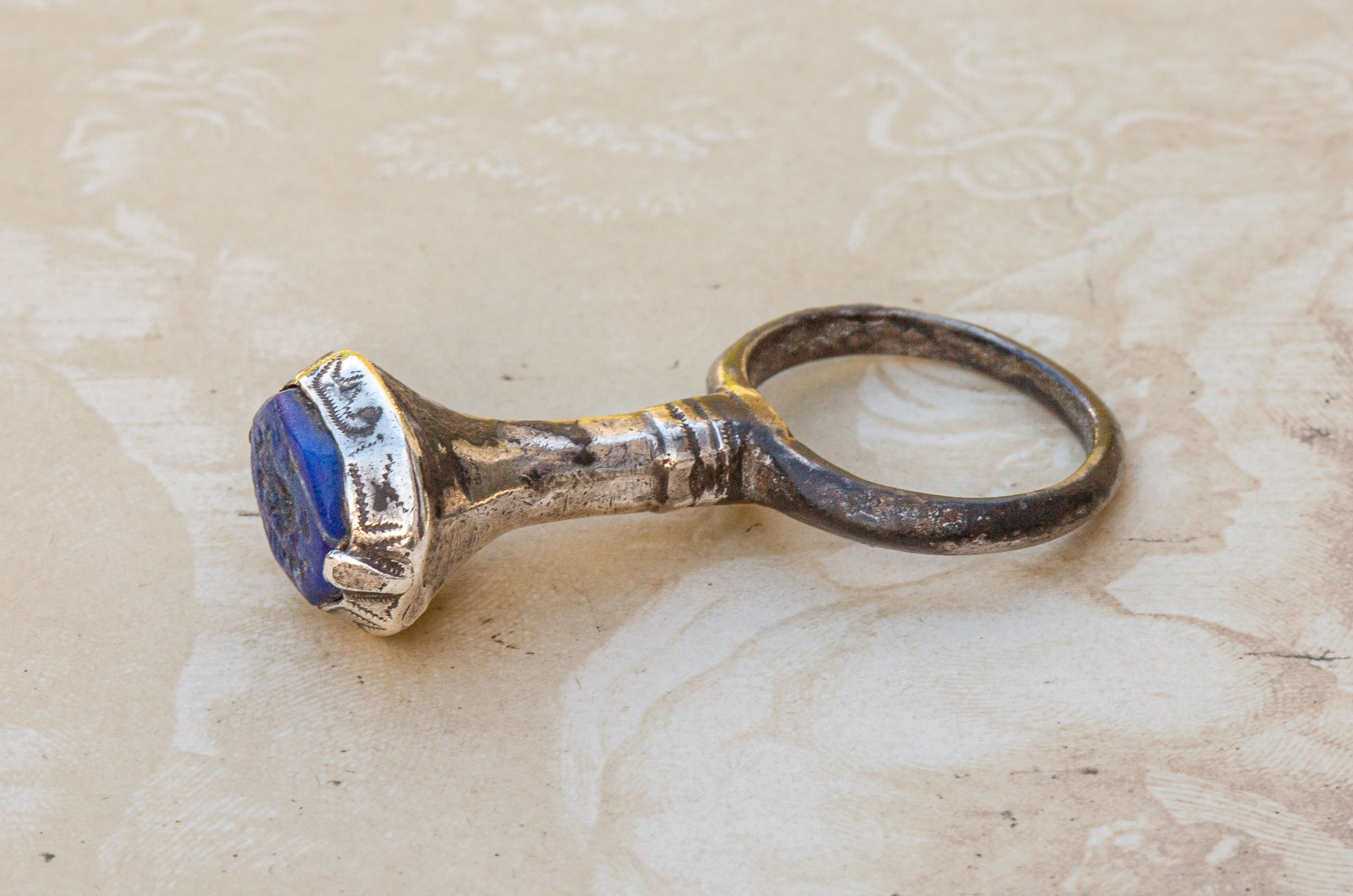
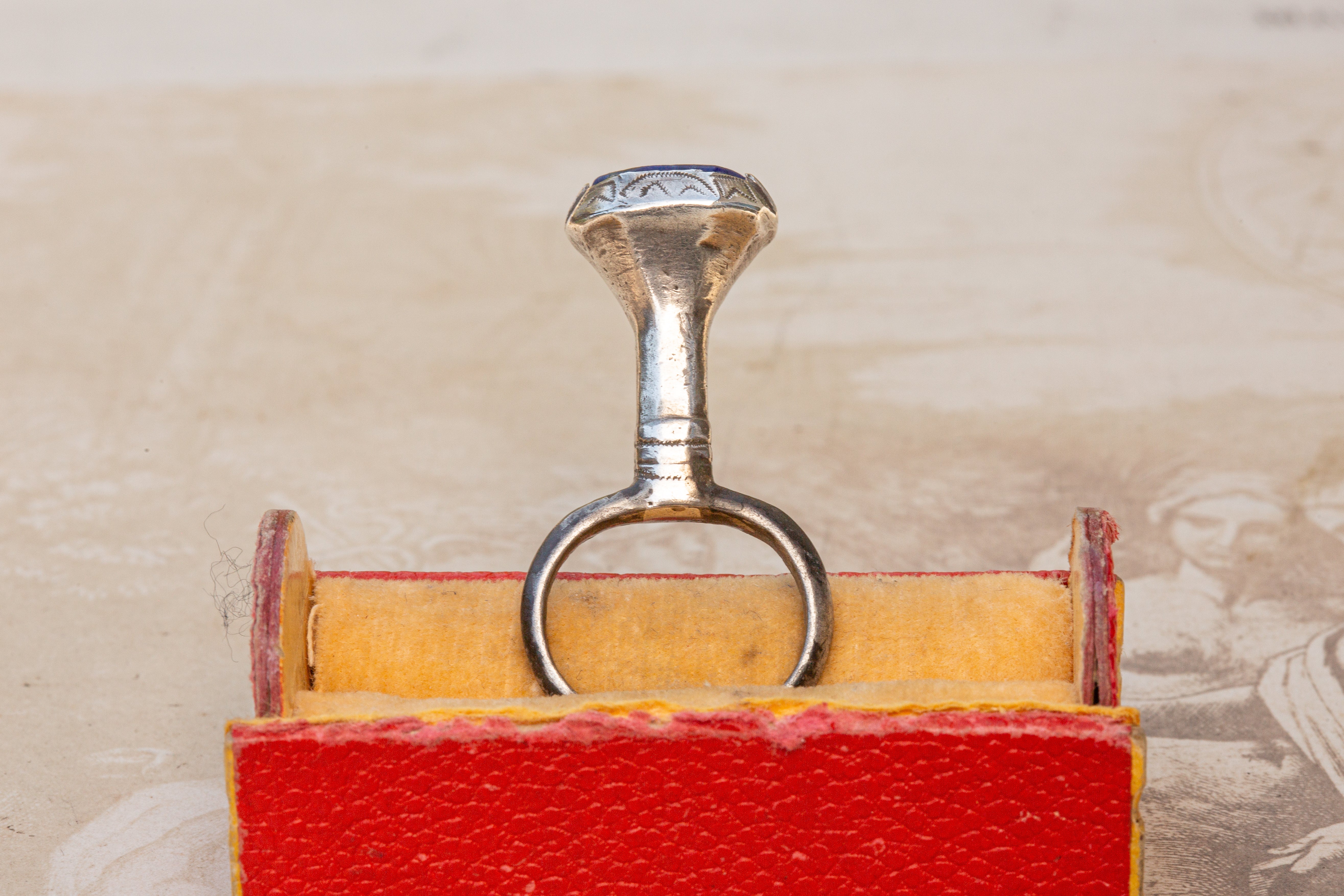
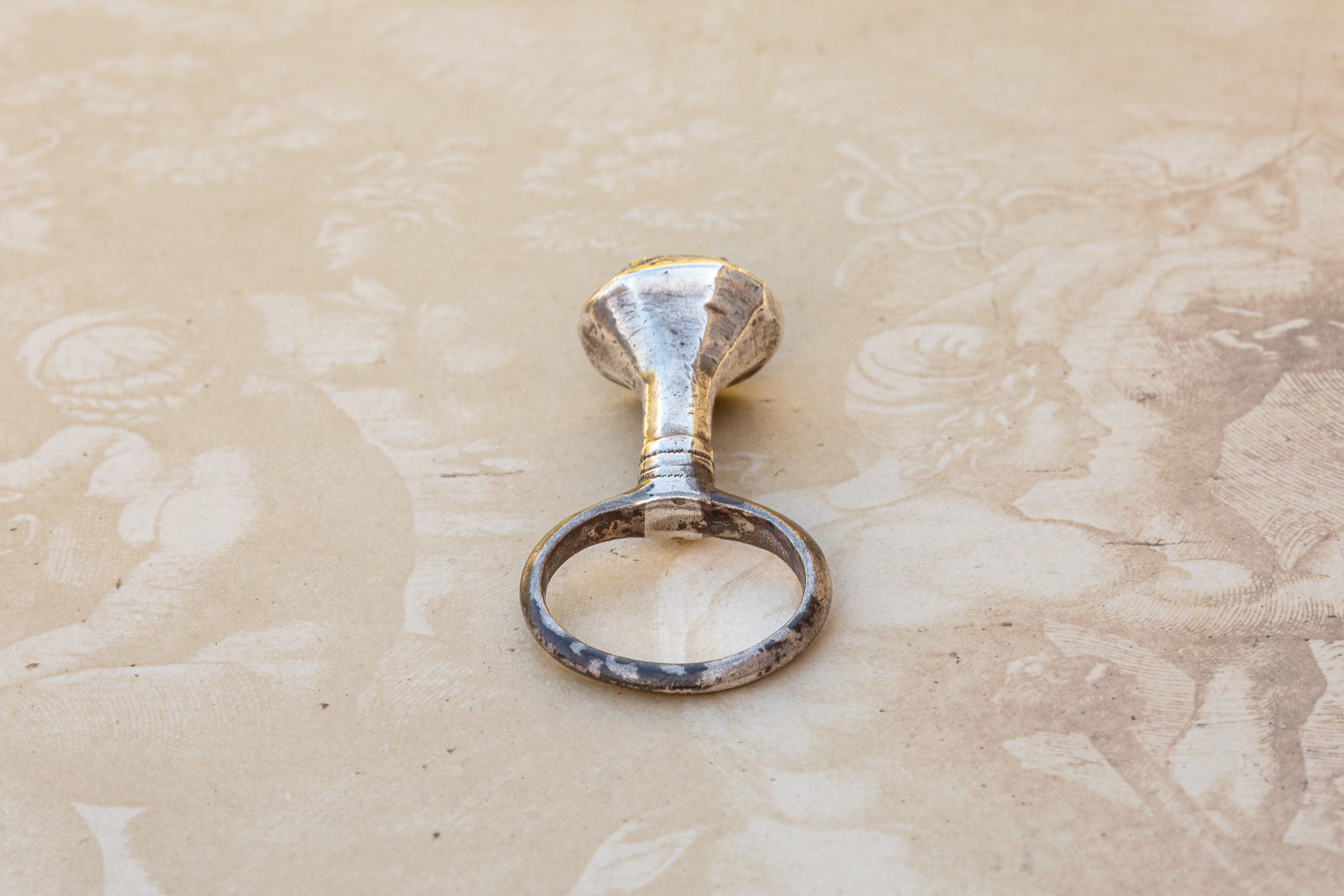
This unusual and rare Islamic high stirrup ring dates to the 13th century Seljuk dynasty, (probably Iran). The carved lapis lazuli intaglio is set within a solid truncated and chamfered bezel, typical of the Seljuk period. The stone is held in position by two wedge-shaped silver prongs setting soldered horizontally to the outside of the octagonal bezel which is decorated with engraved patterns. Unlike most existing examples which are cast in gold, this is a very scarce surviving example in silver. The carving appears to depict a bird, possibly a pheasant or bird of paradise, surrounded by Kufic script.
For similar referenced examples see items 46 in ‘Islamic Rings and Gems: the Benjamin Zucker Collection’ (1987) as well as lot 361 in Christie’s October 2012 Jewellery sale.
The Seljuks, a Turkish dynasty of Central Asian nomadic origins, became the new rulers of eastern Islamic lands following the defeat of the powerful Ghaznavids at the Battle of Dandanakan (1040). Under the Seljuk sultanate, the region enjoyed a period of material and cultural prosperity.
UK size M 1/2, US size 6.5
The ring weighs 8.05g. The ring is unmarked; the protruding head tests as silver, whilst the band might be crafted from a silver alloy based on the discolouration.
The ring protrudes 2.5cm from the finger, the lapis lazuli measures 12mm x 9mm.
Original: $2,412.12
-70%$2,412.12
$723.64Product Information
Product Information
Shipping & Returns
Shipping & Returns
Description
This unusual and rare Islamic high stirrup ring dates to the 13th century Seljuk dynasty, (probably Iran). The carved lapis lazuli intaglio is set within a solid truncated and chamfered bezel, typical of the Seljuk period. The stone is held in position by two wedge-shaped silver prongs setting soldered horizontally to the outside of the octagonal bezel which is decorated with engraved patterns. Unlike most existing examples which are cast in gold, this is a very scarce surviving example in silver. The carving appears to depict a bird, possibly a pheasant or bird of paradise, surrounded by Kufic script.
For similar referenced examples see items 46 in ‘Islamic Rings and Gems: the Benjamin Zucker Collection’ (1987) as well as lot 361 in Christie’s October 2012 Jewellery sale.
The Seljuks, a Turkish dynasty of Central Asian nomadic origins, became the new rulers of eastern Islamic lands following the defeat of the powerful Ghaznavids at the Battle of Dandanakan (1040). Under the Seljuk sultanate, the region enjoyed a period of material and cultural prosperity.
UK size M 1/2, US size 6.5
The ring weighs 8.05g. The ring is unmarked; the protruding head tests as silver, whilst the band might be crafted from a silver alloy based on the discolouration.
The ring protrudes 2.5cm from the finger, the lapis lazuli measures 12mm x 9mm.