🎉 Up to 70% Off Selected ItemsShop Sale
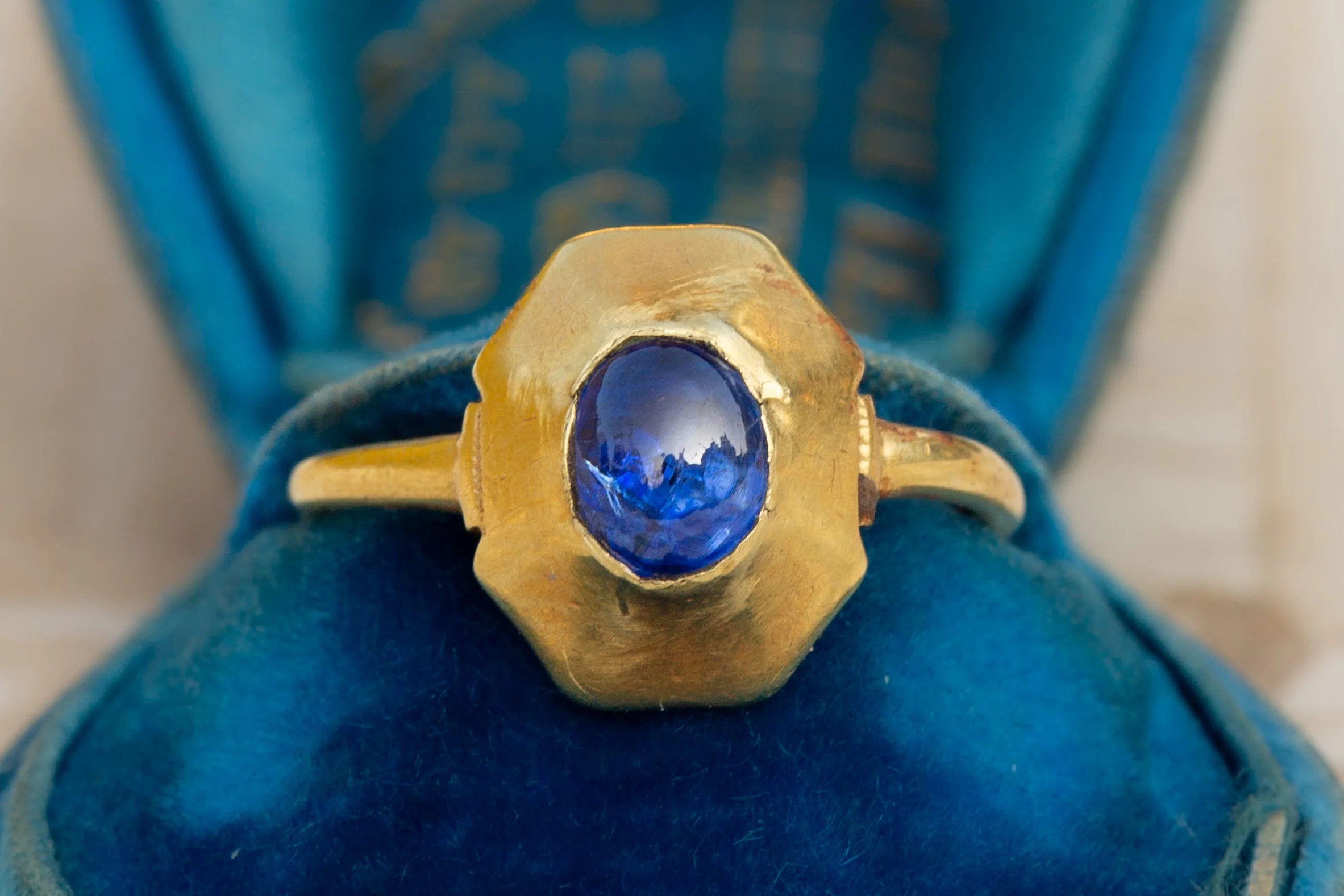






Medieval Sapphire “Pie-Dish” Ring
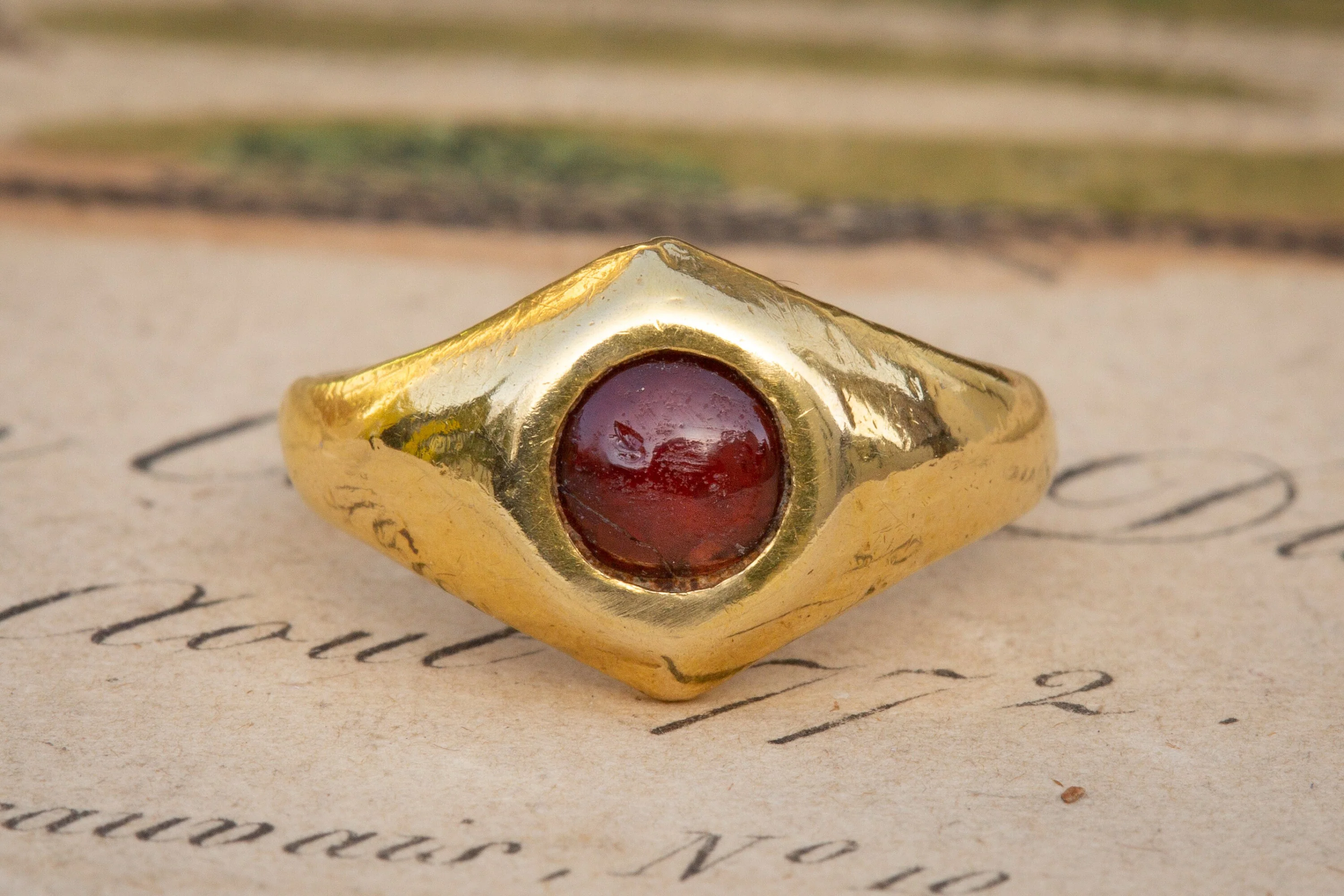
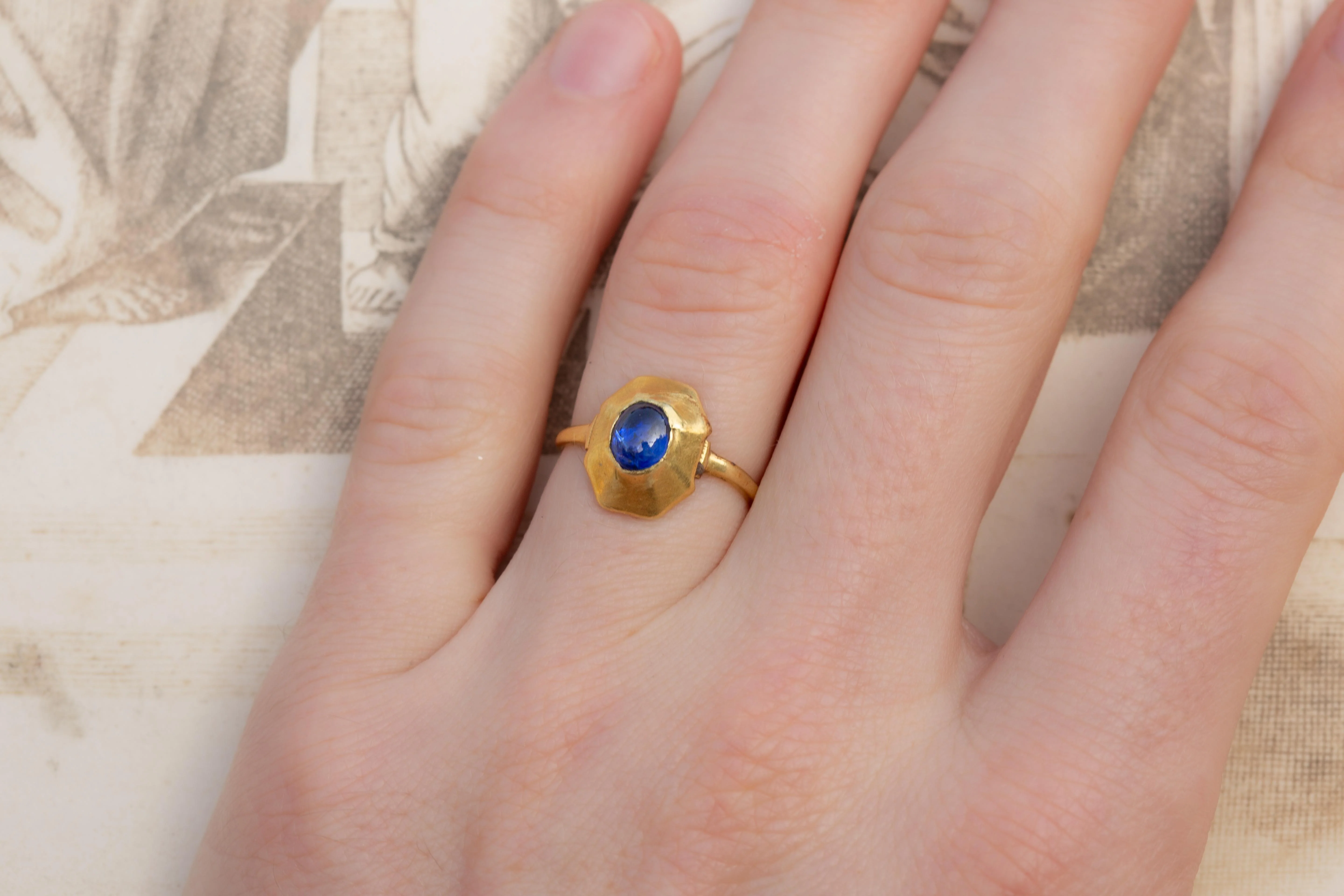
A scarce late 13th-century Medieval gold ring, made either in France or England, circa 1280.
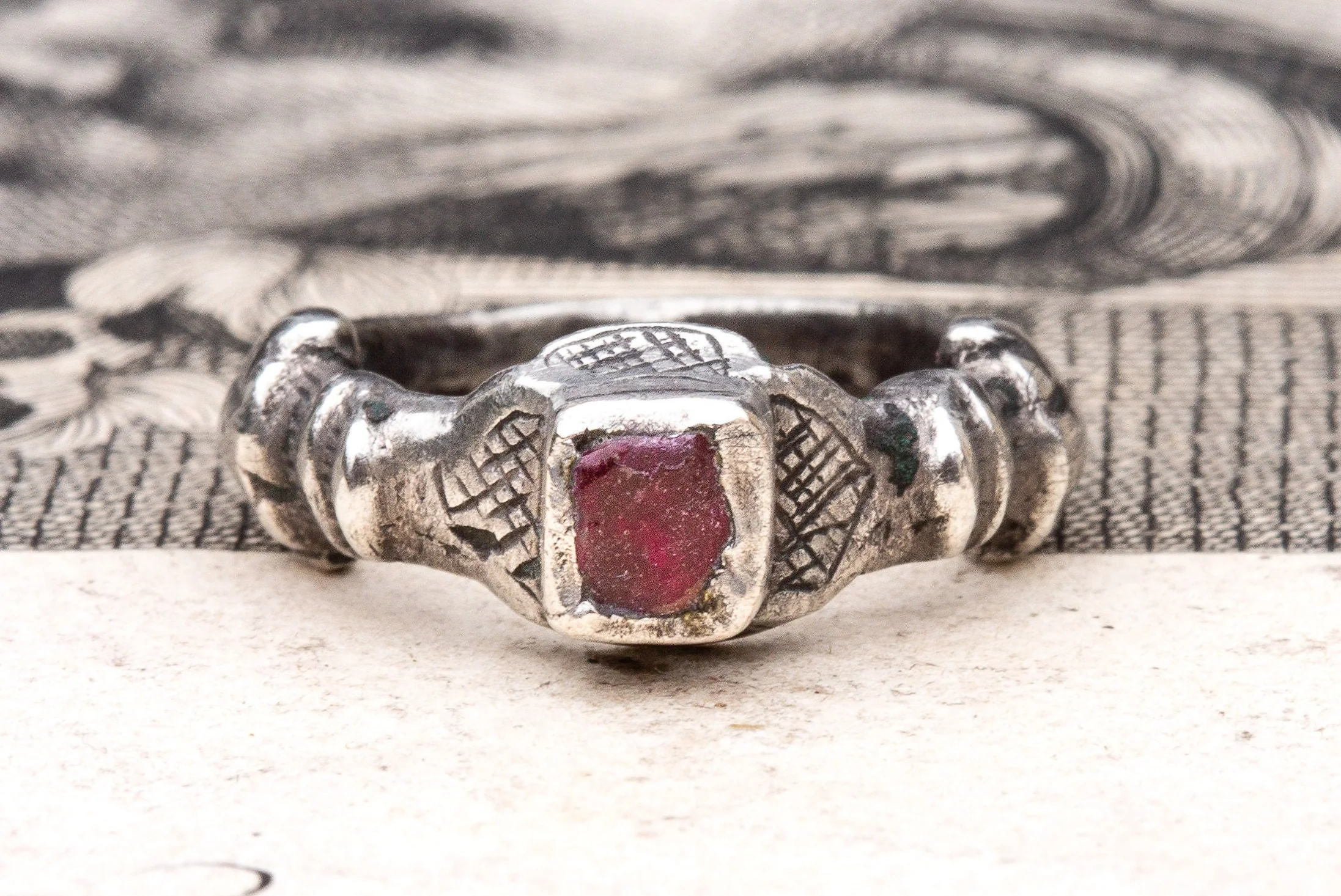
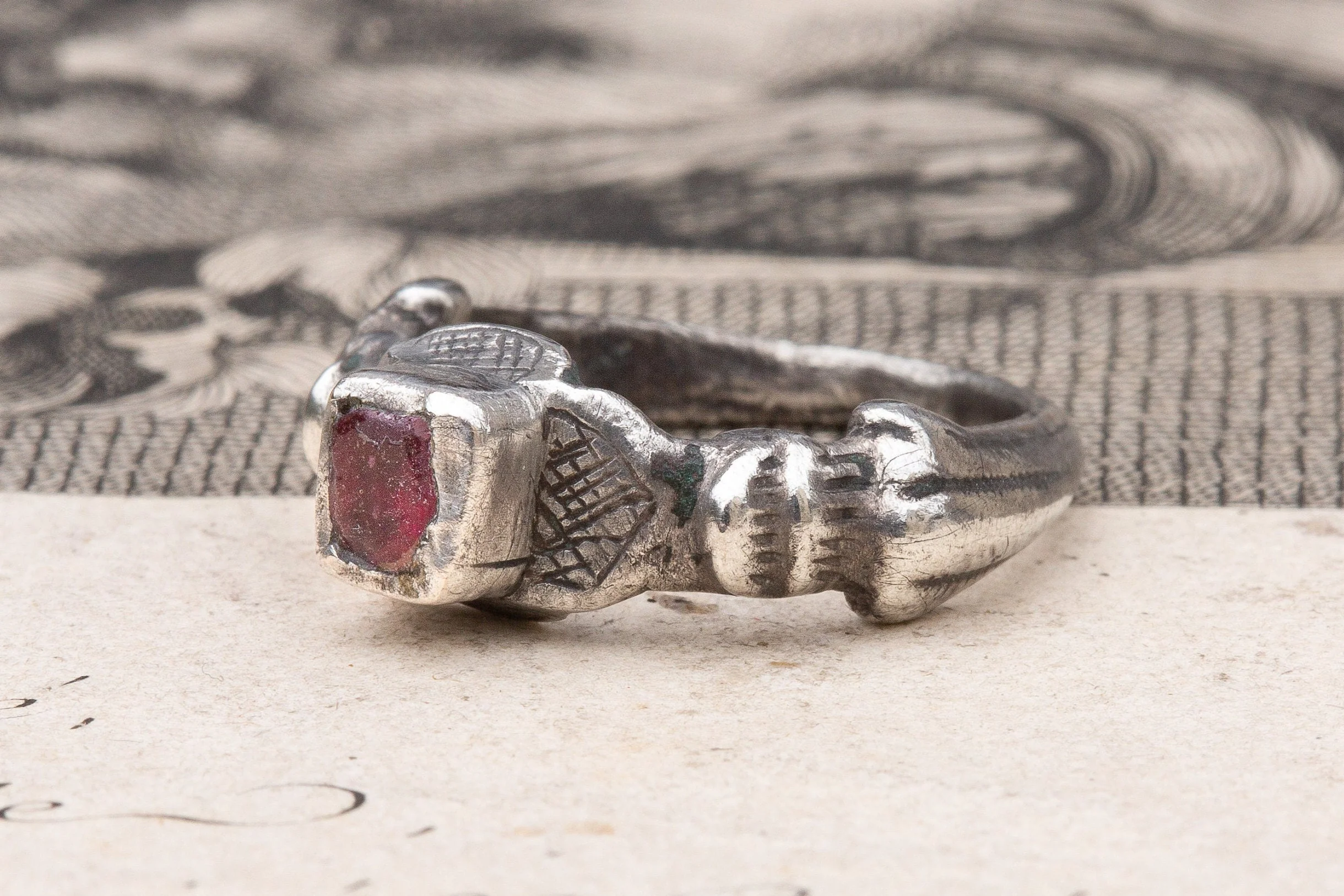
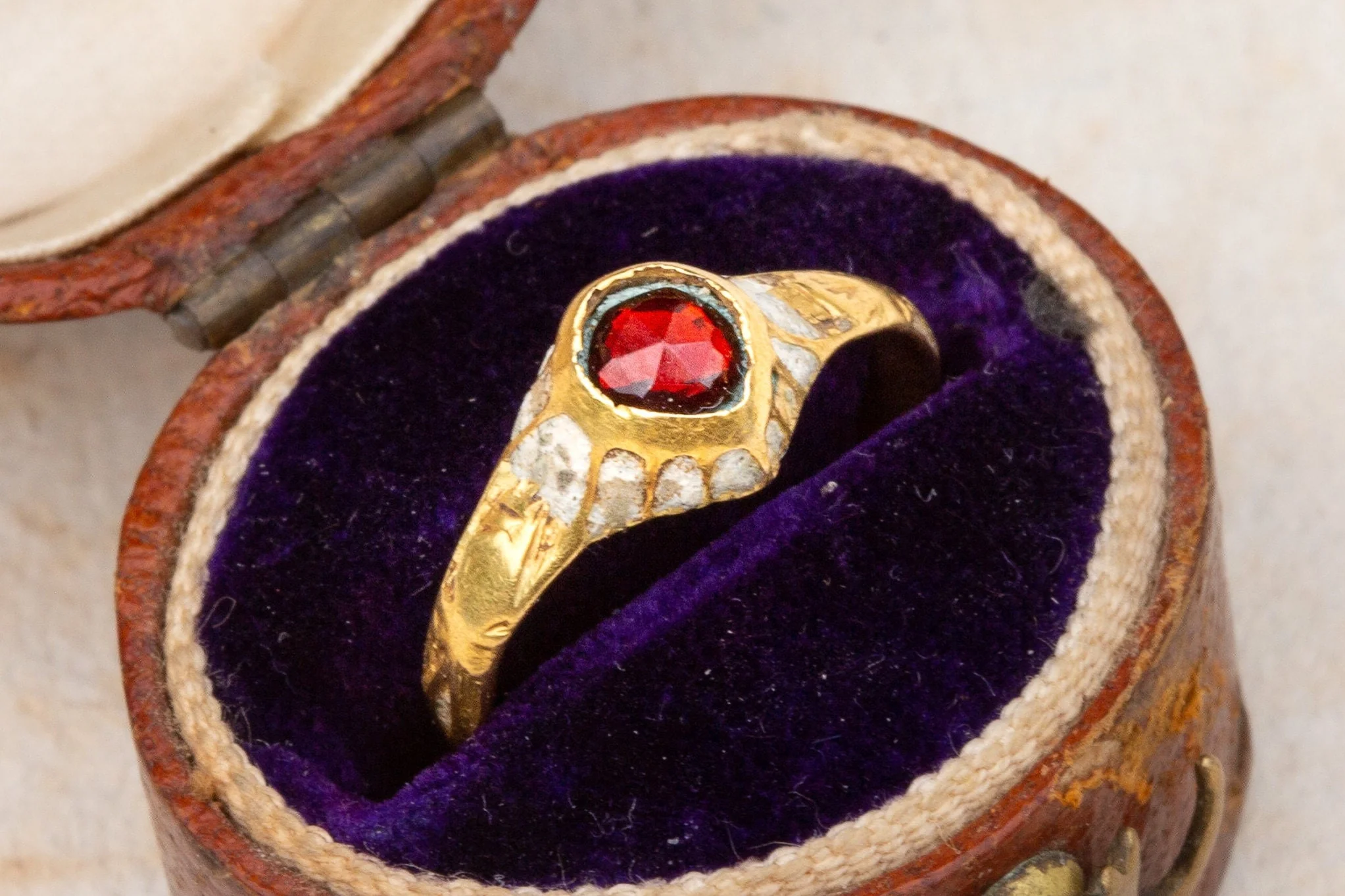
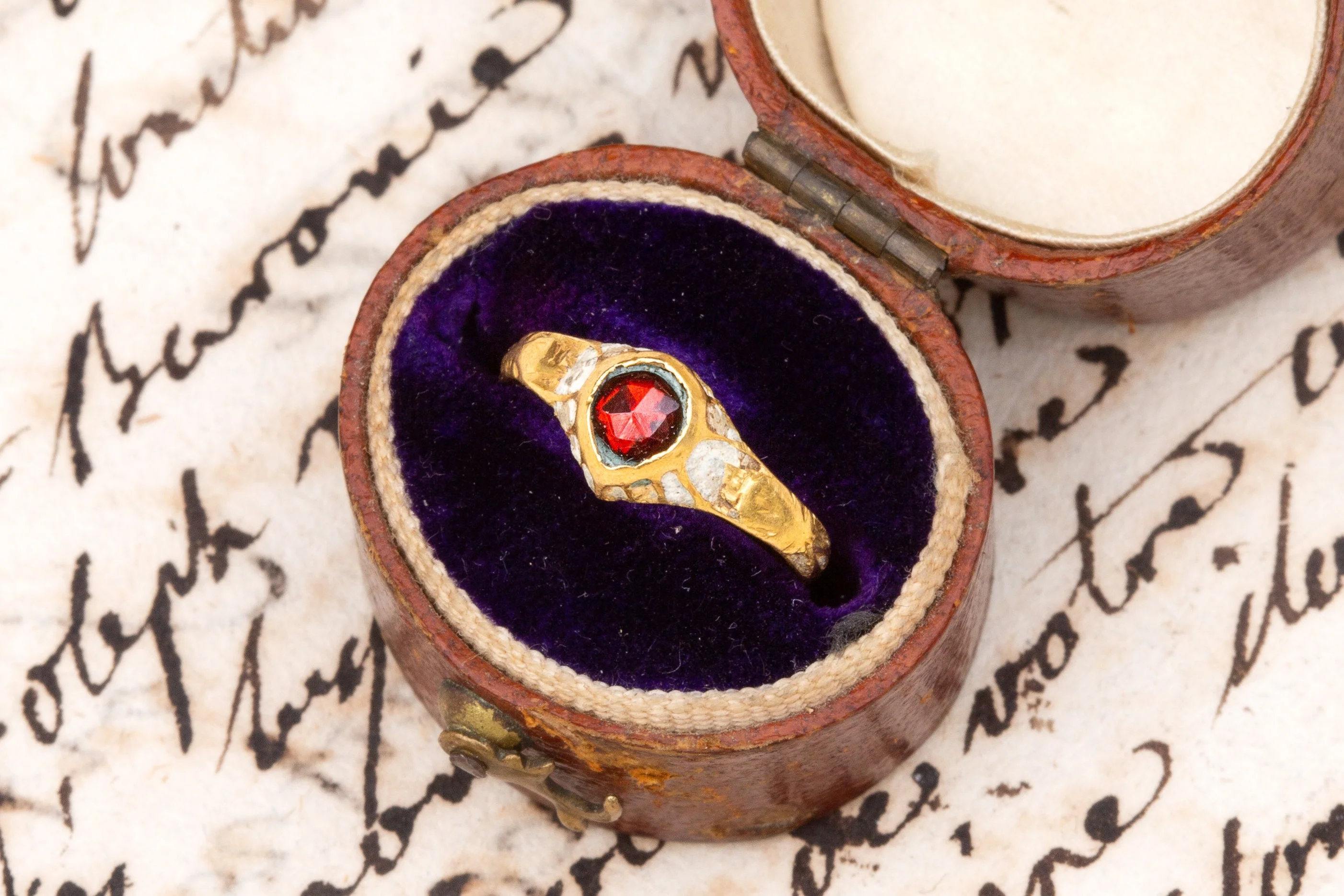
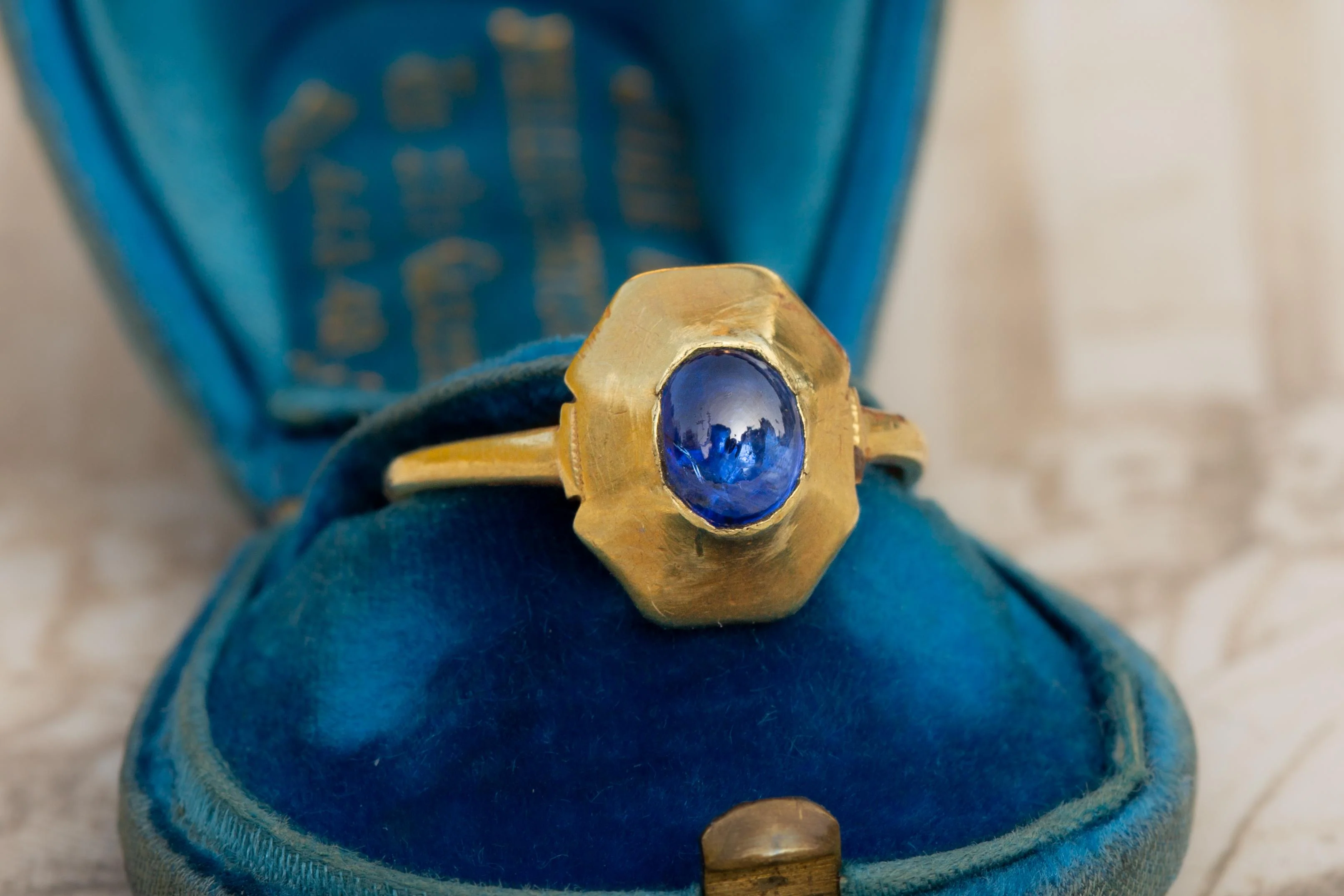
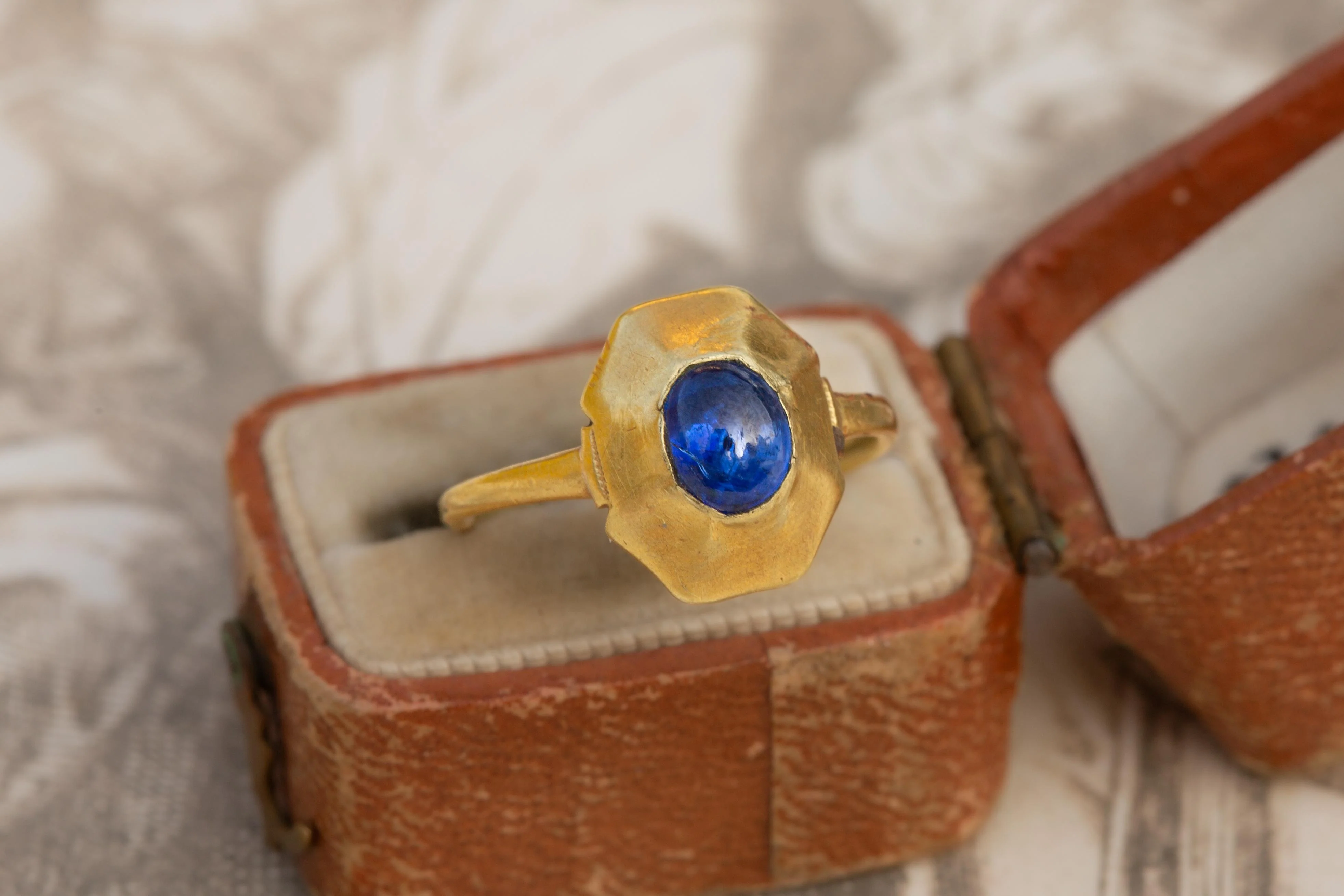
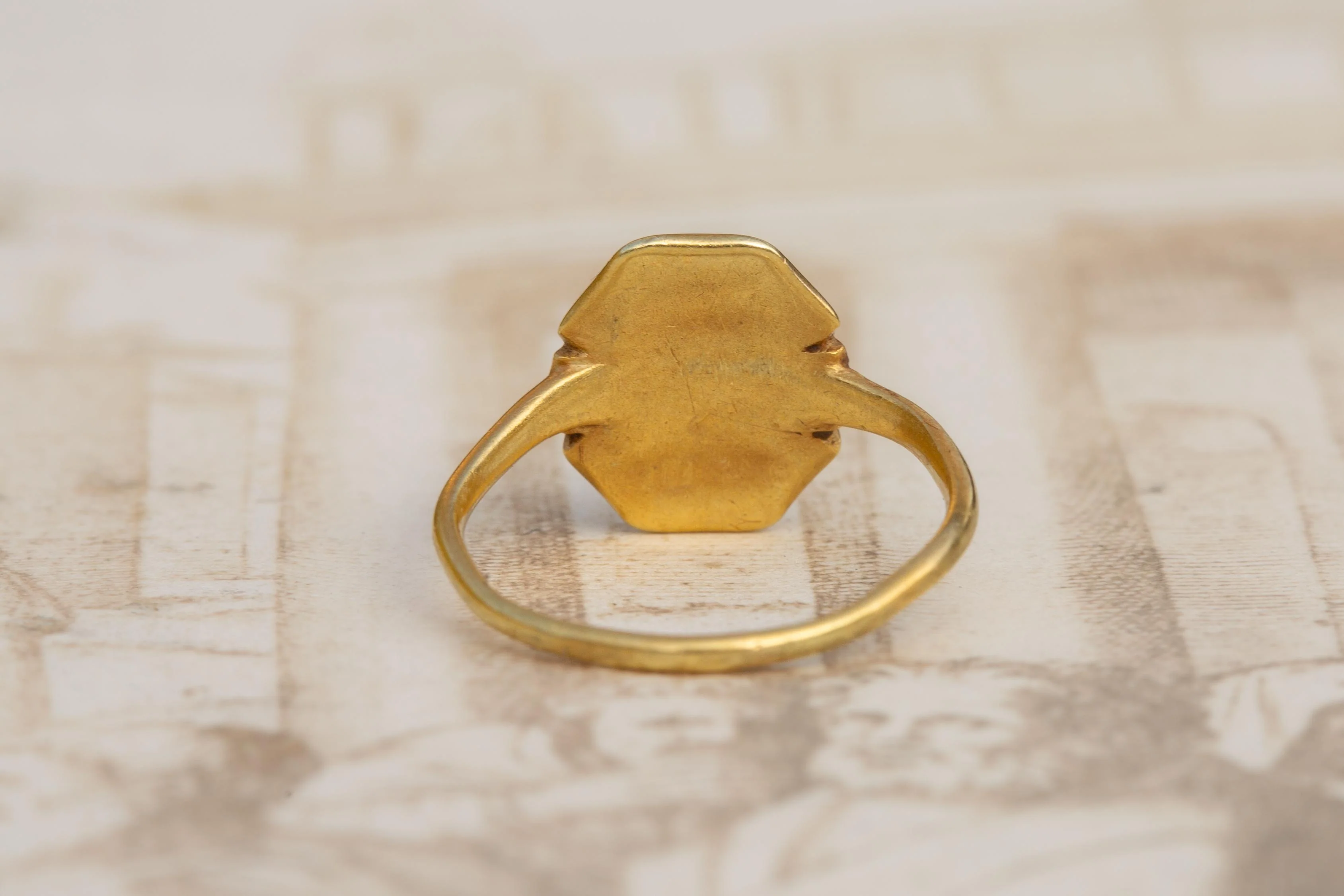
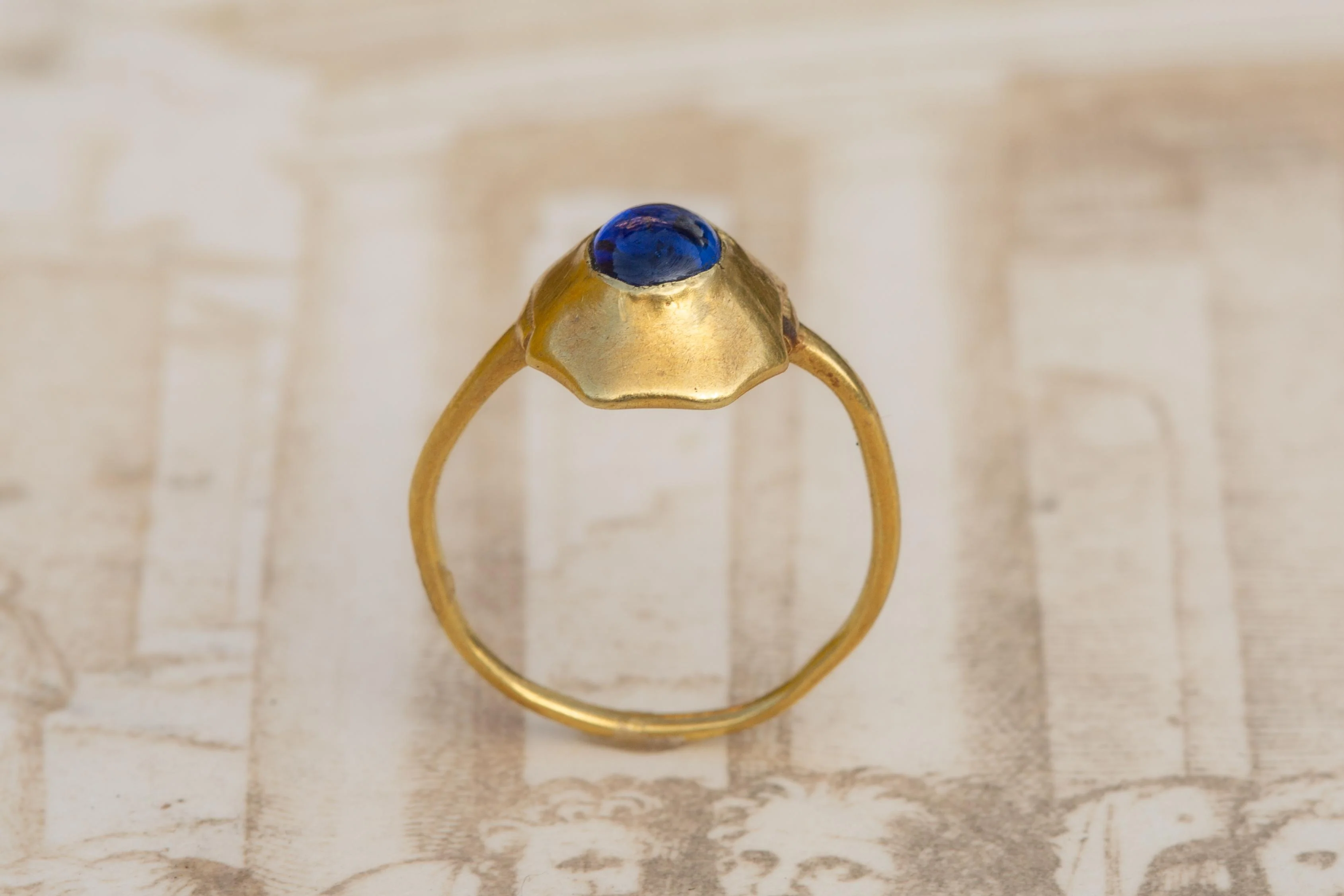
This high-karat gold ring is set with an intense blue sapphire cabochon. The form belongs to a distinctive 13th-century ring type which Victorian collectors later described as “pie-dish” rings, or moule à tarte (tart-mould), referring to the characteristic shape of the setting. The sapphire sits neatly within an octagonal, box-shaped bezel with a delicately scooped profile.
Rings of this type were particularly popular during the final decades of the 13th century. During the Middle Ages gemstones were believed to possess powerful amuletic and talismanic properties, and sapphires were especially prized within the ecclesiastical world. They were thought to promote chastity, peace and divine favour, and examples have been recovered from the tombs of high-ranking clergy including bishops, abbots and priors.
Outside the Church, sapphires were equally admired but extremely rare, and were therefore reserved almost exclusively for the nobility and upper aristocracy. Medieval texts known as lapidaries recorded the supposed powers of gemstones; one of the most influential, the Liber Lapidum of Marbodus of Rennes (1067–1081), claimed sapphires could protect the body, cool fevers and headaches, soothe the eyes and even cure stammers.
The sapphires found in Medieval jewellery were typically mined in Sri Lanka and travelled to Europe along long-established trade routes of the Silk Road, passing through Constantinople before reaching Venice, Genoa and other port cities. In the medieval world the gemstone itself was by far the most valuable element of a ring, and stones arriving from distant lands were among the most prized possessions.
Unlike modern gemstones, medieval stones were rarely faceted; instead they were polished into smooth rounded forms known as cabochons, as seen in this example.
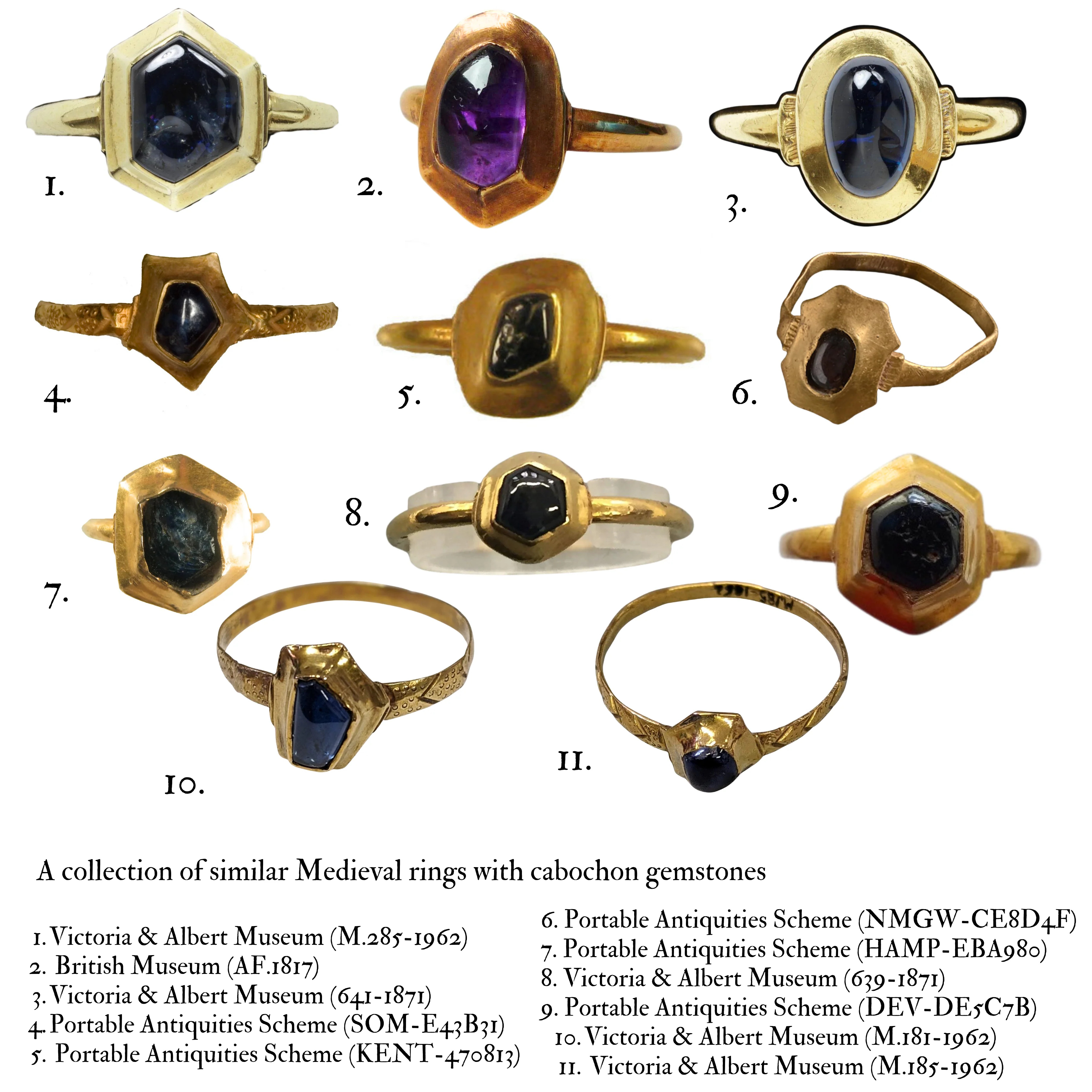
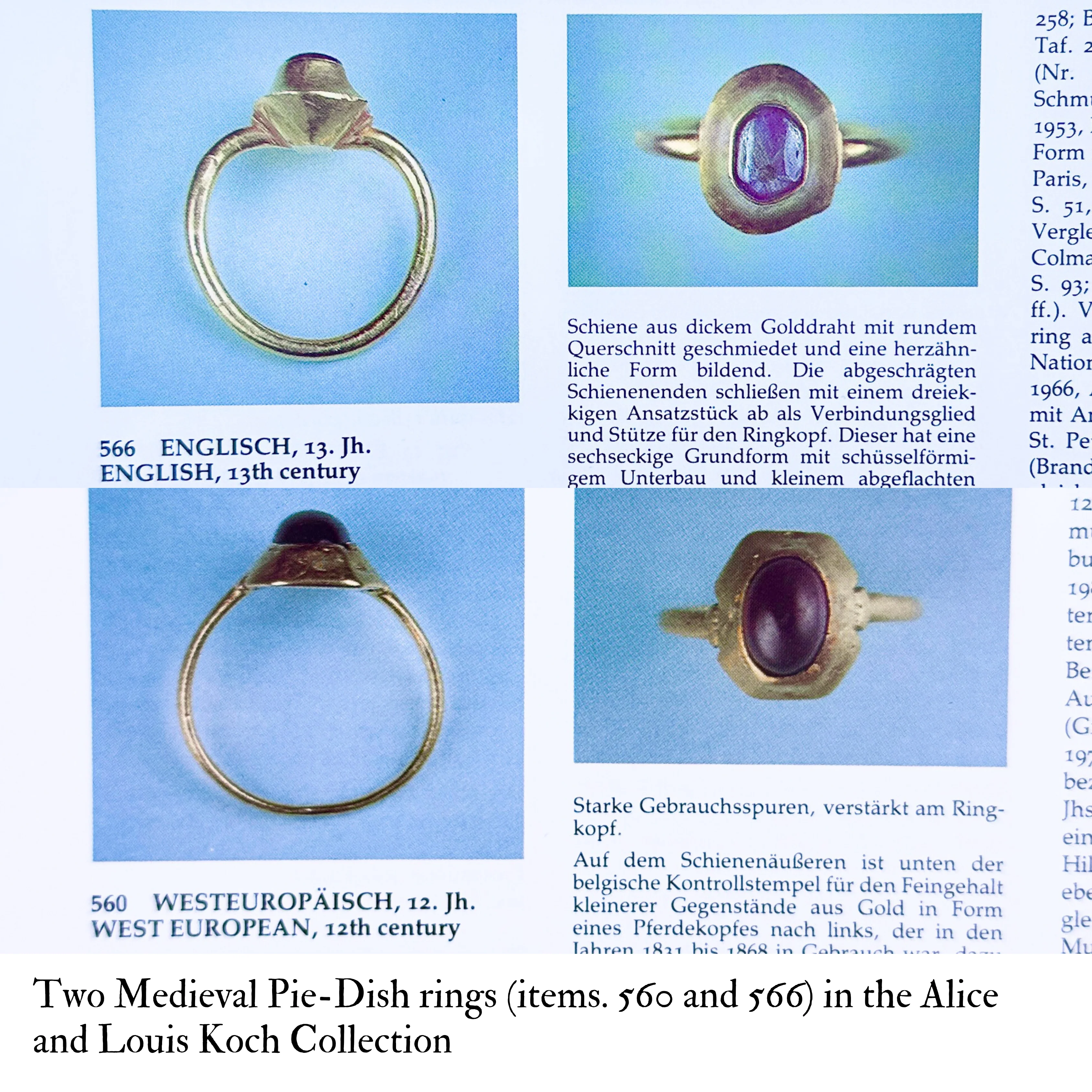
The present ring is closely related to examples in major museum collections, including the Alice & Louis Koch Collection (Swiss National Museum; items 560 and 566), as well as rings preserved in the Hermitage Museum, the Victoria & Albert Museum and the British Museum. Additional related examples have been recorded as national treasure on the Portable Antiquities Scheme database in the United Kingdom.
Despite its remarkable age of more than seven centuries, the ring survives in impressive and highly collectable condition.
UK size L 1/2, US size 6
Weight 2.48g
High-karat gold (tests approx 18K)
The sapphire measures approximately 6 × 5mm (around 0.6ct). The octagonal bezel measures 12 × 10mm and rises approximately 5mm from the finger. The hoop has a diameter of approximately 2mm.
$10,720.54
Medieval Sapphire “Pie-Dish” Ring—
$10,720.54
Product Information
Product Information
Shipping & Returns
Shipping & Returns
Description
A scarce late 13th-century Medieval gold ring, made either in France or England, circa 1280.
This high-karat gold ring is set with an intense blue sapphire cabochon. The form belongs to a distinctive 13th-century ring type which Victorian collectors later described as “pie-dish” rings, or moule à tarte (tart-mould), referring to the characteristic shape of the setting. The sapphire sits neatly within an octagonal, box-shaped bezel with a delicately scooped profile.
Rings of this type were particularly popular during the final decades of the 13th century. During the Middle Ages gemstones were believed to possess powerful amuletic and talismanic properties, and sapphires were especially prized within the ecclesiastical world. They were thought to promote chastity, peace and divine favour, and examples have been recovered from the tombs of high-ranking clergy including bishops, abbots and priors.
Outside the Church, sapphires were equally admired but extremely rare, and were therefore reserved almost exclusively for the nobility and upper aristocracy. Medieval texts known as lapidaries recorded the supposed powers of gemstones; one of the most influential, the Liber Lapidum of Marbodus of Rennes (1067–1081), claimed sapphires could protect the body, cool fevers and headaches, soothe the eyes and even cure stammers.
The sapphires found in Medieval jewellery were typically mined in Sri Lanka and travelled to Europe along long-established trade routes of the Silk Road, passing through Constantinople before reaching Venice, Genoa and other port cities. In the medieval world the gemstone itself was by far the most valuable element of a ring, and stones arriving from distant lands were among the most prized possessions.
Unlike modern gemstones, medieval stones were rarely faceted; instead they were polished into smooth rounded forms known as cabochons, as seen in this example.
The present ring is closely related to examples in major museum collections, including the Alice & Louis Koch Collection (Swiss National Museum; items 560 and 566), as well as rings preserved in the Hermitage Museum, the Victoria & Albert Museum and the British Museum. Additional related examples have been recorded as national treasure on the Portable Antiquities Scheme database in the United Kingdom.
Despite its remarkable age of more than seven centuries, the ring survives in impressive and highly collectable condition.
UK size L 1/2, US size 6
Weight 2.48g
High-karat gold (tests approx 18K)
The sapphire measures approximately 6 × 5mm (around 0.6ct). The octagonal bezel measures 12 × 10mm and rises approximately 5mm from the finger. The hoop has a diameter of approximately 2mm.