



Ancient Javanese Gold Lotus Ring
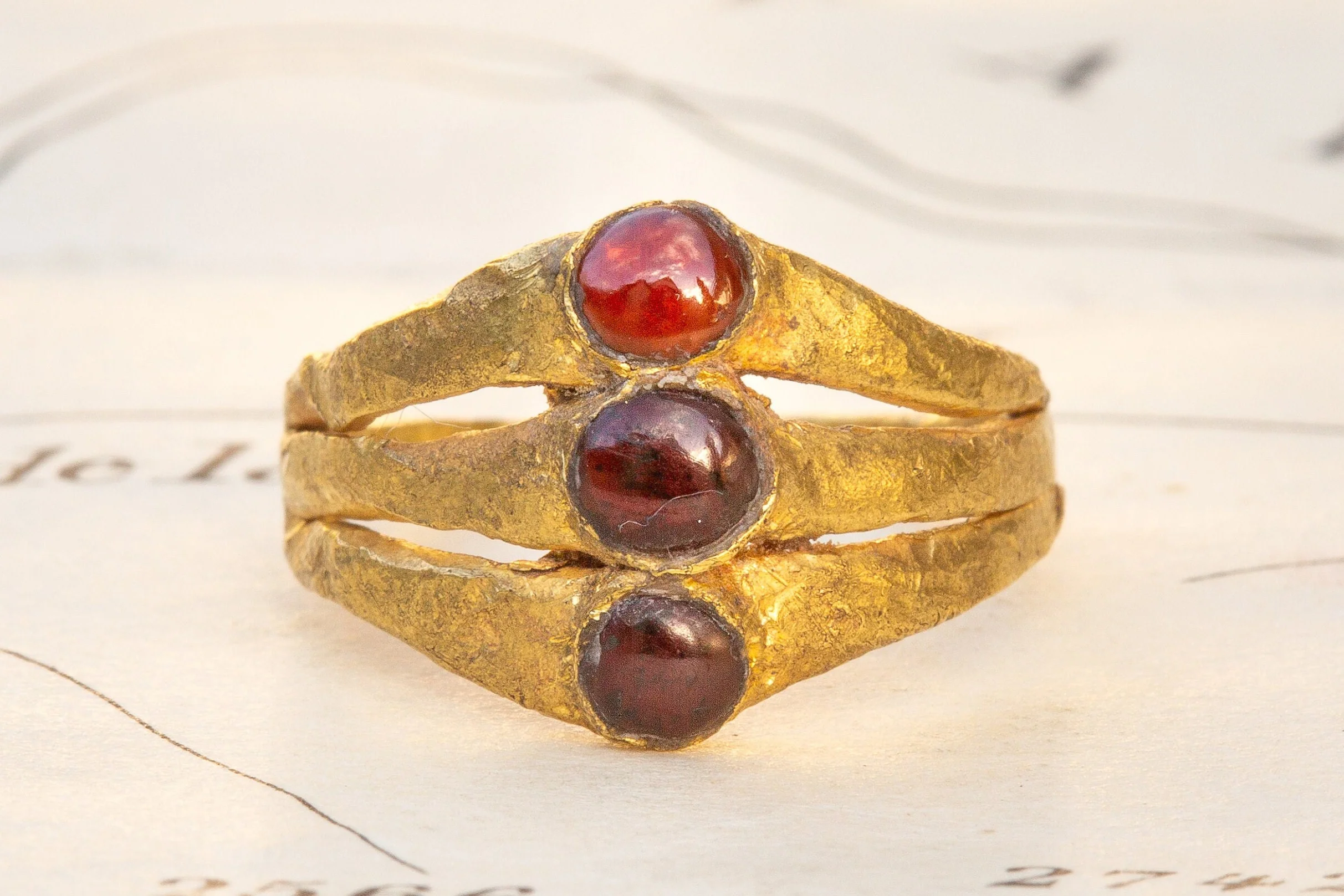
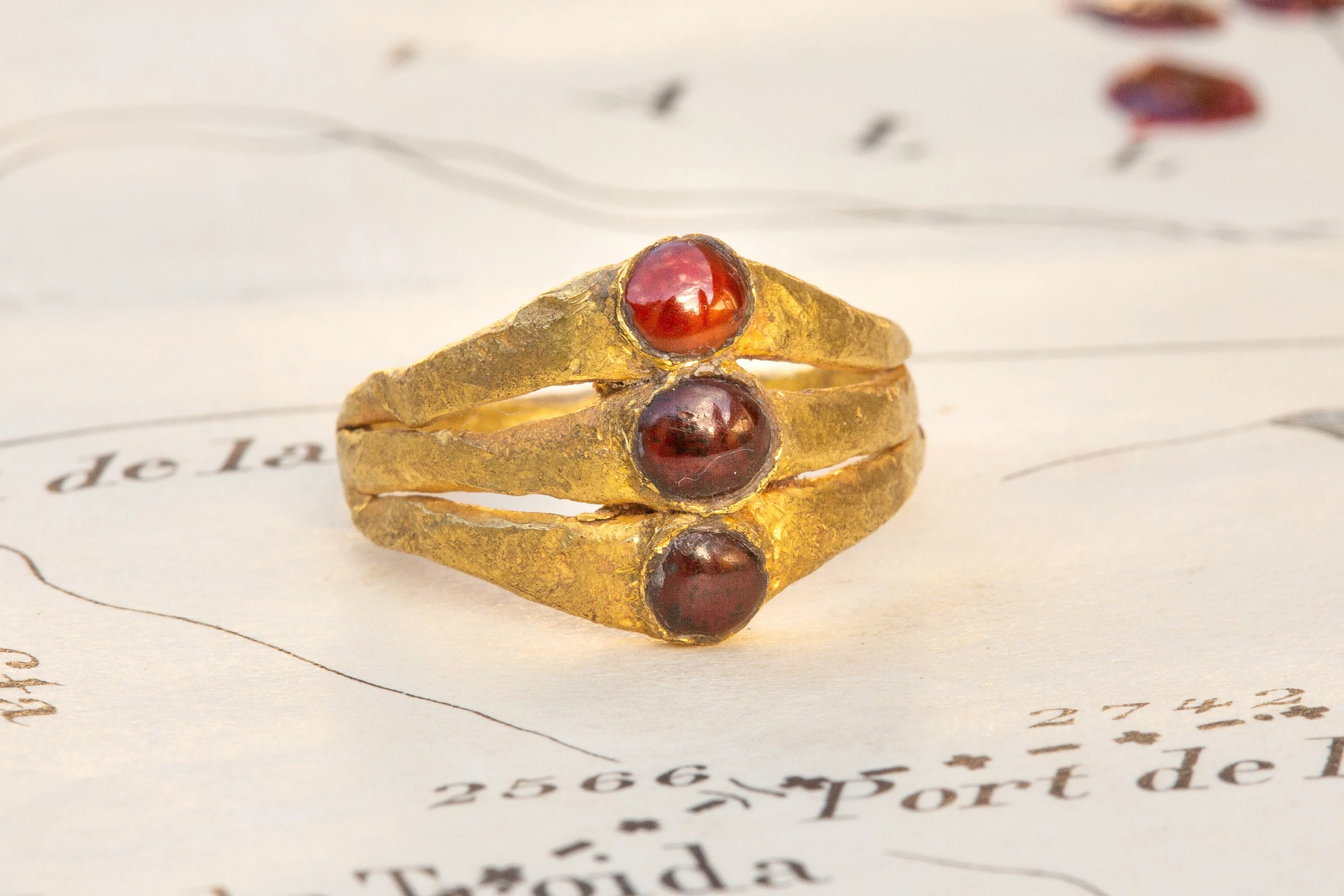
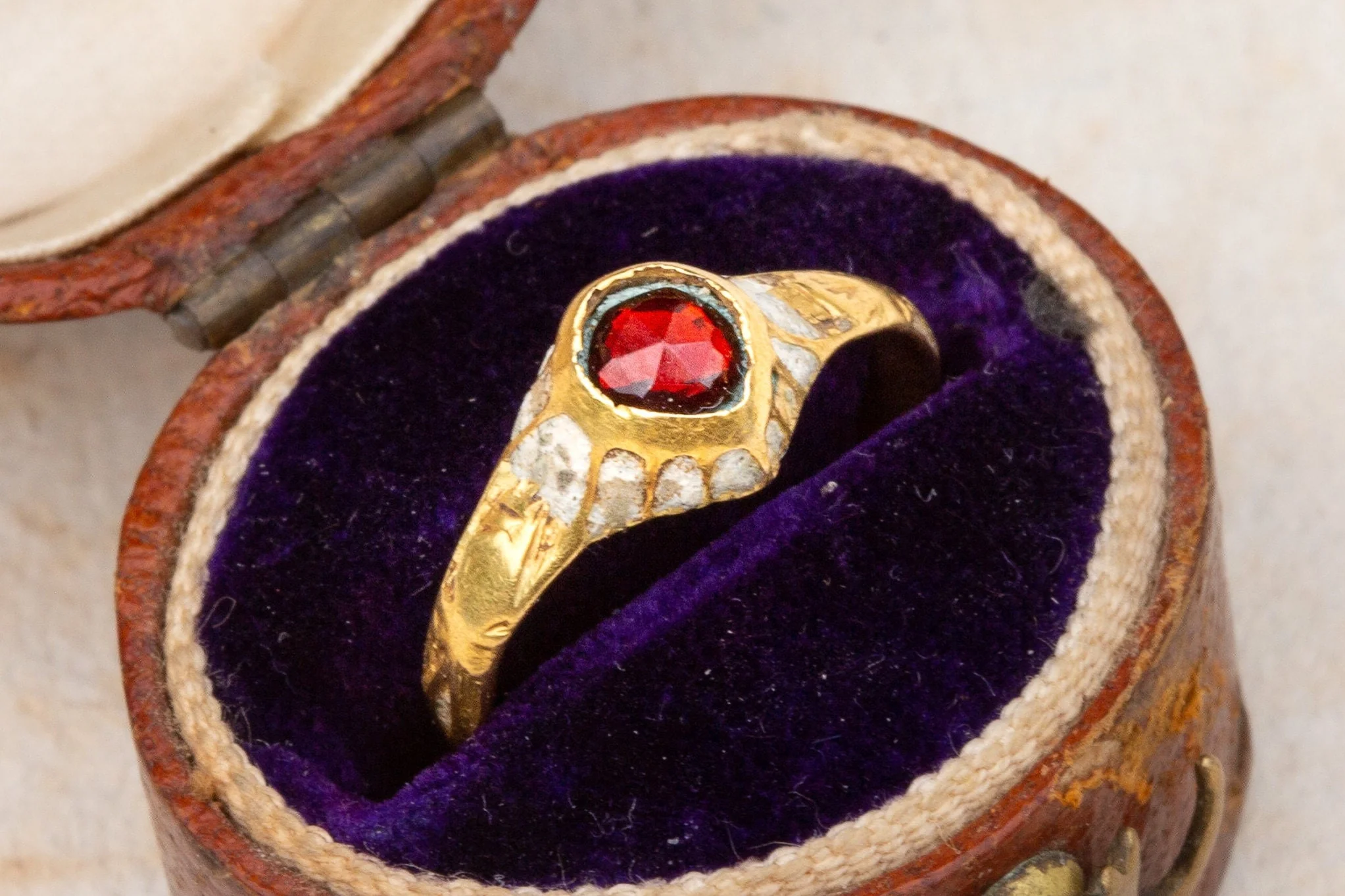
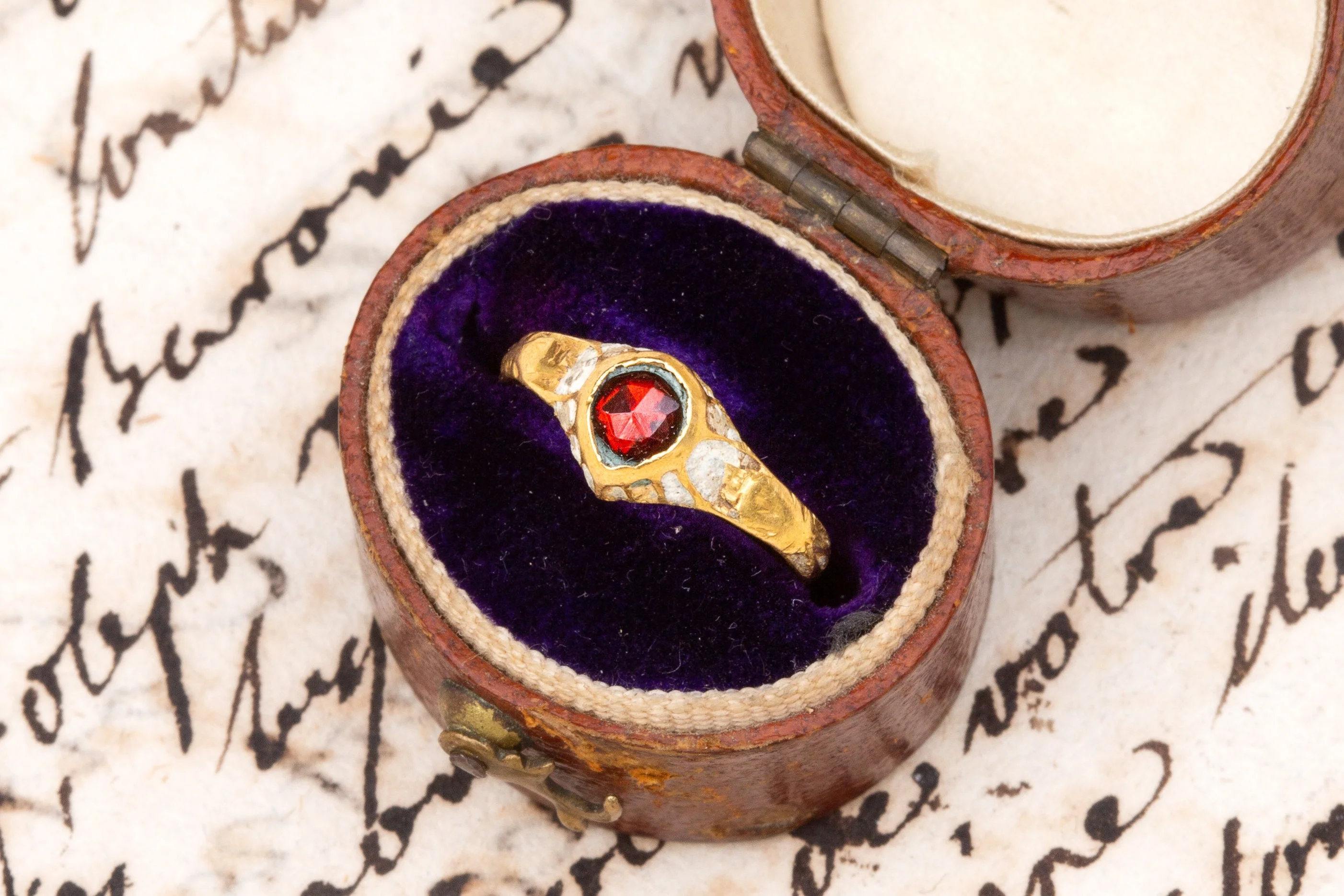
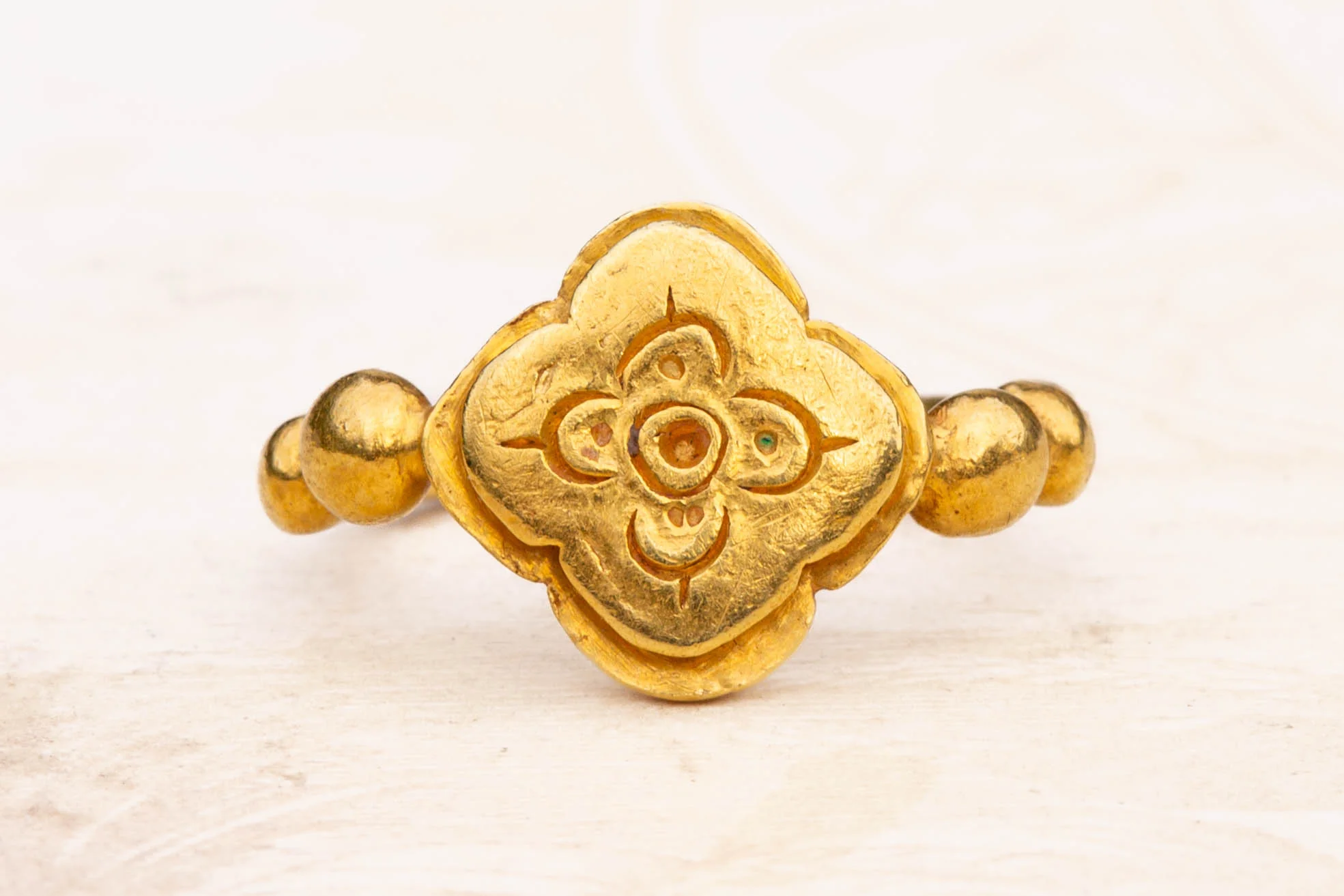
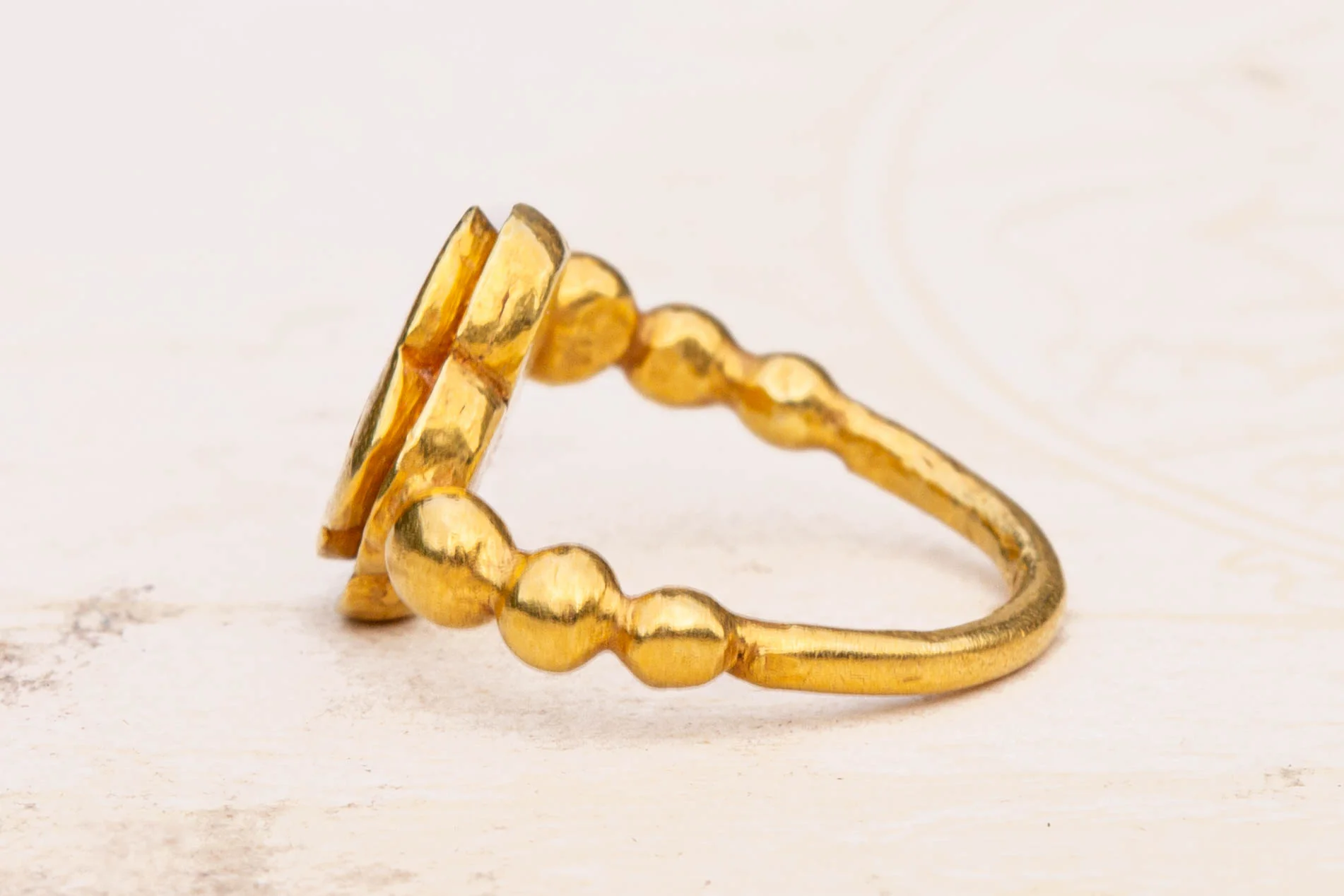
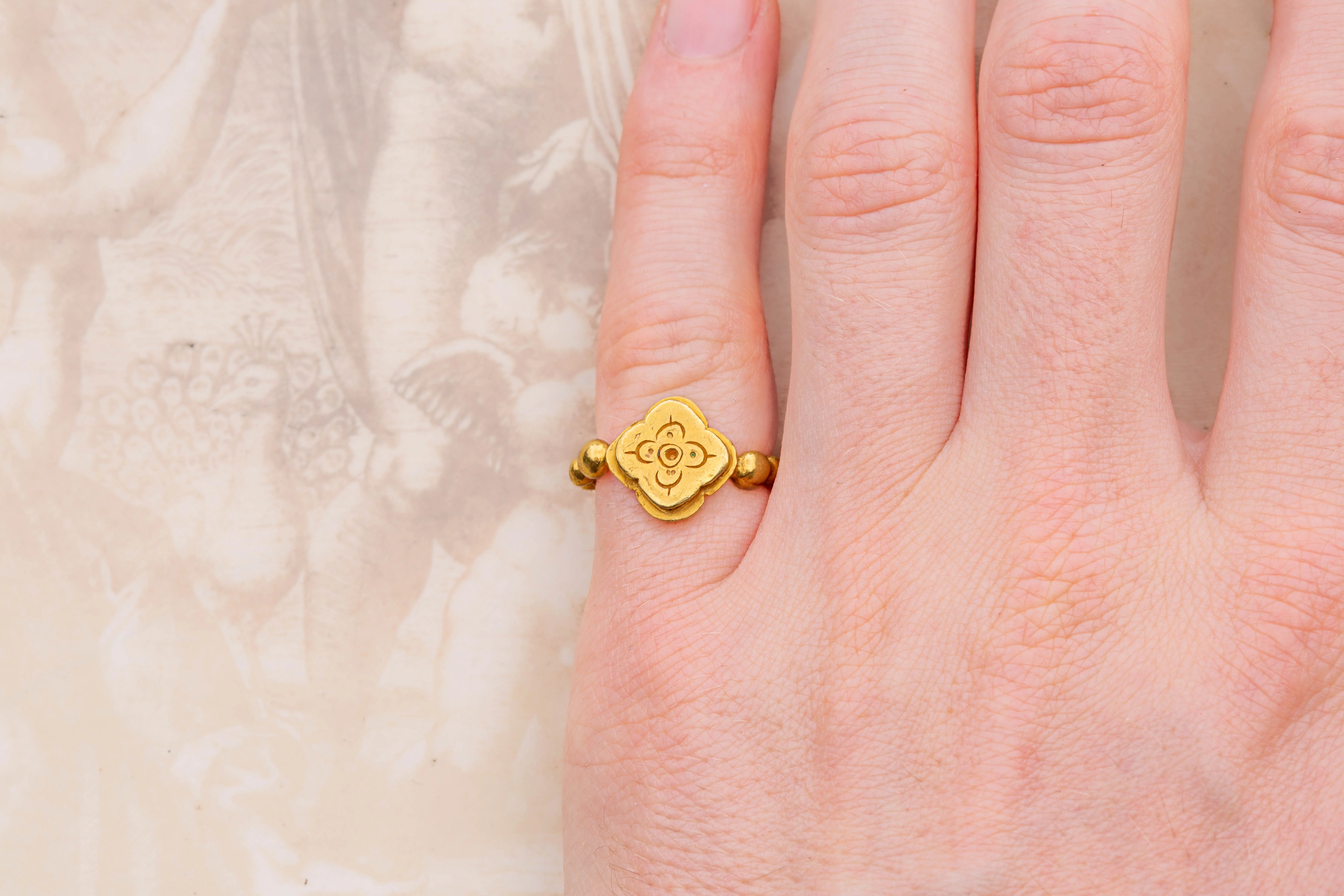
This scarce ancient Javanese high-karat gold ring has a quatrefoil-shaped bezel. The ring dates from the Classical Period of Indonesia, more specifically between the second half of the 9th to the early 10th century.
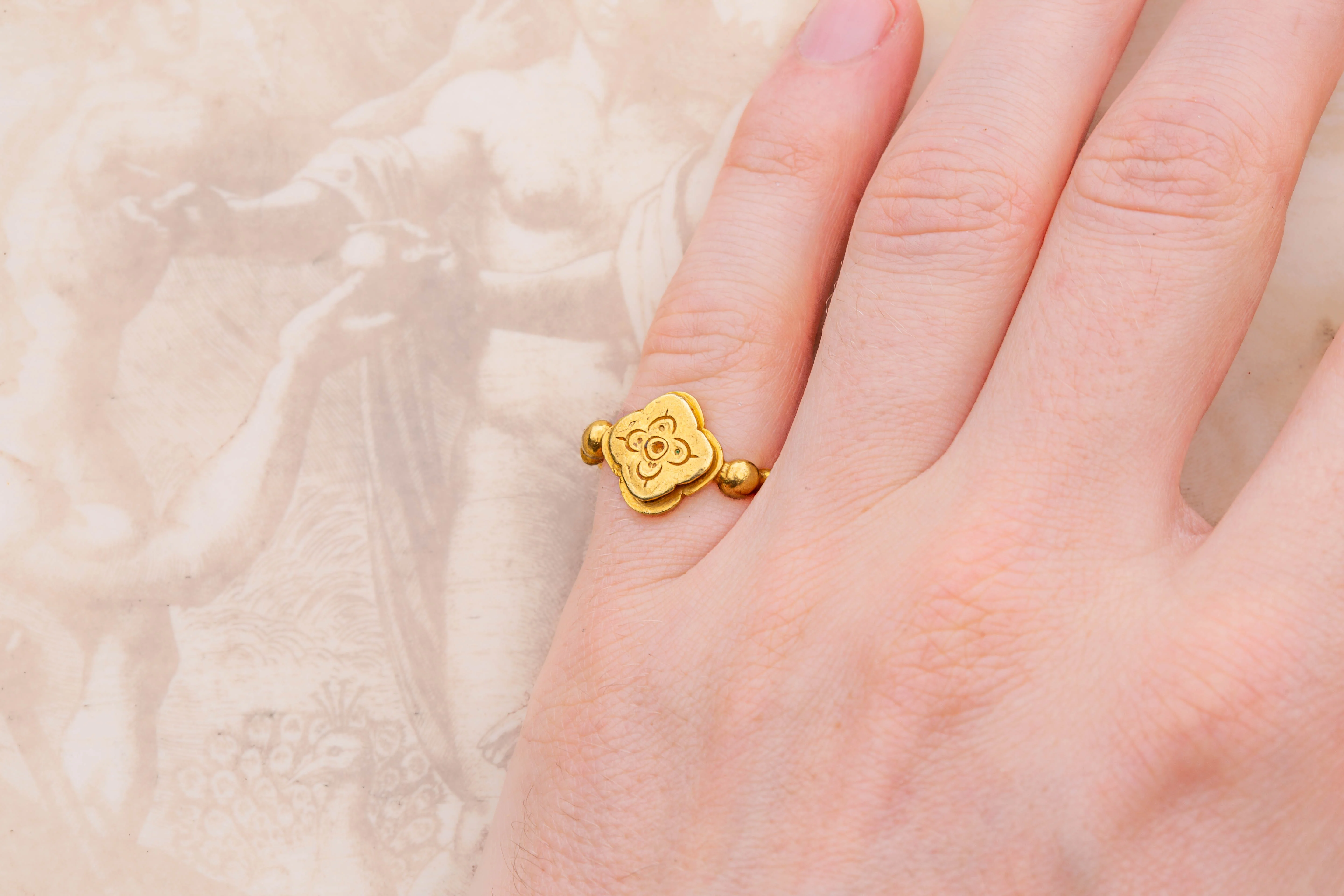
The bezel is intricately chased to depict a lotus flower pod which is an important motif in the Hindu-Buddhist context. It serves both as a seat or cushion for deities and symbolises nobility, purity, enlightenment and rebirth.
The symbol is also associated with the Javanese goddess Dewi Sri, the goddess of fertility, prosperity and rice. Rings with Sri motifs were believed to bring good fortune to the wearer.
Gold rings were worn by both genders in the Classical Period. As seen on statuary, both the fingers and toes of deities and the nobility were fitted with multiple gold rings whilst larger rings were also worn around the neck as pendants.
The role of rings in this period is two-fold; they were an important part of burial customs but also items of transaction and commerce. Gold was used to pay fines, salaries or services. Gold rings were also a part of wedding presents and gift exchanges.
Similar Javanese gold lotus and scallop-edged rings can be found in the Met Museum (accession numbers: 1998.544.398, 1998.544.399, 1998.544.386, 1998.544.331 and 2001.794.135). See final photo for images of these examples.
UK ring size H, US size 3.75
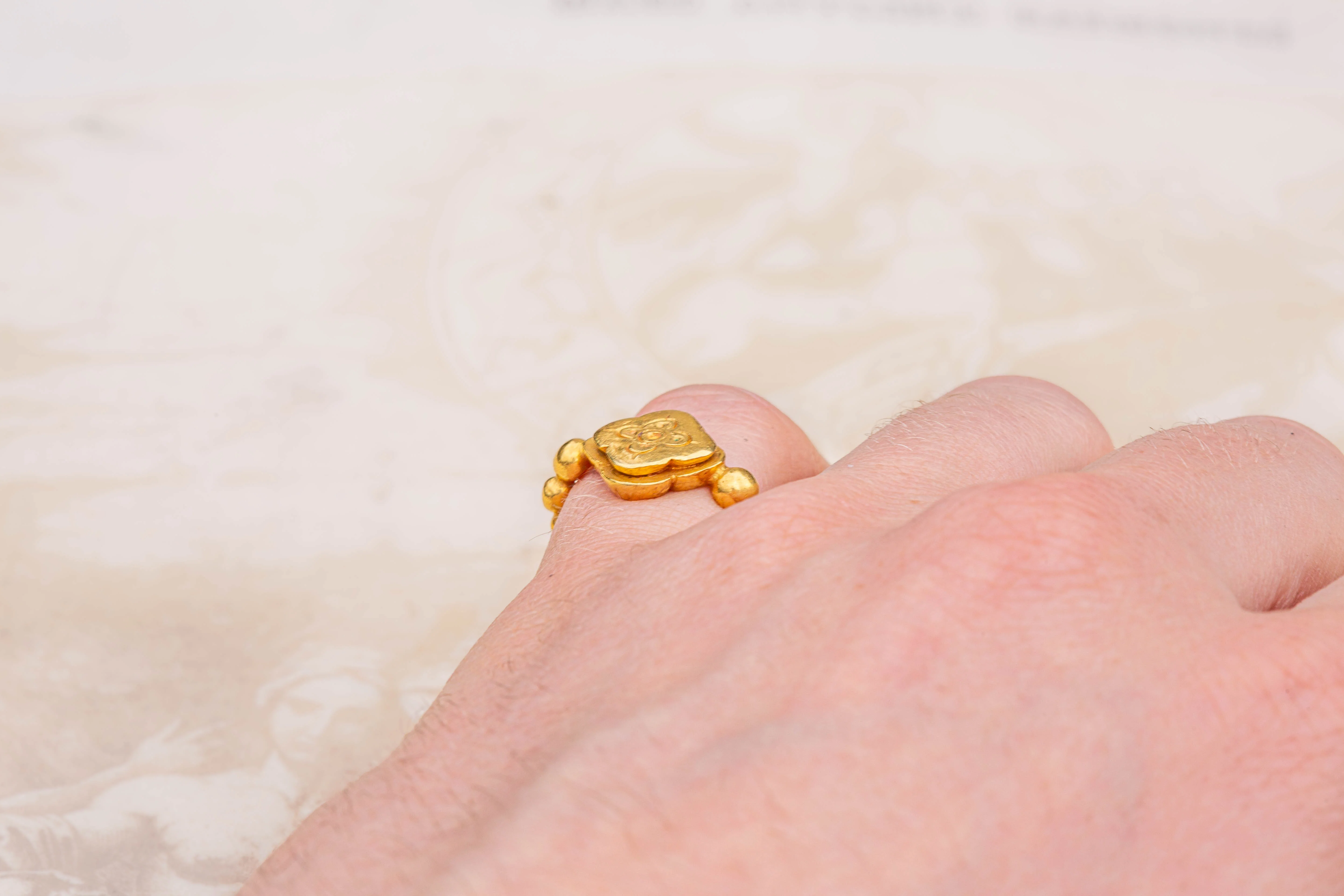
The quatrefoil bezel measures 13mm across. The ring tests as high-karat gold (approx 20K) and weighs 6.52 grams. Despite its significant age, the ring remains in good and wearable condition. A truly special ring.
Original: $5,360.27
-70%$5,360.27
$1,608.08Product Information
Product Information
Shipping & Returns
Shipping & Returns
Description
This scarce ancient Javanese high-karat gold ring has a quatrefoil-shaped bezel. The ring dates from the Classical Period of Indonesia, more specifically between the second half of the 9th to the early 10th century.
The bezel is intricately chased to depict a lotus flower pod which is an important motif in the Hindu-Buddhist context. It serves both as a seat or cushion for deities and symbolises nobility, purity, enlightenment and rebirth.
The symbol is also associated with the Javanese goddess Dewi Sri, the goddess of fertility, prosperity and rice. Rings with Sri motifs were believed to bring good fortune to the wearer.
Gold rings were worn by both genders in the Classical Period. As seen on statuary, both the fingers and toes of deities and the nobility were fitted with multiple gold rings whilst larger rings were also worn around the neck as pendants.
The role of rings in this period is two-fold; they were an important part of burial customs but also items of transaction and commerce. Gold was used to pay fines, salaries or services. Gold rings were also a part of wedding presents and gift exchanges.
Similar Javanese gold lotus and scallop-edged rings can be found in the Met Museum (accession numbers: 1998.544.398, 1998.544.399, 1998.544.386, 1998.544.331 and 2001.794.135). See final photo for images of these examples.
UK ring size H, US size 3.75
The quatrefoil bezel measures 13mm across. The ring tests as high-karat gold (approx 20K) and weighs 6.52 grams. Despite its significant age, the ring remains in good and wearable condition. A truly special ring.