🎉 Up to 70% Off Selected ItemsShop Sale





Ancient Roman Intaglio Ring
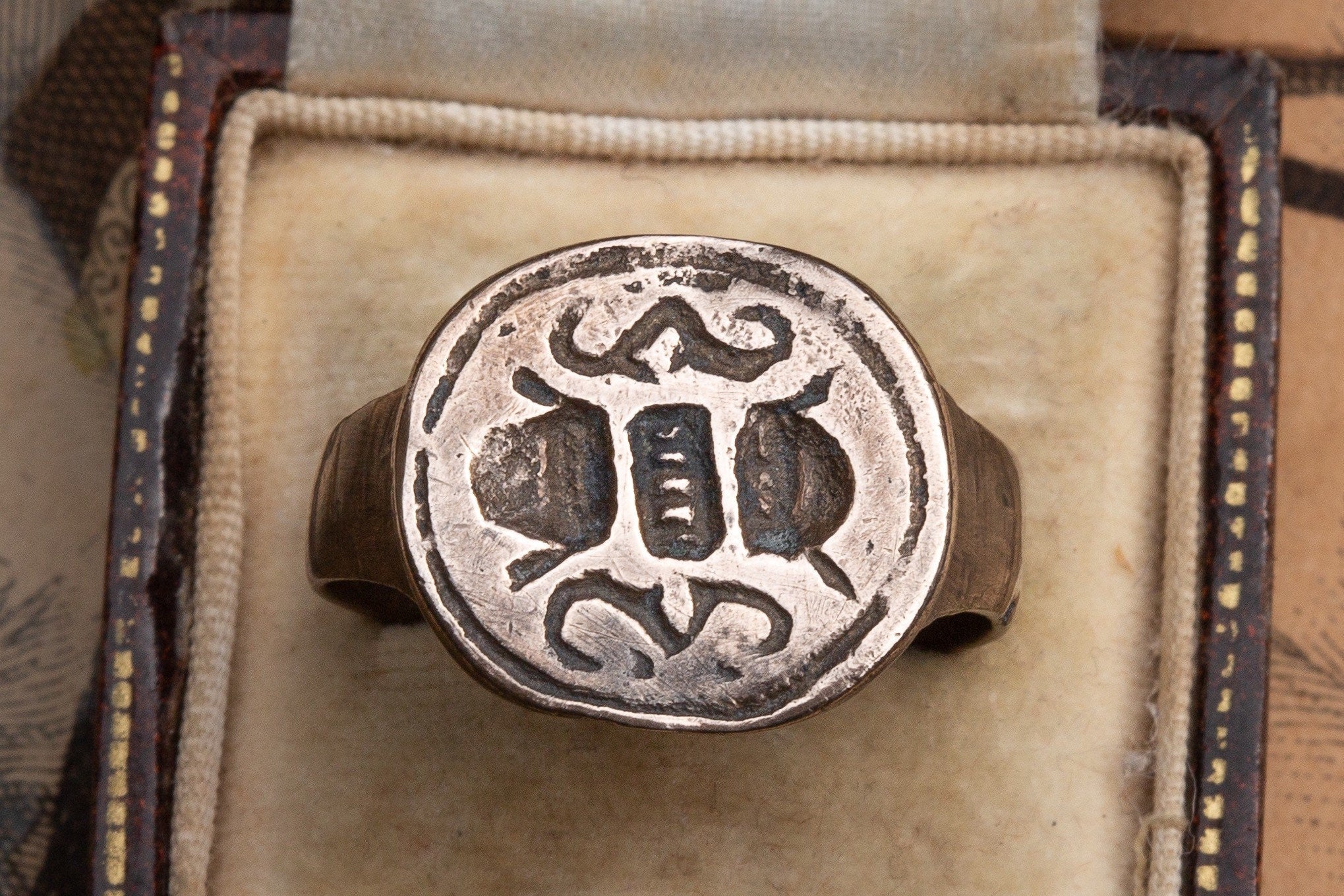
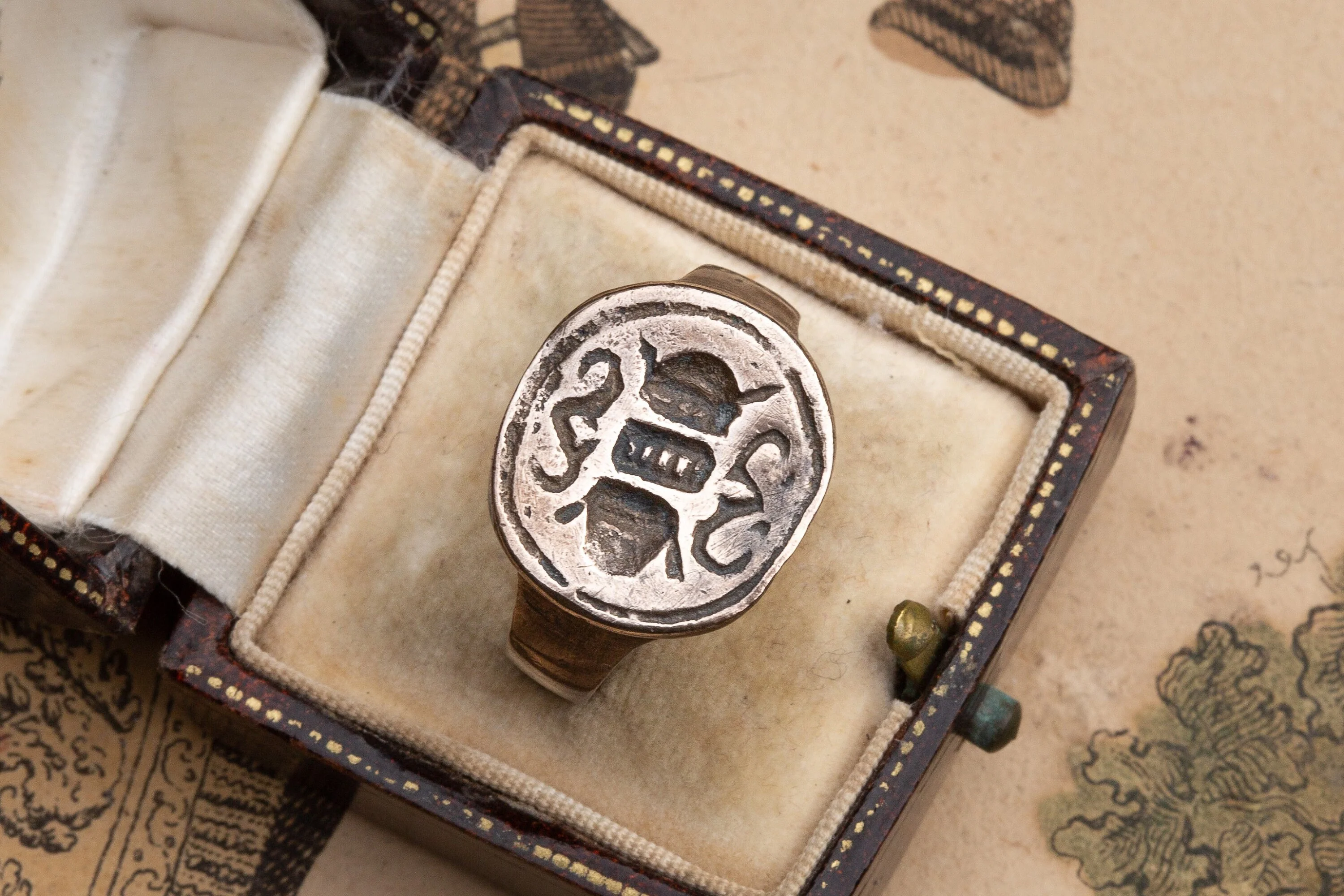
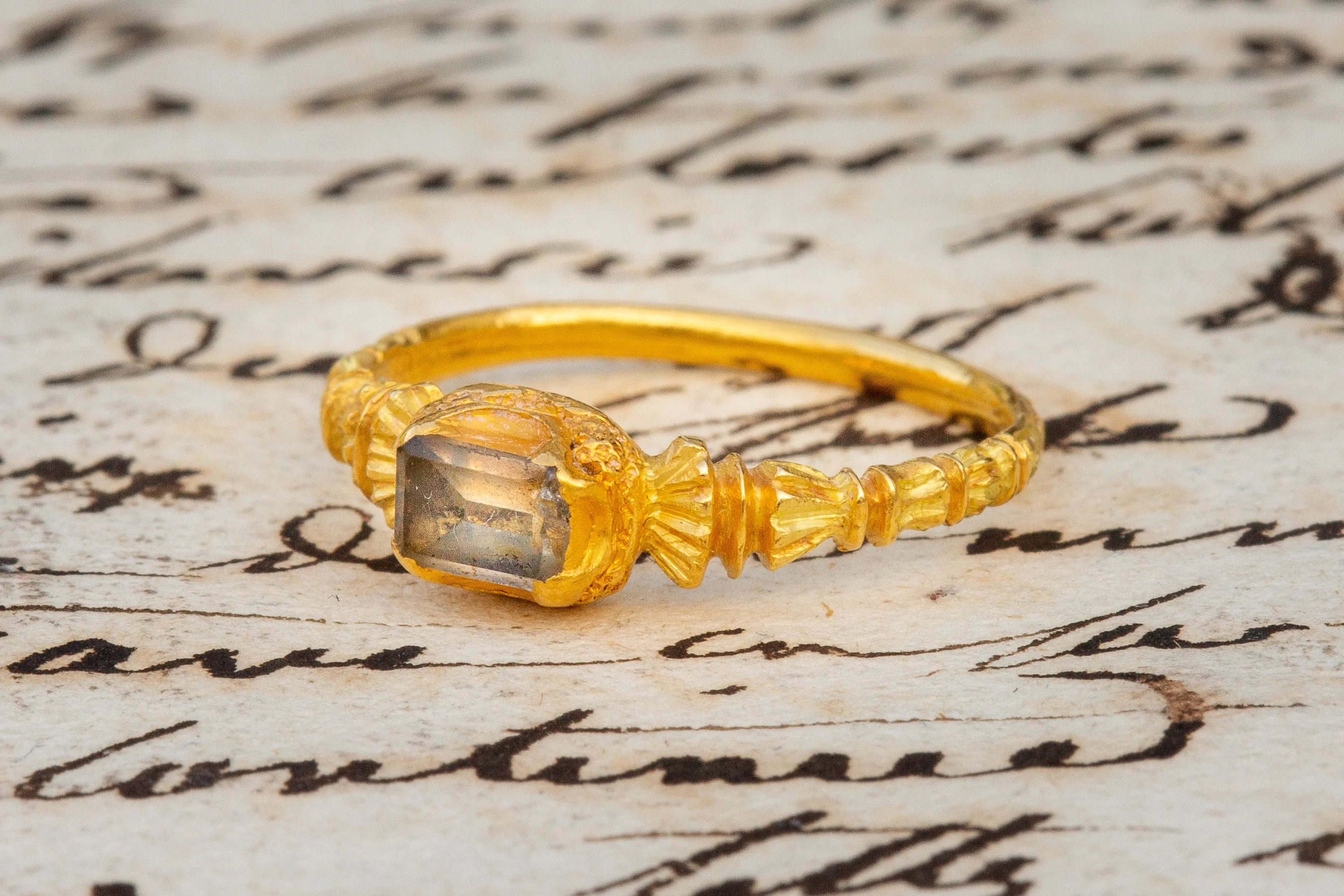
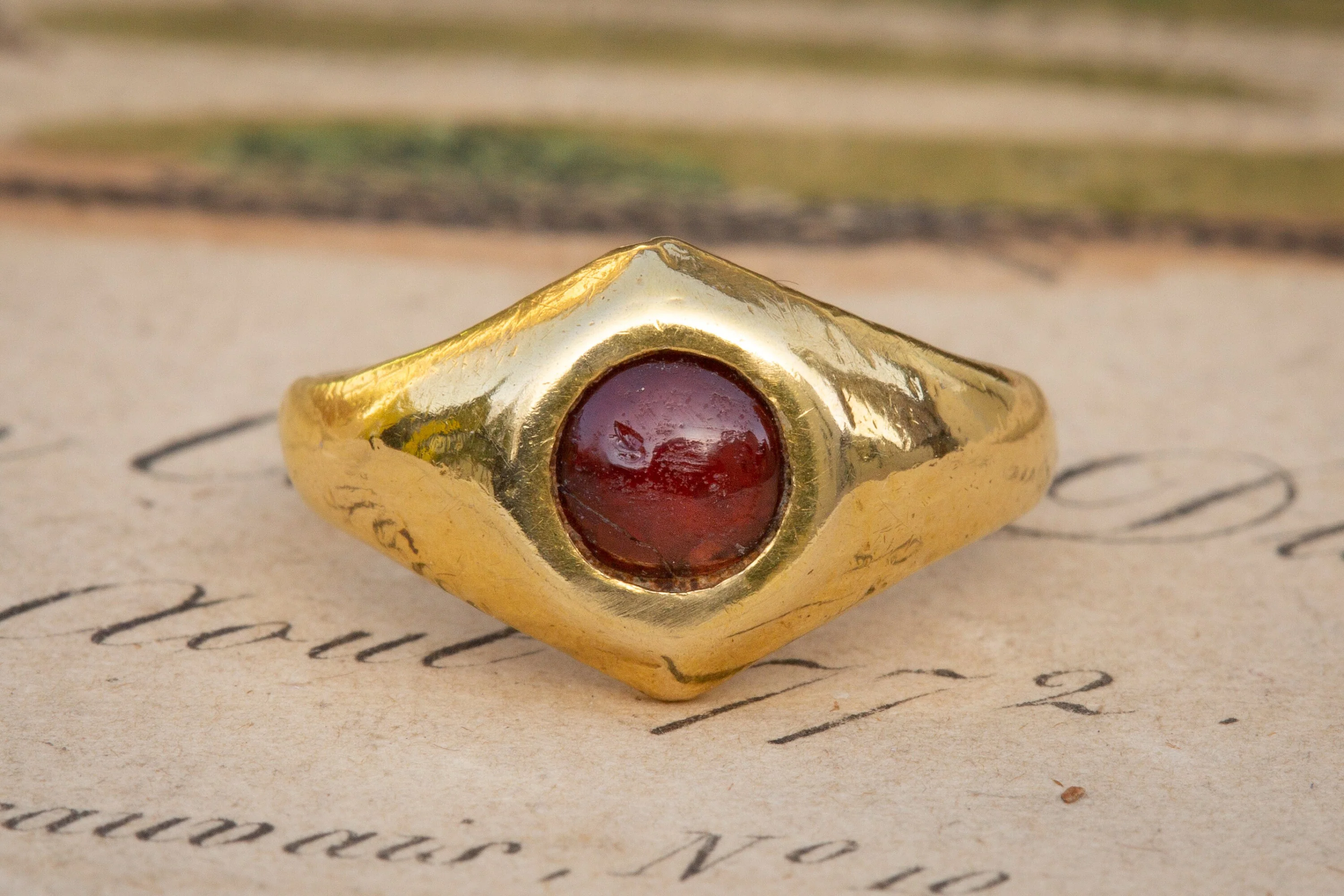
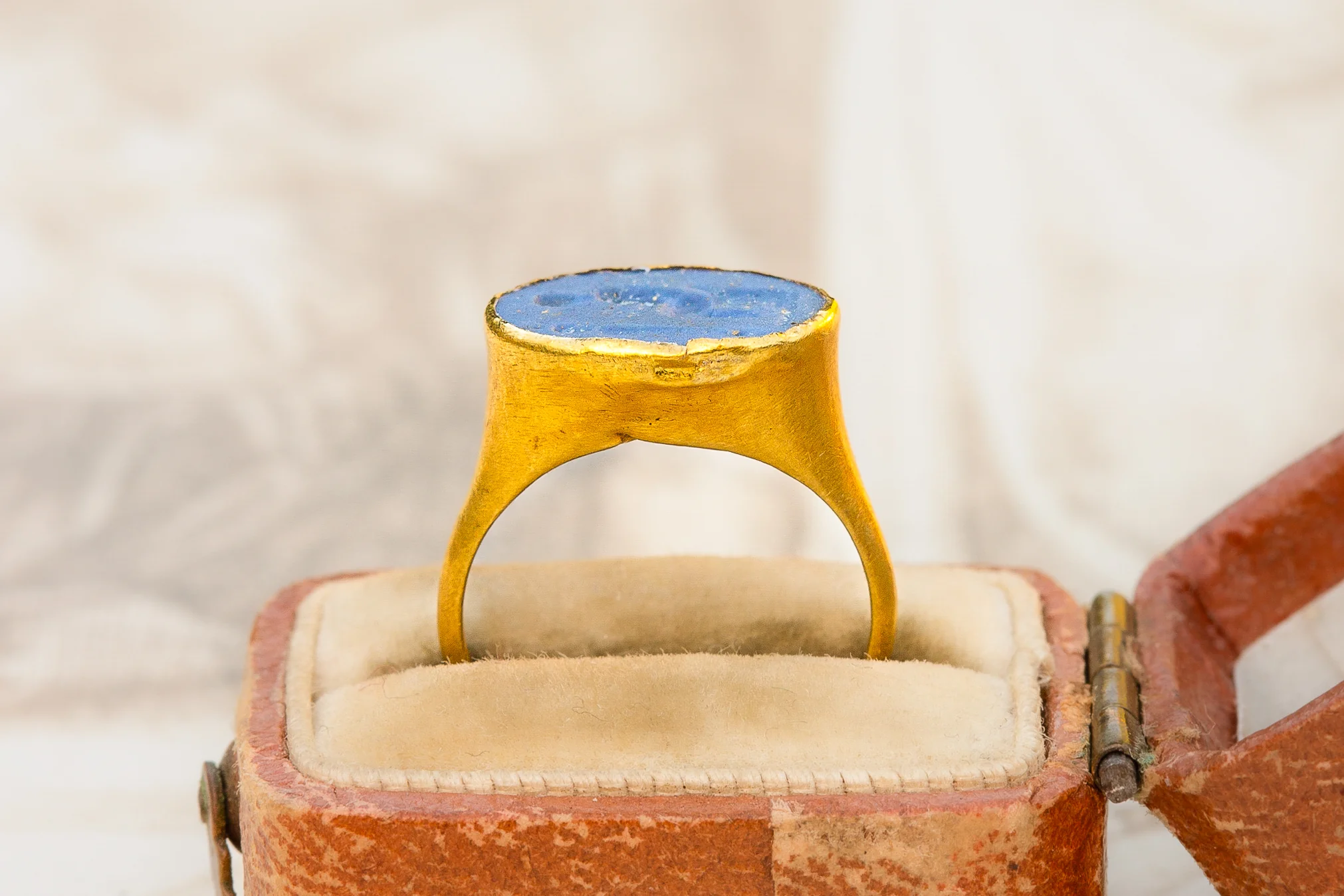
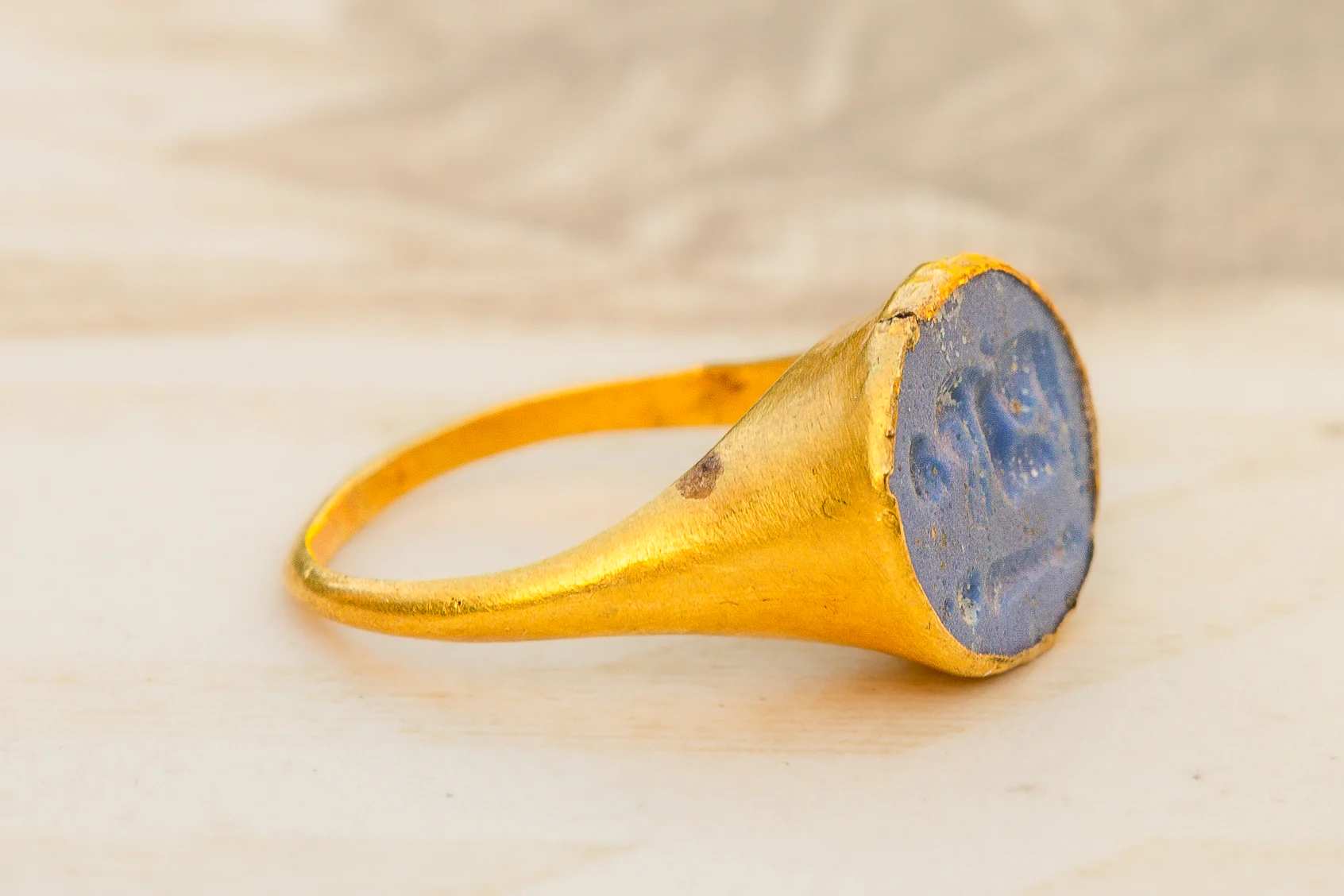
An exceptional Roman gold ring dating to the early Imperial period, circa mid-1st century AD, set with a finely moulded blue vitreous paste intaglio depicting a seated philosopher studying a herm on a plinth.
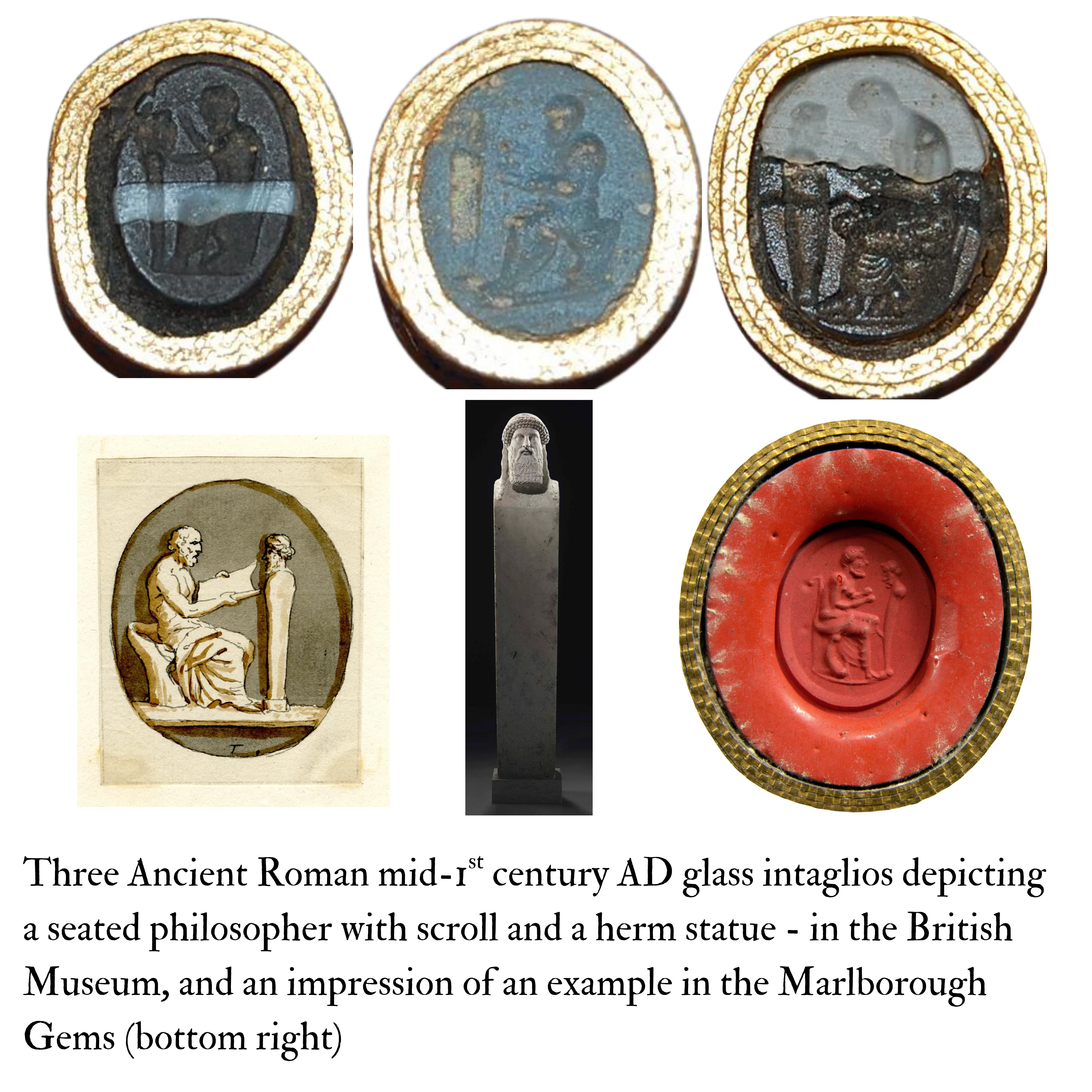
Two very closely related glass intaglios of this same motif are preserved in the British Museum (inv. 1814,0704.2373 and 1814,0704.2834), both traced to a glass workshop at Pompeii - likely the same production centre that supplied this piece. Similar examples are also recorded in the Marlborough Gems (Boardman et al., 2009, no. 434) and The Metropolitan Museum of Art (inv. 81.6.49). While the aforementioned museum pieces survive as loose gems, this example remains in its original period gold mount - an extremely rare survival of its truncated, hollow form.
The subject, a seated, bearded philosopher with a scroll contemplating a herm, was a popular emblem among educated Romans, symbolising paideia - Greek learning and philosophical virtue. Rings with this motif were often worn by literate members of society - city administrators, physicians, rhetoricians, jurists, and other professional elites - as personal seals and statements of cultured identity. The delicate scale of this ring suggests it may have belonged to a youth or woman of similar standing, perhaps a member of an educated household.
The ring is crafted in high-purity gold, approximately 22–23K, with a hollow, tapered hoop rising to a truncated oval bezel. The intaglio measures 12 × 7 mm; the bezel rises 4 mm from the base of the finger.
UK size F½ / US 3.
Weight: 1.64 g.
A superb example of early Imperial craftsmanship; a personal artefact of learning, status, and identity from the ancient world, remarkably preserved in its original gold mount.
$1,206.06
Original: $4,020.20
-70%Ancient Roman Intaglio Ring—
$4,020.20
$1,206.06Product Information
Product Information
Shipping & Returns
Shipping & Returns
Description
An exceptional Roman gold ring dating to the early Imperial period, circa mid-1st century AD, set with a finely moulded blue vitreous paste intaglio depicting a seated philosopher studying a herm on a plinth.
Two very closely related glass intaglios of this same motif are preserved in the British Museum (inv. 1814,0704.2373 and 1814,0704.2834), both traced to a glass workshop at Pompeii - likely the same production centre that supplied this piece. Similar examples are also recorded in the Marlborough Gems (Boardman et al., 2009, no. 434) and The Metropolitan Museum of Art (inv. 81.6.49). While the aforementioned museum pieces survive as loose gems, this example remains in its original period gold mount - an extremely rare survival of its truncated, hollow form.
The subject, a seated, bearded philosopher with a scroll contemplating a herm, was a popular emblem among educated Romans, symbolising paideia - Greek learning and philosophical virtue. Rings with this motif were often worn by literate members of society - city administrators, physicians, rhetoricians, jurists, and other professional elites - as personal seals and statements of cultured identity. The delicate scale of this ring suggests it may have belonged to a youth or woman of similar standing, perhaps a member of an educated household.
The ring is crafted in high-purity gold, approximately 22–23K, with a hollow, tapered hoop rising to a truncated oval bezel. The intaglio measures 12 × 7 mm; the bezel rises 4 mm from the base of the finger.
UK size F½ / US 3.
Weight: 1.64 g.
A superb example of early Imperial craftsmanship; a personal artefact of learning, status, and identity from the ancient world, remarkably preserved in its original gold mount.