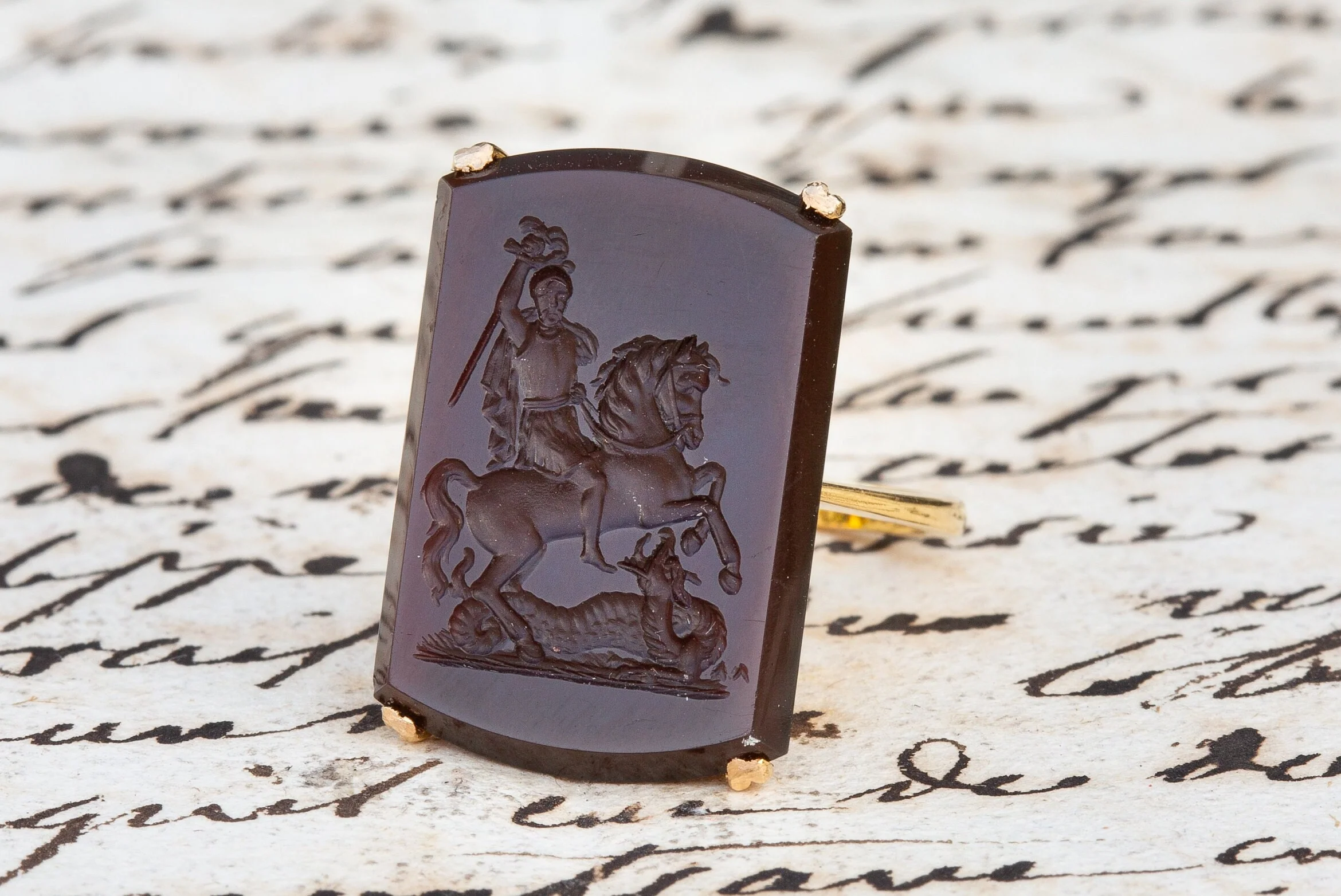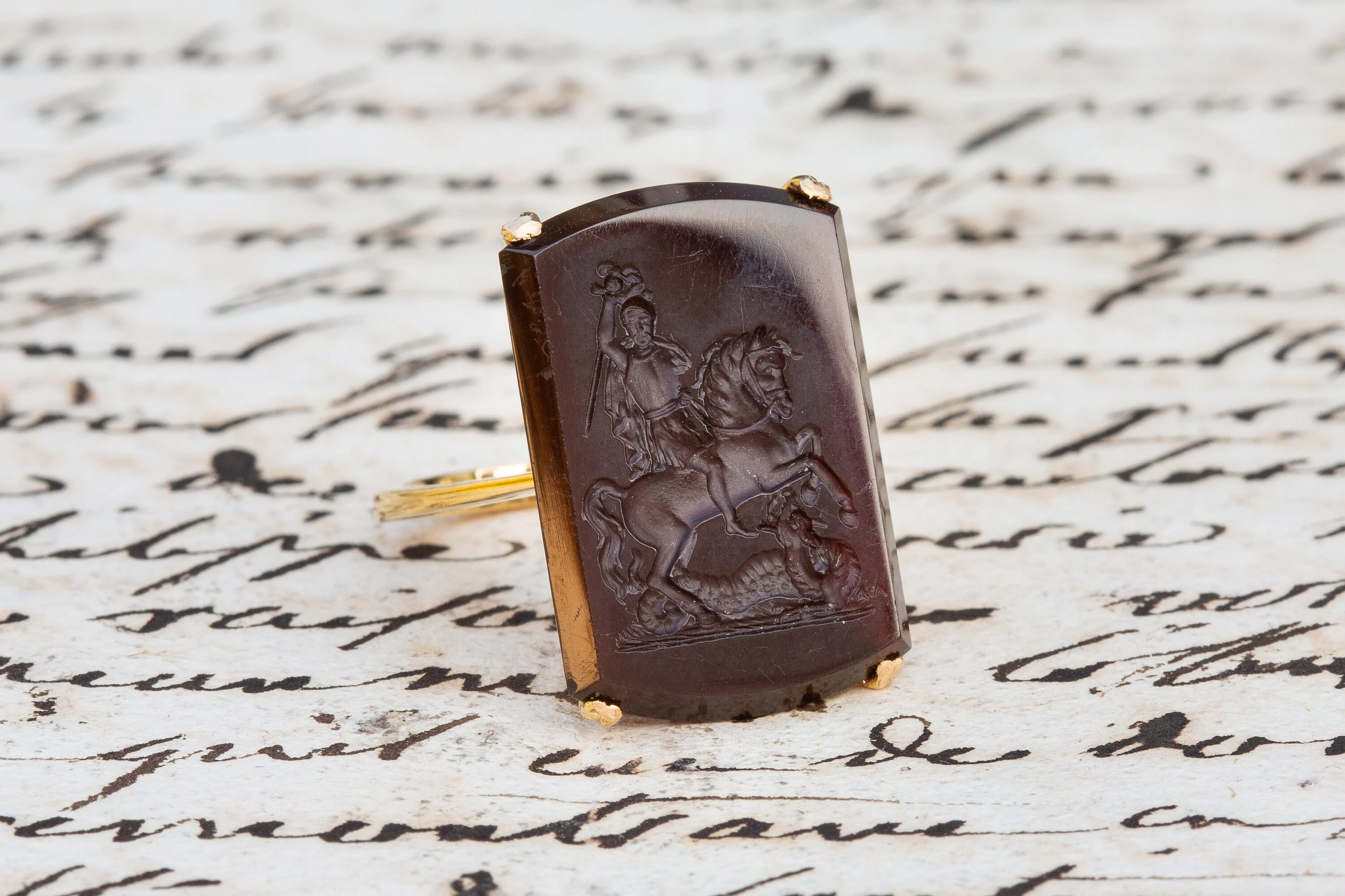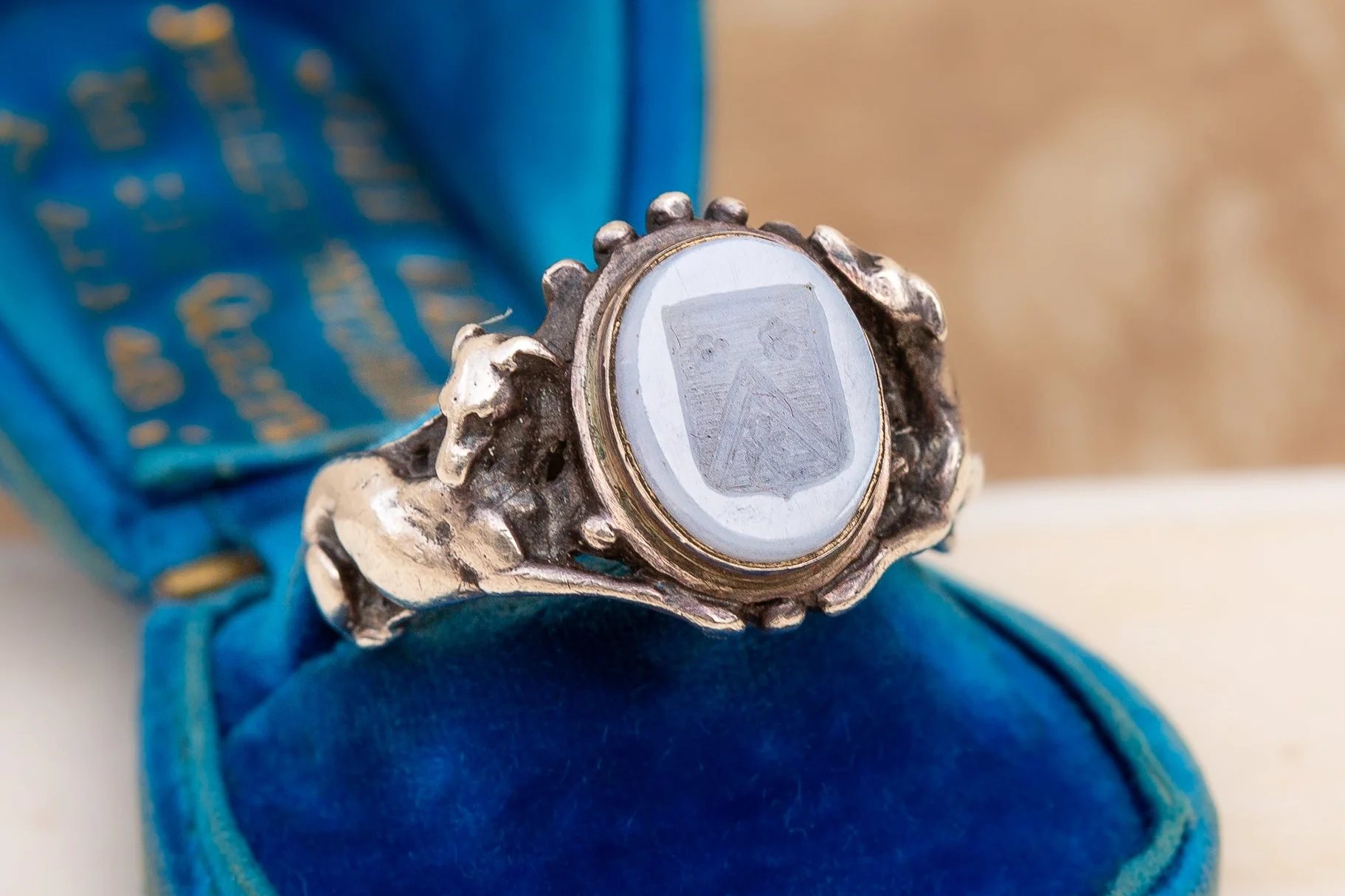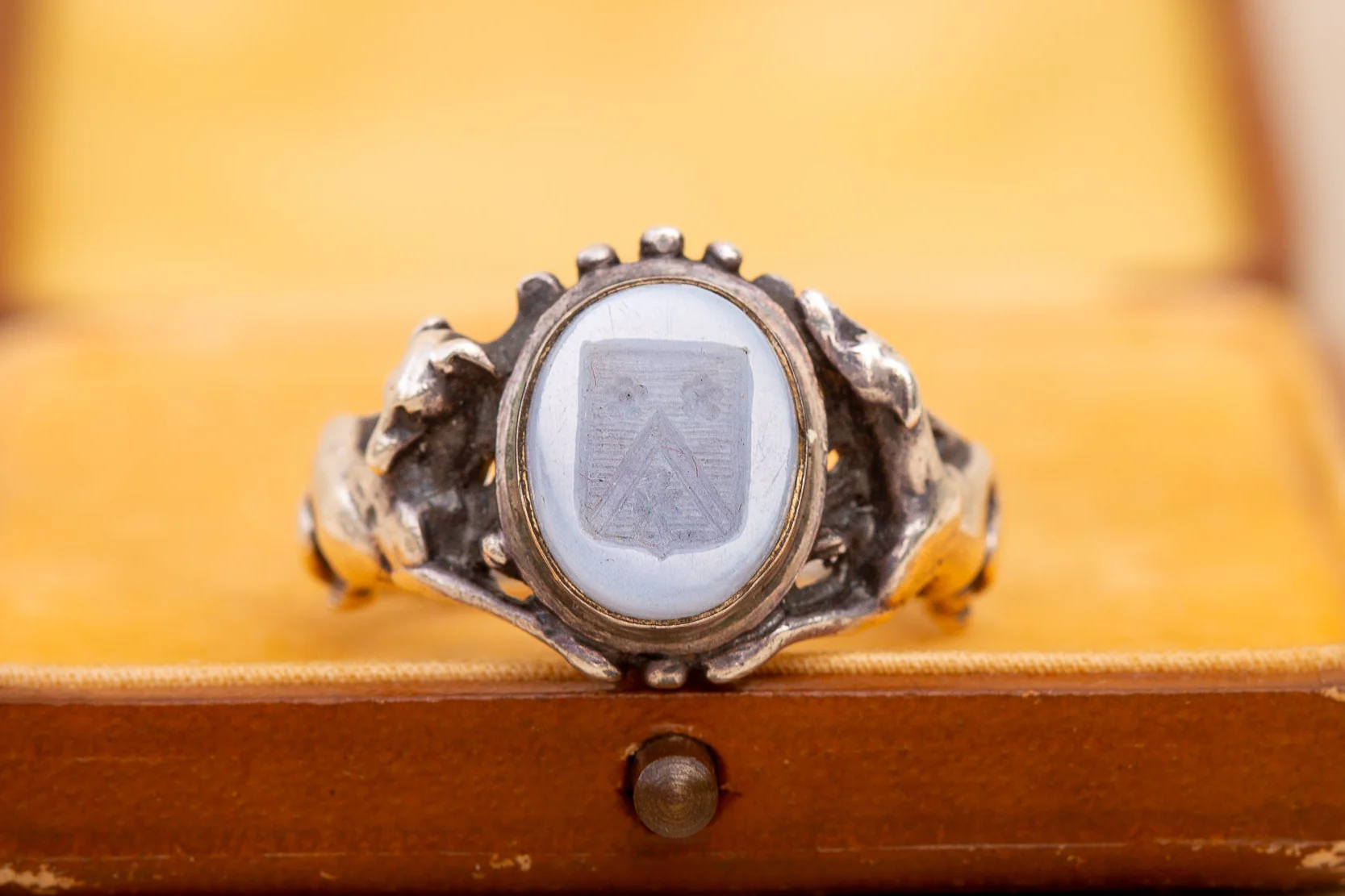
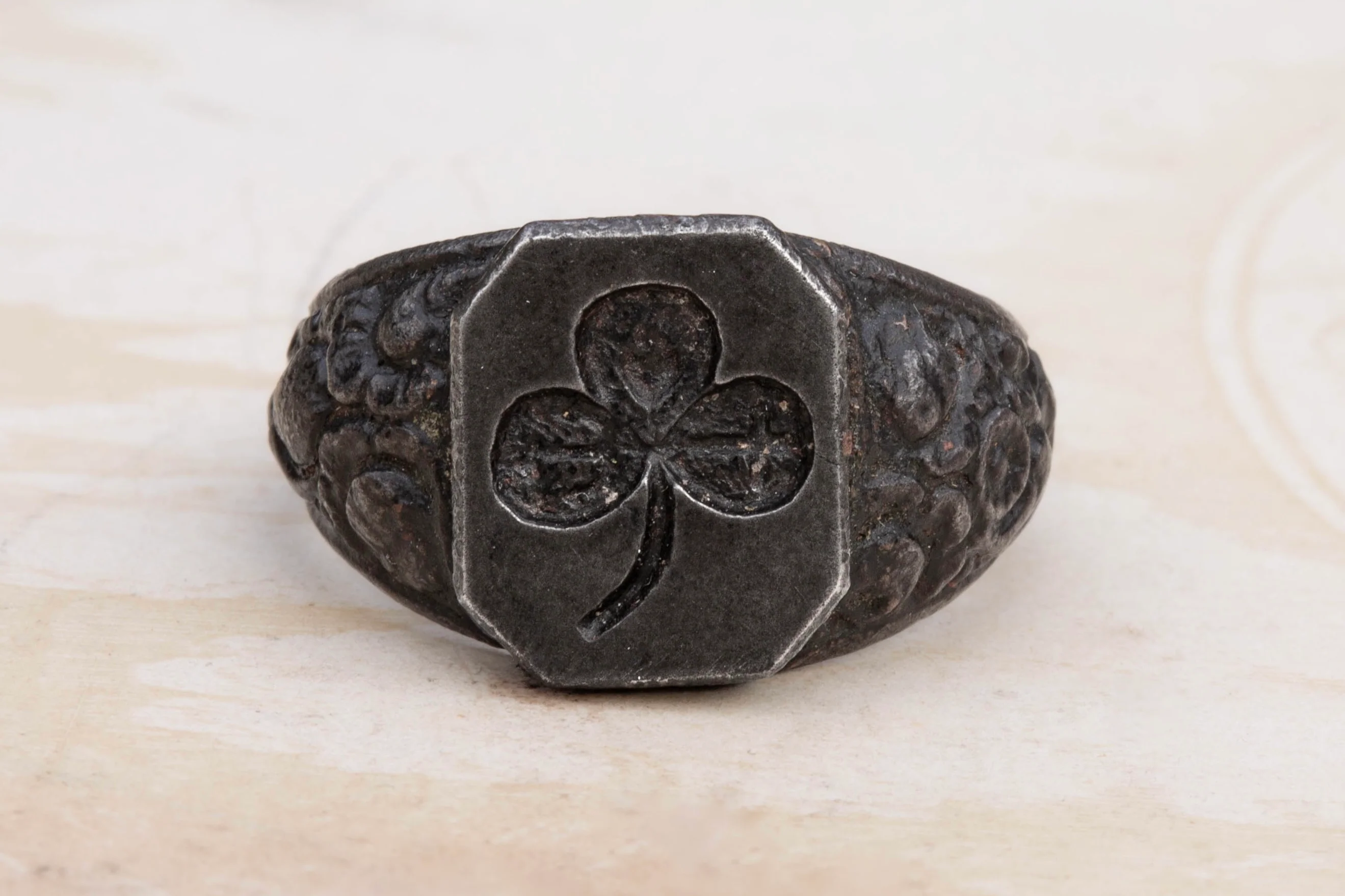


Berlin Iron Signet Ring
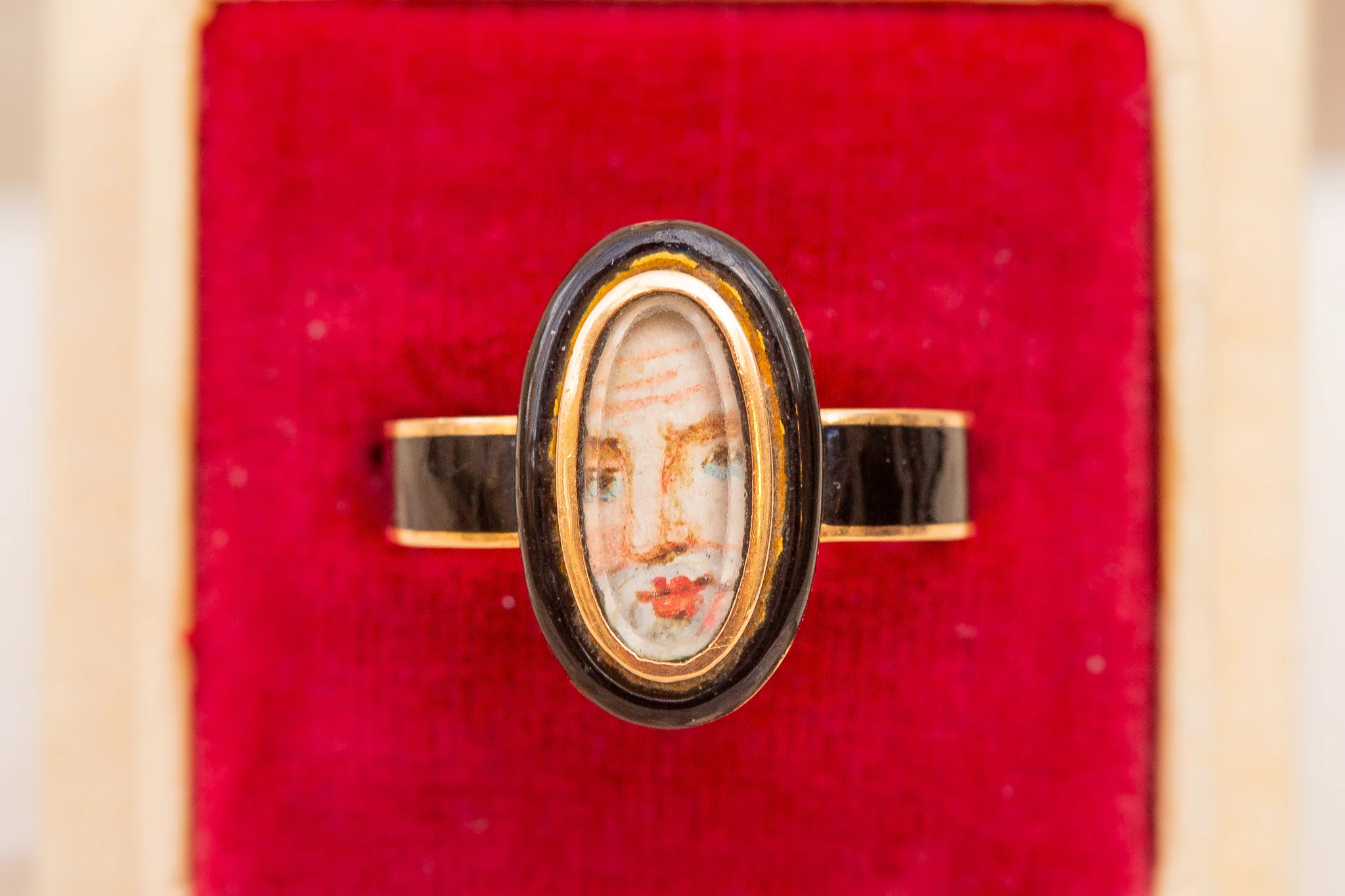
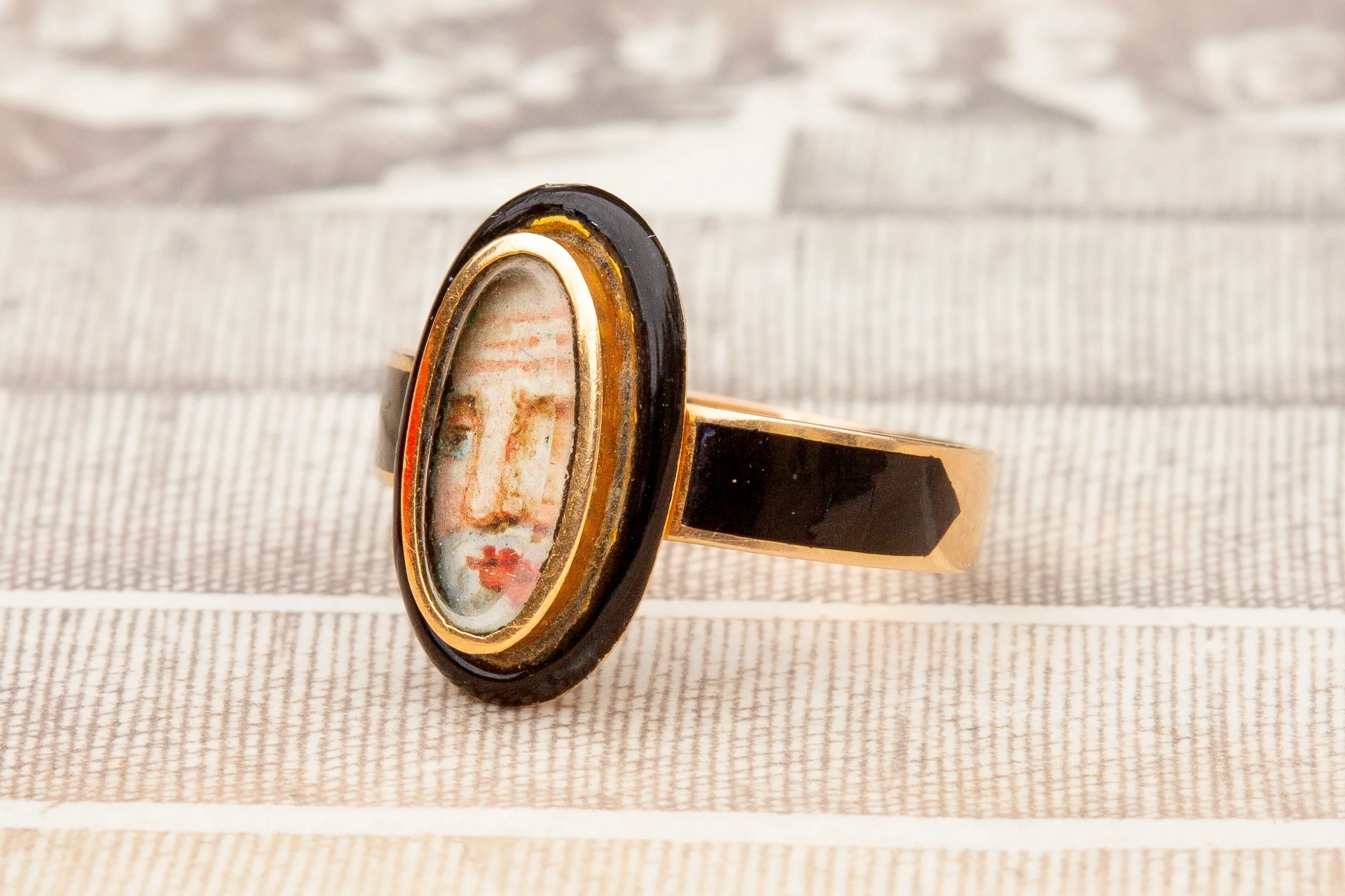
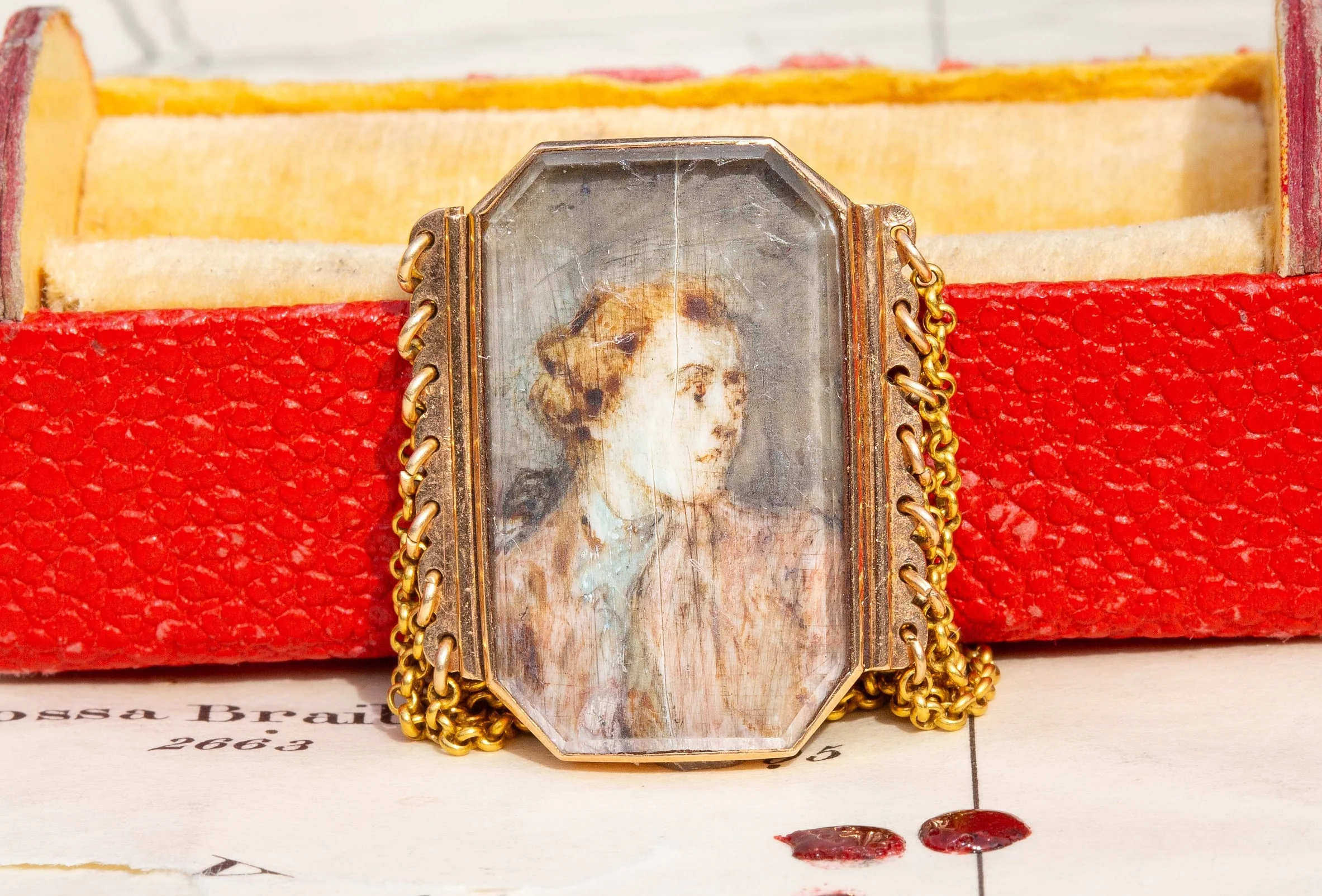
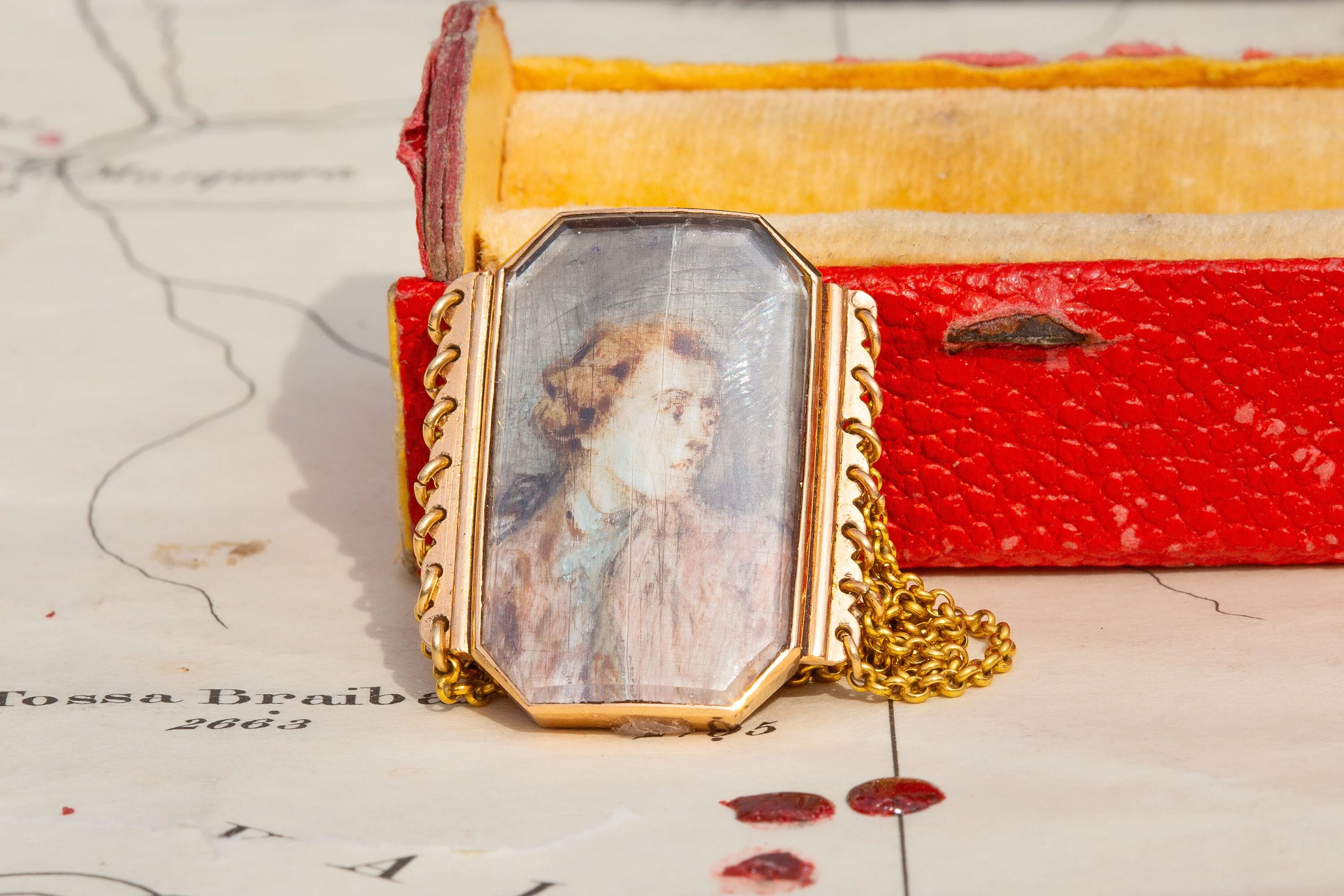
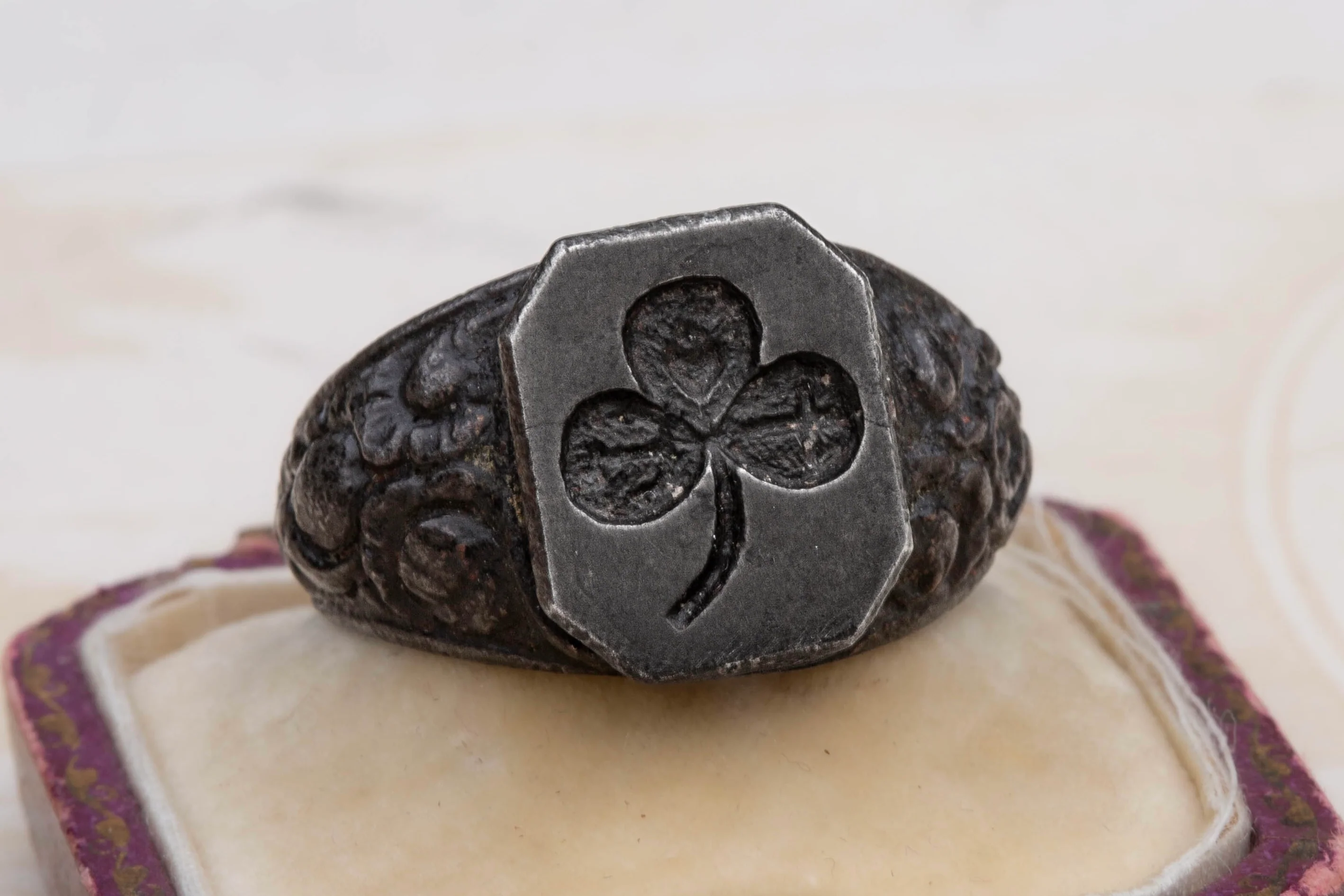
This is a rare example of ‘Berlin iron jewellery’, and dates from circa 1820.
The bezel is decorated with a three leaf clover motif. Within each of the leaves of the clover are the symbols, ‘faith, hope and charity’, which are represented by the cross, the sacred heart and the anchor. The shoulders feature relief-worked scroll and floral motifs.
Berlin iron jewellery was produced as part of the 'Gold gab ich fur Eisen' ('I gave gold for iron') campaign that began in 1813 in Prussia.
To help finance the ongoing Prussian war effort to repel the forces of Napoleon, the Prussian Royal Family urged wealthy citizens to donate their gold jewellery to the impoverished Prussian state and in exchange they would recieve cast iron jewellery (known as Berlin Iron jewellery).
The campaign for gold was particularly successful, the Prussian chests were filled and wearing iron jewellery was an overt statement of your loyalty and patriotic commitment to the country, and many chose to continue wearing it long after the war ended until its appeal faded in the latter half of the nineteenth century.
The technique consisted in carving or moulding shapes in wax, pressing these into fine sand and filling the impressions with molten iron. These pieces were then applied with black lacquer to help prevent rusting.
Many of the iron jewels imitated the popular and classical styles of the time, as is the theme of this ring, a lucky shamrock clover and the symbols for faith, hope and charity. In jewellery the symbols read like a prayer: by God’s grace, come back safe. During the Napoleonic Wars, it became a relevant popular symbol at a time when seafaring and war meant that a loved one might never be seen again.
Combining history and sentiment is this very rare glorious example. It is in excellent condition and most Berlin ironwork pieces which survive intact are bracelets or necklaces, very few rings are on the market in comparison. In fact, most of Berlin iron jewellery now resides in museums or was left to perish in the rust. The most notable collections of Berlin Iron jewellery can be found in the Victoria and Albert Museum, the Musée des Beaux-Arts de Rouen and the Neues Museum.
UK size Y 1/2, US size 12.25 (quite a large ring size!)
In overall very good condition, with some small areas of discolouration - elements of surface rust typical of surviving Berlin iron jewellery of this period. The ring weighs 11.97g, and the octagonal bezel measures 15mm x 12mm. The band measures 4mm across at the back.
Product Information
Product Information
Shipping & Returns
Shipping & Returns
Description
This is a rare example of ‘Berlin iron jewellery’, and dates from circa 1820.
The bezel is decorated with a three leaf clover motif. Within each of the leaves of the clover are the symbols, ‘faith, hope and charity’, which are represented by the cross, the sacred heart and the anchor. The shoulders feature relief-worked scroll and floral motifs.
Berlin iron jewellery was produced as part of the 'Gold gab ich fur Eisen' ('I gave gold for iron') campaign that began in 1813 in Prussia.
To help finance the ongoing Prussian war effort to repel the forces of Napoleon, the Prussian Royal Family urged wealthy citizens to donate their gold jewellery to the impoverished Prussian state and in exchange they would recieve cast iron jewellery (known as Berlin Iron jewellery).
The campaign for gold was particularly successful, the Prussian chests were filled and wearing iron jewellery was an overt statement of your loyalty and patriotic commitment to the country, and many chose to continue wearing it long after the war ended until its appeal faded in the latter half of the nineteenth century.
The technique consisted in carving or moulding shapes in wax, pressing these into fine sand and filling the impressions with molten iron. These pieces were then applied with black lacquer to help prevent rusting.
Many of the iron jewels imitated the popular and classical styles of the time, as is the theme of this ring, a lucky shamrock clover and the symbols for faith, hope and charity. In jewellery the symbols read like a prayer: by God’s grace, come back safe. During the Napoleonic Wars, it became a relevant popular symbol at a time when seafaring and war meant that a loved one might never be seen again.
Combining history and sentiment is this very rare glorious example. It is in excellent condition and most Berlin ironwork pieces which survive intact are bracelets or necklaces, very few rings are on the market in comparison. In fact, most of Berlin iron jewellery now resides in museums or was left to perish in the rust. The most notable collections of Berlin Iron jewellery can be found in the Victoria and Albert Museum, the Musée des Beaux-Arts de Rouen and the Neues Museum.
UK size Y 1/2, US size 12.25 (quite a large ring size!)
In overall very good condition, with some small areas of discolouration - elements of surface rust typical of surviving Berlin iron jewellery of this period. The ring weighs 11.97g, and the octagonal bezel measures 15mm x 12mm. The band measures 4mm across at the back.