🎉 Up to 70% Off Selected ItemsShop Sale



Medieval Gold Posy Ring
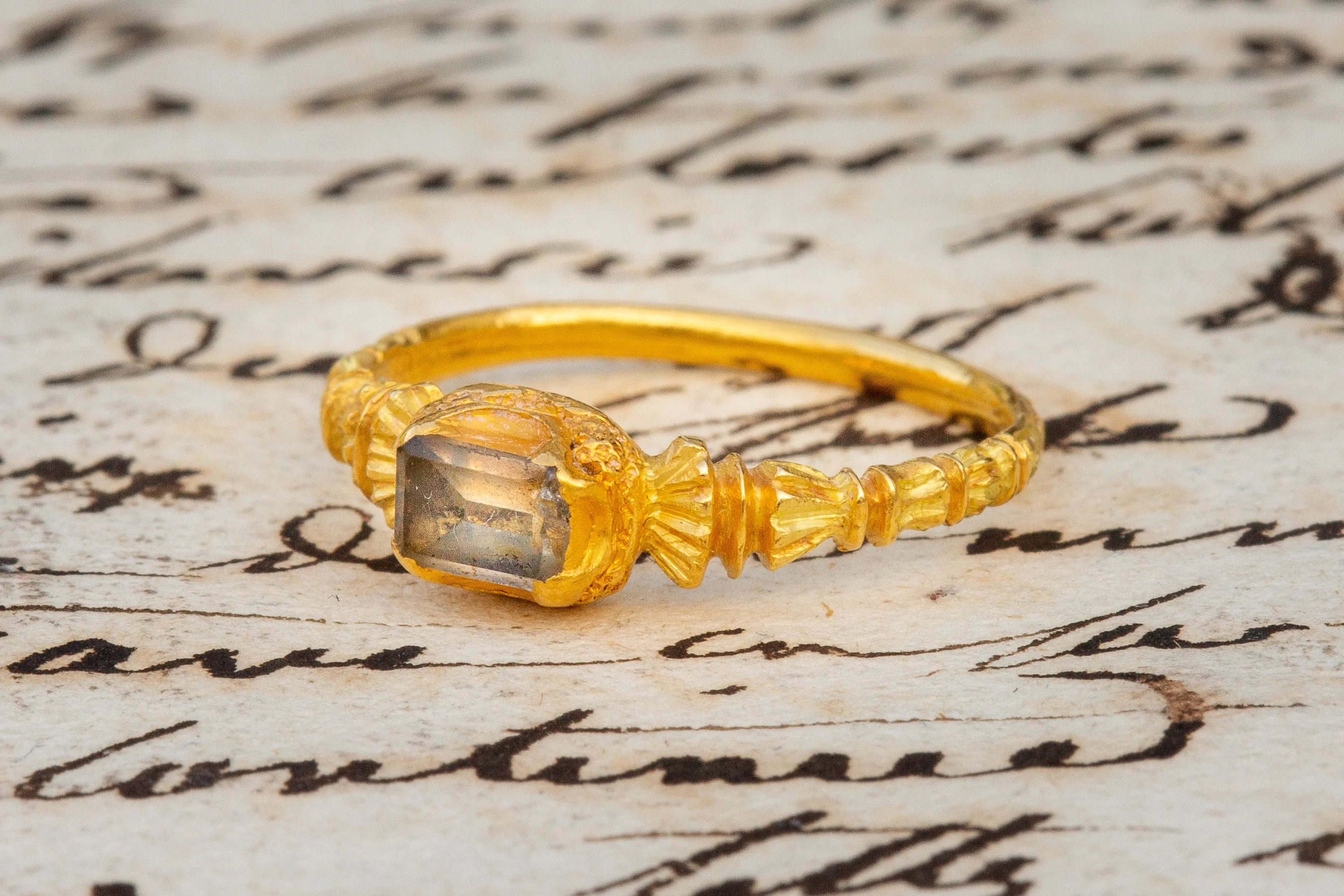
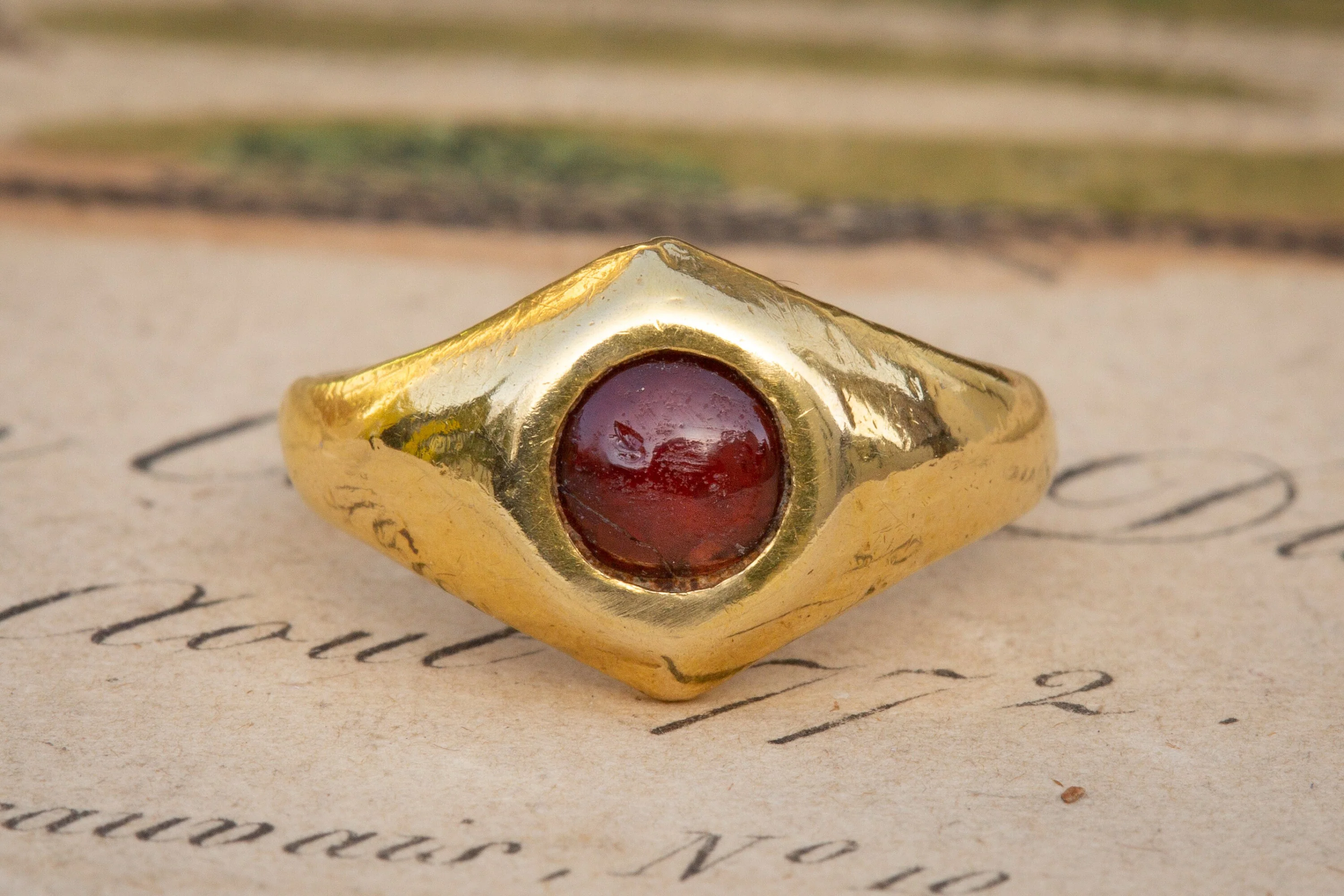
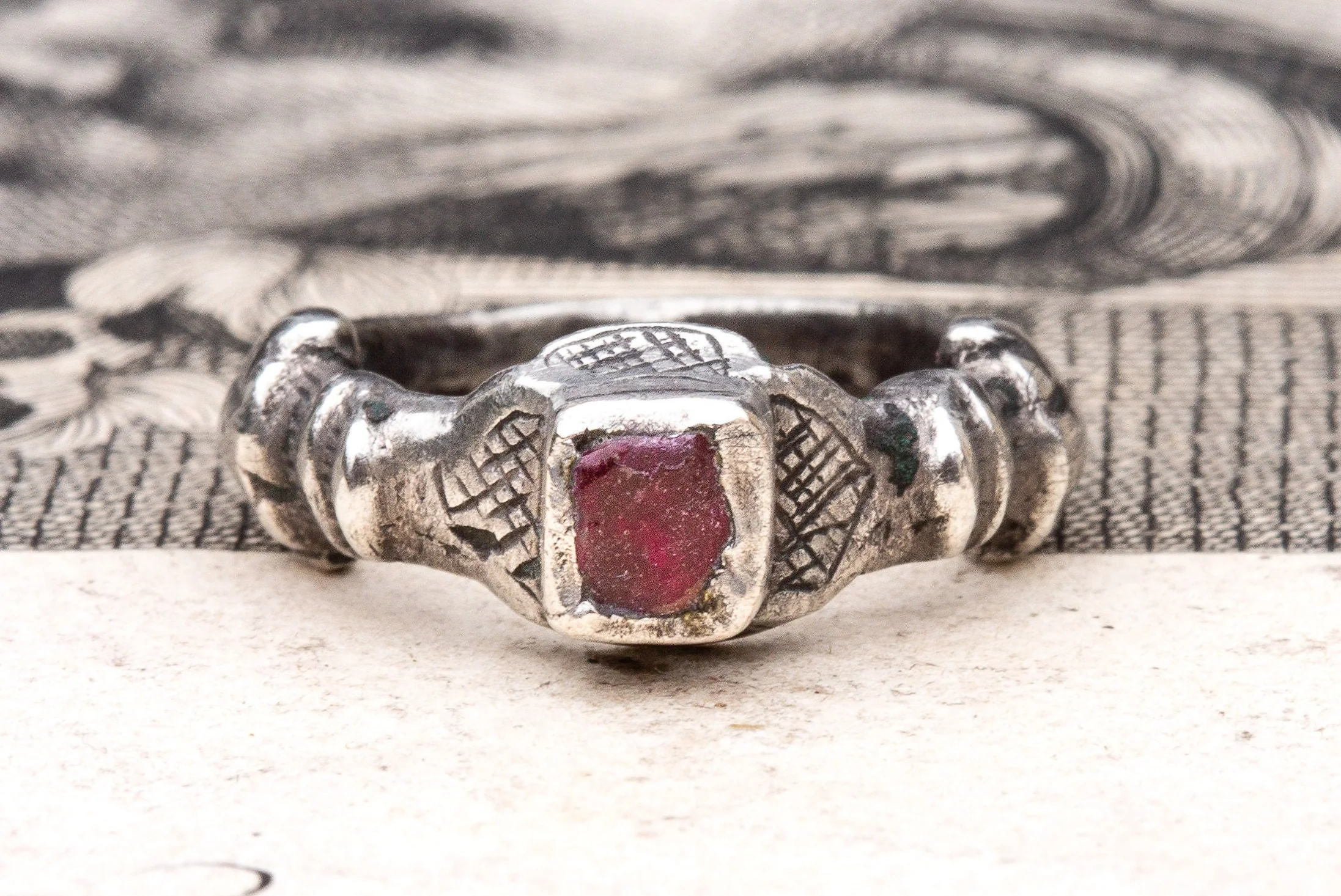
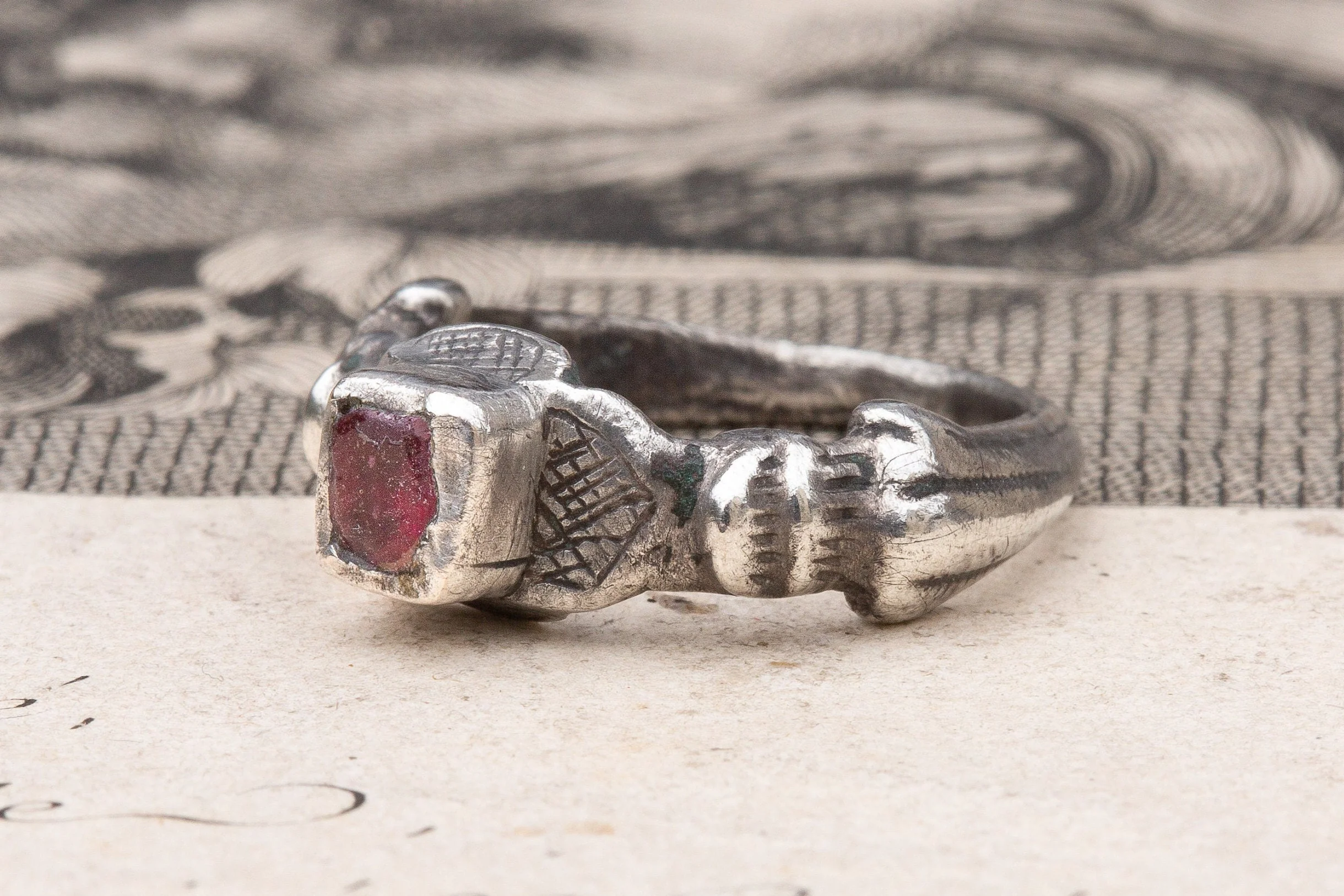
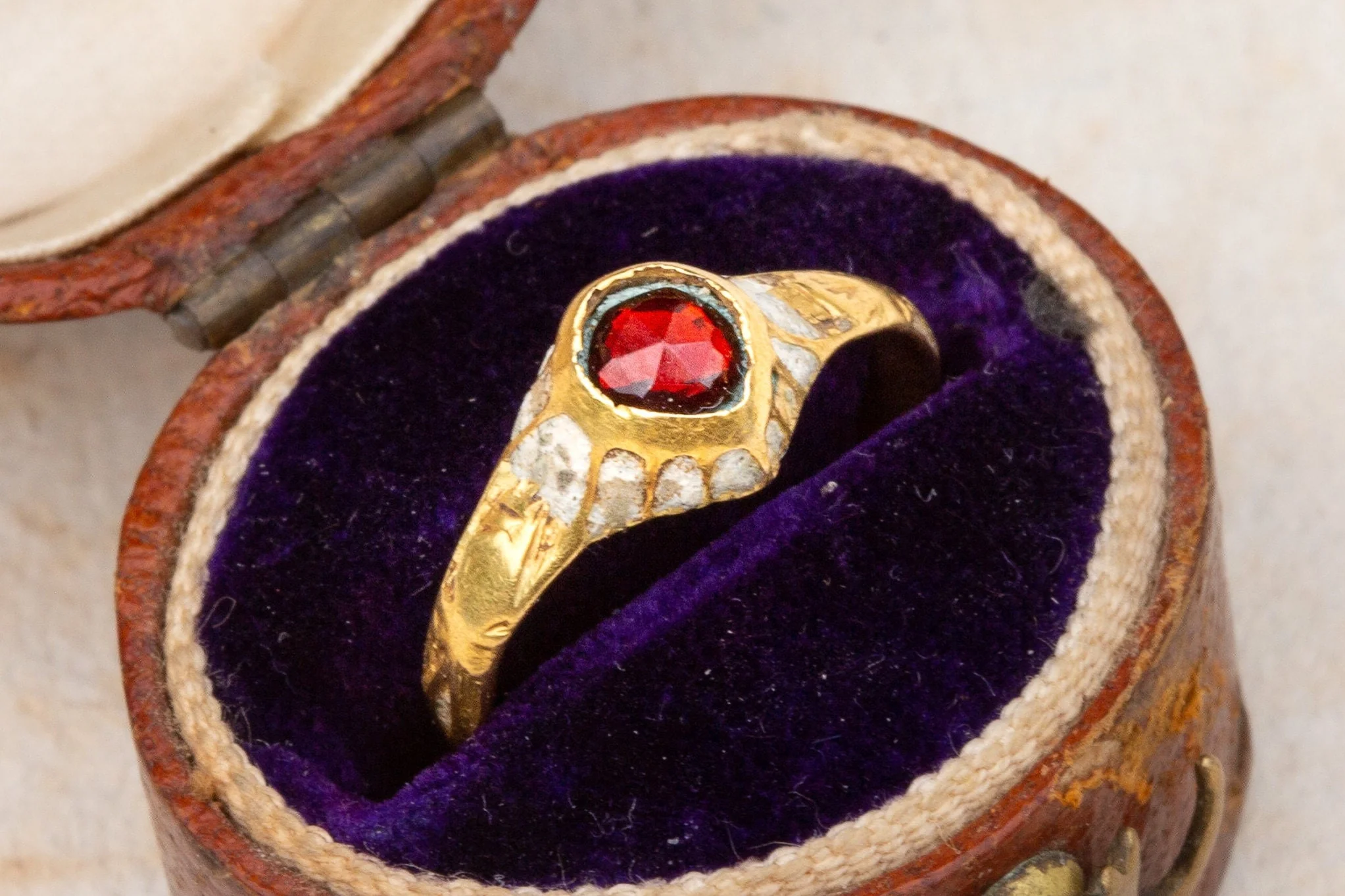
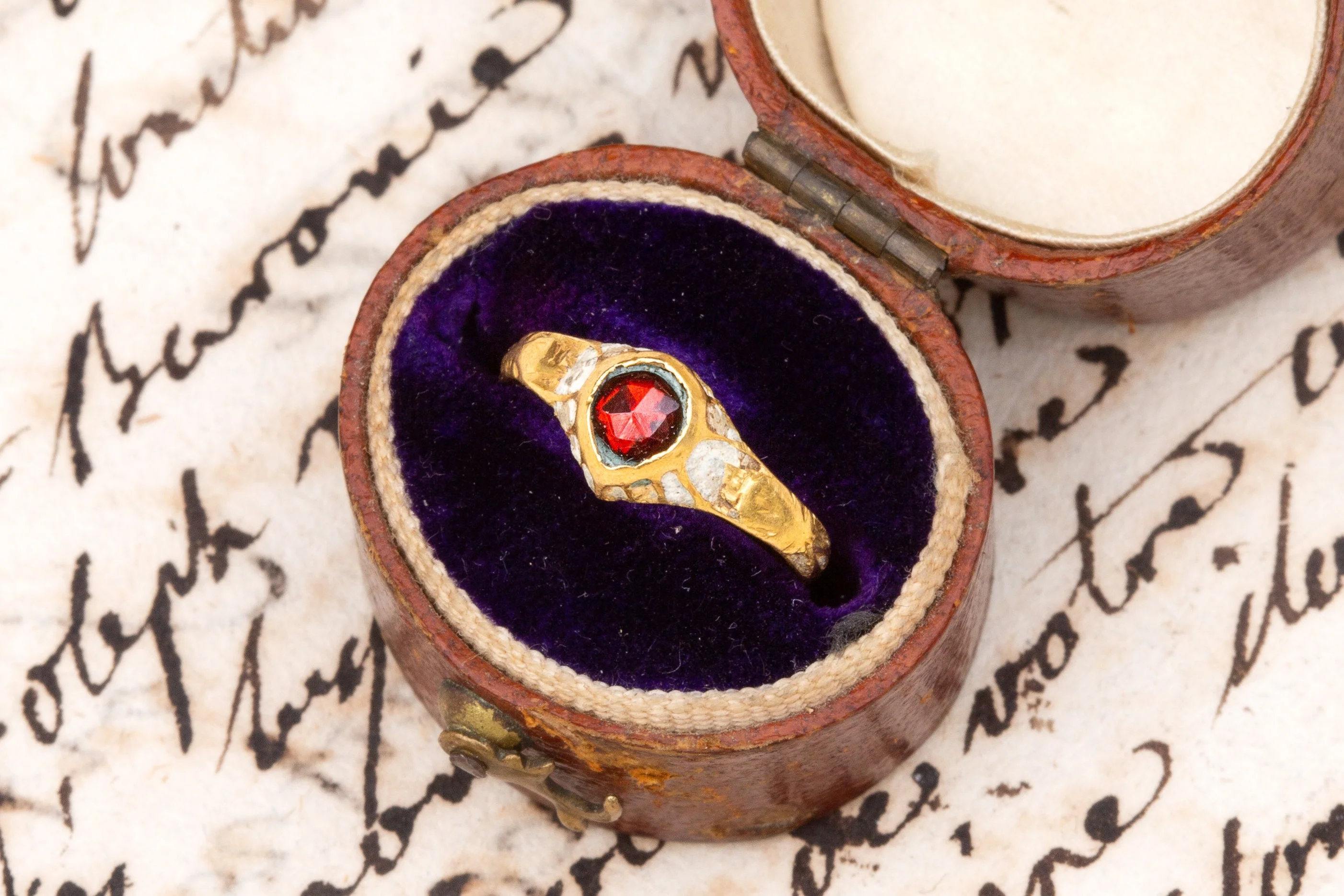
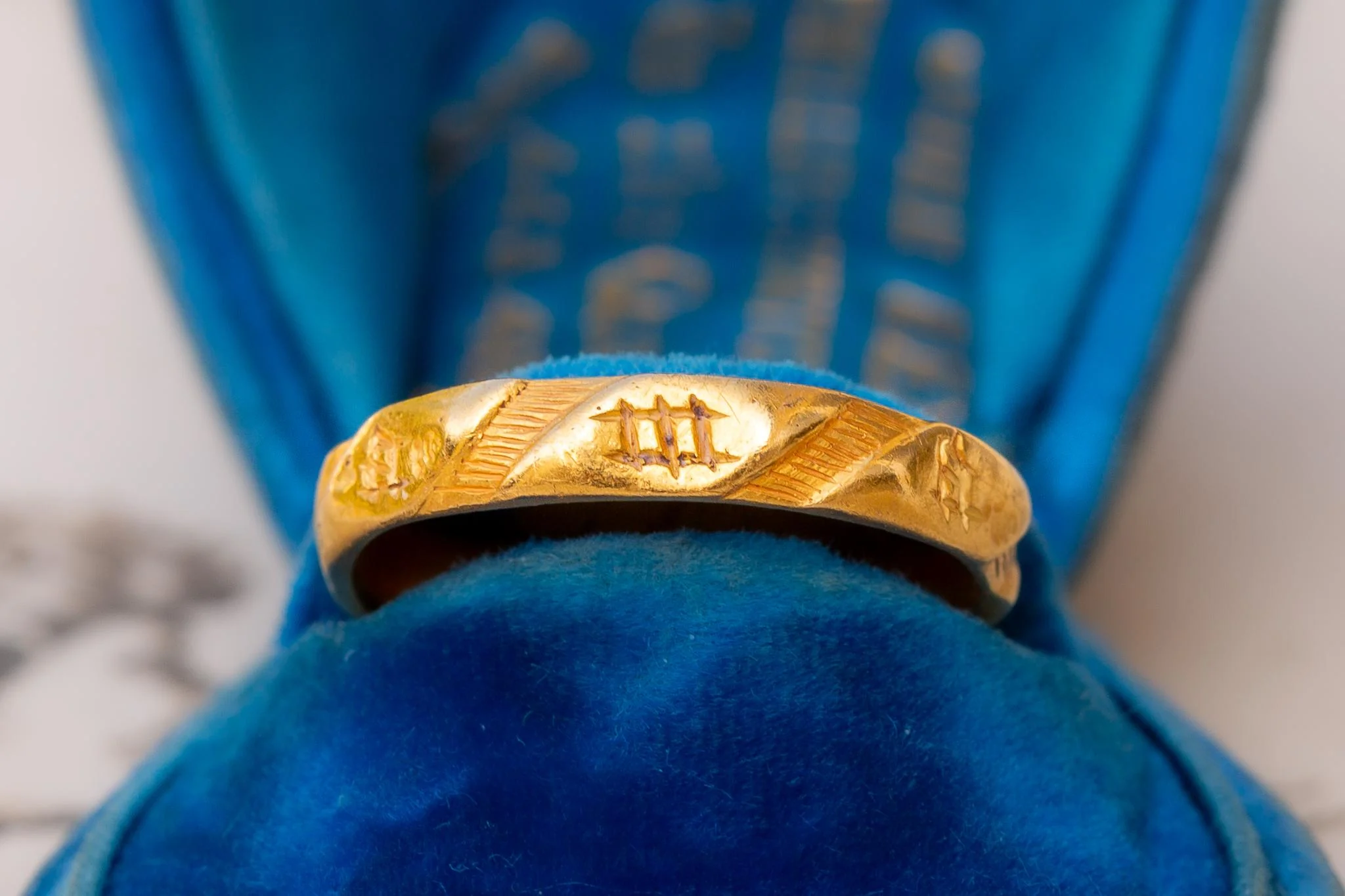
A rare and evocative Medieval posy ring, dating to the 14th century and crafted in high-karat gold.
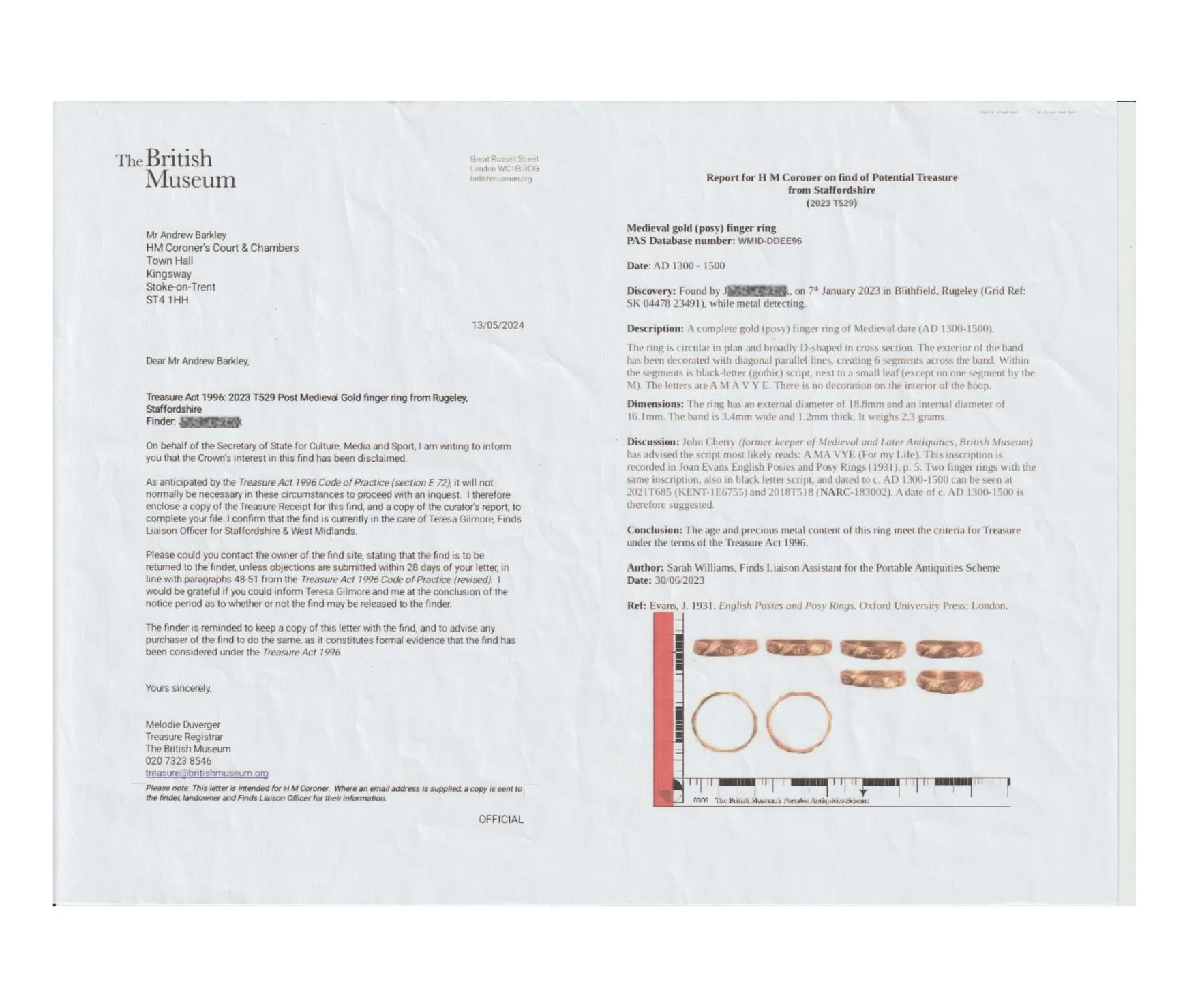
This piece was discovered in Staffordshire by a metal detectorist and subsequently recorded with the Portable Antiquities Scheme. It was analysed by the British Museum and later disclaimed as ‘Treasure’ (see final images for documentation). A copy of the official report will be included with the ring.
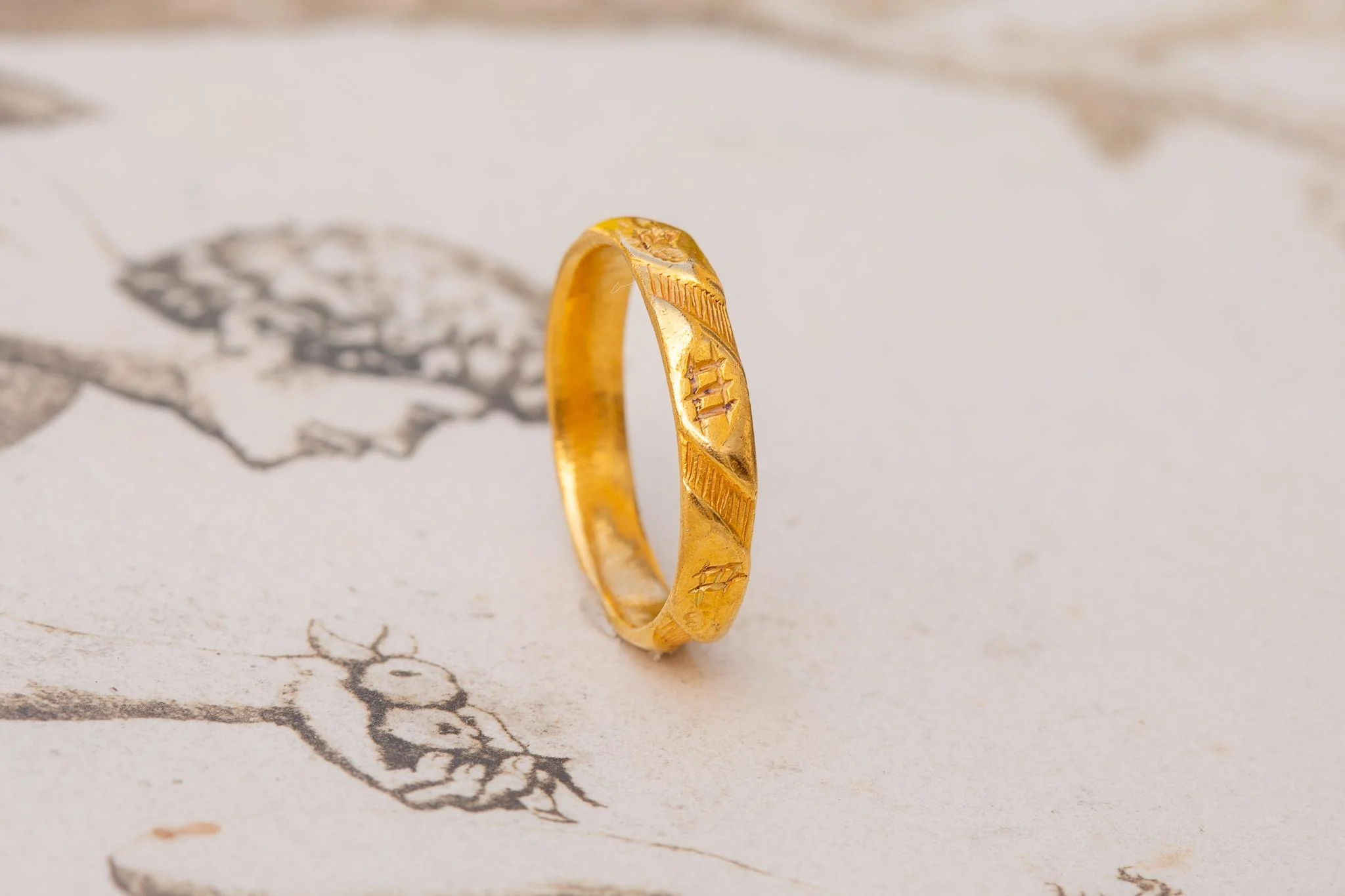
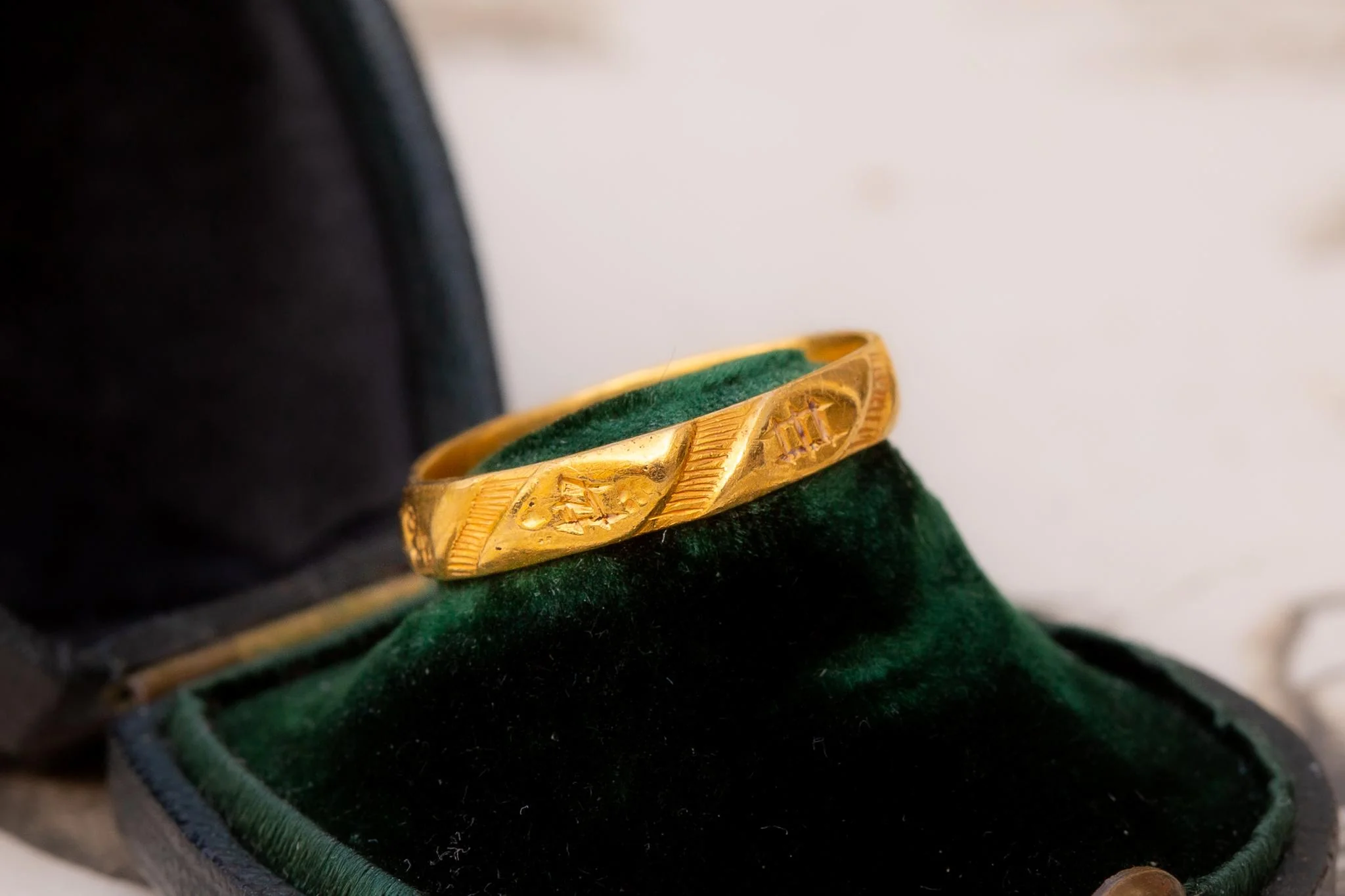
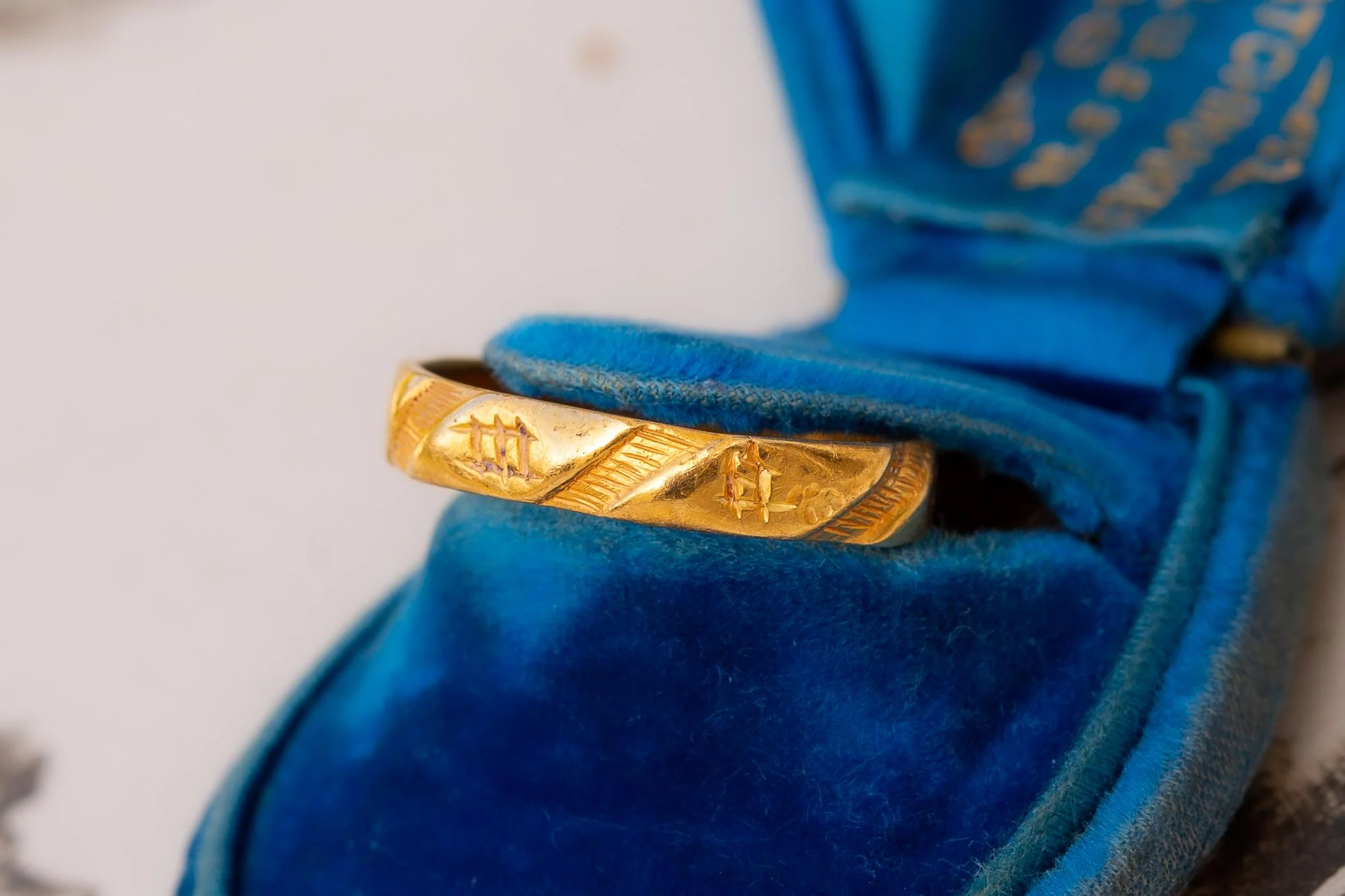
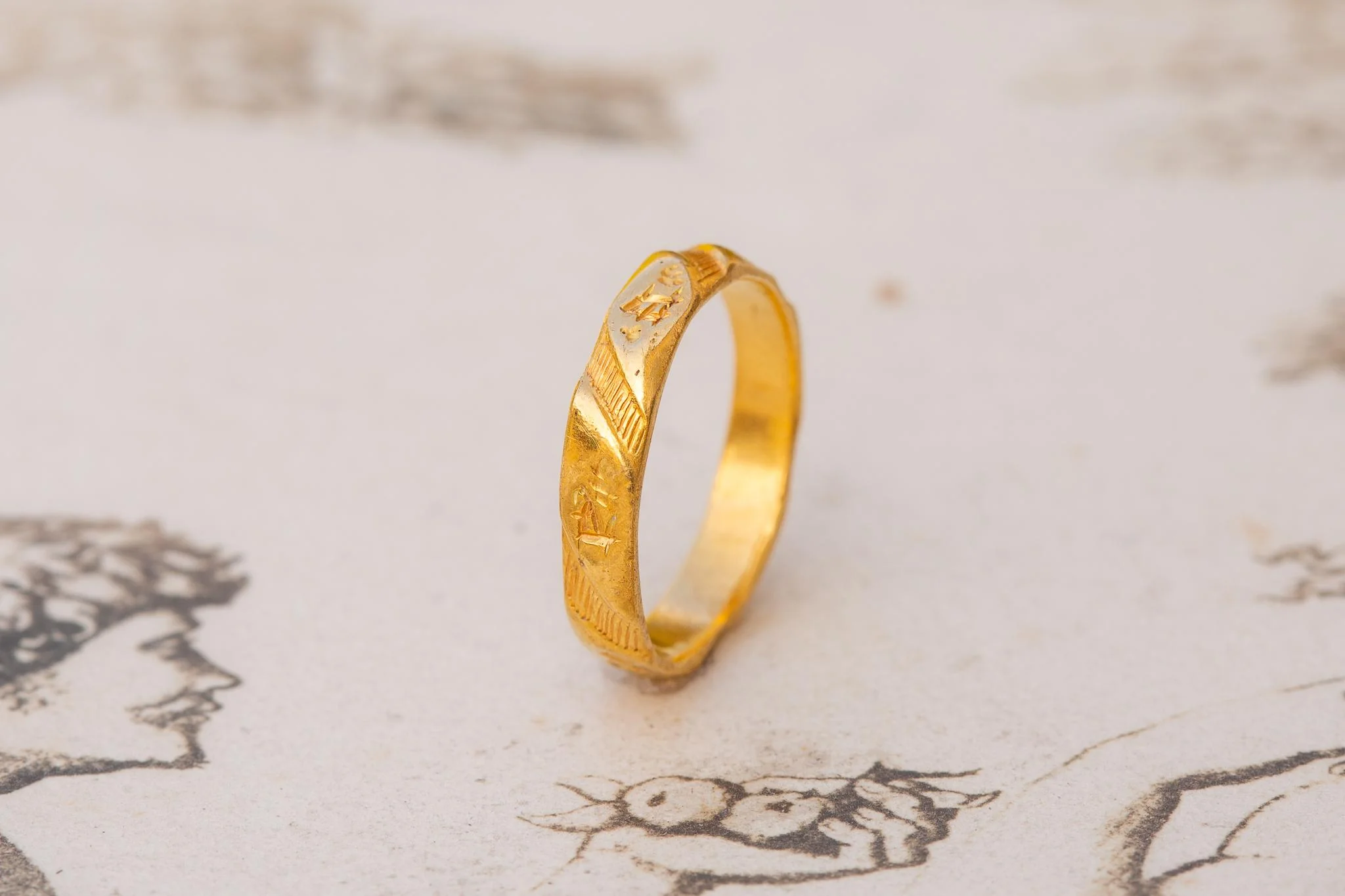
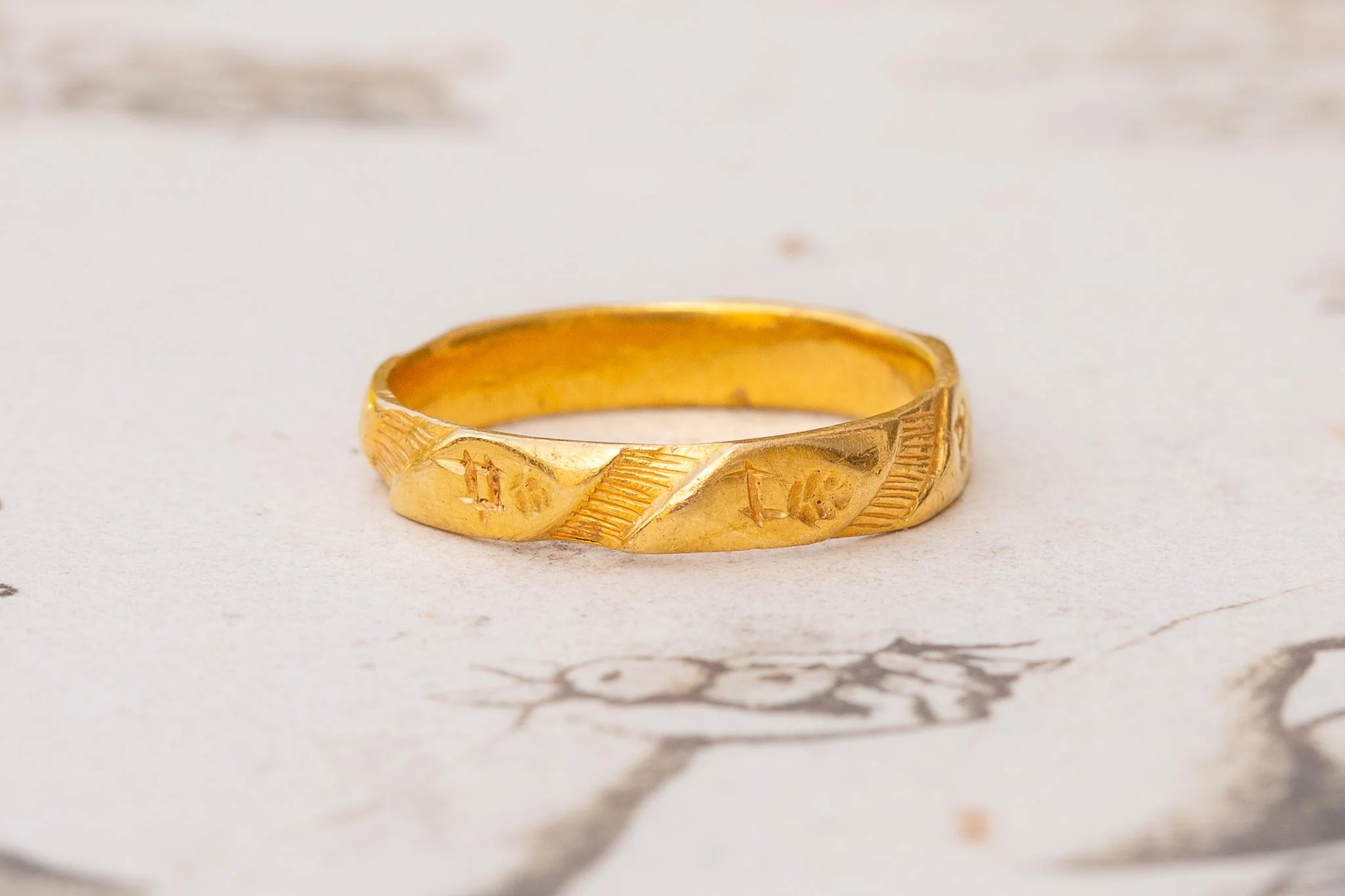
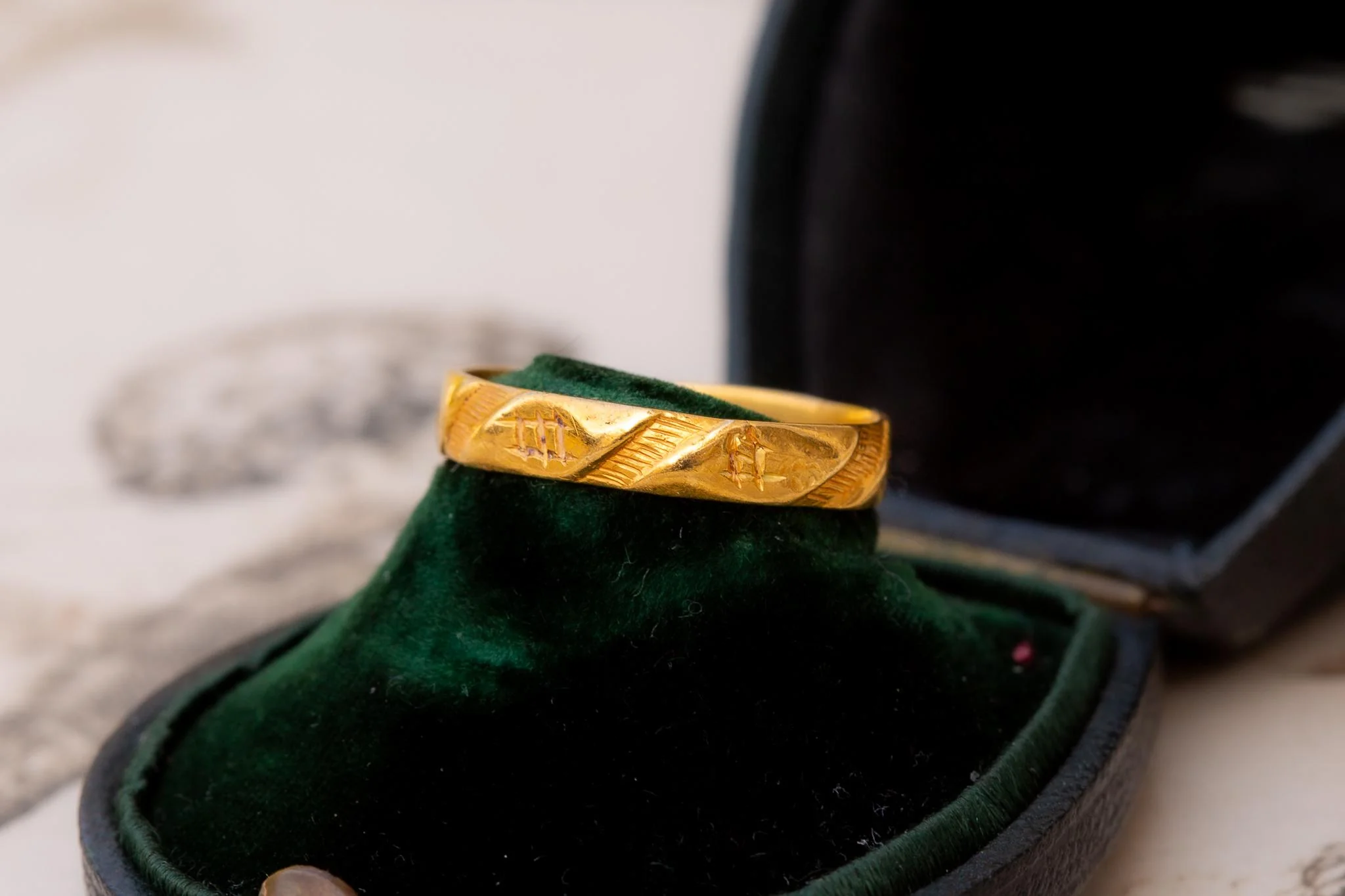
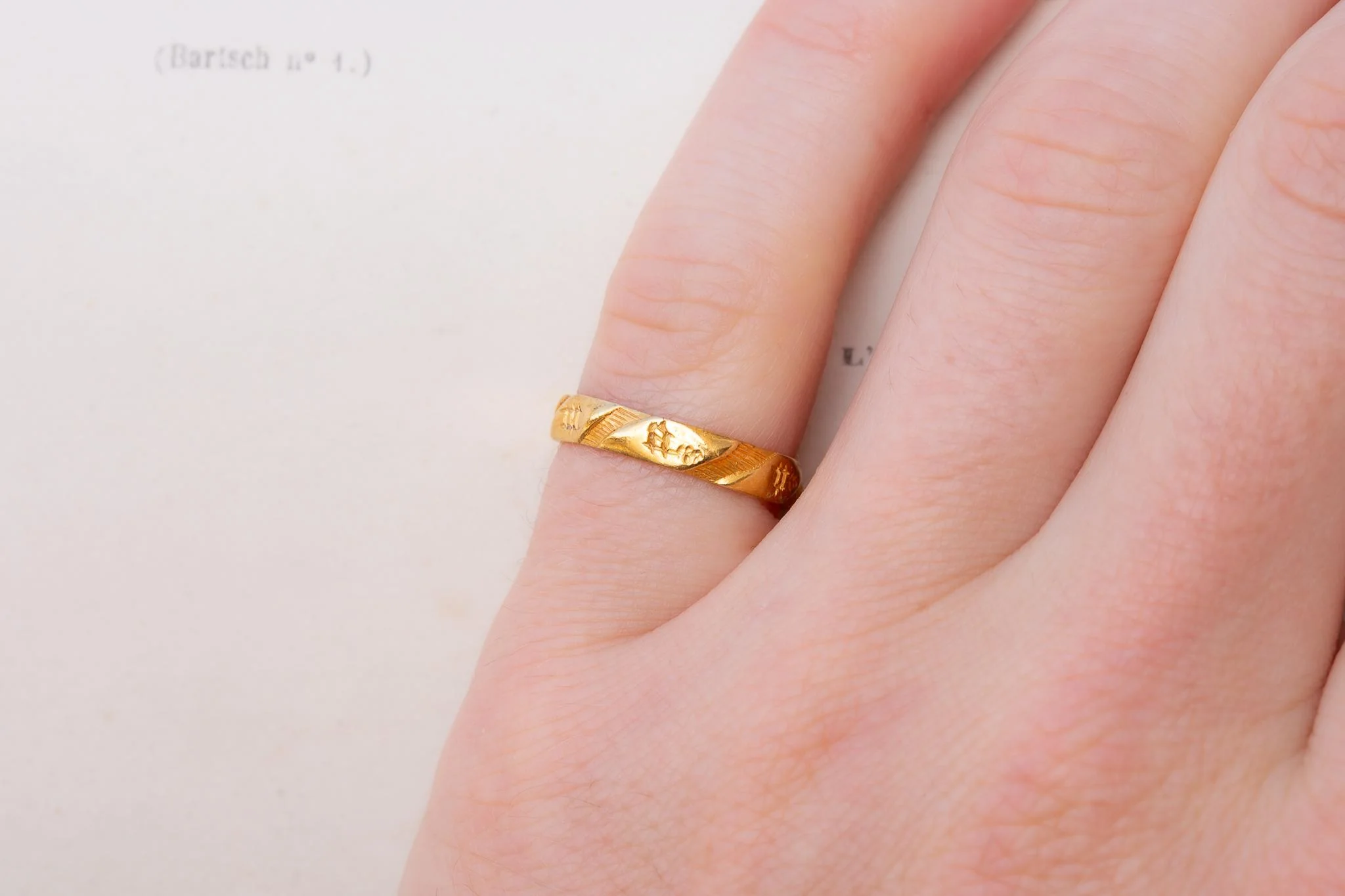
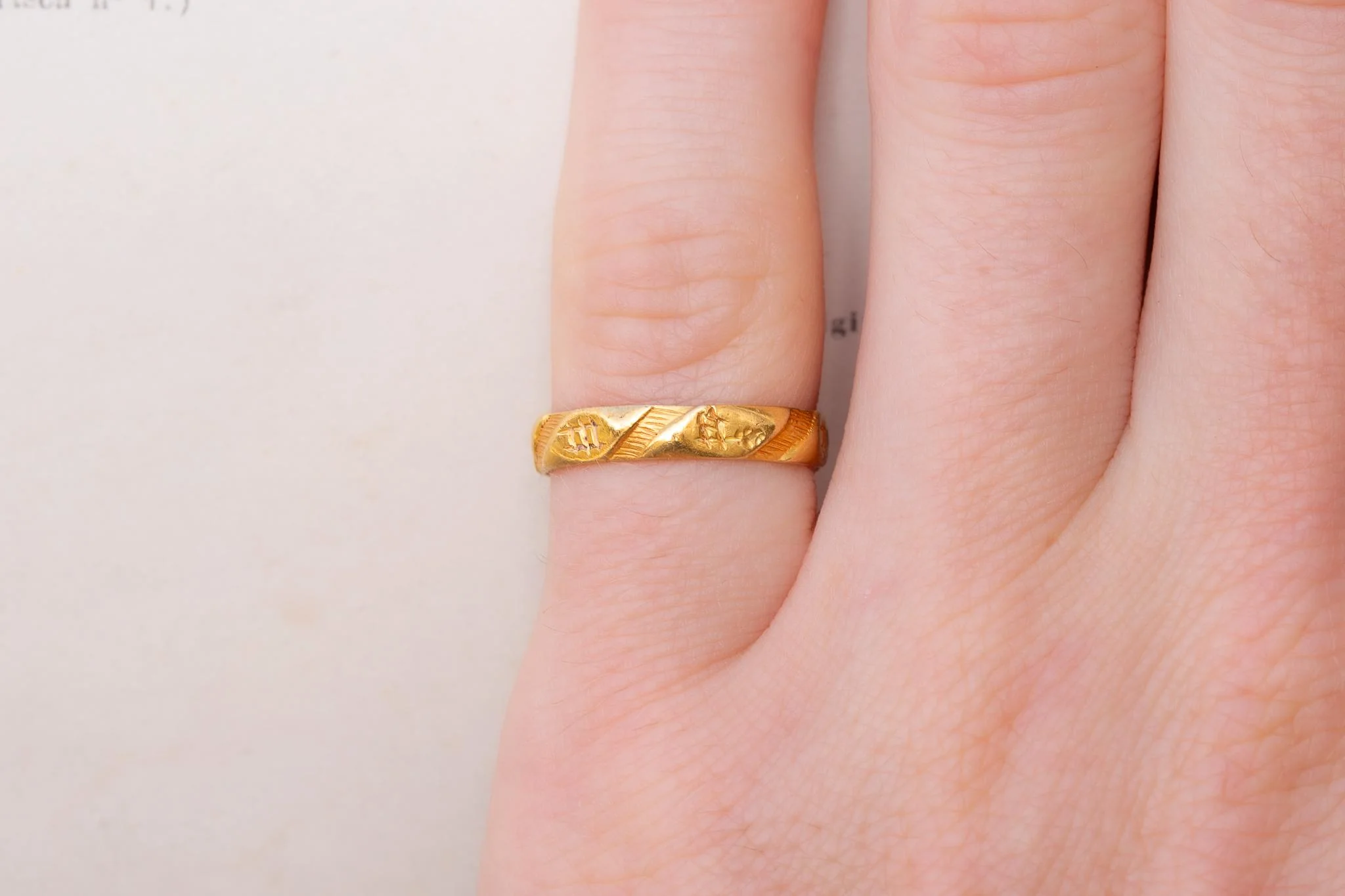
The band is engraved with a series of fine diagonal striations, dividing the surface into six distinct panels. Each section contains a Gothic letter paired with a stylised foliate motif, likely oak leaves. Together, the letters spell A M A V I E, an abbreviated form of the Old French phrase “A ma vie”—translating as “[he or she] has my life.” This poignant inscription is recorded in Joan Evans’ English Posies and Posy Rings (1931, p. 5), and was commonly exchanged between lovers during the Middle Ages.
Rings of this kind were gifted as betrothal or wedding bands and often bore inscriptions that encapsulated love, loyalty, and lifelong commitment. Few examples with engravings on the exterior survive today in such wearable condition, especially with clearly legible lettering and original decorative engraving.
UK size J½ (US size 5).
The band measures 3 mm in width.
Tests as high-karat gold (approximately 19K–20K).
A rare example of 14th-century craftsmanship and sentimentality, preserved across the centuries.
$8,710.44
Medieval Gold Posy Ring—
$8,710.44
Product Information
Product Information
Shipping & Returns
Shipping & Returns
Description
A rare and evocative Medieval posy ring, dating to the 14th century and crafted in high-karat gold.
This piece was discovered in Staffordshire by a metal detectorist and subsequently recorded with the Portable Antiquities Scheme. It was analysed by the British Museum and later disclaimed as ‘Treasure’ (see final images for documentation). A copy of the official report will be included with the ring.
The band is engraved with a series of fine diagonal striations, dividing the surface into six distinct panels. Each section contains a Gothic letter paired with a stylised foliate motif, likely oak leaves. Together, the letters spell A M A V I E, an abbreviated form of the Old French phrase “A ma vie”—translating as “[he or she] has my life.” This poignant inscription is recorded in Joan Evans’ English Posies and Posy Rings (1931, p. 5), and was commonly exchanged between lovers during the Middle Ages.
Rings of this kind were gifted as betrothal or wedding bands and often bore inscriptions that encapsulated love, loyalty, and lifelong commitment. Few examples with engravings on the exterior survive today in such wearable condition, especially with clearly legible lettering and original decorative engraving.
UK size J½ (US size 5).
The band measures 3 mm in width.
Tests as high-karat gold (approximately 19K–20K).
A rare example of 14th-century craftsmanship and sentimentality, preserved across the centuries.