



Medieval Sapphire Stirrup Ring
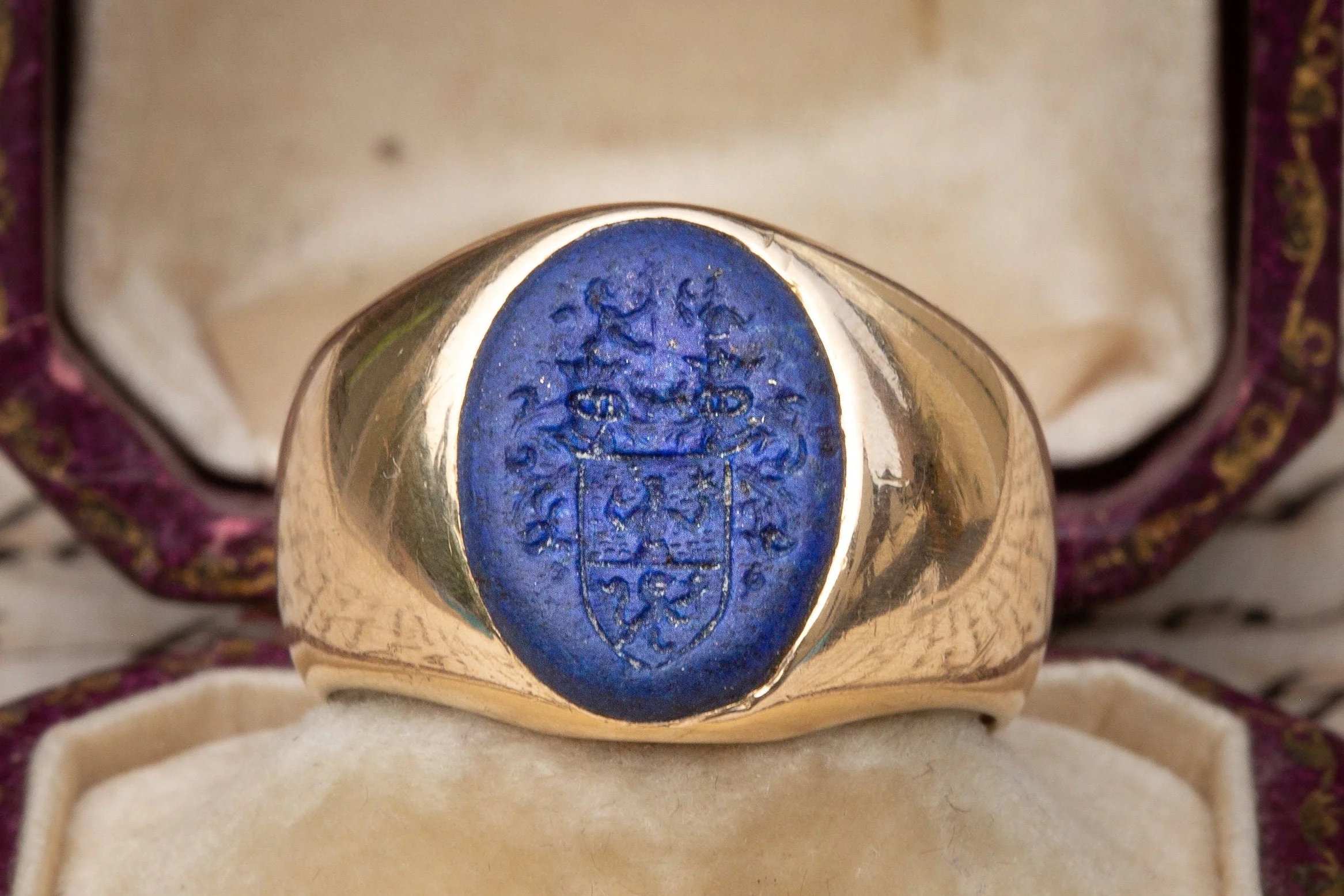
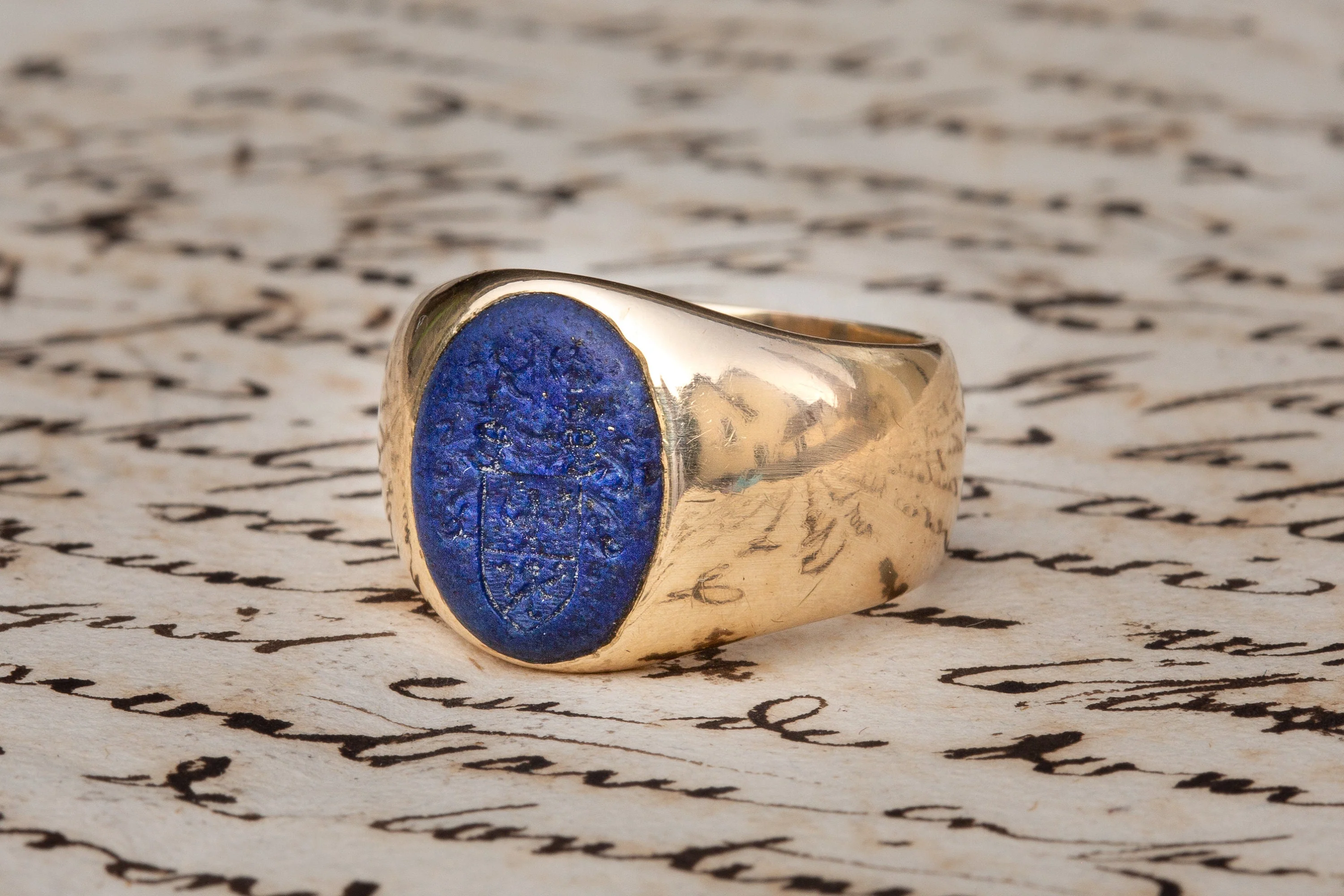
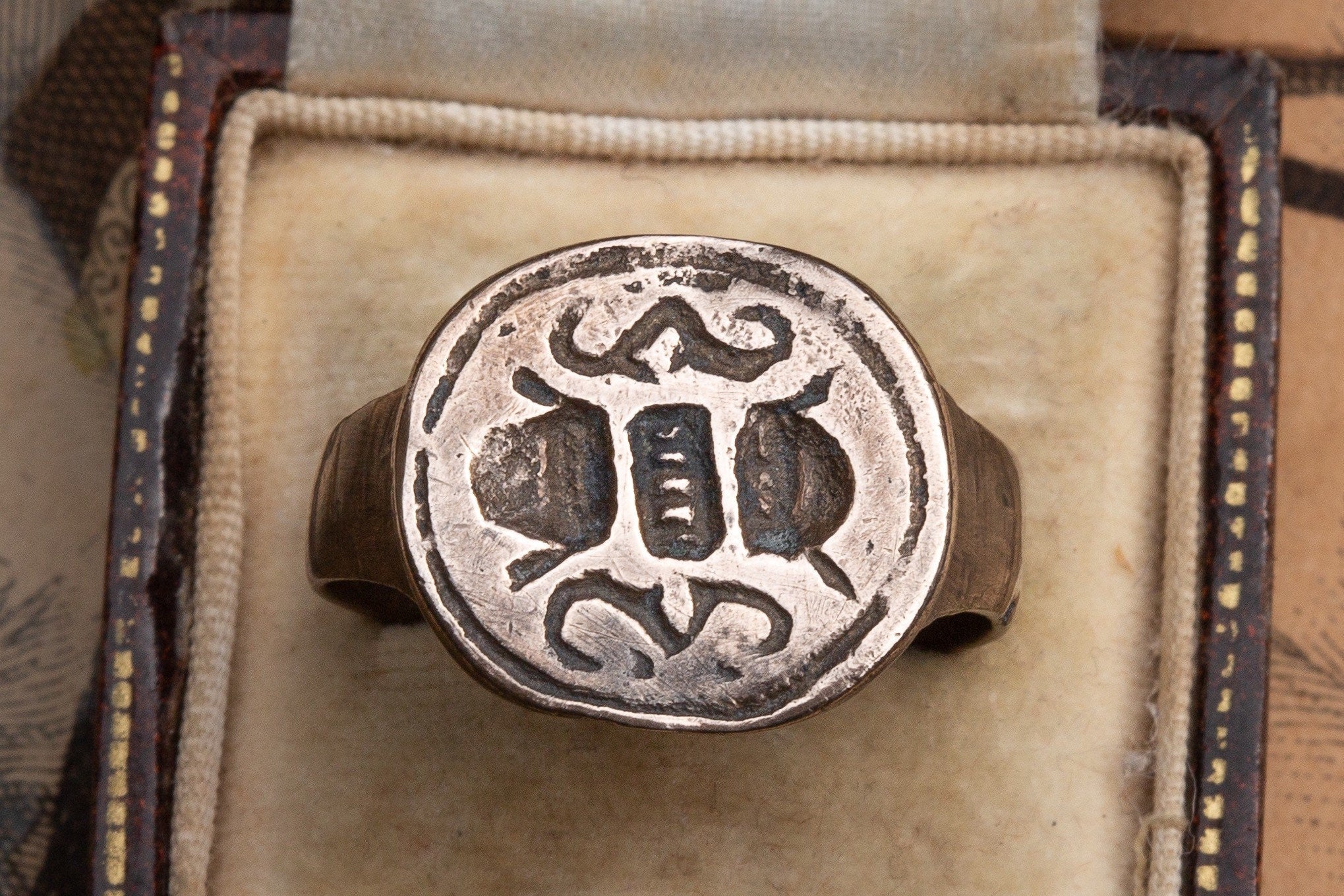
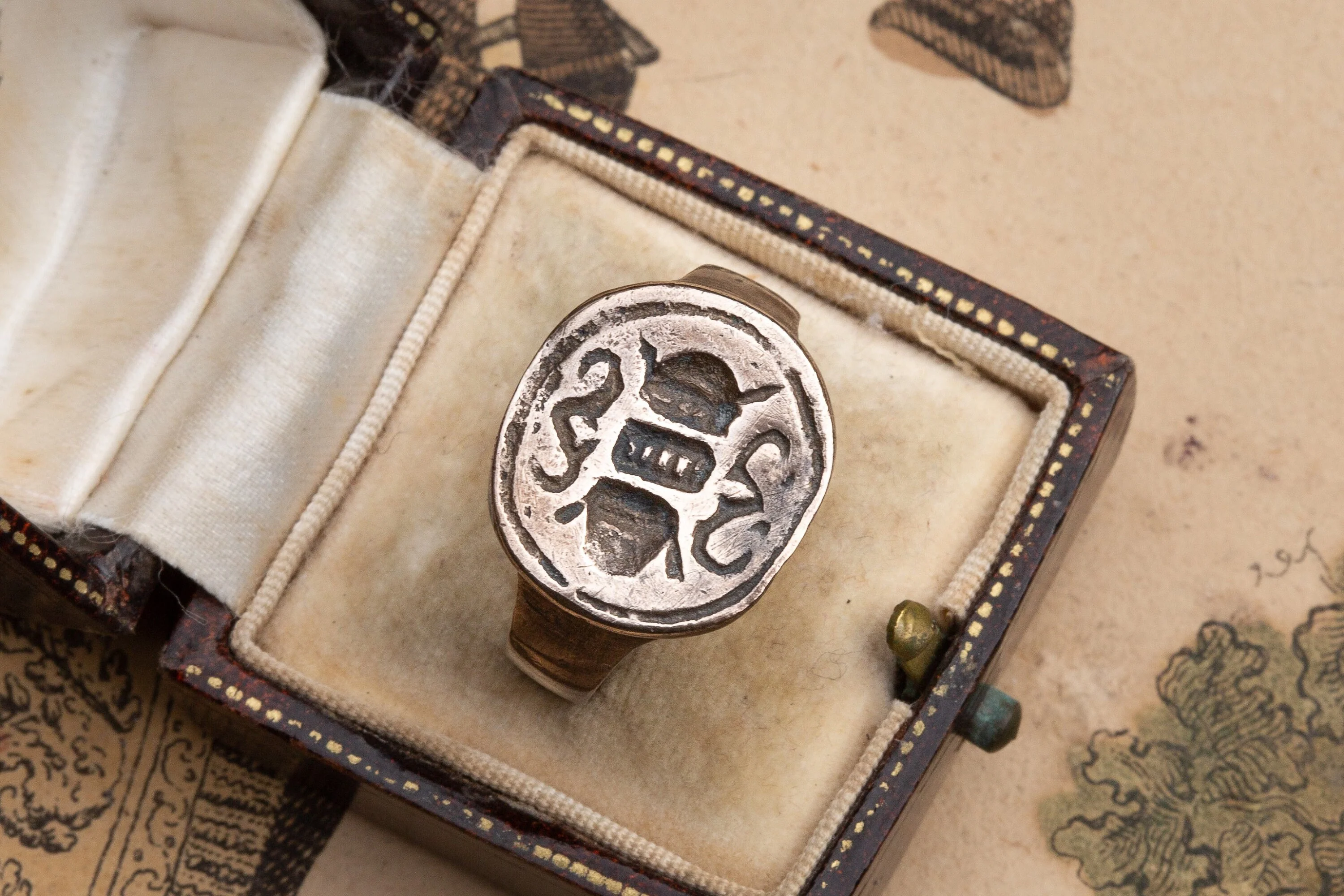
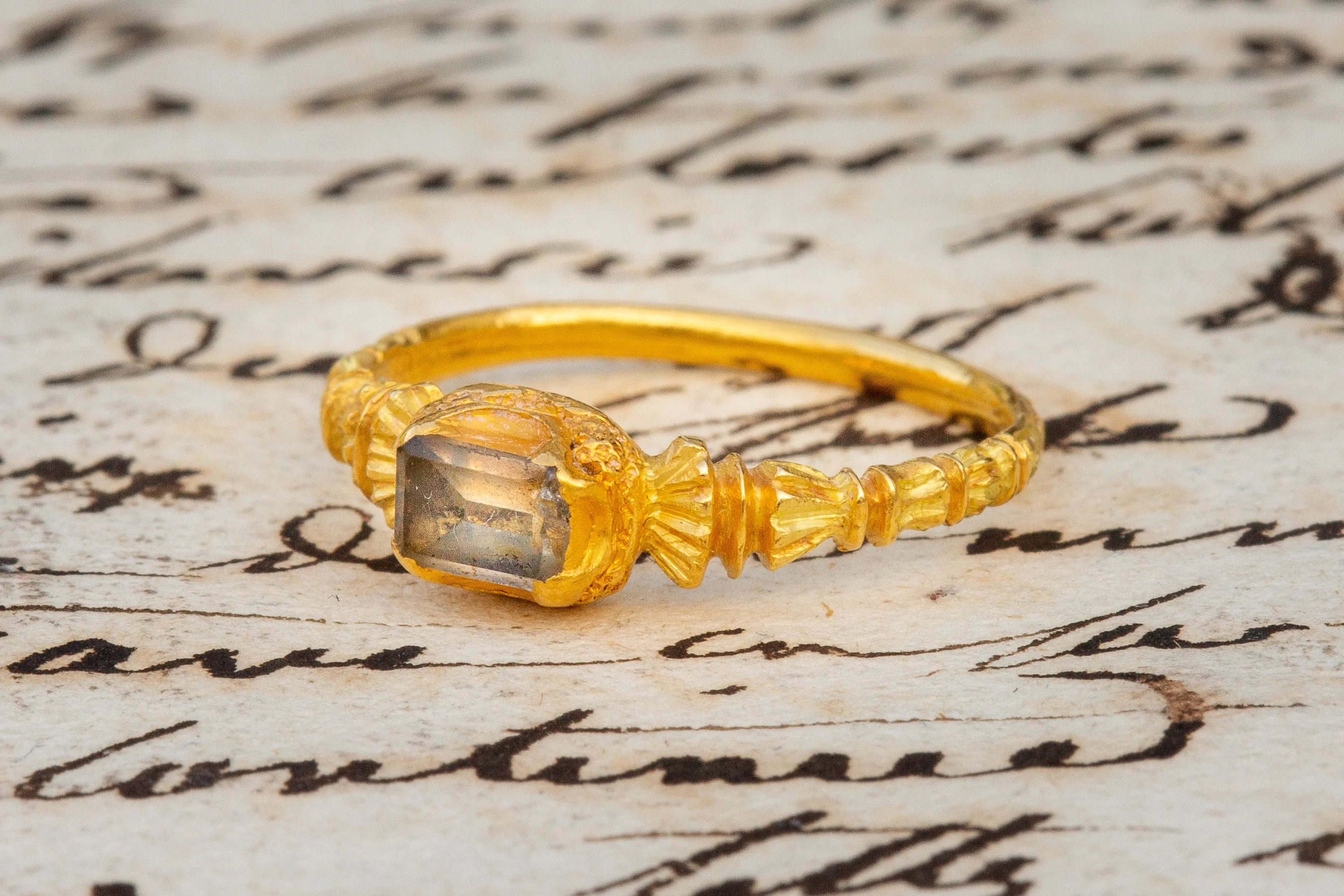
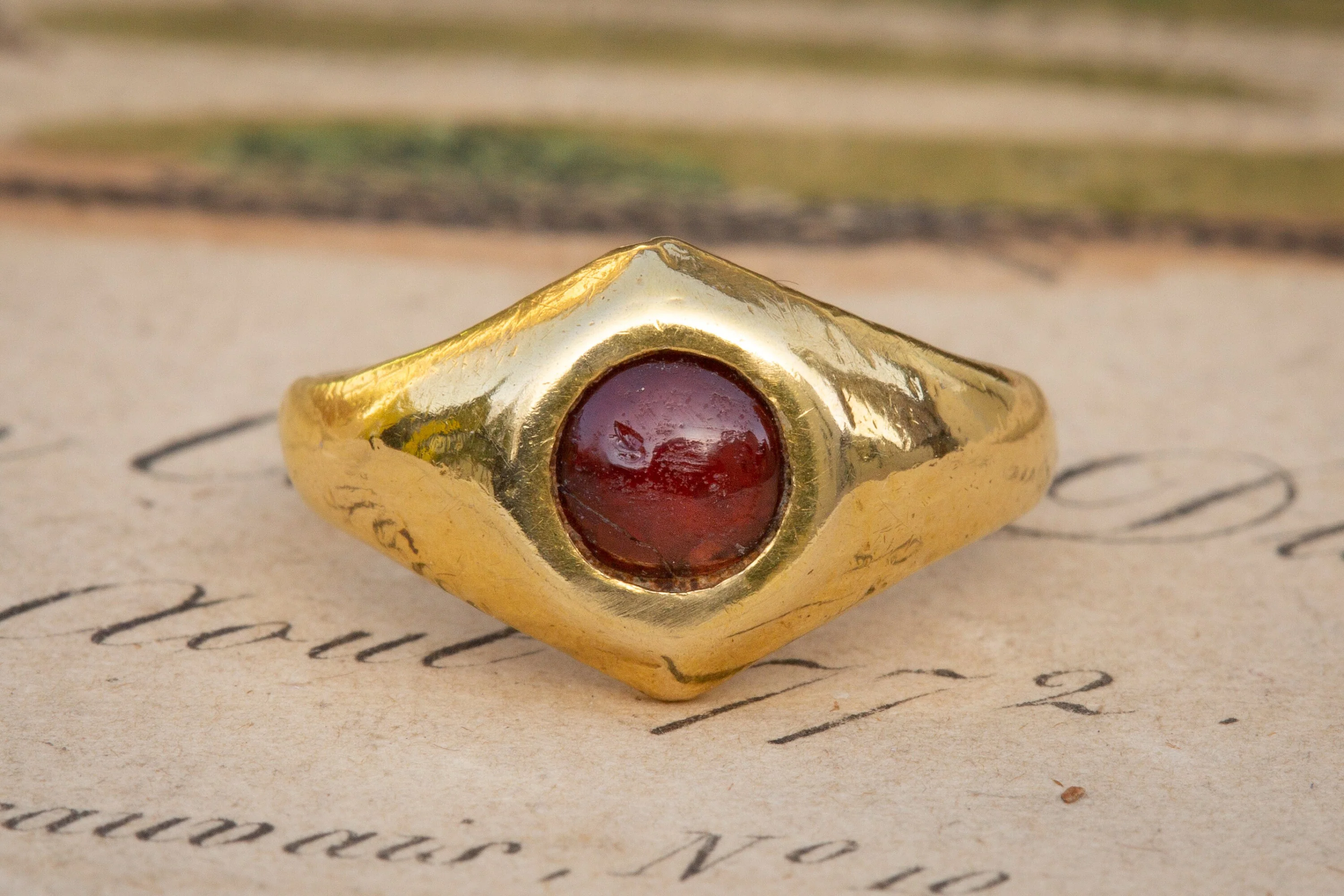
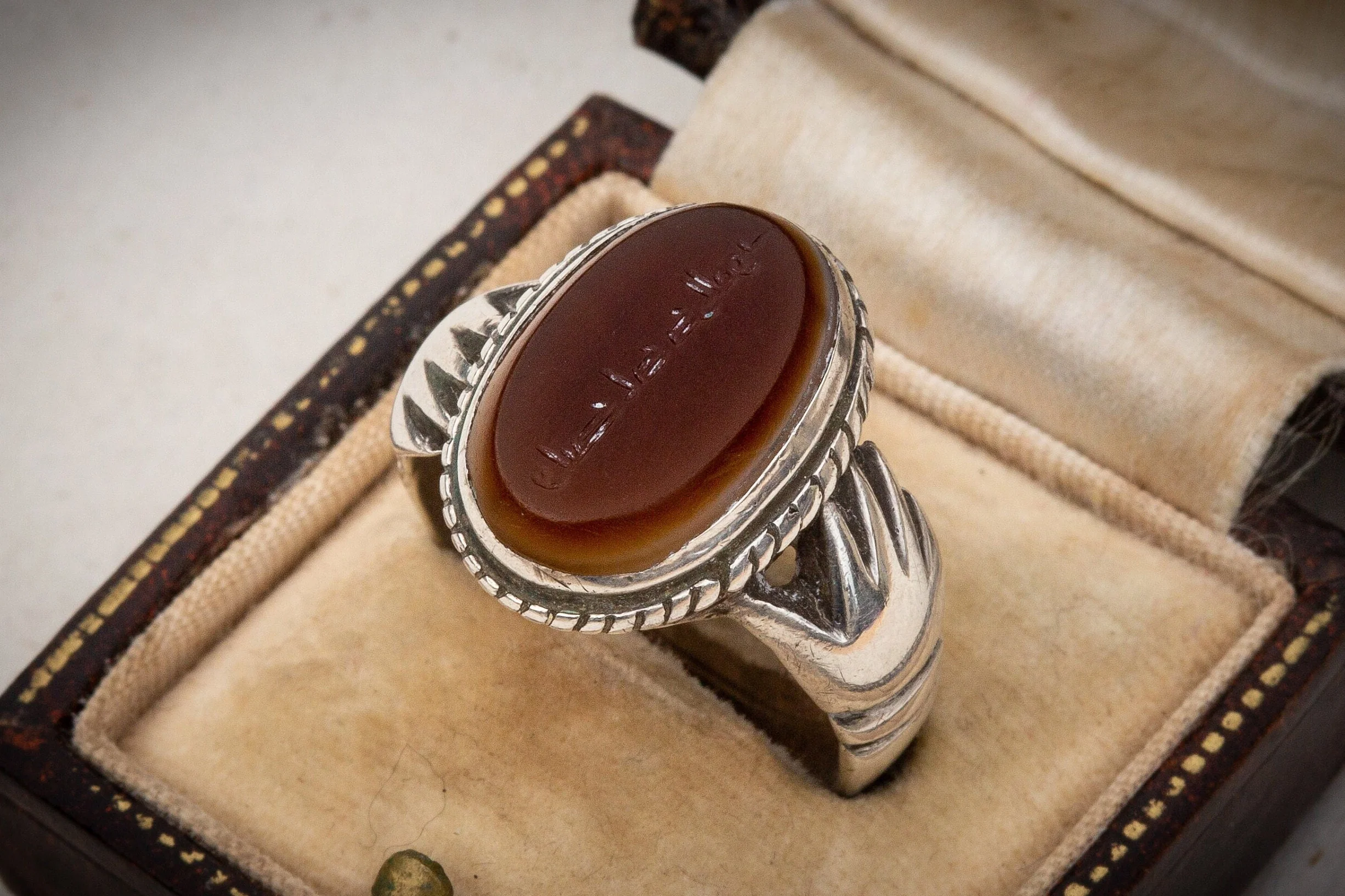
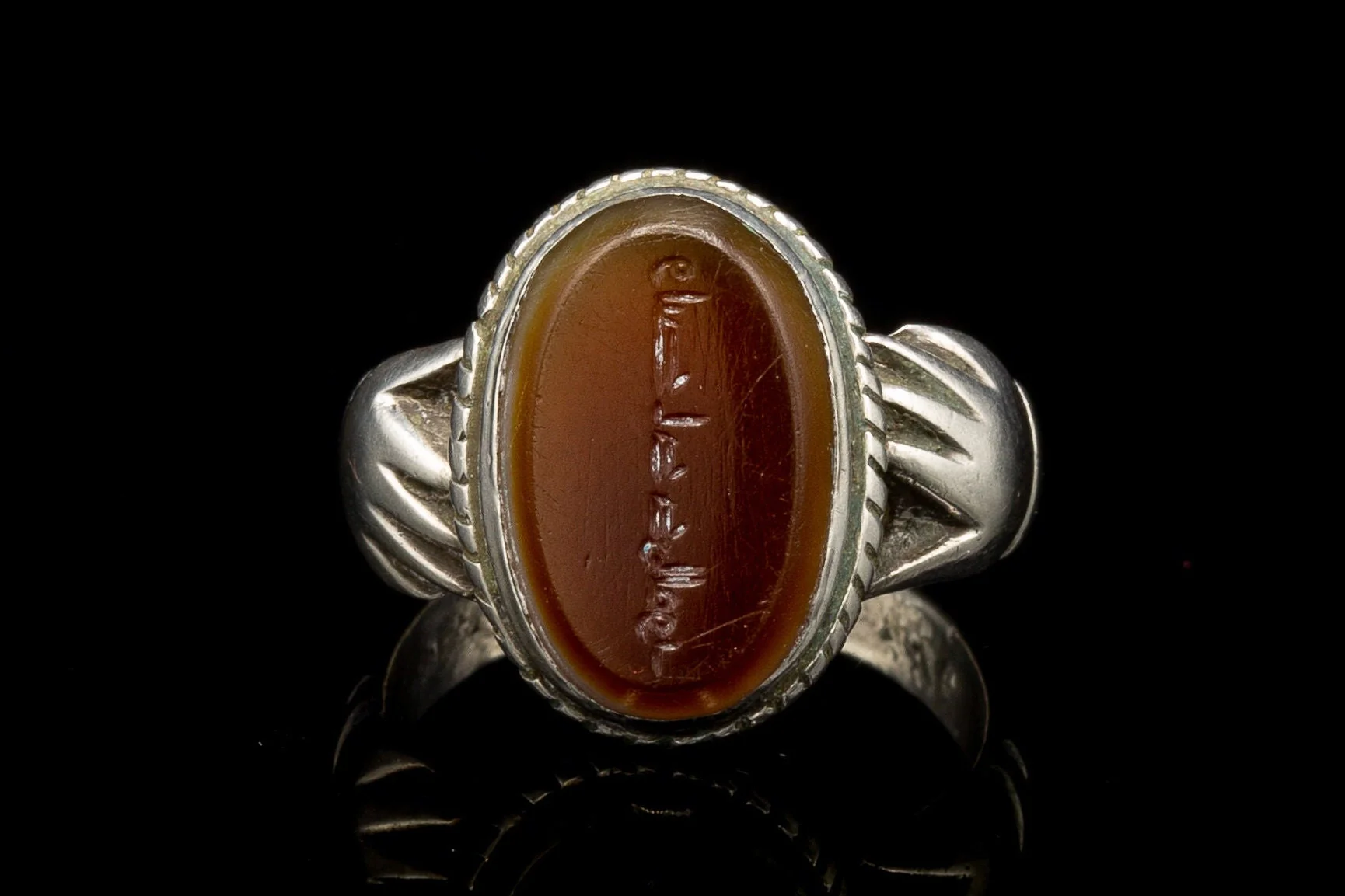
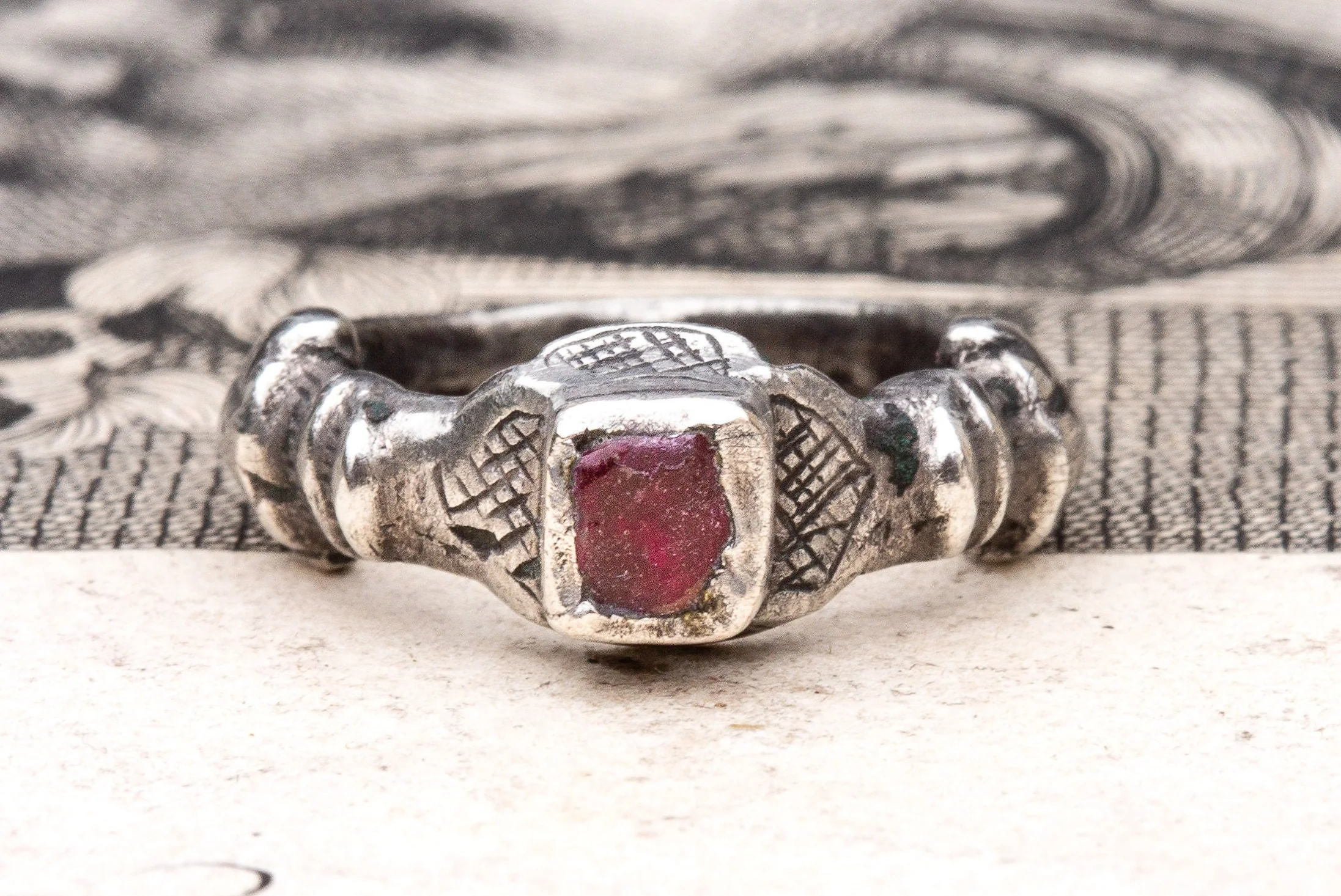
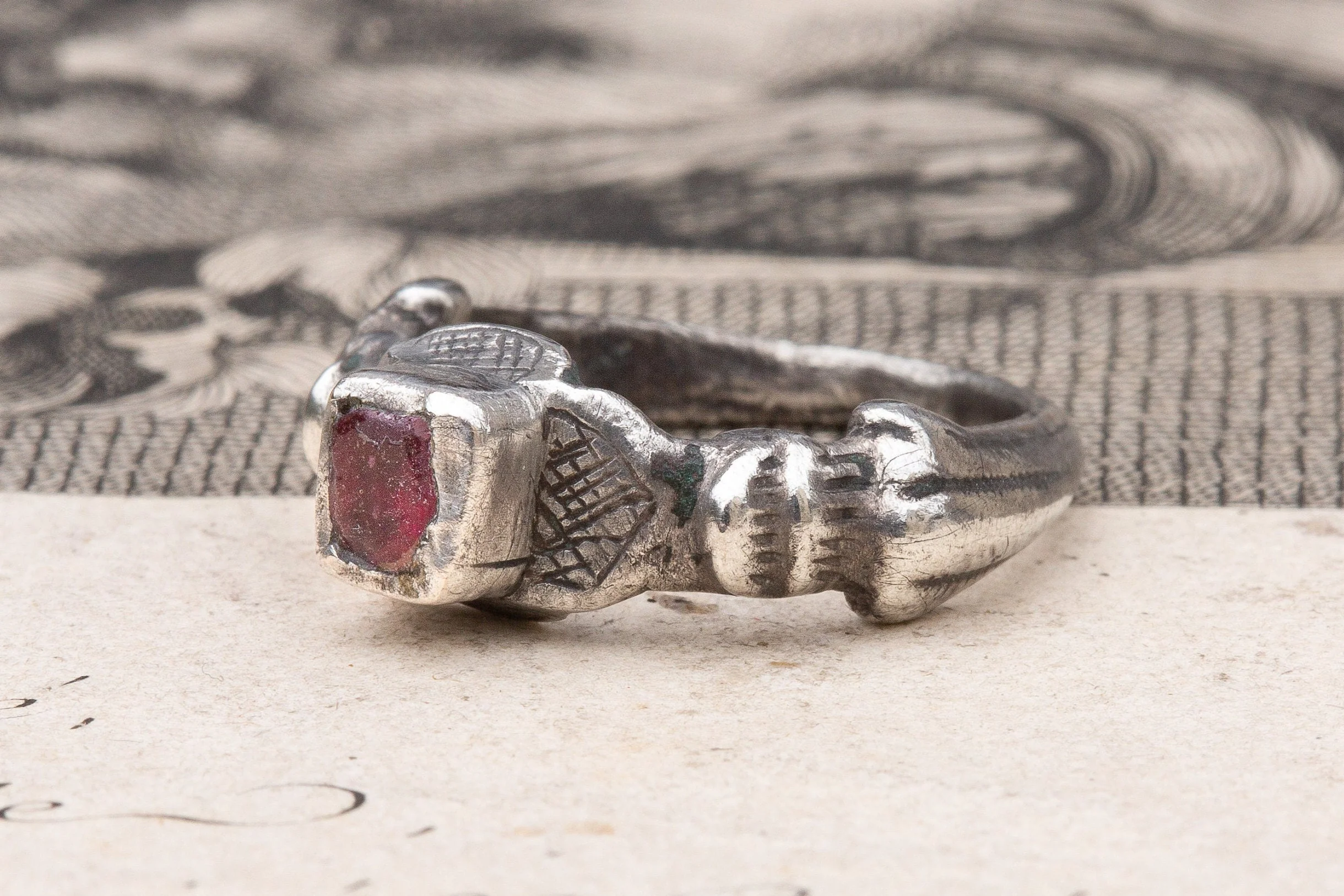
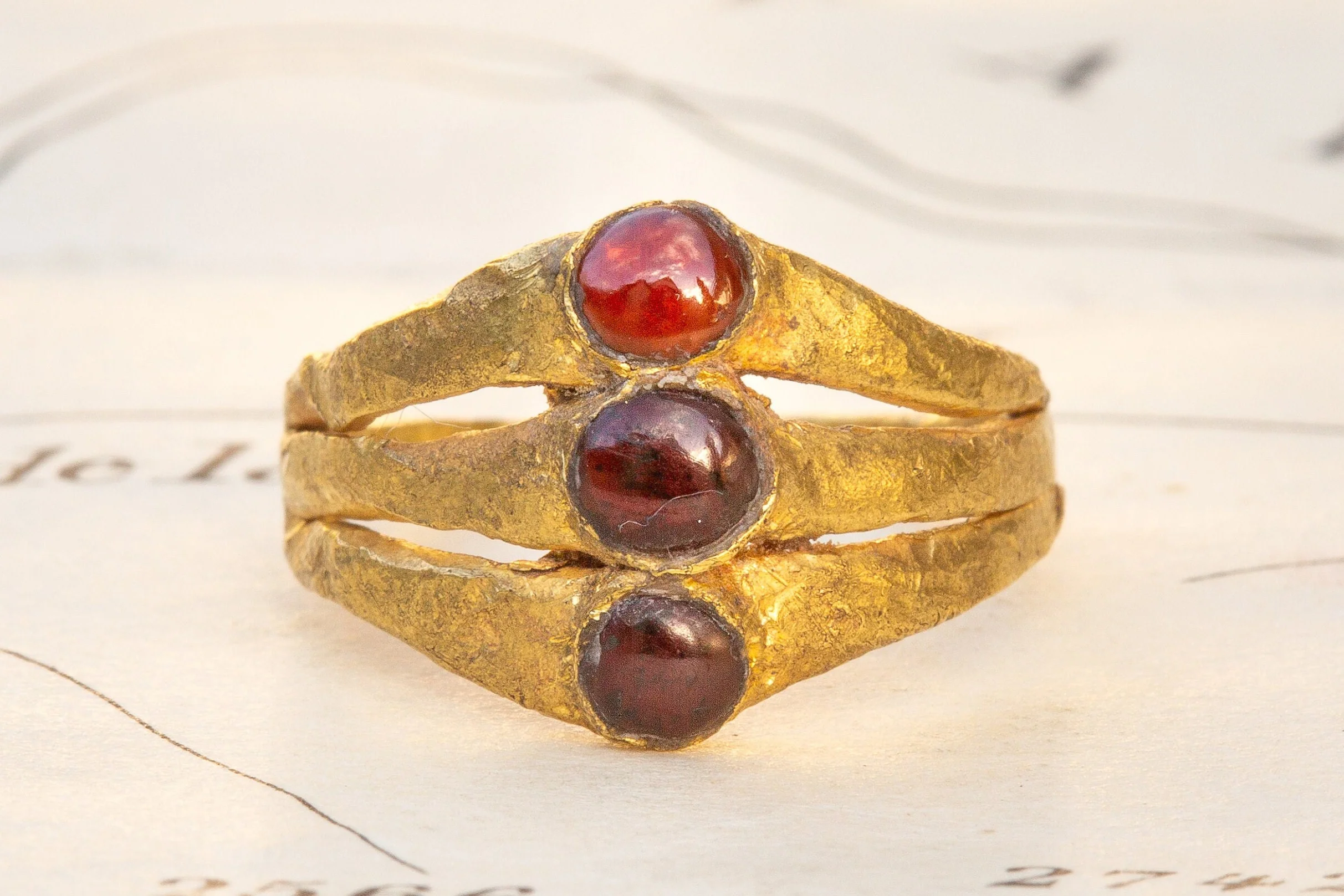
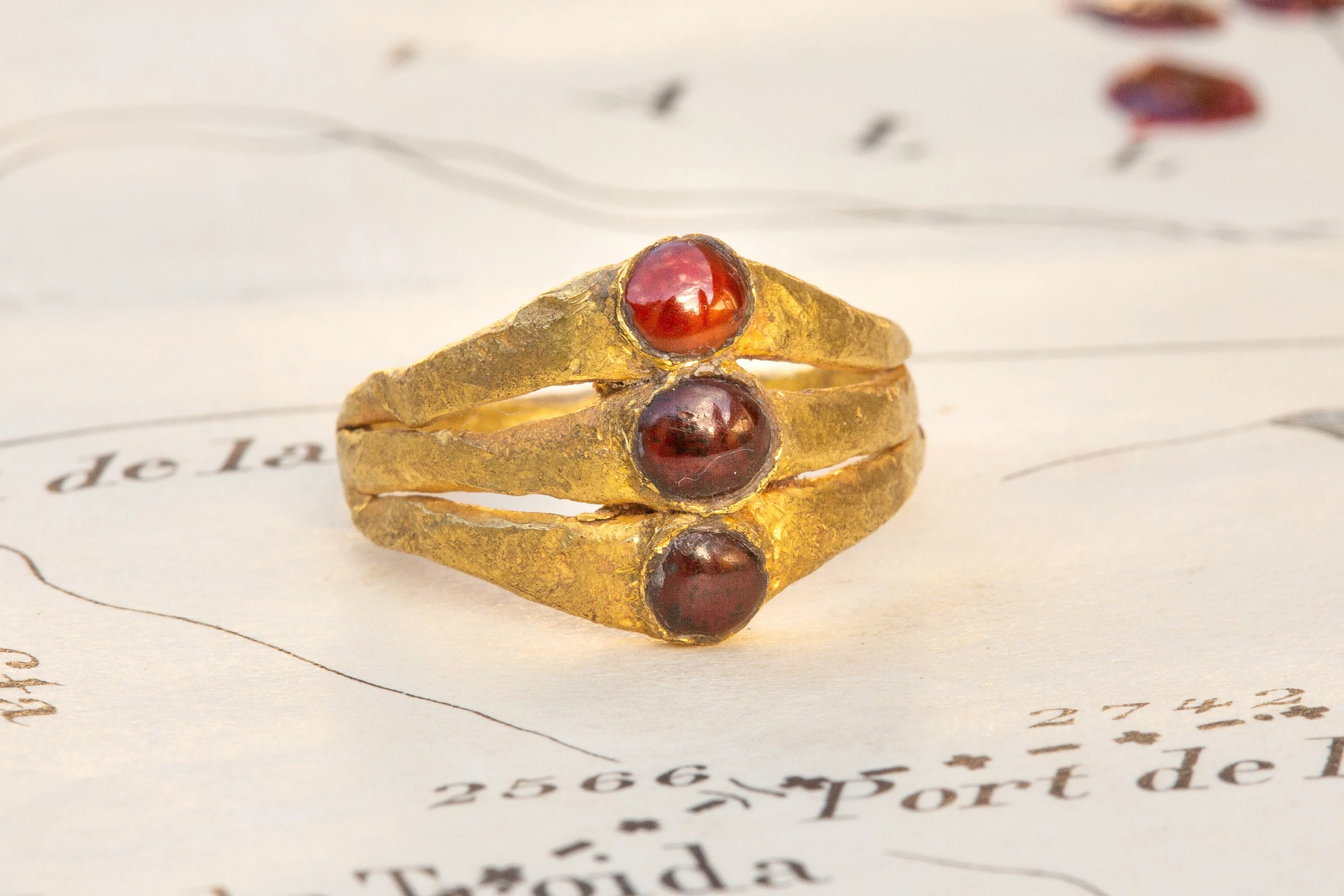
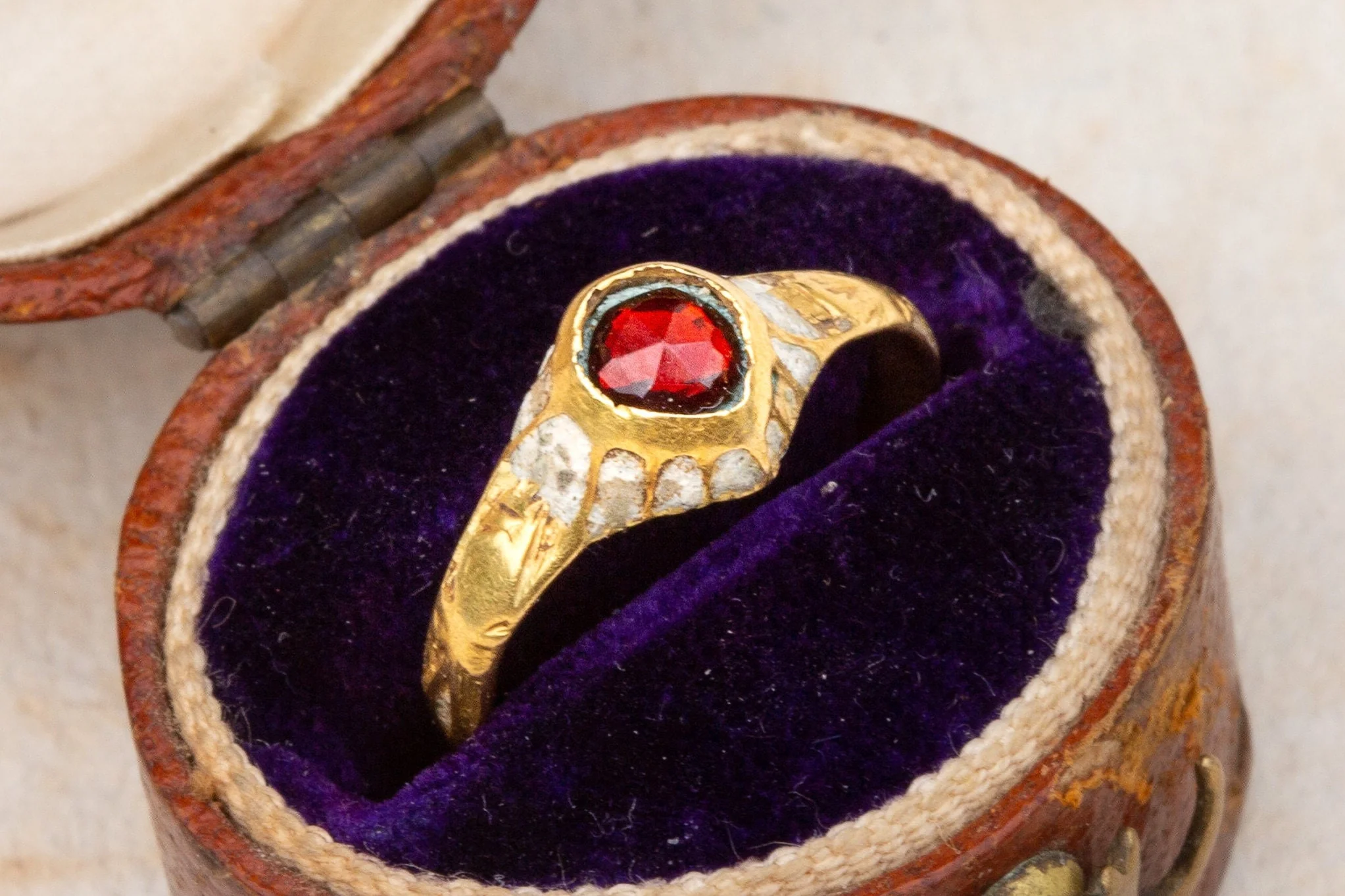
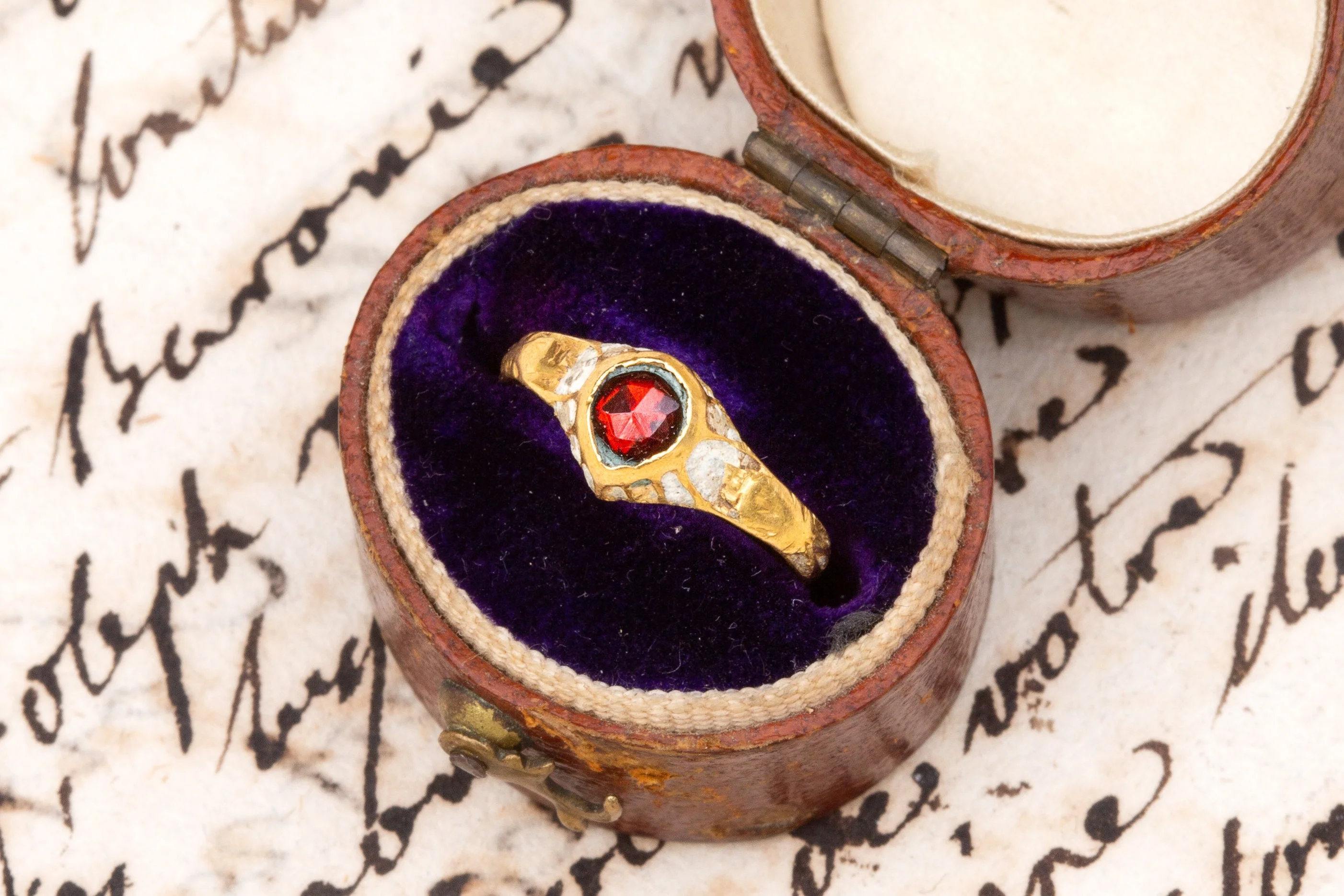
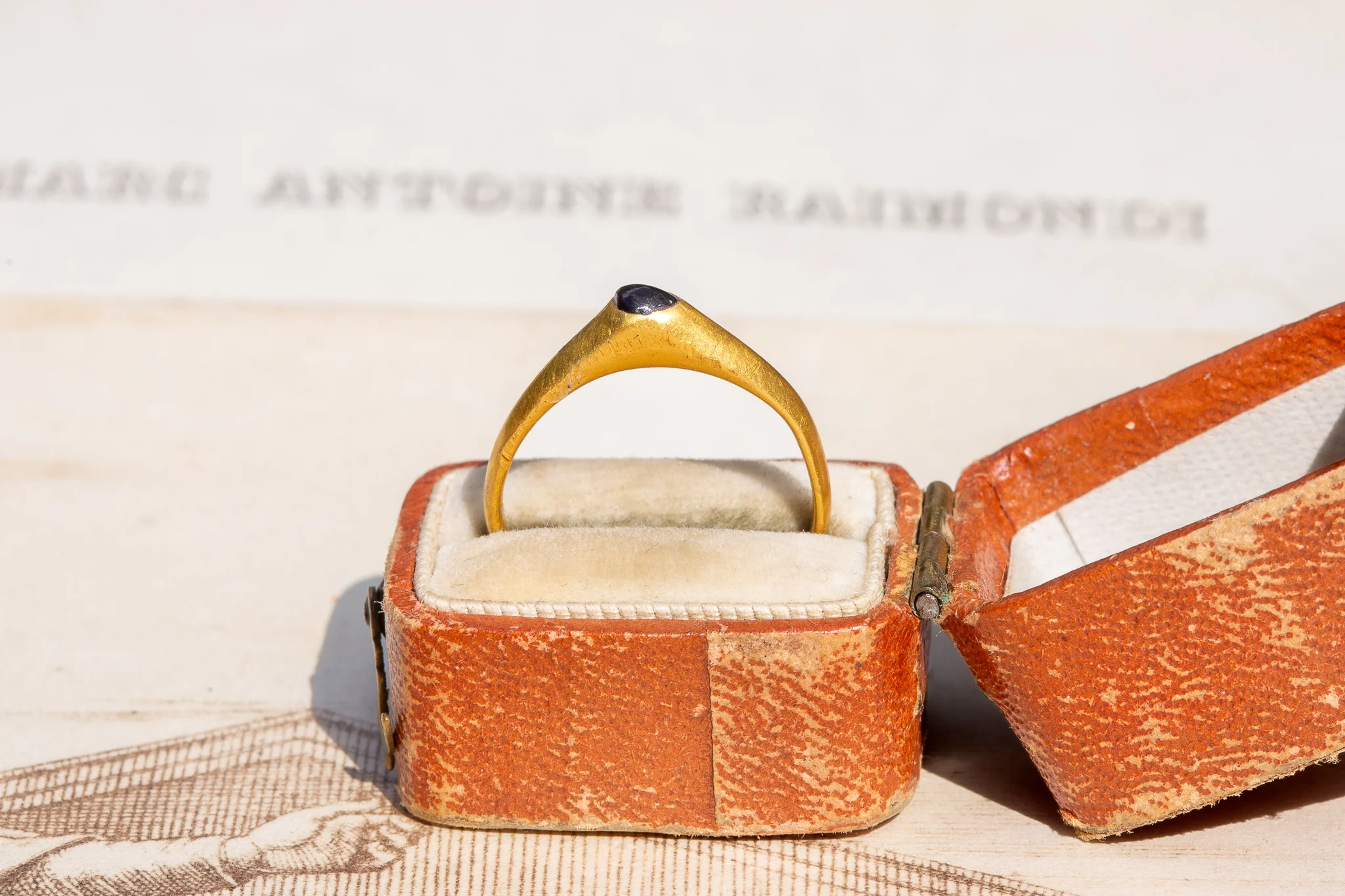
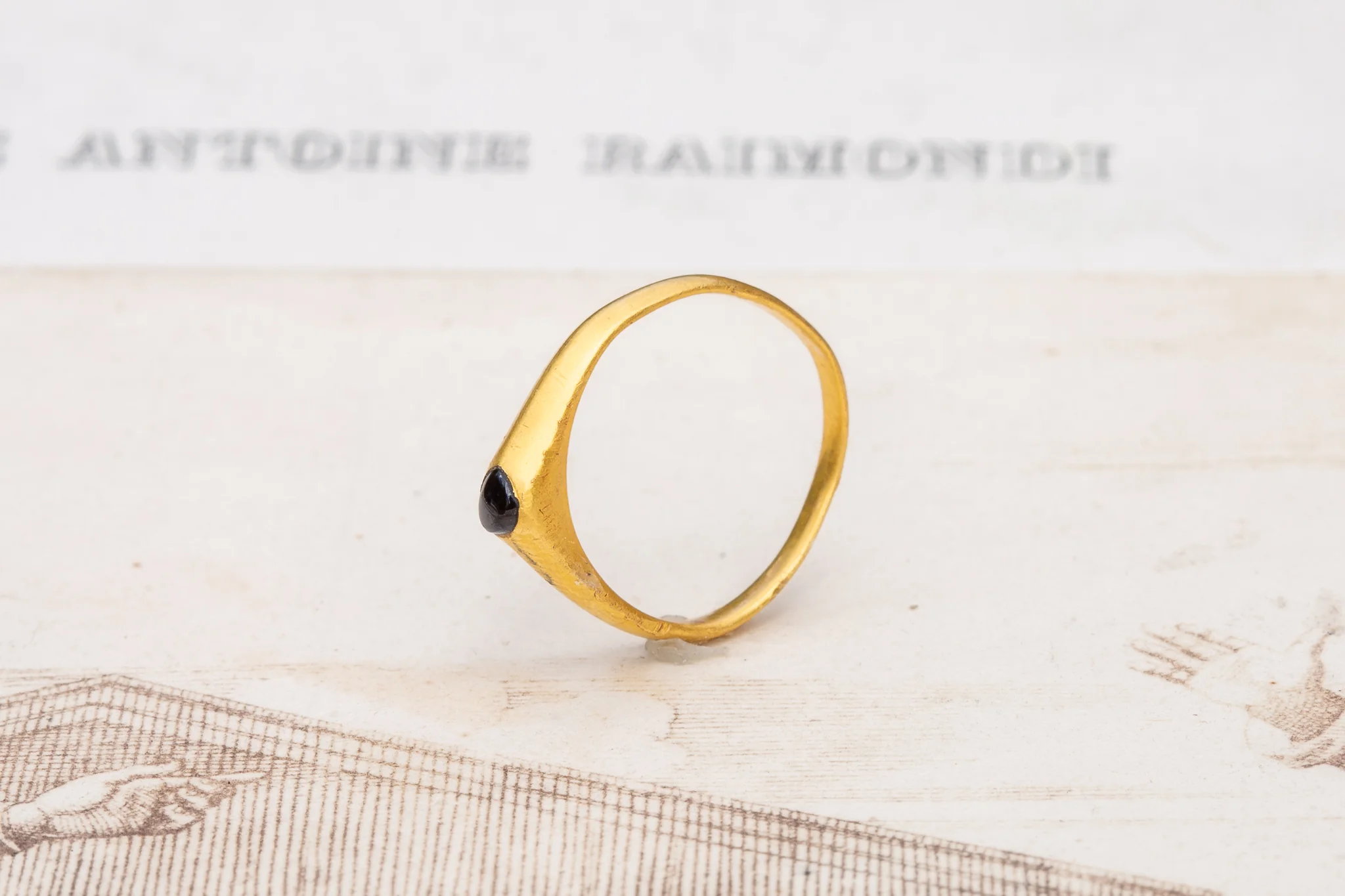
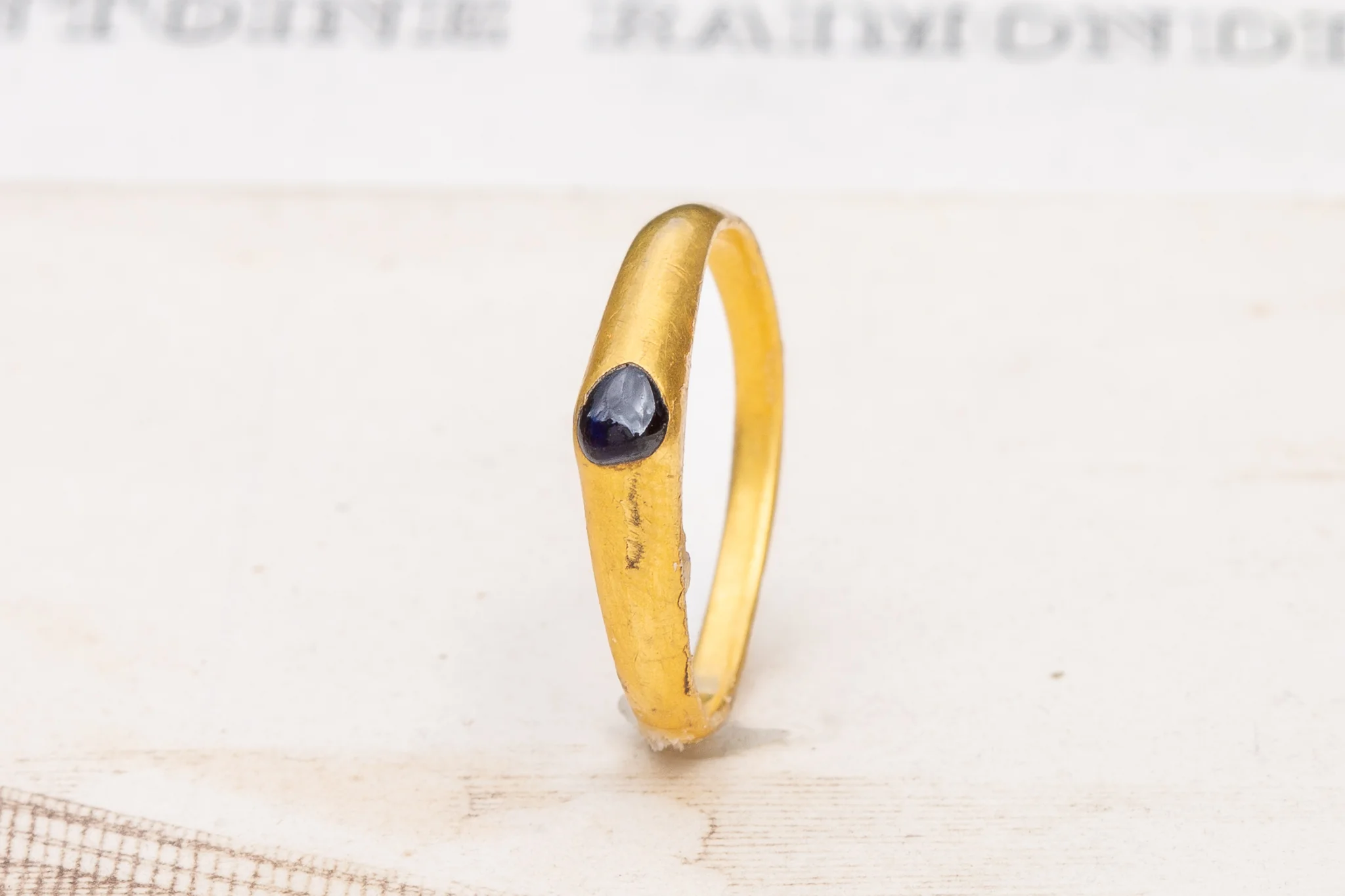
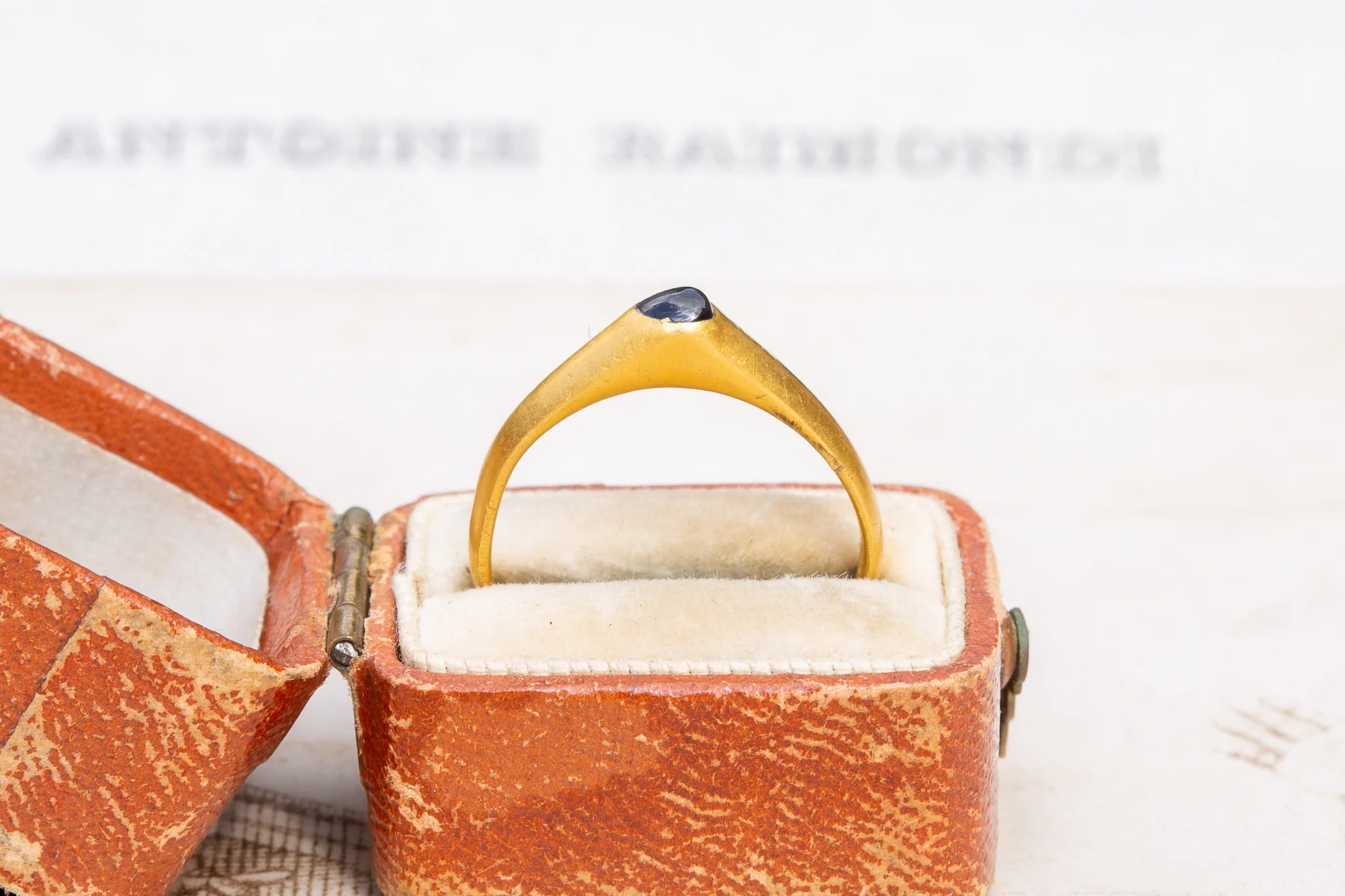
An enchanting Medieval period gold ring set with a sapphire, circa 1250. The high carat gold hoop extends outwards at the bezel into a distinctive medieval finger-ring shape, named by Victorian collectors as a ‘stirrup ring’ (due to the shape resembling a horse stirrup). Further research and study into this category of ring has concluded the ‘stirrup’ shape is likely a representation of Gothic arches, as found in the ornate windows of Cathedrals of the period. These rings were in fashion from the twelfth century well into the fourteenth century.
The gold ring is set with a polished dark blue sapphire cabochon. In Medieval times, gemstone rings were considered to have amuletic and talismanic power. Sapphires were particularly prized by the ecclesiastical community. Sapphires were also believed to promote chastity, peace and to incline God to hear prayers favourably. For these reasons, they were often found in English and French tombs of high-ranking clergymen, such as Bishop’s, Abbots and Priors.
Even outside of the ecclesiastical community, sapphires were a favourite choice in the Middle Ages, though so rare that they were reserved solely for nobility and upper aristocracy. Books known as ‘lapidaries’ listed the powers attributed to each stone. The Liber Lapidum of Marbodus of Rennes (1067-81) was one of the most widely read and claimed that sapphires could protect the body, cool fevers and headaches, calm the eyes and cure stammers.
The sapphires found in Medieval jewellery were mined in Sri Lanka, and were brought along the Silk Road - as they had been in Roman times - and through Constantinople to Venice, Genoa and other European port cities. Gems were the most valuable element of a ring, and those from distant lands were the most costly and desirable. In the medieval period, stones were not generally cut, but polished into a rounded form, known as ‘cabochon’, as in this example.
A number of near identical referenced examples reside in notable museums all across the world. Notably, the Victoria & Albert (accession numbers: 65-1871, 634-1871 and 633-1871); the Met Museum (accession number: 2015.697); Walters Art Museum (accession number: 57.1986) and the British Museum (accession numbers: AF.1842, AF.1835 and AF.1840). A photo with these examples and their sources can be found at the end of the listing photos.
UK size N 1/2, US size 7
The ring is unmarked but tests as high-karat gold (approx 20K-21K). It weighs 3.42 grams in total and the sapphire measures 4mm x 3mm. The gold hoop measures 2mm across and the stirrup protrudes 4mm outwards. Upon loupe magnification, there are some scratches to the surface of the gold, however despite its significant age - this solid and sturdy ring is still very wearable and the stone very securely set.
Original: $5,628.28
-70%$5,628.28
$1,688.48Product Information
Product Information
Shipping & Returns
Shipping & Returns
Description
An enchanting Medieval period gold ring set with a sapphire, circa 1250. The high carat gold hoop extends outwards at the bezel into a distinctive medieval finger-ring shape, named by Victorian collectors as a ‘stirrup ring’ (due to the shape resembling a horse stirrup). Further research and study into this category of ring has concluded the ‘stirrup’ shape is likely a representation of Gothic arches, as found in the ornate windows of Cathedrals of the period. These rings were in fashion from the twelfth century well into the fourteenth century.
The gold ring is set with a polished dark blue sapphire cabochon. In Medieval times, gemstone rings were considered to have amuletic and talismanic power. Sapphires were particularly prized by the ecclesiastical community. Sapphires were also believed to promote chastity, peace and to incline God to hear prayers favourably. For these reasons, they were often found in English and French tombs of high-ranking clergymen, such as Bishop’s, Abbots and Priors.
Even outside of the ecclesiastical community, sapphires were a favourite choice in the Middle Ages, though so rare that they were reserved solely for nobility and upper aristocracy. Books known as ‘lapidaries’ listed the powers attributed to each stone. The Liber Lapidum of Marbodus of Rennes (1067-81) was one of the most widely read and claimed that sapphires could protect the body, cool fevers and headaches, calm the eyes and cure stammers.
The sapphires found in Medieval jewellery were mined in Sri Lanka, and were brought along the Silk Road - as they had been in Roman times - and through Constantinople to Venice, Genoa and other European port cities. Gems were the most valuable element of a ring, and those from distant lands were the most costly and desirable. In the medieval period, stones were not generally cut, but polished into a rounded form, known as ‘cabochon’, as in this example.
A number of near identical referenced examples reside in notable museums all across the world. Notably, the Victoria & Albert (accession numbers: 65-1871, 634-1871 and 633-1871); the Met Museum (accession number: 2015.697); Walters Art Museum (accession number: 57.1986) and the British Museum (accession numbers: AF.1842, AF.1835 and AF.1840). A photo with these examples and their sources can be found at the end of the listing photos.
UK size N 1/2, US size 7
The ring is unmarked but tests as high-karat gold (approx 20K-21K). It weighs 3.42 grams in total and the sapphire measures 4mm x 3mm. The gold hoop measures 2mm across and the stirrup protrudes 4mm outwards. Upon loupe magnification, there are some scratches to the surface of the gold, however despite its significant age - this solid and sturdy ring is still very wearable and the stone very securely set.