🎉 Up to 70% Off Selected ItemsShop Sale
Renaissance Revival Ship Pendant
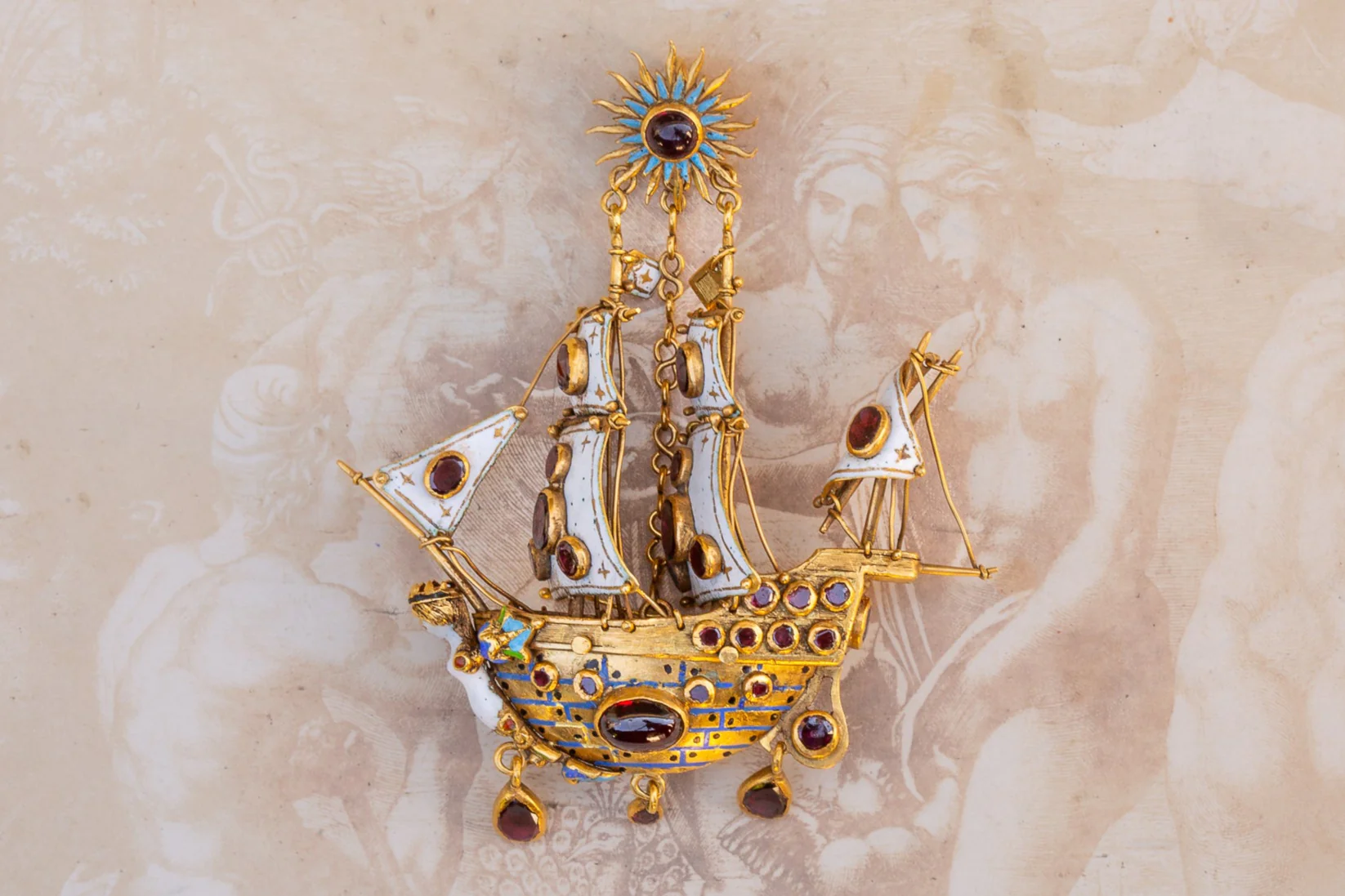
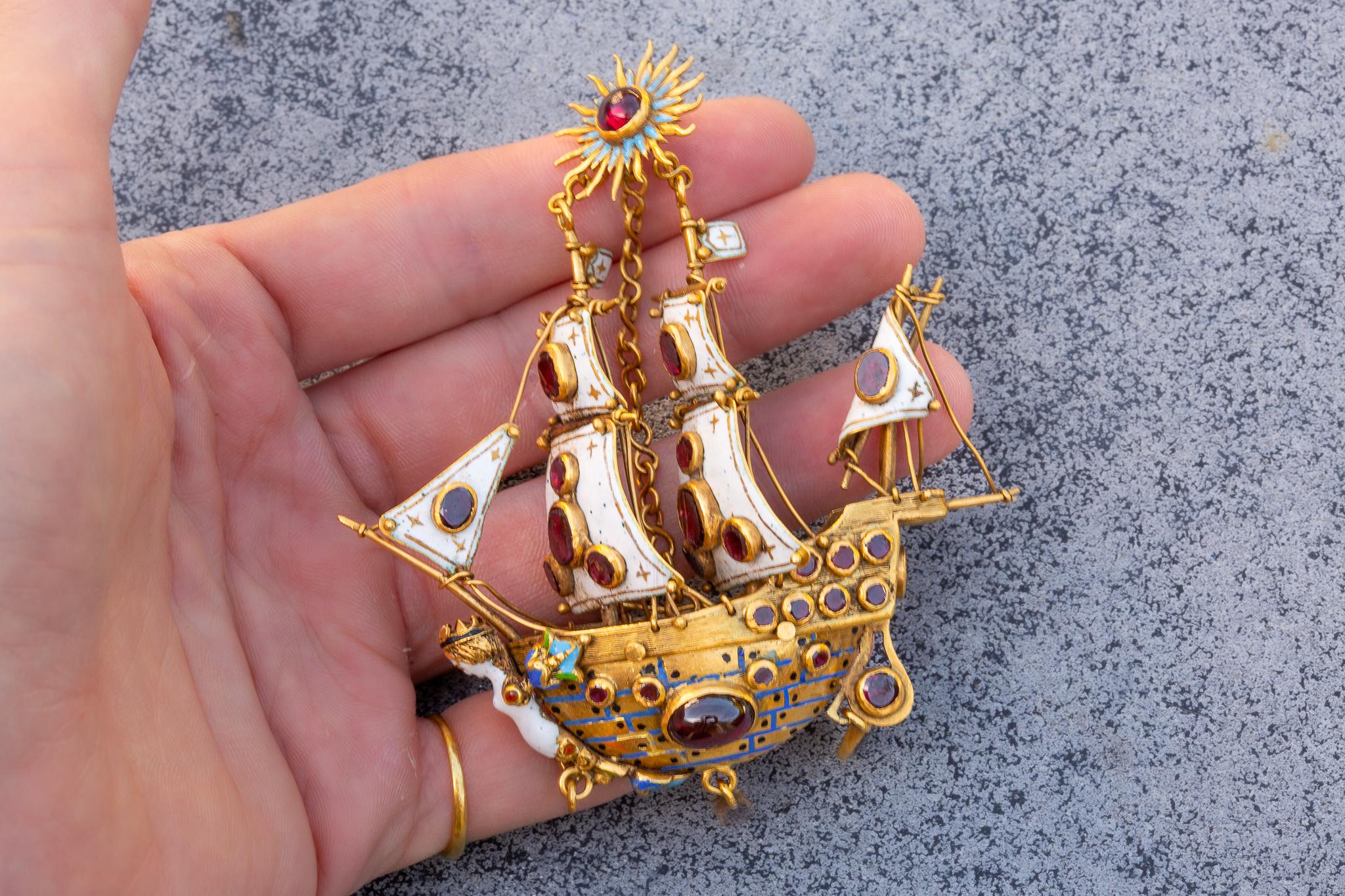
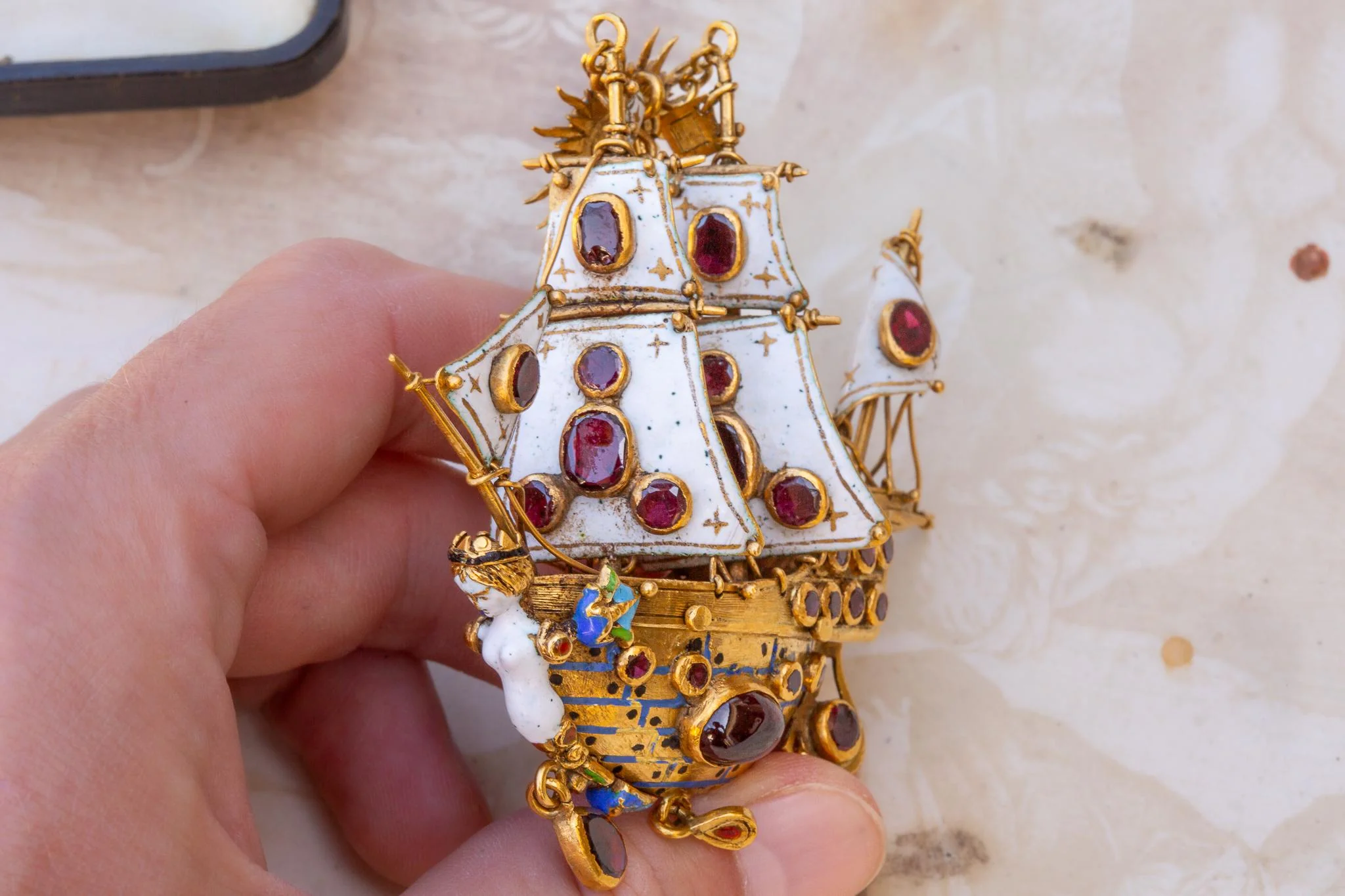
A rare and elaborate Renaissance Revival galleon pendant, circa 1880, crafted in 18K gold and richly decorated with enamel and garnets. This exceptional object exemplifies the imaginative historicism and technical virtuosity of the period’s finest revivalist goldsmiths; most notably Reinhold Vasters (German, active 1853–1890) and Alfred André (French, 1839–1919).
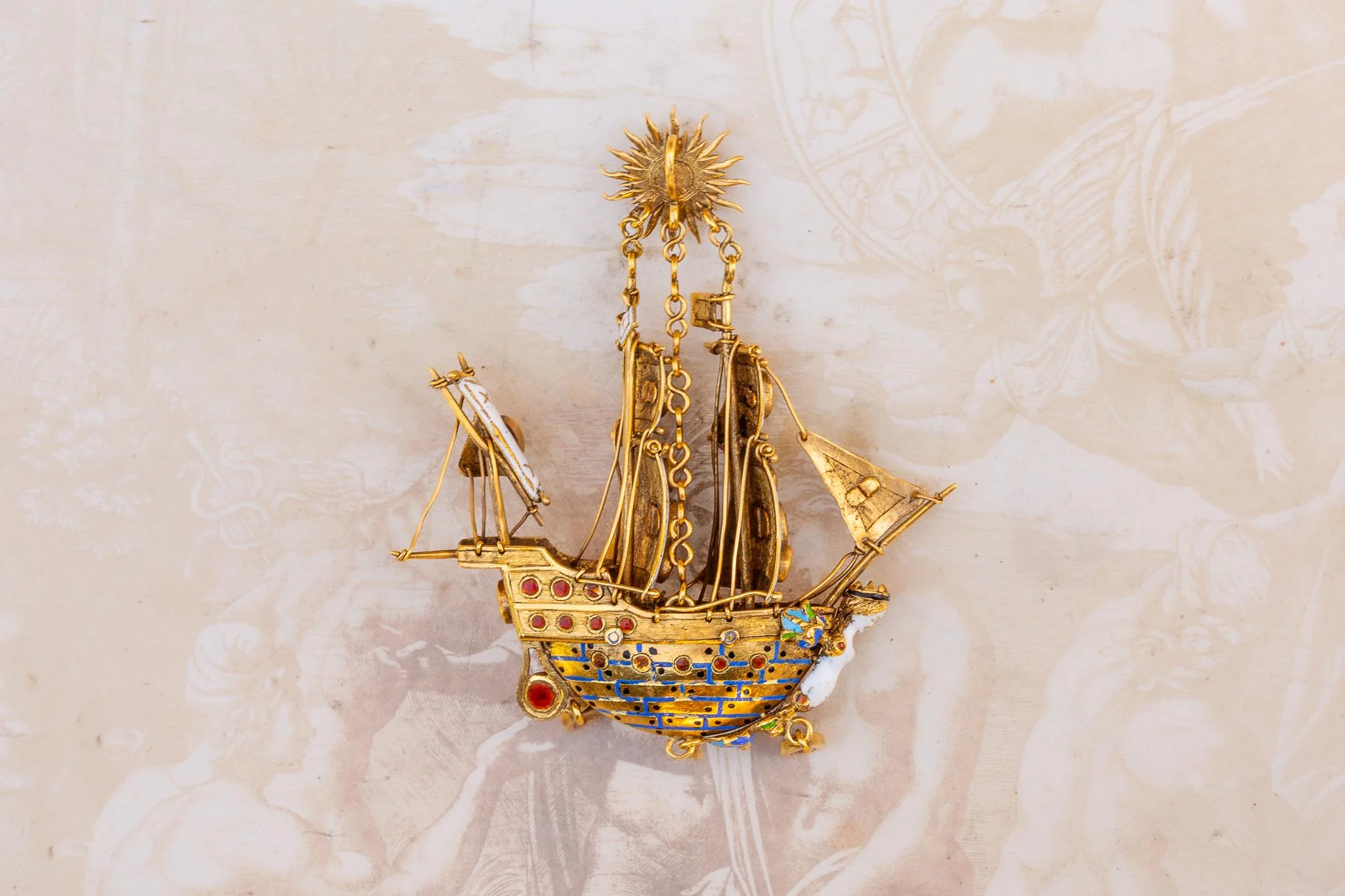
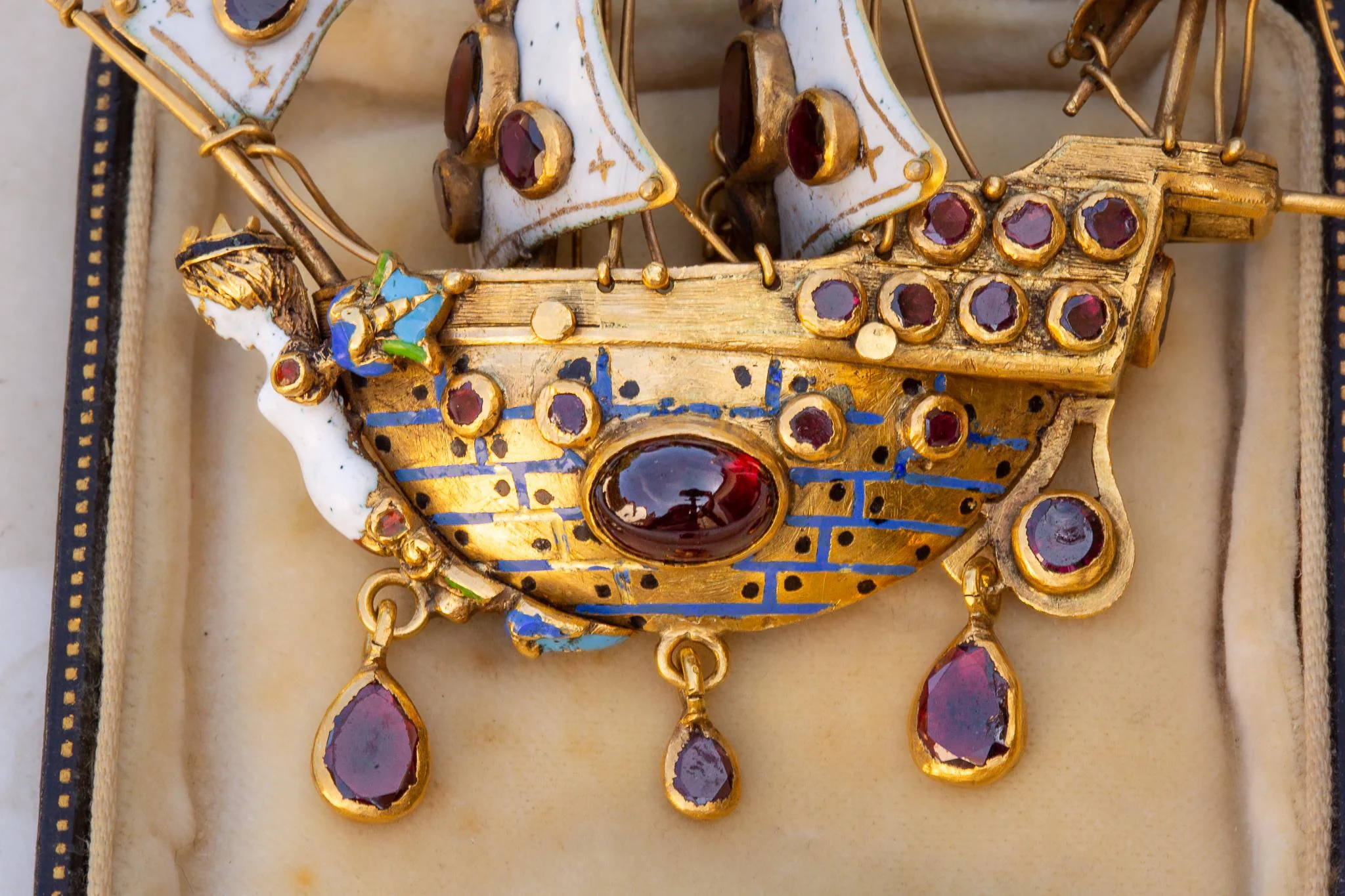
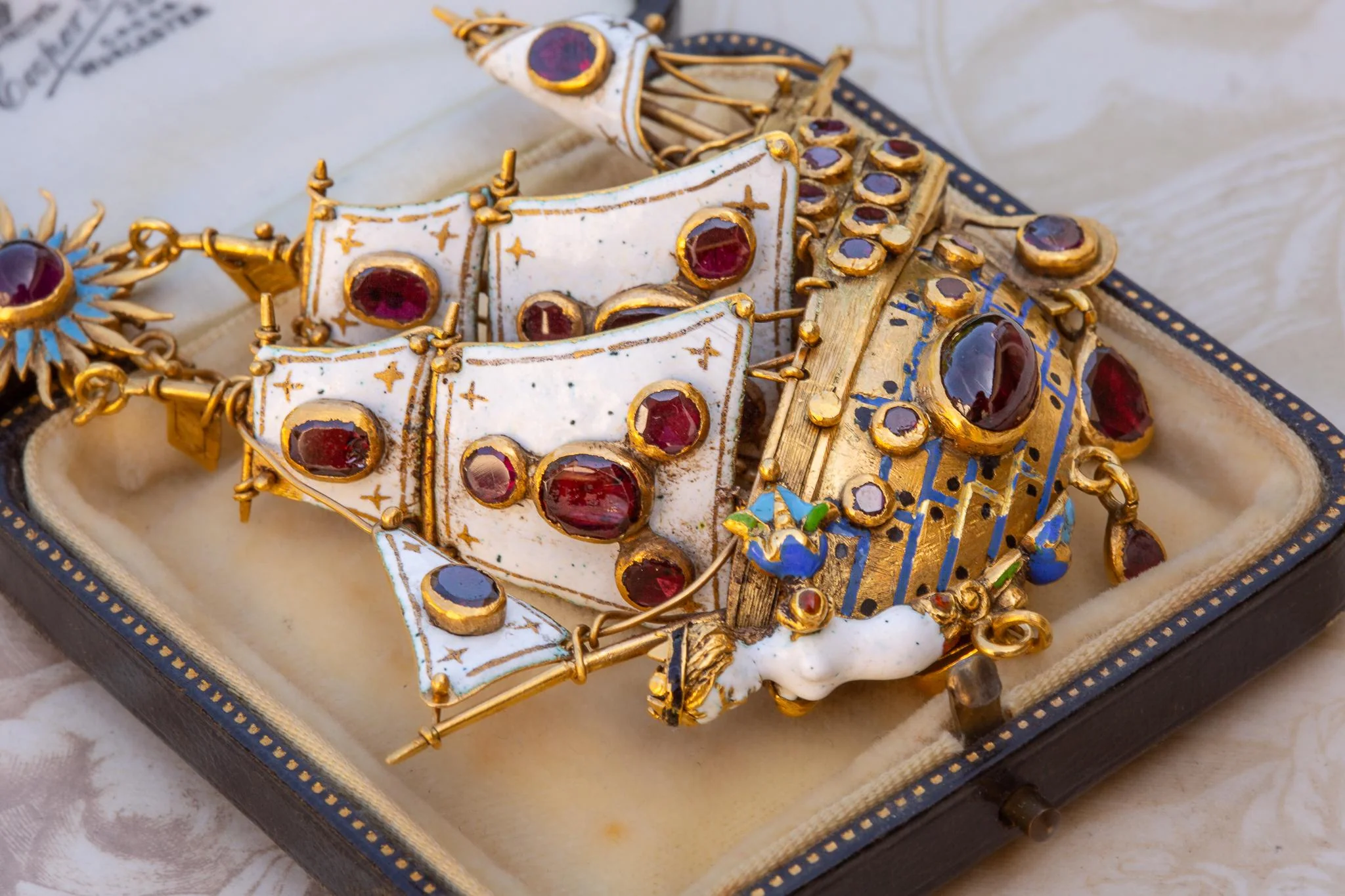
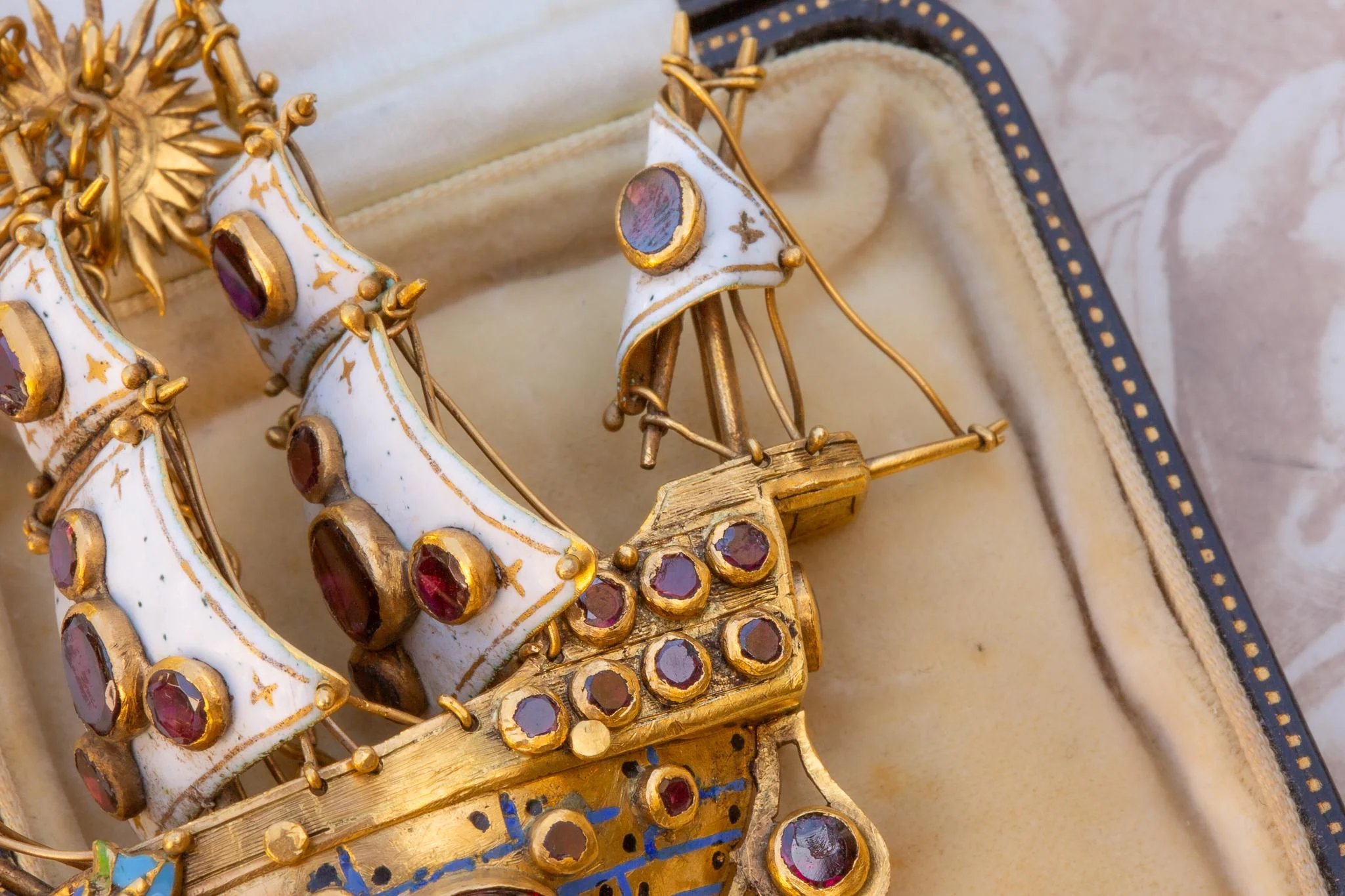
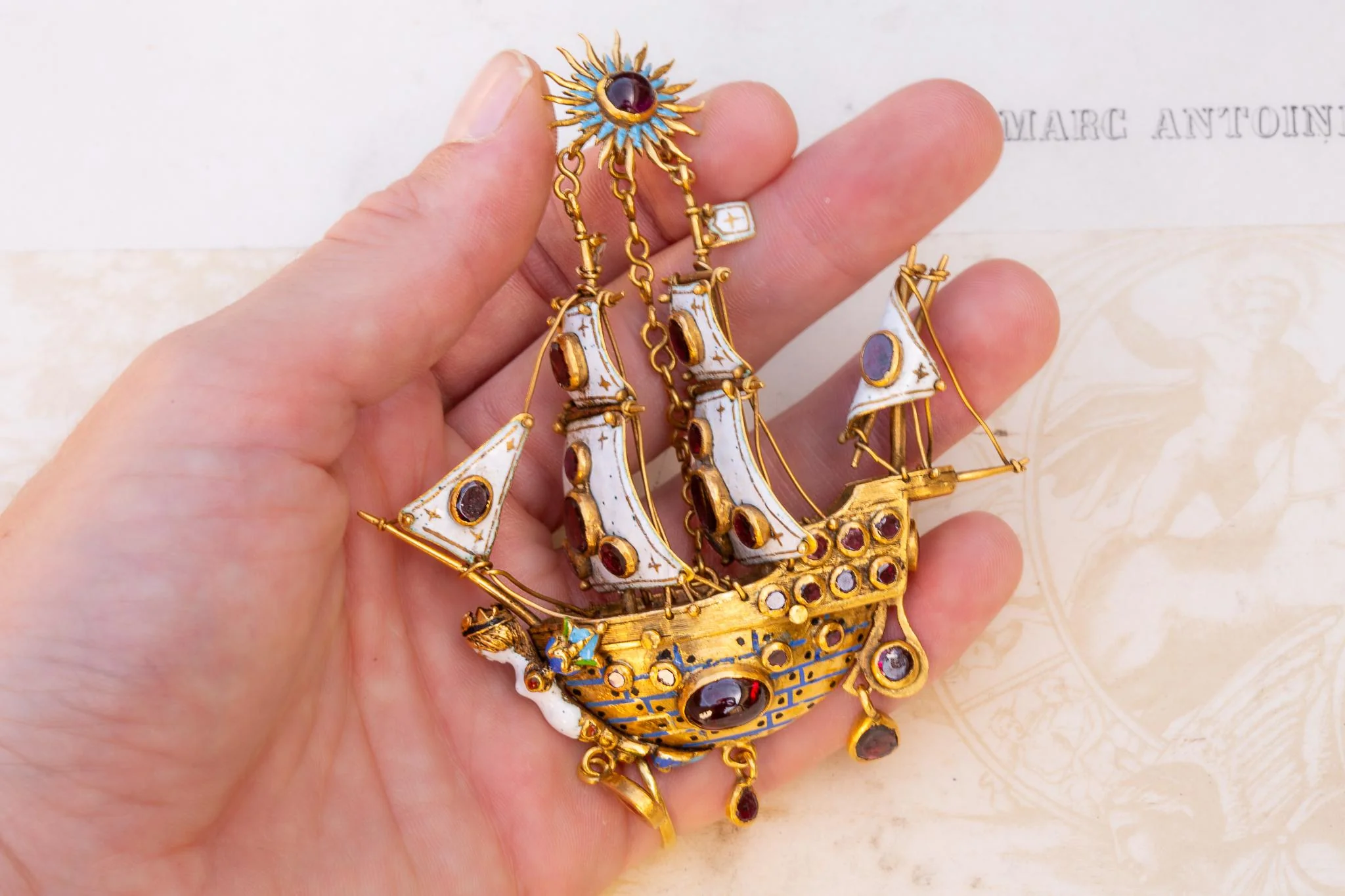
The pendant takes the form of a late-medieval or early Renaissance caravel, a type of ship used during the Age of Discovery. Its hull is constructed in gold, engraved and stippled to resemble wooden planks, and inset with numerous garnet cabochons and flat-cut stones. The enamelled sails are decorated with stylised gold crosses and further garnet settings, while the stern features two rows of flat cut garnet cannons.
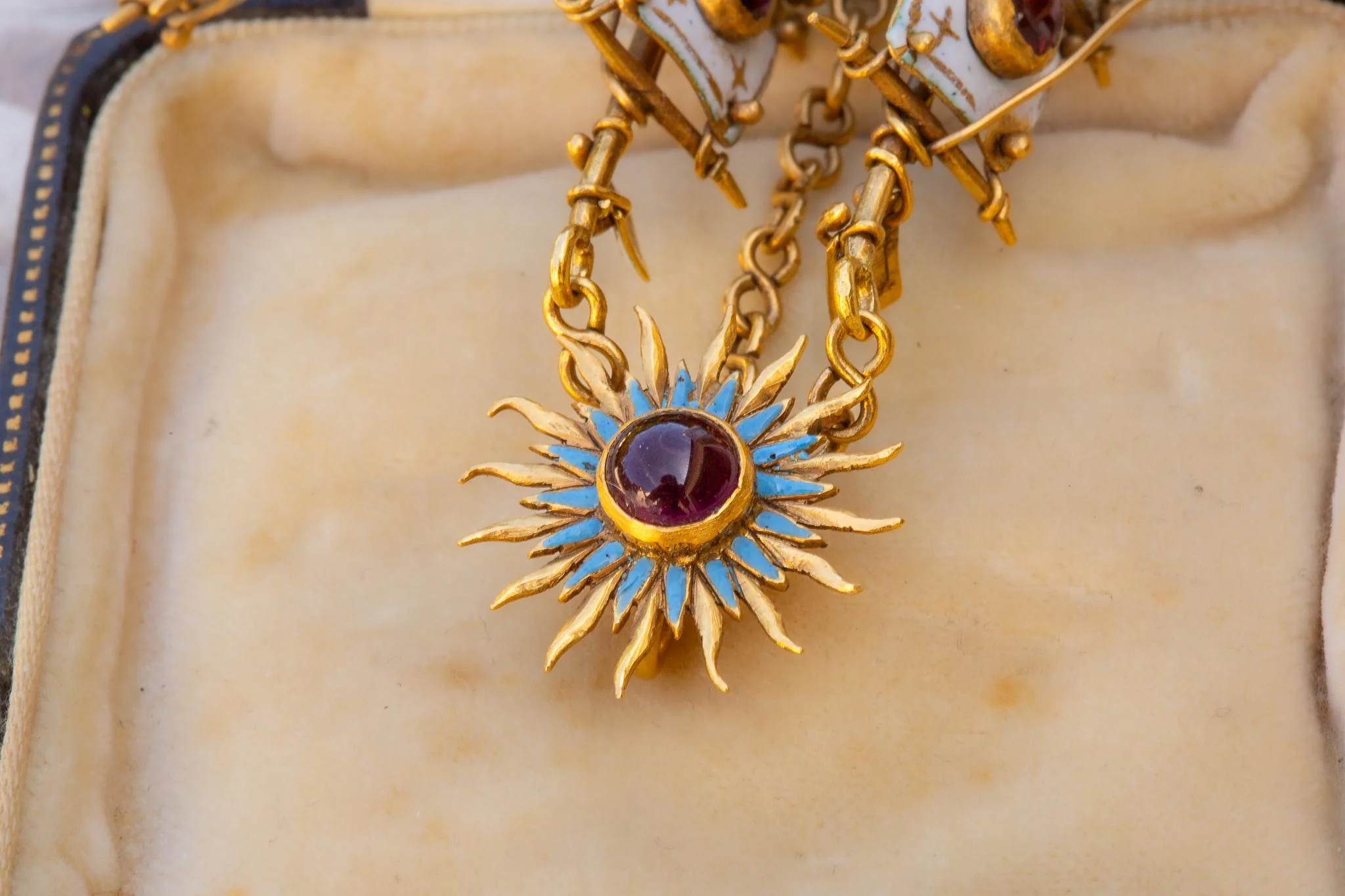
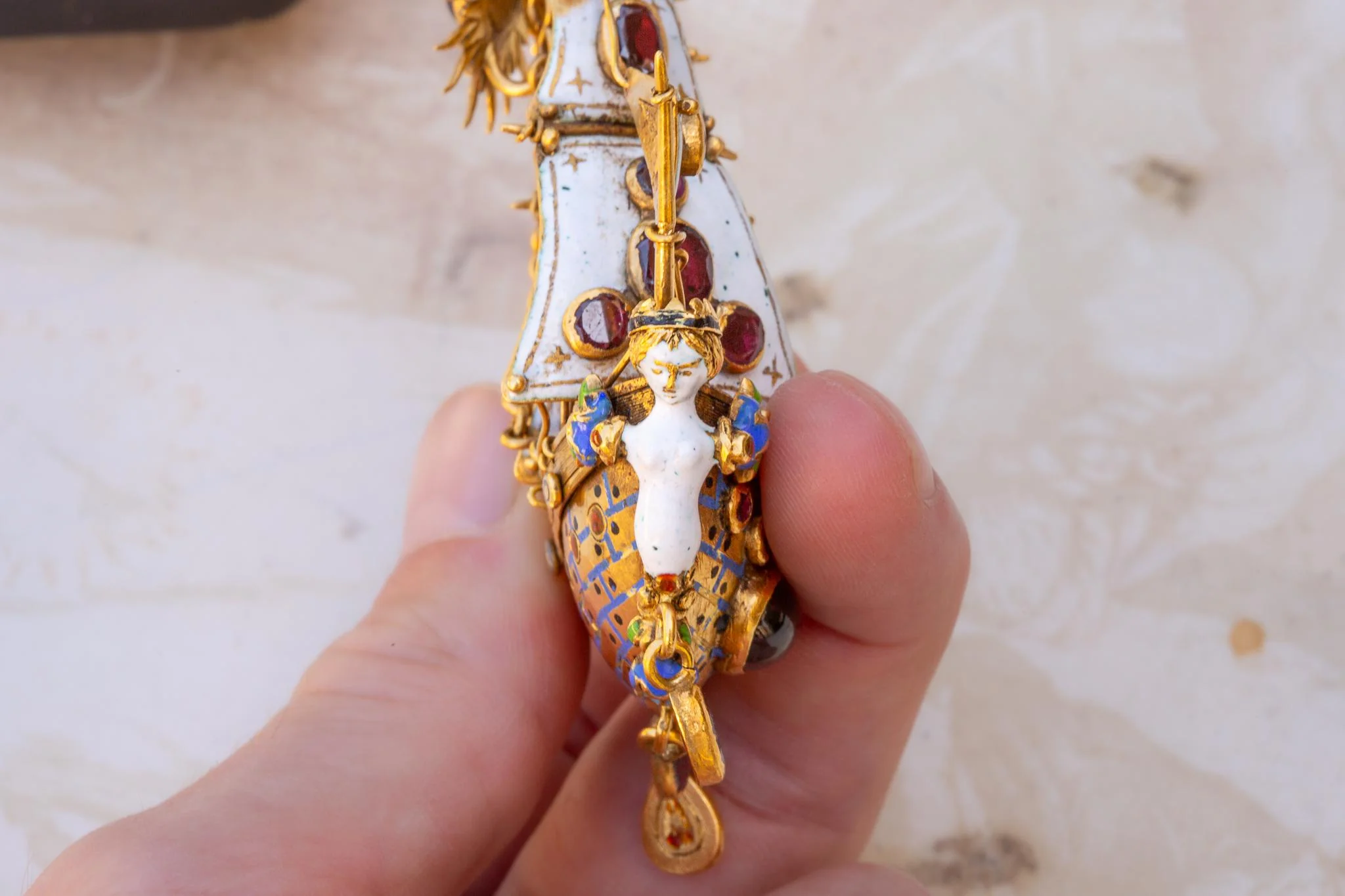
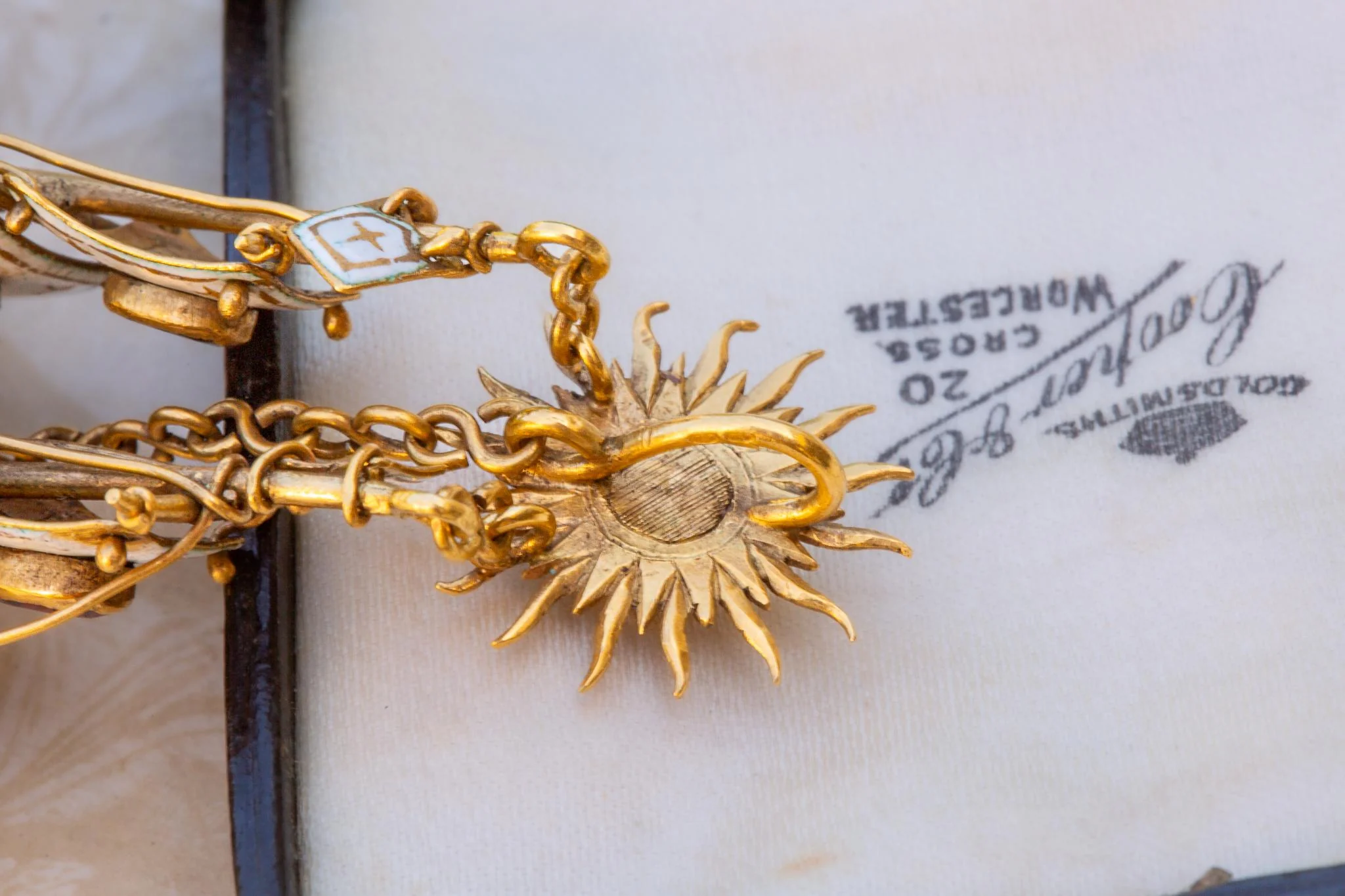
Suspended from a radiant, enamelled sun motif, with a loop on the reverse-side to allow wear as a pendant, the galleon also features an enamelled female figurehead and articulated flags. A remarkable feat of construction, the ship is fully rigged with gold wire rigging and mast fittings, and finishes with three drop-set garnets suspended beneath the hull.
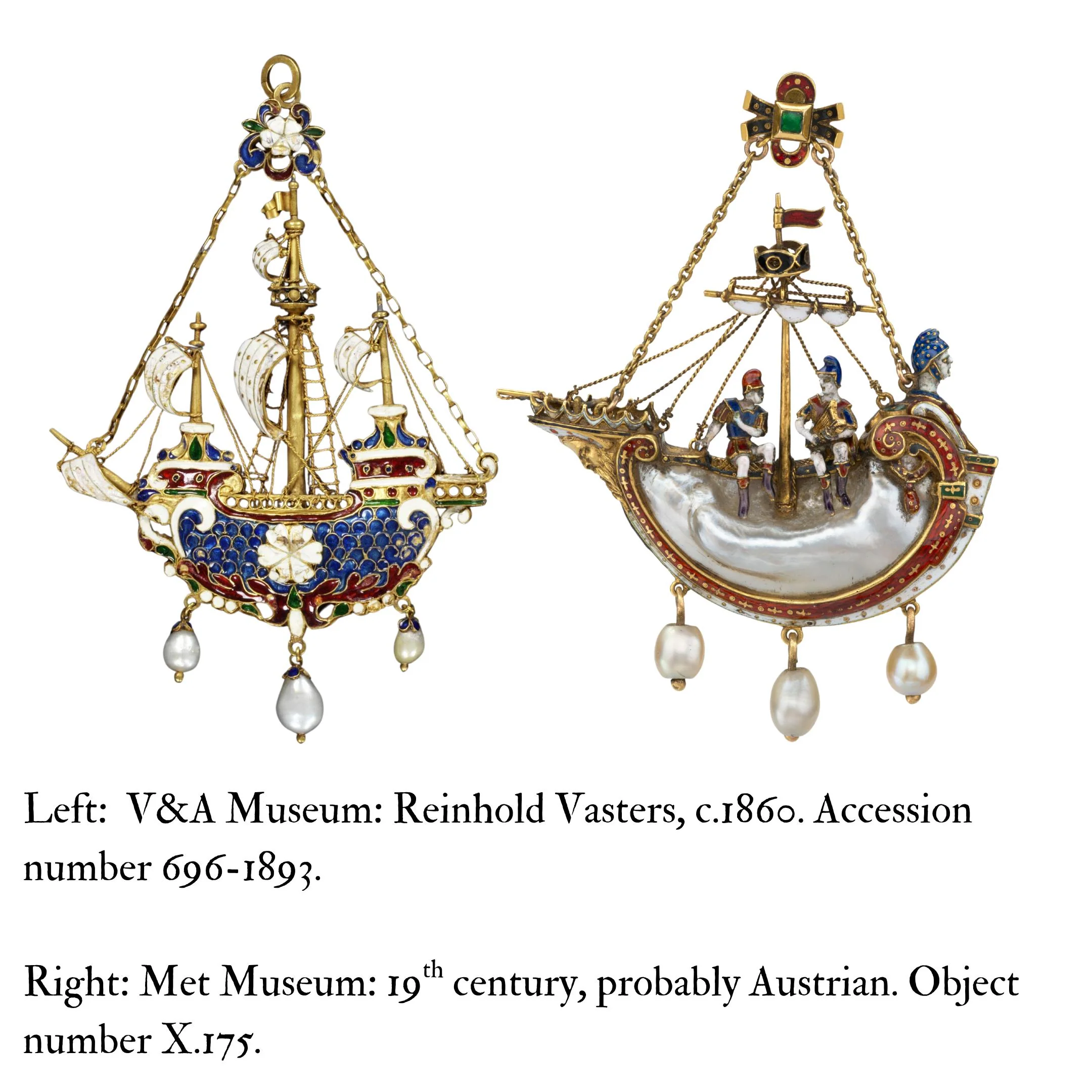
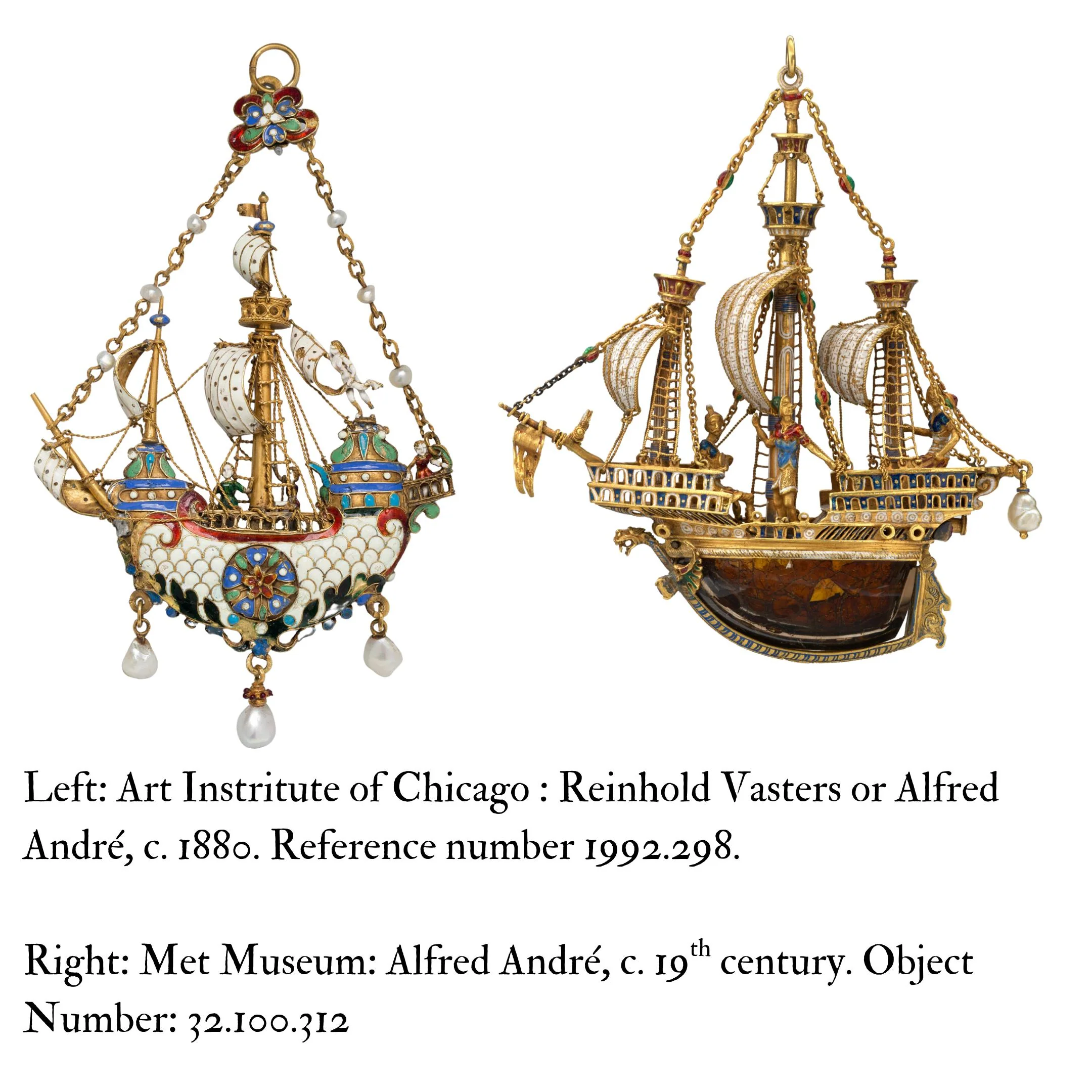
With a substantial weight of 70.88 grams and large dimensions (10cm x 8cm x 2.5cm), this is a true collector’s object: wearable, but conceived as a display piece. Works of this nature - fantastical, allegorical, and conversation-provoking - were a hallmark of Vasters’ workshop in Aachen, often inspired by (or misattributed as) original 16th-century jewels. Indeed, several closely related caravel pendants are preserved in major museum collections (see final photos), including the Victoria & Albert Museum (accession no. 696-1893) and the Art Institute of Chicago (1992.298), both formerly attributed to the Renaissance period.
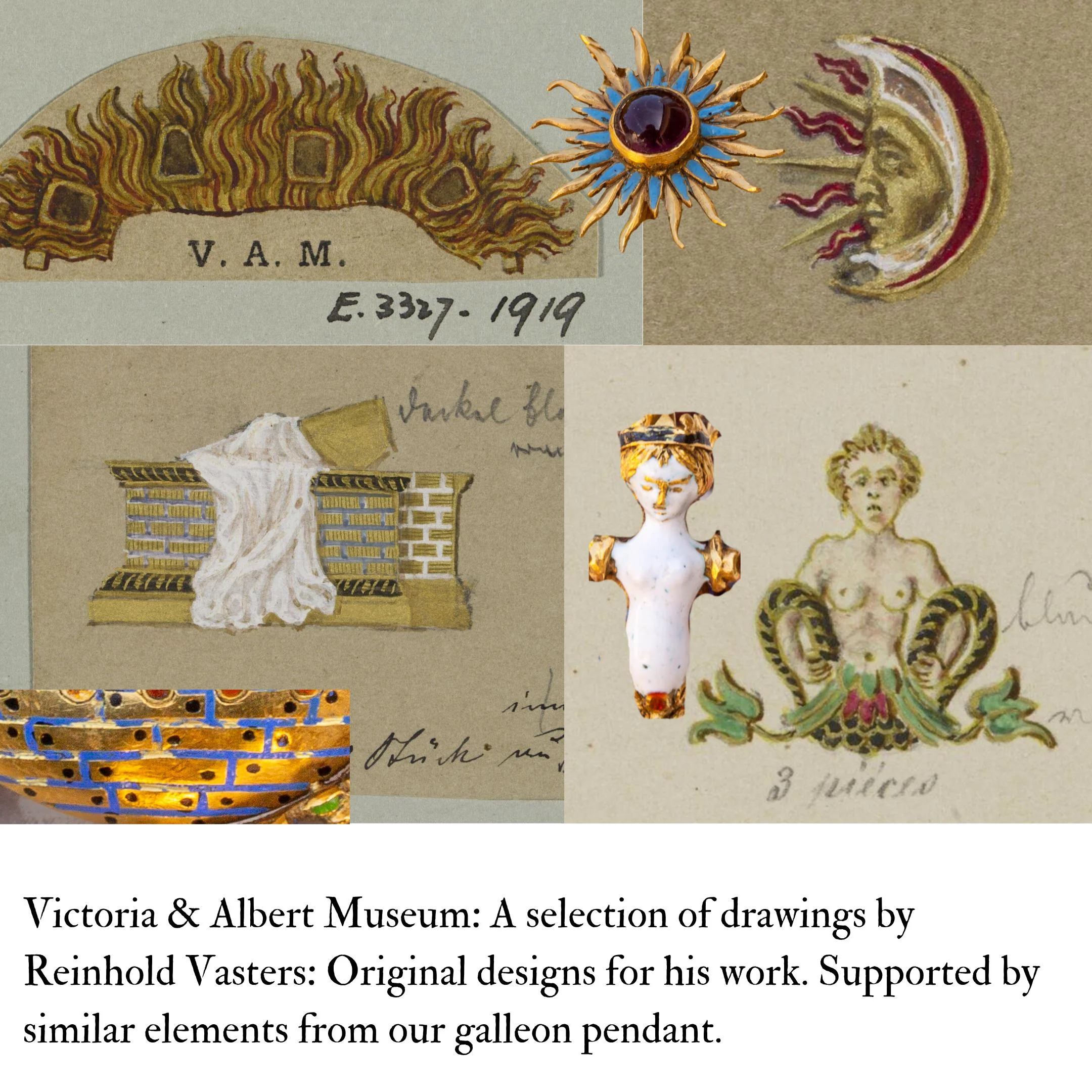
Design elements on this pendant—including the sun terminal, stylised hull, and female figurehead—correspond closely to sketches held in the V&A’s archive of Vasters’ original drawings (E.3327-1919), support the attribution of this pendant to Vasters.
$4,824.24
Original: $16,080.80
-70%Renaissance Revival Ship Pendant—
$16,080.80
$4,824.24Product Information
Product Information
Shipping & Returns
Shipping & Returns
Description
A rare and elaborate Renaissance Revival galleon pendant, circa 1880, crafted in 18K gold and richly decorated with enamel and garnets. This exceptional object exemplifies the imaginative historicism and technical virtuosity of the period’s finest revivalist goldsmiths; most notably Reinhold Vasters (German, active 1853–1890) and Alfred André (French, 1839–1919).
The pendant takes the form of a late-medieval or early Renaissance caravel, a type of ship used during the Age of Discovery. Its hull is constructed in gold, engraved and stippled to resemble wooden planks, and inset with numerous garnet cabochons and flat-cut stones. The enamelled sails are decorated with stylised gold crosses and further garnet settings, while the stern features two rows of flat cut garnet cannons.
Suspended from a radiant, enamelled sun motif, with a loop on the reverse-side to allow wear as a pendant, the galleon also features an enamelled female figurehead and articulated flags. A remarkable feat of construction, the ship is fully rigged with gold wire rigging and mast fittings, and finishes with three drop-set garnets suspended beneath the hull.
With a substantial weight of 70.88 grams and large dimensions (10cm x 8cm x 2.5cm), this is a true collector’s object: wearable, but conceived as a display piece. Works of this nature - fantastical, allegorical, and conversation-provoking - were a hallmark of Vasters’ workshop in Aachen, often inspired by (or misattributed as) original 16th-century jewels. Indeed, several closely related caravel pendants are preserved in major museum collections (see final photos), including the Victoria & Albert Museum (accession no. 696-1893) and the Art Institute of Chicago (1992.298), both formerly attributed to the Renaissance period.
Design elements on this pendant—including the sun terminal, stylised hull, and female figurehead—correspond closely to sketches held in the V&A’s archive of Vasters’ original drawings (E.3327-1919), support the attribution of this pendant to Vasters.