🎉 Up to 70% Off Selected ItemsShop Sale
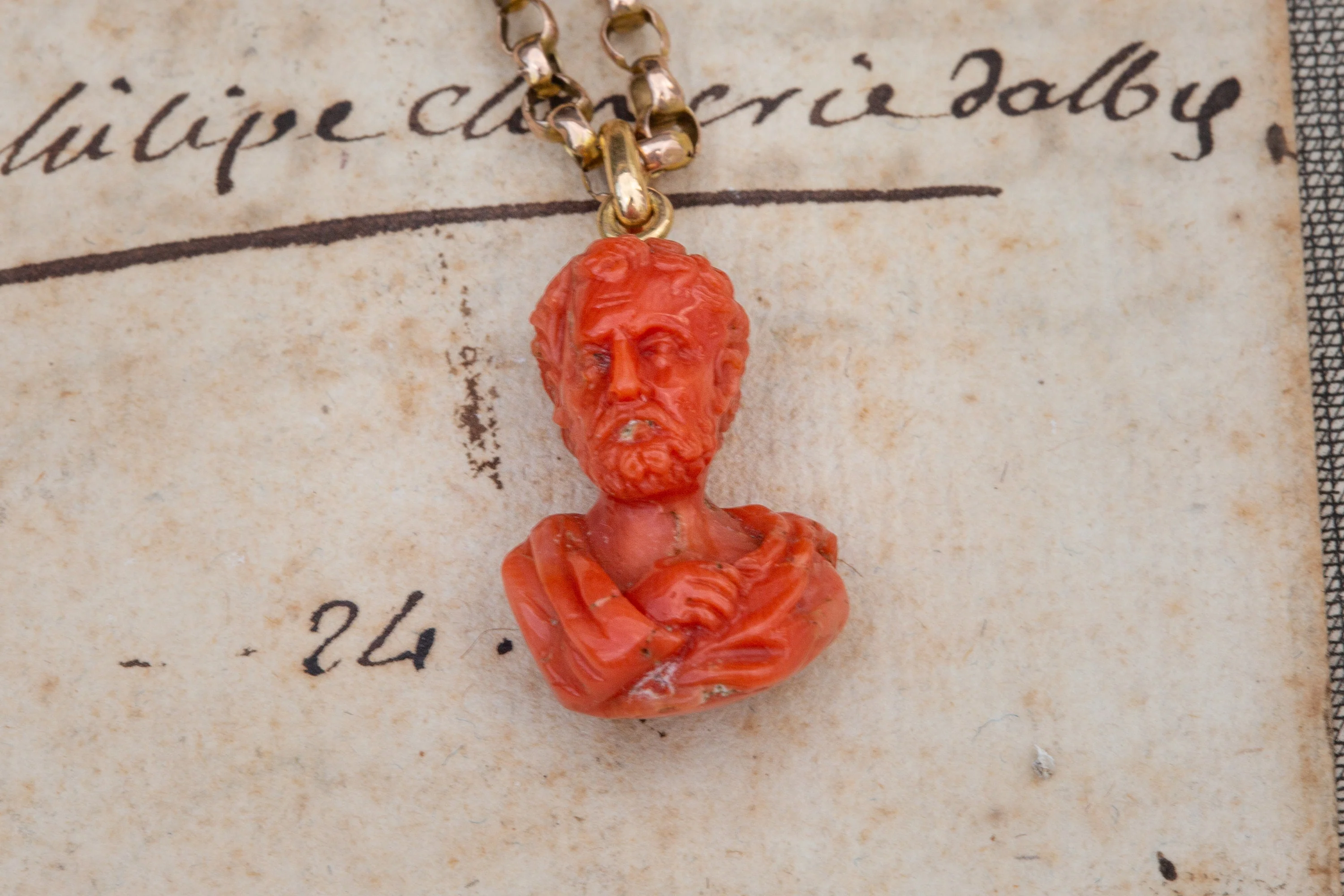
Italian Grand Tour Carved Coral Necklace
Rare Antique Italian Grand Tour Carved Coral Gold Necklace
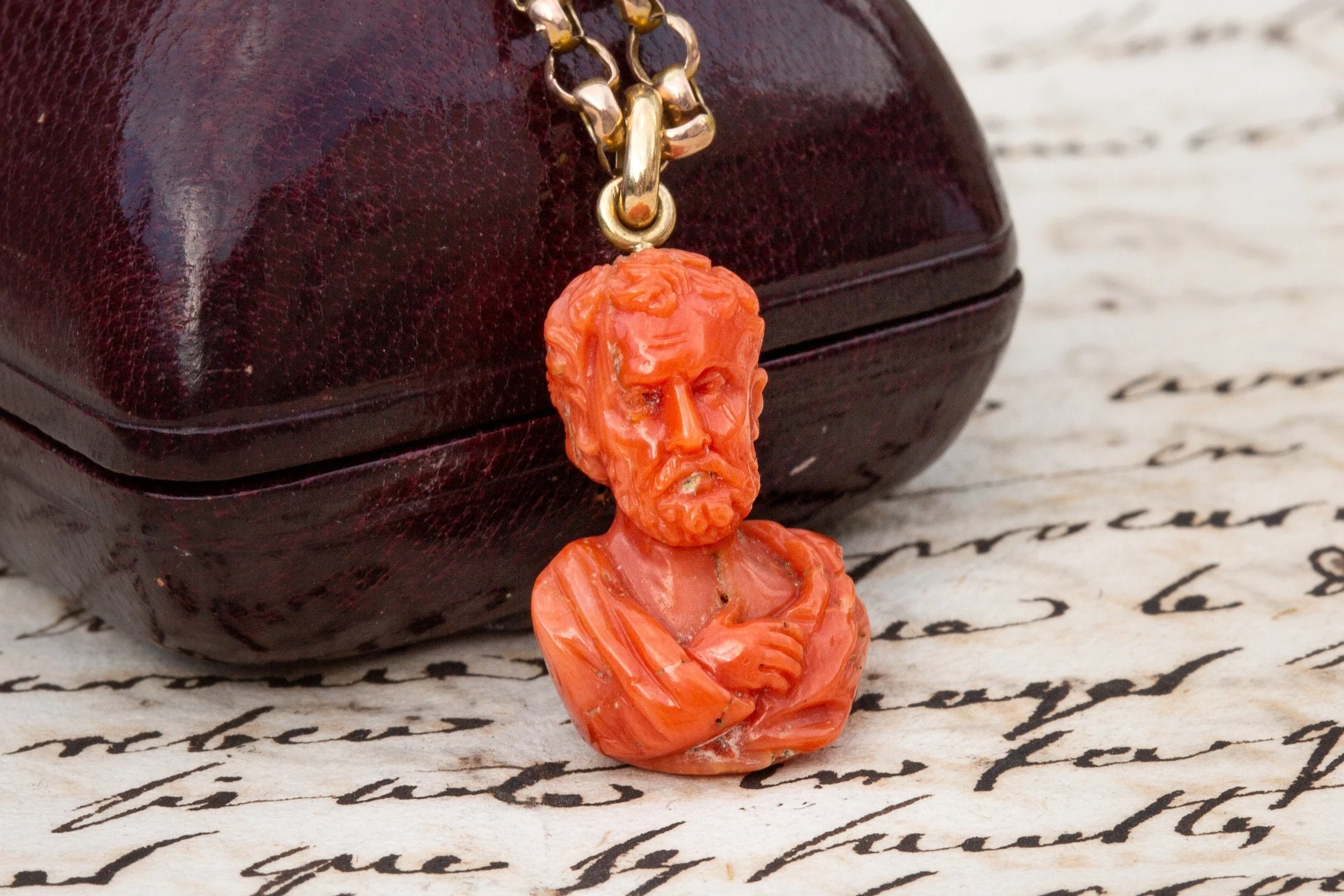
This exquisitely carved corallium rubrum was made in Italy and dates to the late 19th century, circa 1870. It would have been a souvenir from the Italian leg of the Grand Tour.
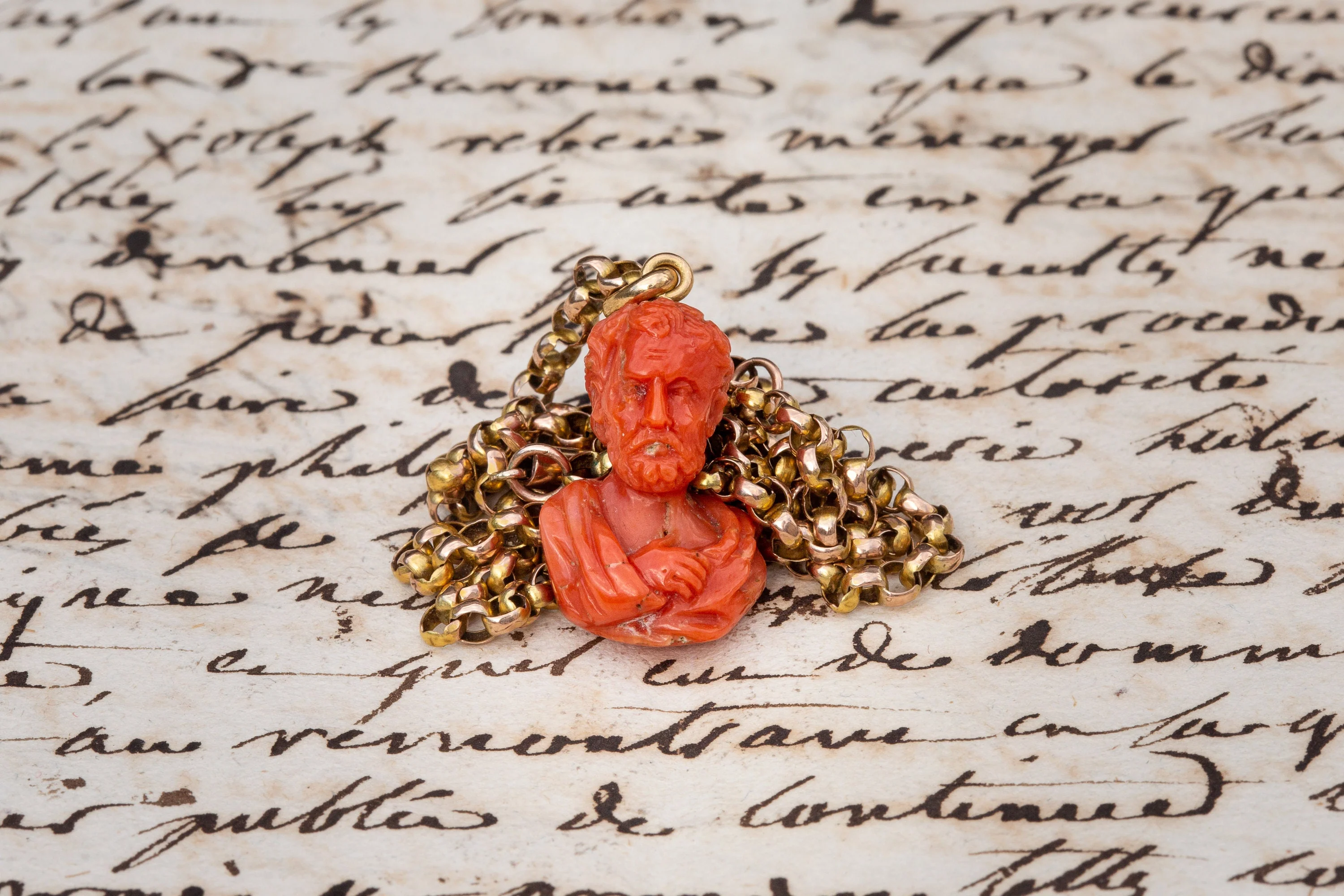
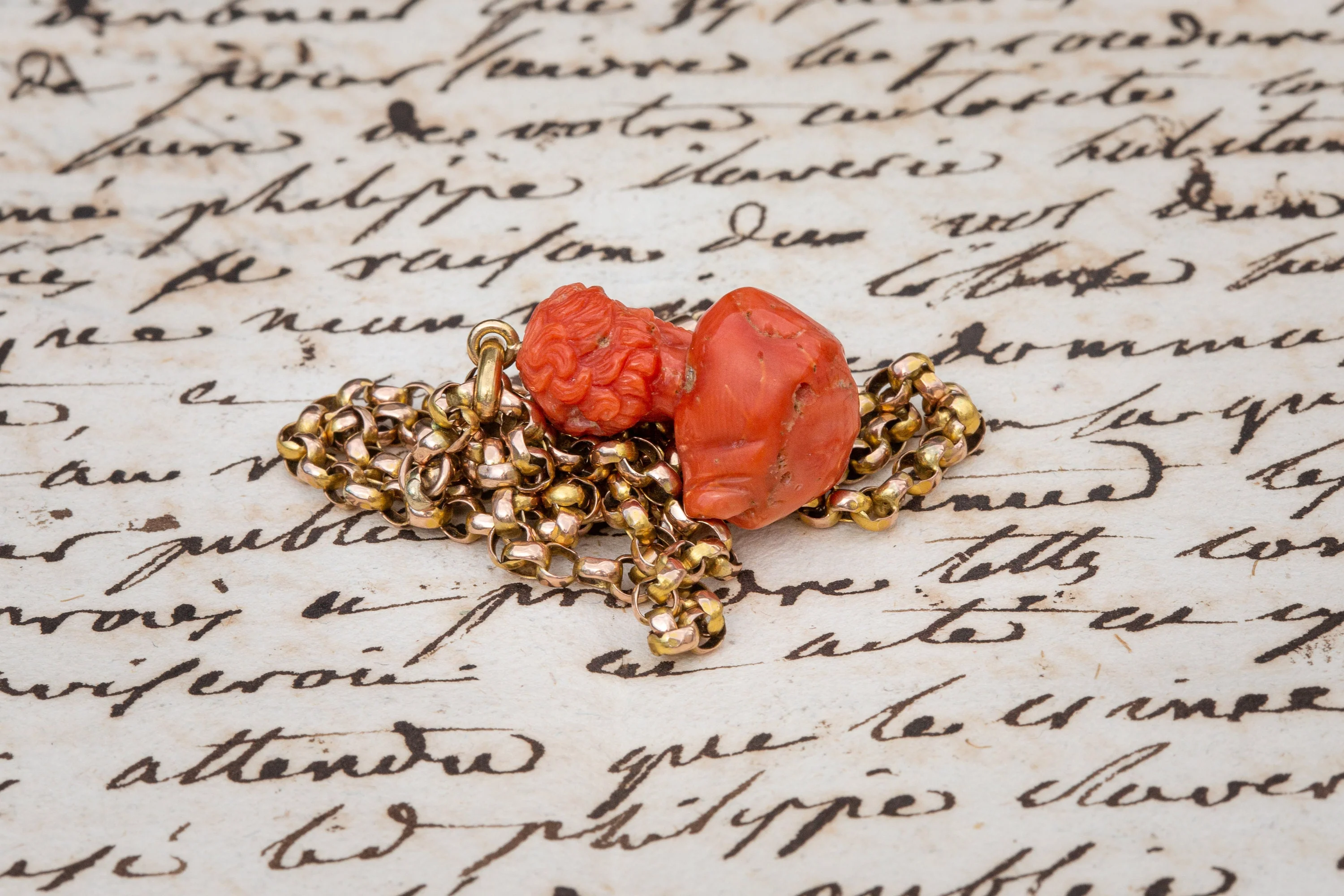
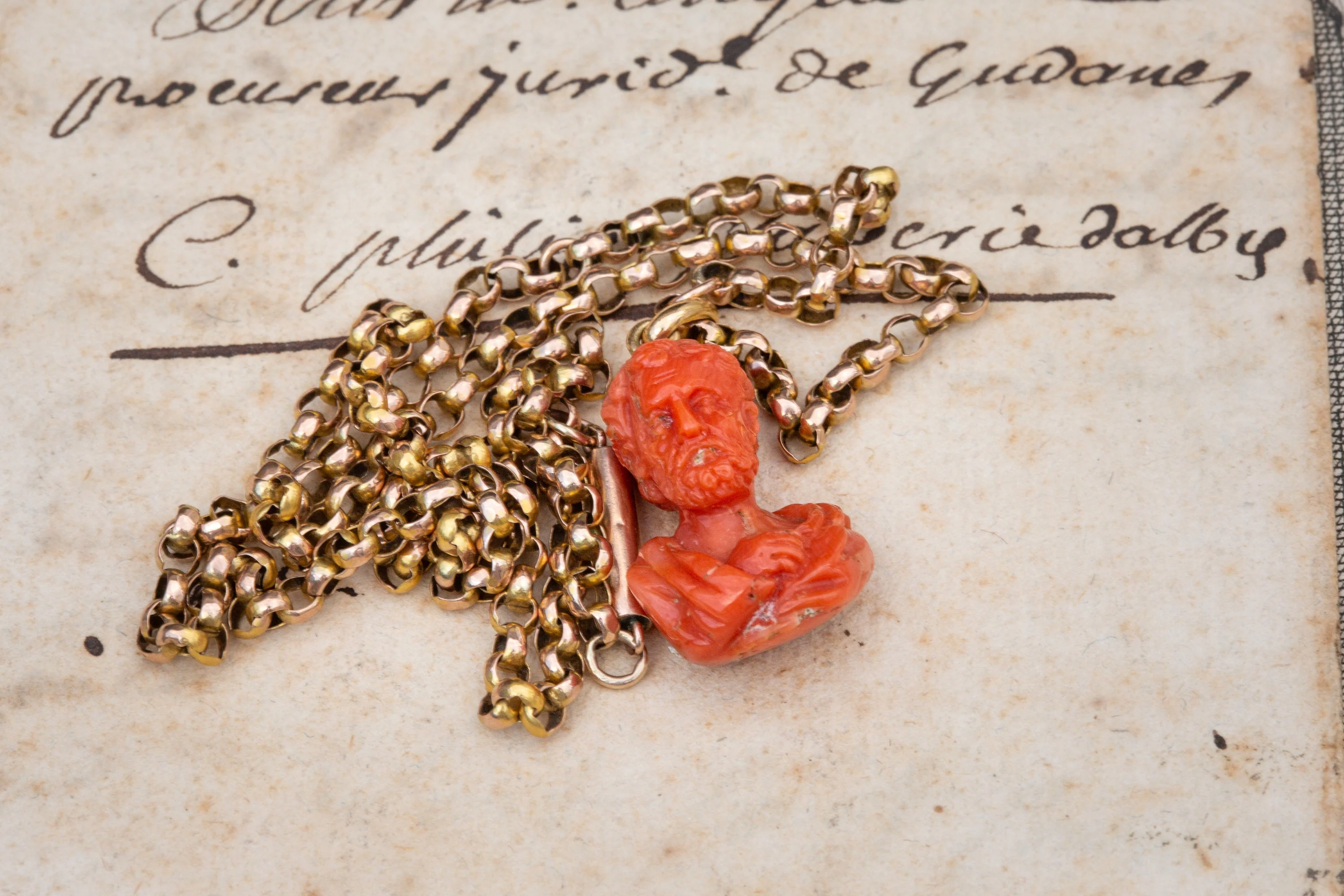
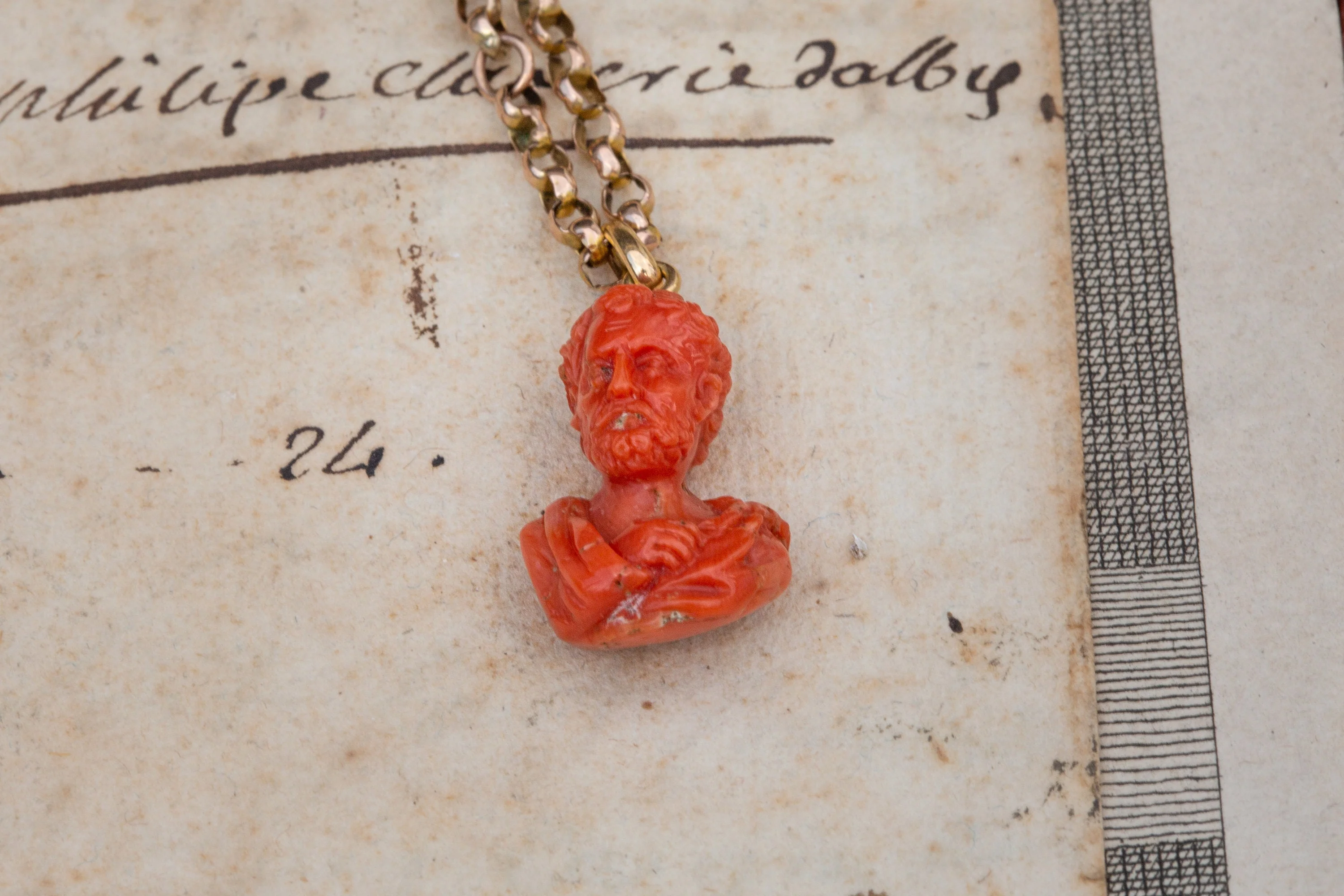
It is a beautiful carving rendered in high detail depicting the bust of a classical man. It is a representation of either Hadrian or Antoninus Pius. Both of these Roman emperors were known for their thick curls and medium weighted ‘philosopher’s beards’.
The pendant is attached to a barrel-clasped Victorian 9K gold belcher chain, approx 17”. Pendant measures 23mm x 15mm x 8mm, total weight 10.97g
Coral jewellery has been worn as an amulet of protection against illness and the evil eye since ancient Rome. It grows deep in the waters of the Mediterranean. The ancient Greeks incorporated it into a myth: after petrifying Cetus, the sea monster threatening Andromeda, Perseus placed Medusa's head on the riverbank while he washed his hands. When he recovered her head, he saw that her blood had turned the seaweed and reeds into red coral.
This exquisitely carved corallium rubrum was made in Italy and dates to the late 19th century, circa 1870. It would have been a souvenir from the Italian leg of the Grand Tour.
It is a beautiful carving rendered in high detail depicting the bust of a classical man. It is a representation of either Hadrian or Antoninus Pius. Both of these Roman emperors were known for their thick curls and medium weighted ‘philosopher’s beards’.
The pendant is attached to a barrel-clasped Victorian 9K gold belcher chain, approx 17”. Pendant measures 23mm x 15mm x 8mm, total weight 10.97g
Coral jewellery has been worn as an amulet of protection against illness and the evil eye since ancient Rome. It grows deep in the waters of the Mediterranean. The ancient Greeks incorporated it into a myth: after petrifying Cetus, the sea monster threatening Andromeda, Perseus placed Medusa's head on the riverbank while he washed his hands. When he recovered her head, he saw that her blood had turned the seaweed and reeds into red coral.
$930.68
Original: $3,102.26
-70%Italian Grand Tour Carved Coral Necklace—
$3,102.26
$930.68Product Information
Product Information
Shipping & Returns
Shipping & Returns
Description
Rare Antique Italian Grand Tour Carved Coral Gold Necklace
This exquisitely carved corallium rubrum was made in Italy and dates to the late 19th century, circa 1870. It would have been a souvenir from the Italian leg of the Grand Tour.
It is a beautiful carving rendered in high detail depicting the bust of a classical man. It is a representation of either Hadrian or Antoninus Pius. Both of these Roman emperors were known for their thick curls and medium weighted ‘philosopher’s beards’.
The pendant is attached to a barrel-clasped Victorian 9K gold belcher chain, approx 17”. Pendant measures 23mm x 15mm x 8mm, total weight 10.97g
Coral jewellery has been worn as an amulet of protection against illness and the evil eye since ancient Rome. It grows deep in the waters of the Mediterranean. The ancient Greeks incorporated it into a myth: after petrifying Cetus, the sea monster threatening Andromeda, Perseus placed Medusa's head on the riverbank while he washed his hands. When he recovered her head, he saw that her blood had turned the seaweed and reeds into red coral.
This exquisitely carved corallium rubrum was made in Italy and dates to the late 19th century, circa 1870. It would have been a souvenir from the Italian leg of the Grand Tour.
It is a beautiful carving rendered in high detail depicting the bust of a classical man. It is a representation of either Hadrian or Antoninus Pius. Both of these Roman emperors were known for their thick curls and medium weighted ‘philosopher’s beards’.
The pendant is attached to a barrel-clasped Victorian 9K gold belcher chain, approx 17”. Pendant measures 23mm x 15mm x 8mm, total weight 10.97g
Coral jewellery has been worn as an amulet of protection against illness and the evil eye since ancient Rome. It grows deep in the waters of the Mediterranean. The ancient Greeks incorporated it into a myth: after petrifying Cetus, the sea monster threatening Andromeda, Perseus placed Medusa's head on the riverbank while he washed his hands. When he recovered her head, he saw that her blood had turned the seaweed and reeds into red coral.