🎉 Up to 70% Off Selected ItemsShop Sale
Antique French 'Gallia' Pendant
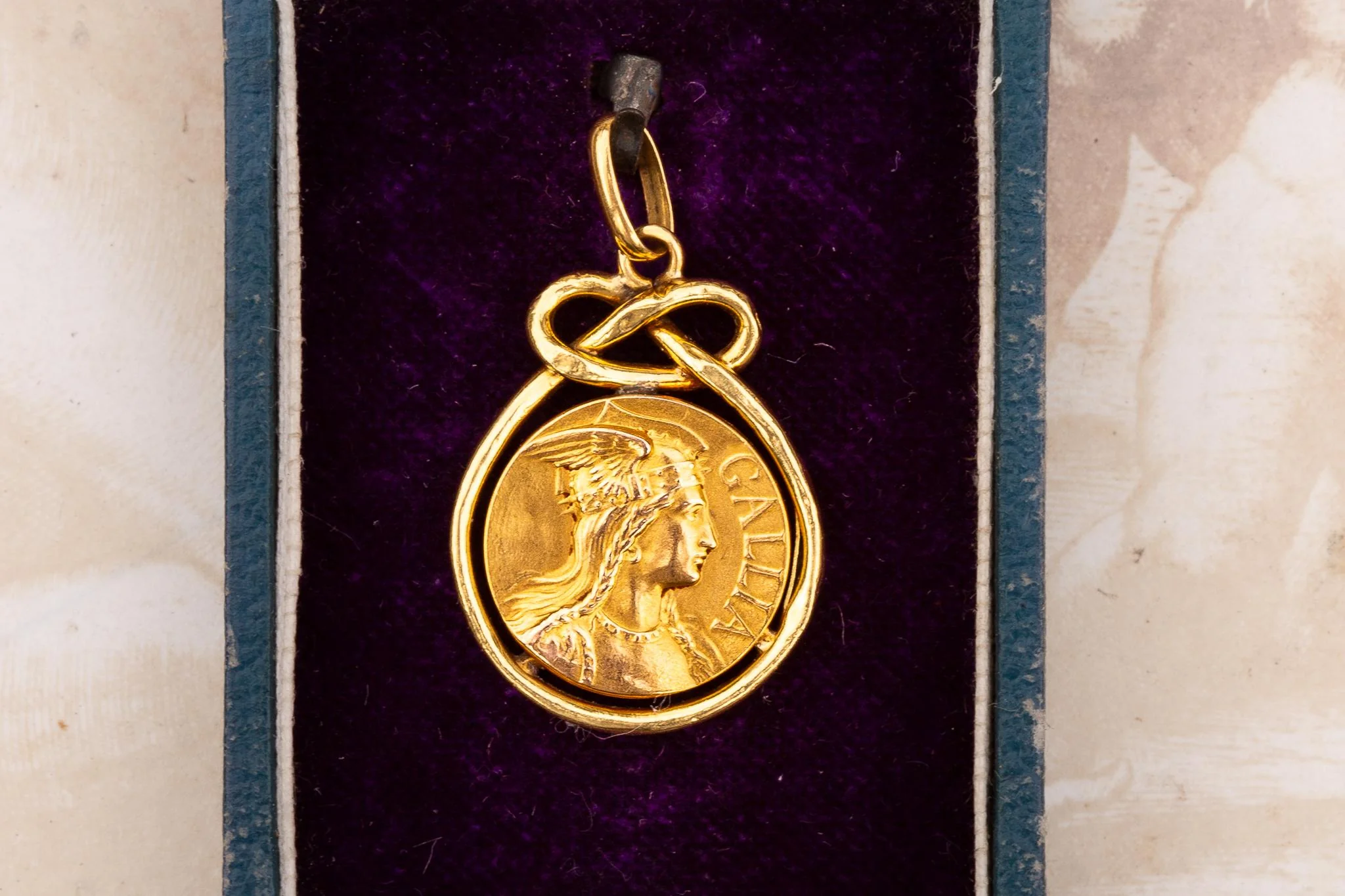
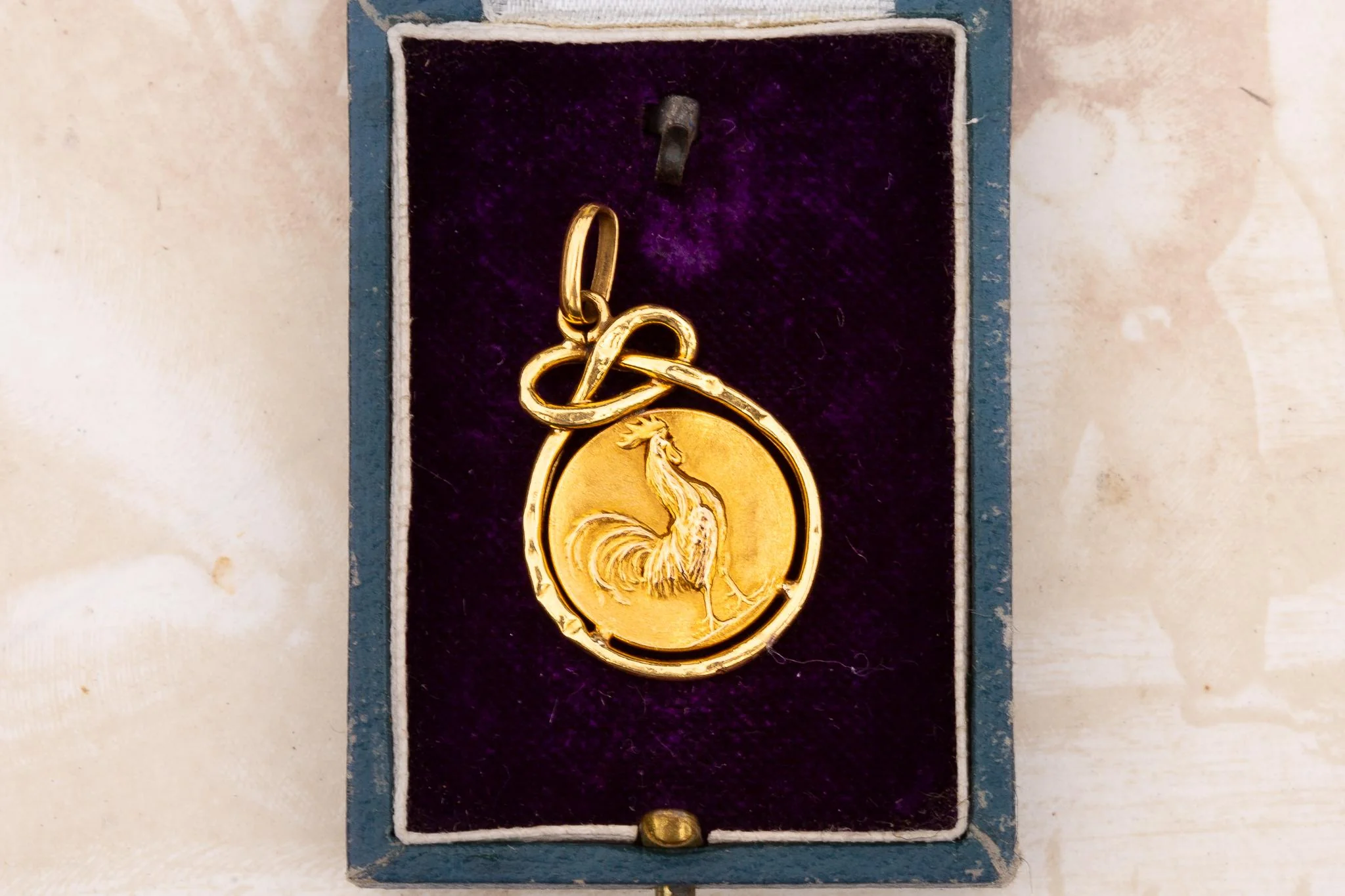
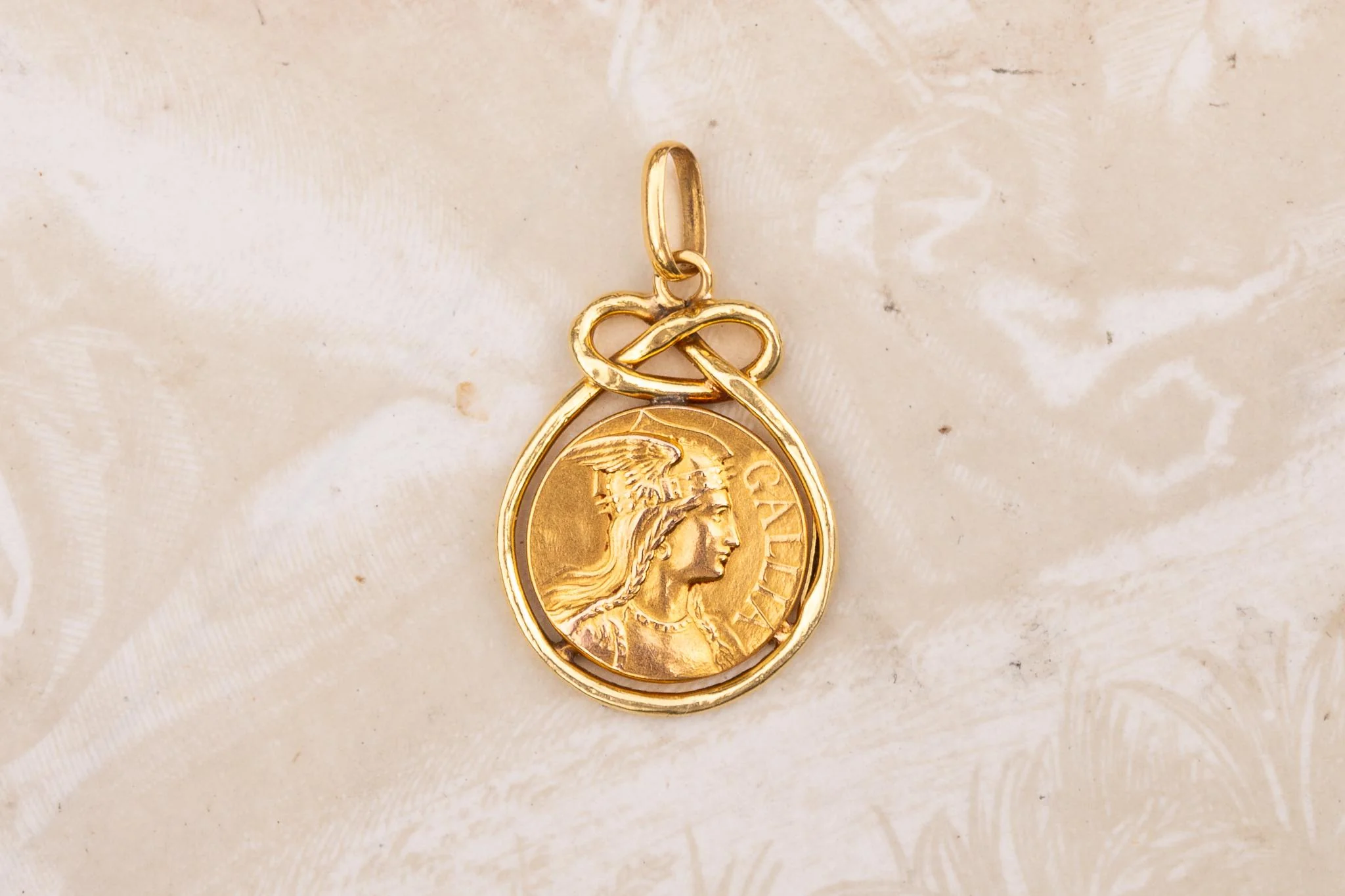
A fine and symbolically rich French gold pendant dating to circa 1890, composed of a circular double-sided medallion framed in a looping gold mount.
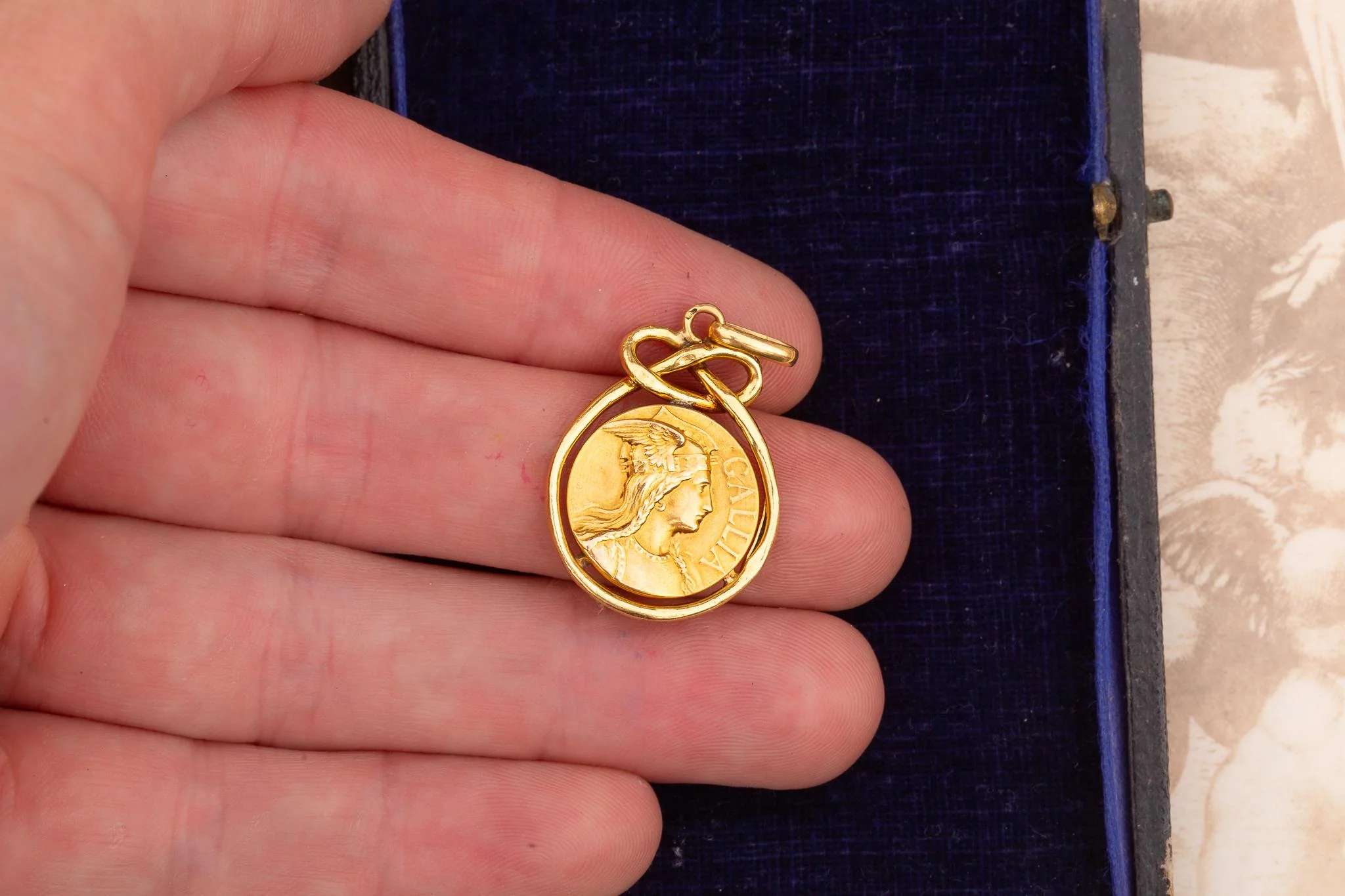
On the obverse is a beautifully engraved helmeted female figure inscribed “GALLIA” - a personification of ancient Gaul and a patriotic emblem of France’s cultural origins. Gallia was commonly portrayed in late 19th-century art as a proud warrior maiden, referencing both classical iconography and France’s republican ideals. The use of her image speaks to a renewed interest in French national identity following the Franco-Prussian War of 1870–71. Gallia represents resilience, liberty, and the mythic ancestry of the French people rooted in the Gallic tribes that once inhabited the region.
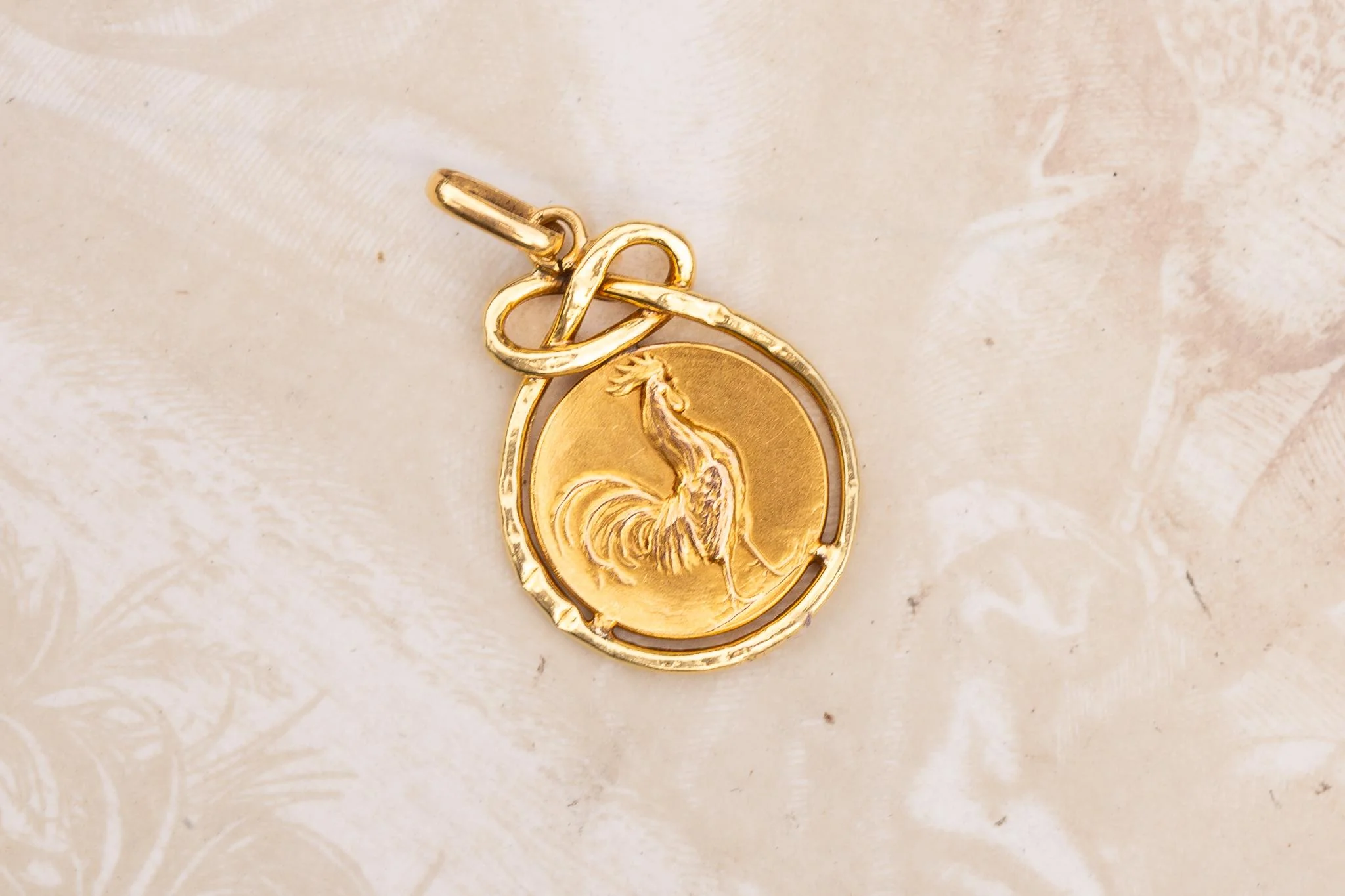
The reverse depicts a standing cockerel — the coq gaulois — now widely recognised as the national symbol of France. Though not used as a tribal emblem in antiquity, the rooster gained prominence during the French Revolution and again under the Third Republic. The Latin word gallus means both "rooster" and "Gaul", which made the animal a punning symbol of the French nation. By the 1880s, it had become a widespread icon of civic pride, appearing on medals, coins, and architecture.
The pendant is mounted in an 18K gold ribbon-twist frame with an integrated bail, hallmarked with the French tête de cheval (horse head), used for 18K gold items made outside Paris between 1847 and 1919. A maker’s mark is also present, though partially obscured.
Measurements:
3cm (including bail) x 2.5cm wide
Weight: 1.81g
Condition:
Good antique condition. Under magnification, one side of the hollow frame shows a fine internal crack and a few light dents; these do not affect wearability or structural integrity.
$482.42
Original: $1,608.08
-70%Antique French 'Gallia' Pendant—
$1,608.08
$482.42Product Information
Product Information
Shipping & Returns
Shipping & Returns
Description
A fine and symbolically rich French gold pendant dating to circa 1890, composed of a circular double-sided medallion framed in a looping gold mount.
On the obverse is a beautifully engraved helmeted female figure inscribed “GALLIA” - a personification of ancient Gaul and a patriotic emblem of France’s cultural origins. Gallia was commonly portrayed in late 19th-century art as a proud warrior maiden, referencing both classical iconography and France’s republican ideals. The use of her image speaks to a renewed interest in French national identity following the Franco-Prussian War of 1870–71. Gallia represents resilience, liberty, and the mythic ancestry of the French people rooted in the Gallic tribes that once inhabited the region.
The reverse depicts a standing cockerel — the coq gaulois — now widely recognised as the national symbol of France. Though not used as a tribal emblem in antiquity, the rooster gained prominence during the French Revolution and again under the Third Republic. The Latin word gallus means both "rooster" and "Gaul", which made the animal a punning symbol of the French nation. By the 1880s, it had become a widespread icon of civic pride, appearing on medals, coins, and architecture.
The pendant is mounted in an 18K gold ribbon-twist frame with an integrated bail, hallmarked with the French tête de cheval (horse head), used for 18K gold items made outside Paris between 1847 and 1919. A maker’s mark is also present, though partially obscured.
Measurements:
3cm (including bail) x 2.5cm wide
Weight: 1.81g
Condition:
Good antique condition. Under magnification, one side of the hollow frame shows a fine internal crack and a few light dents; these do not affect wearability or structural integrity.